



America’s negotiations with Iran after over hundred days of war were unlikely to produce a comprehensive peace agreement. Indeed, the MoU left core drivers of the conflict unresolved. Iran continued to enrich uranium, expand its missile programme and rely on regional proxies across the Middle East. Israel’s campaign against Hezbollah in Lebanon remained unresolved and was always about to reignite direct confrontation with Tehran. Since negotiations began, the United States has scaled-back major military operations, prompting Israel to follow suit. Iran has for some time limited its retaliations, while commercial traffic through the Strait of Hormuz has resumed but only for a short while. The United States and Iran have restarted tit-for-tat attacks, setting the scene for a long-term, low-intensity conflict.
The memorandum of understanding (MOU) has at least reduced the intensity of the war, although its significance lies less in what it resolved than in the opportunity it could create. A narrow window of peace could allow Iran and its Arab Gulf neighbours to repair relations and lay the foundations for a more durable regional security architecture. If Saudi Arabia and other Gulf states use this period to define rules of coexistence with Tehran, they could help reduce the risk of another Israel-Iran war. Europe and the Gulf states should continue to proactively work for a truce to take place.
Doing so will undoubtedly be difficult. Several weeks of conflict have deepened mistrust across the Gulf. States that have maintained channels with Tehran — notably Saudi Arabia, Qatar and Oman — will need to lead negotiations on non-aggression guarantees that protect not only themselves but also Gulf states that bore the brunt of the fighting. Iran faces an equally consequential choice. Tehran may conclude that the war has strengthened its regional position and provided it with greater leverage over its neighbours. That would be a strategic mistake. Both Israel and Iran are widely viewed across the Arab world as pursuing regional hegemony. The decisive advantage in the next phase of the competition will therefore belong not to the state that demonstrates the greatest military resilience, but to the one that breaks its regional isolation first. Israel has shown that military superiority alone does not secure regional acceptance. Iran should avoid making the opposite mistake by equating military resilience with diplomatic success. Instead, it should capitalize on geography, rebuild trust with its Gulf neighbours and pursue regional integration.
Time is short. Since restoring diplomatic relations in the China-brokered agreement of 2023, Saudi Arabia and Iran have made only limited progress towards deeper cooperation. They may now need to accomplish in just a few months what they failed to achieve in three years. The truce will expire as Israel enters an election campaign and the US approaches its mid-term elections. The choices made in Riyadh and Tehran before then will determine whether the February 2026 war marks the beginning of a more stable Gulf order — or merely the first of many future confrontations.
Because they experienced the war differently, Gulf states do not hold a common vision of how to deal with Iran. The UAE, Kuwait and Bahrain have suffered the most direct attacks. Kuwait’s main airport was forced to suspend operations, while Bahrain and Kuwait remained targets even as America-Iran negotiations continued. By contrast, Saudi Arabia, Qatar and Oman escaped direct attacks on critical infrastructure, although all three still absorbed the wider economic costs of the conflict.
The disruption of shipping through the Strait of Hormuz also exposed important differences among Gulf economies. States heavily dependent on the waterway for oil and gas exports — notably the UAE, Kuwait, Bahrain and Qatar — suffered the greatest losses. Those who have alternative export routes proved more resilient and, in some cases, strengthened their strategic position. Within weeks, 80% of Saudi exports were rerouted through the East-West pipeline to the Red Sea. Oman operated its ports south of Hormuz at full capacity. Some of the trade once moved through Dubai’s Jebel Ali port was redirected overland to the Omani ports of Duqm, Sohar and Sallaha.
These wartime adaptations are now becoming long-term strategies. Regardless of whether Washington and Tehran reach a lasting agreement, few Gulf leaders expect a return to the pre-war status quo. Freedom of navigation through Hormuz can no longer be taken for granted. Economic diversification is therefore becoming a strategic necessity. Across the region, governments are expanding their capacity in alternative ports, investing in overland transport corridors and reducing dependence on the Strait of Hormuz. The same logic applies to defence policy. The US security umbrella, once regarded as a cornerstone of Gulf stability, is now seen by many as both an asset and a liability. As a result, many Gulf capitals are diversifying their security partnerships through joint investment and defence cooperation with other countries such as Ukraine, Turkey and several European states.
The central question is no longer whether Gulf states should engage Iran, but how they should do so. One camp argues that Gulf states should shape the region’s future security architecture rather than have it imposed through negotiations with Washington and Tehran. Lasting stability, this view holds, requires Arab states and Iran to establish rules of coexistence based on deterrence, diplomacy and economic interdependence. If excluded from formal negotiations Gulf states should create facts on the ground that encourage regional accommodation.
Saudi Arabia has emerged as the principal advocate of regional accommodations with Iran. Rather than severing ties with Tehran, Riyadh has engaged with both Iranian and US negotiators while seeking to establish itself as the Gulf’s leading diplomatic actor. Beyond managing relations with Tehran, Saudi Arabia sees an opportunity to shape the future Gulf security architecture and consolidate its leadership within the Gulf Cooperation Council, reinforcing its position relative to the UAE. Qatar has complemented these efforts by facilitating discussion on sanctions relief and the release of frozen Iranian assets, while Oman has continued to serve as Tehran’s principal diplomatic channel.
A second camp places deterrence at the centre of regional security. Its supporters argue that diplomacy cannot moderate Iranian behaviour and that only sustained military deterrence and economic pressure can prevent future aggression. In this view, the US security umbrella — potentially reinforced by Israeli military technology — remains the most credible guarantee of Gulf security. The UAE, Bahrain and, to a lesser extent, Kuwait, broadly support this approach. All three remain heavily dependent on America’s security guarantees. Bahrain also continues to view Iranian interference as a persistent threat, while the UAE and Bahrain‘s normalization with Israel has deepened their commitment to a deterrence-based regional order.
These security concerns are reinforced by broader geopolitical considerations. A regional order built around a Saudi-Iranian accommodation would inevitably redistribute influence within the Gulf. Saudi Arabia, Qatar and Oman would gain diplomatic and economic influence, while Bahrain and Kuwait could become increasingly marginalized. The UAE, in turn, would risk seeing its regional influence diminished by a security architecture in which it plays a less central role.
The war is therefore reshaping not only relations between Iran and the Gulf but also the balance of power within the Gulf itself. Any future regional architecture will have to accommodate these competing interests. States seeking closer ties with Iran will need to secure guarantees on freedom of navigation and mutual non-aggression that reassure all Gulf countries – not only those leading the diplomatic effort.
Iran will also help determine whether the truce becomes the foundation of a new regional order or merely an interlude before another war. As in the Gulf monarchies, opinion is divided in Tehran. The question is whether Iran should continue confronting its Arab neighbours because they host American bases or instead rebuild relations and negotiate a new framework for regional coexistence.
That debate began before the February 2026 war. Supporters of rapprochement argued that stronger ties with Gulf monarchies could weaken Israel’s strategy of isolating Iran and encourage Gulf states to act as mediators with Washington. Many in Tehran now believe that effort has failed. Reconciliation advanced too slowly to keep pace with Israel’s military campaign. Iran’s strike on Qatar in May 2025 marked a turning point. It departed from the good neighbour policy pursued by President Ebrahim Raisi and Mahmoud Pezeshkian, and became part of a broader strategy during the second phase of the war in February 2026.
Unable to transform its Gulf neighbours into strategic partners, Iran instead sought to pressure them. Iranian policymakers increasingly argued that attacks on Gulf states hosting US military bases would expose the costs of relying on the American security umbrella, which they viewed as central to the strategy adopted by Washington and Israel to contain Iran. The expectation was that Gulf governments would diversify their security partnerships, suspend or slow normalization with Israel and adopt a more balanced regional posture.
For its supporters, the war appeared to vindicate this strategy. Gulf states accelerated efforts to diversify their security relationships. Some, particularly Oman and Qatar, expanded their diplomatic engagement with Tehran. At the same time, many in Iran concluded that the country’s principal sources of leverage – its missile and drone capabilities, its ability to disrupt shipping through the Strait of Hormuz and its advancing nuclear programme – remained effective instruments of deterrence.
Others in Iran draw a different lesson. They see the truce as an opportunity to revive the good neighbour policy abandoned during the war. The public apology made by Iranian President Pezeshkian to Iran’s Gulf neighbours just one week into the war reflected this alternative view: that the war had damaged relationships Tehran could not afford to lose. Rebuilding trust with these states would strengthen Iran’s case for sanctions relief, attract reconstruction funding and reintegrate its economy into the Gulf. Repairing ties with Saudi Arabia would be the cornerstone of that effort, but it will not be sufficient on its own. A durable regional settlement will also require security guarantees for the Gulf states that suffered most during the war, particularly the UAE. Without such assurances, broader Gulf-Iranian reconciliation is unlikely to endure. Oman is well placed to facilitate this process by rebuilding confidence between Tehran and Riyadh and sustaining high-level dialogue, while Qatar could complement these efforts by facilitating negotiations with Washington on sanctions relief and the release of frozen Iranian assets.
The US-Iran memorandum is an imperfect agreement. It neither resolves the underlying conflict nor guarantees that the ceasefire will hold. Its significance lies elsewhere. A truce offers Iran and the Gulf monarchies a brief opportunity to redefine their relationship before another cycle of escalation begins. The region will not return to the pre-war status quo. The war has exposed the limits of both military deterrence and external security guarantees. It has also accelerated economic and strategic diversification across the Gulf. The question is no longer whether a new regional order will emerge, but what shape it will take.
Saudi Arabia and Iran have a narrow window of opportunity to turn the current turmoil into a new regional order that promotes stability and prosperity for people on both sides of the Gulf. Time, however, is limited. Continued Iranian attacks on Gulf states or repeated violations of the ceasefire would strengthen opponents of diplomacy in both Tehran and Arab capitals. They would slow down Iran-Saudi rapprochement and antagonize smaller Gulf states and the UAE against the prospect of coexistence with Iran. They would also strengthen the position of those in Israel and the US who argue that military-based pressure – rather than diplomacy – offers the only viable path to regional security.
Respect of the truce or relapse into conflict is therefore likely to shape the Gulf for years to come. If Riyadh and Tehran move quickly within this two-month period, they could demonstrate to the new Israeli government and the US that regional security cannot be built through force alone. The memorandum may not deliver peace. But it has created a rare opportunity to replace an unstable balance of confrontation with a more durable balance of coexistence.
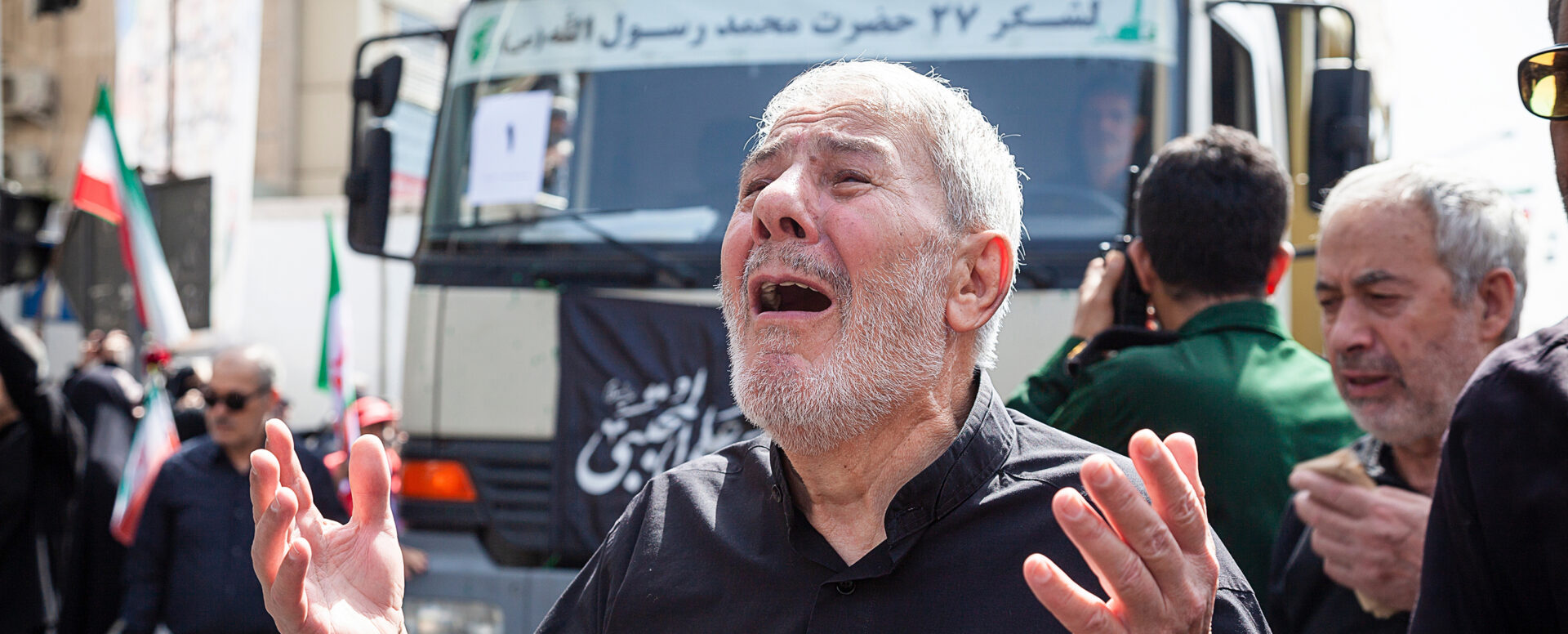
Header Photo: Tehran, Iran – June 28, 2025: Funerals of senior Iranian military commanders and scientists killed in Israeli attacks. Hundreds of thousands mourn top Iranian commanders and scientists killed. Saeediex/Shutterstock