



The Mediterranean has long been presented as a space of cultural exchange, layered histories and shared civilizations. Yet it is equally a region where cultural heritage is exposed to overlapping pressures: armed conflict, forced displacement, institutional fragmentation, environmental disaster and climate stress. Heritage is no longer only a matter of conservation policy. It has become a lens through which wider regional fractures can be read.
Across the Euro-Mediterranean space, the destruction, neglect and reconstruction of cultural heritage reveal struggles over power, legitimacy and memory. Monuments, archaeological sites, religious buildings, historic neighborhoods, museums and living practices are not simply victims of crisis. They are targeted, instrumentalized, selectively restored or politically ignored. For that reason, the region’s heritage question is inseparable from questions of war, migration, governance and social recovery.
This broader framing is especially useful for a regional assessment. The current Mediterranean landscape still bears the devastating effects of the armed conflict in Palestine and Lebanon, alongside the longer-term legacies of past and unresolved conflicts in Syria, Libya, Cyprus and Bosnia and Herzegovina, and the growing recognition that climate- and disaster-related risks are reshaping the conditions under which heritage survives. At the same time, heritage remains a field of dialogue, civic action and confidence building where official diplomacy often faces limitations.
Heritage as a Target and an Instrument of Conflict
Recent Mediterranean experience confirms that cultural heritage is attacked because of what it represents. In Palmyra, the destruction carried out by the Islamic State grouping was not incidental wartime damage but a strategy of symbolic erasure. Scholarly analysis indicates that the destruction of Palmyra formed part of a broader strategy that combined propaganda, humiliation of targeted communities, recruitment and the exacerbation of tensions between different Muslim communities [7, 3, 5]. Aleppo illustrates a broader pattern in the Syrian conflict: heritage destruction has emerged not only through deliberate iconoclasm, but through prolonged urban warfare, struggles for territorial control, bombardment and the militarization of historic sites [7, 5, 13]. The Syrian case thus shows how heritage destruction becomes embedded in wider strategies of war, domination and territorial contestation.
The escalation of violence in Lebanon during 2024, particularly in the south and border regions, once again showed how cultural heritage can become both a victim and an instrument of conflict. Historic villages, religious sites and archaeological landscapes suffered damage, destruction and abandonment as a result of military operations and displacement. Beyond the physical losses, these attacks affected places closely tied to local identity and collective memory. By 2026, heritage in Lebanon remains threatened not only by direct violence, but also by political instability, economic crisis and limited institutional capacity for long-term protection [8, 20].
Gaza has become the clearest contemporary example of how the destruction of heritage accompanies the destruction of civilian life itself. UNESCO’s updated monitoring documents extensive damage to Gaza’s cultural heritage and had verified damage to 164 cultural sites as of 24 March 2026 [19].
Heritage is also instrumentalized economically. In conflict settings, looting and illicit trafficking connect antiquities to criminal markets and armed financing. Research and UNODC reporting show that trafficking in cultural property thrives in contexts of weak control, corruption and transnational criminal demand, which is why the heritage question should be linked more directly to Mediterranean security analysis, not only to museum or conservation agendas [15, 22].
Displacement, Refugees and the Erosion of Living Heritage
One of the dimensions still often absent from policy discussions is that the Mediterranean refugee crisis is also a heritage crisis. When people are displaced, they do not only lose housing, income or access to services. They also lose access to shrines, cemeteries, historic neighbourhoods, craft spaces, family objects and the social settings in which cultural practices are transmitted. Displacement affects tangible and intangible heritage at the same time.
This point is particularly relevant for Syria. UNHCR still describes the Syrian crisis as one of the largest displacement crises in the world, with more than 12 million Syrians forcibly displaced [21]. In such a context, heritage loss cannot be reduced to physical destruction at monuments alone. It also concerns interrupted rituals, damaged social memory and the fragmentation of communities that once gave meaning to place.
Research on forced migration, reconstruction and living heritage shows that displaced communities are not only victims of loss but also bearers of memory, oral history, songs, foodways, skills and cultural agency. Across the Mediterranean, e.g. in Syrian refugee contexts, heritage work has increasingly emphasized civic engagement with migrant communities and their role in shaping inclusive narratives [1, 17, 18]. Even apart from post-conflict reconstruction, this perspective makes clear that displaced people should be understood not simply as beneficiaries of protection, but as active carriers of heritage whose knowledge and practices matter for cultural continuity.
Law, Accountability and Fragmented Authority
International law provides a strong normative framework for the protection of cultural property, but Mediterranean cases continue to expose the gap between legal principle and political enforcement. The 1954 Hague Convention and its protocols remain central reference points. Although legal protection remains symbolically and normatively important, ongoing large-scale violence has underscored its limits in practice [5, 9].
Similar tensions are visible in Libya, where academic work drawing on governmental, institutional and international documentation shows that after 2011 sites such as Cyrene, Leptis Magna and Sabratha became increasingly vulnerable to encroachment, looting, weak monitoring and chronic resource shortages. In such settings, the problem is not only direct attack but also the weakening of the state institutions and legal enforcement needed for effective protection [14].
In response to the growing threats facing cultural heritage in Lebanon, UNESCO placed 39 Lebanese cultural properties under Enhanced Protection within the framework of the 1954 Hague Convention. The measure aims to reinforce international legal protection for archaeological sites, historic monuments and cultural landscapes threatened by armed conflict and regional instability. It also reflects increasing international concern over the vulnerability of heritage in conflict-affected regions and the urgent need for stronger preventive protection [20].
Non-state actors and divided authority make the picture still more complex. In Syria and Libya, heritage governance has often operated amid fragmented authority, competing territorial control and weakened institutions. In Cyprus, heritage management has likewise relied on forms of cooperation and international support mechanisms shaped by the island’s unresolved political division. In this frozen-conflict setting, authority over preservation is often indirect and politically constrained, while heritage restoration and interpretation remain bound up with contested histories and wider questions of recognition. The protection of heritage in the Mediterranean therefore cannot be understood through treaties alone, but must also be read through fractured sovereignty and uneven implementation [5, 14, 6].
Judicial developments nonetheless matter. The International Criminal Court’s Al Mahdi judgment remains a landmark because it confirmed that the intentional destruction of protected cultural and religious sites can constitute a war crime in international criminal law [10]. Although the case concerned Mali, it continues to shape debates in relation to Syria, Libya, Palestine and other conflict zones over the stand-alone criminality of heritage destruction, accountability for non-state actors, the relationship between cultural harm and human harm, and the scope of reparations. Alongside this judicial turn, the Council of Europe’s Nicosia Convention, in force since 1 April 2022, expanded the criminal-law landscape by targeting trafficking, unlawful excavation, import and export, document falsification and intentional destruction or damage to cultural property through domestic criminalization and interstate cooperation — an agenda with particular resonance in the Mediterranean. Current Mediterranean parties include Albania, Cyprus, Greece, Italy and Montenegro [2].
Reconstruction and Memory Politics
Reconstruction is often presented as a technical or humanitarian necessity, but Mediterranean experience shows that it is always also a political act. What is rebuilt, what is left in ruins, whose losses are recognized and which past is made visible are deeply contested choices. The Syrian case is instructive here as well: beyond destruction itself, the aftermath of conflict reveals that reconstruction is never a neutral process of repair, but part of a struggle over meaning, legitimacy and historical visibility [7, 13].
Bosnia and Herzegovina is equally essential in this regard. The destruction of cultural heritage during the 1992-1995 war was intertwined with ethnic cleansing, and Mostar became one of the most visible examples of both destruction and symbolic rebuilding. The reconstruction of the Old Bridge is frequently presented as a symbol of reconciliation, and UNESCO continues to frame it in precisely those terms. Yet the academic literature on Mostar is more cautious: the rebuilt bridge has immense symbolic value, but symbolic reconstruction has not by itself resolved social division, competing narratives or spatial segregation in the city. Bosnia therefore remains crucial for any Euro-Mediterranean discussion of endangered heritage because it shows both the promise and the limits of post-conflict restoration [18, 23].
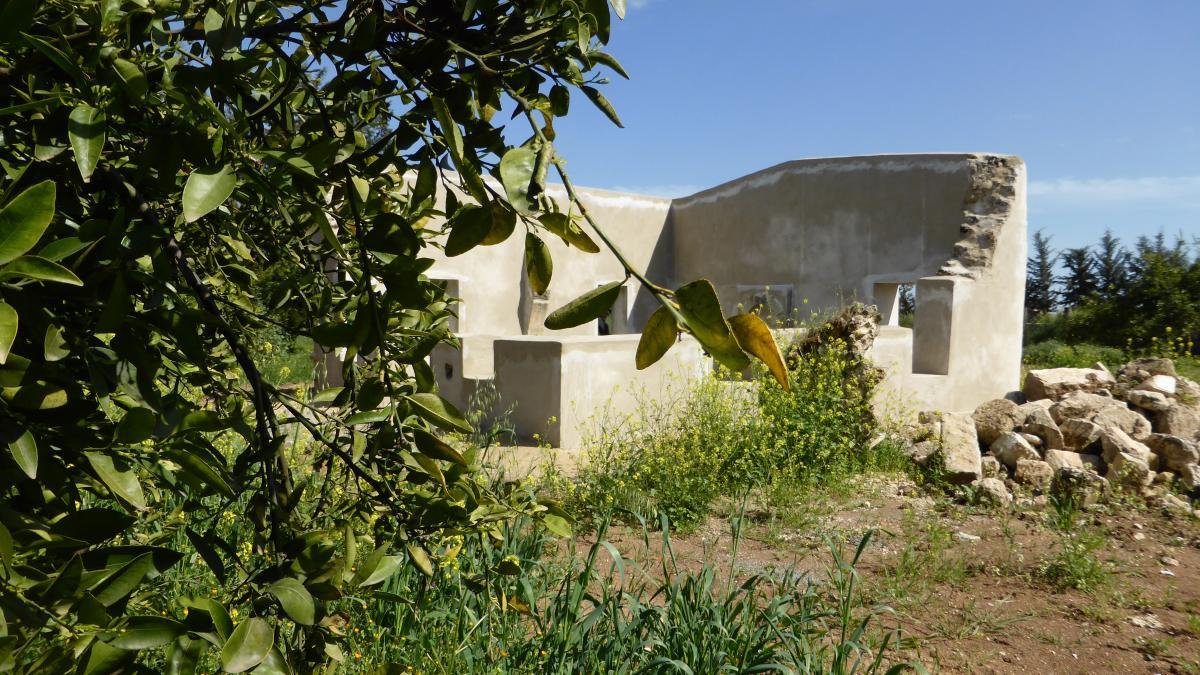
Cyprus offers a different but equally instructive model. Heritage work there has become one of the few sustained fields of bicommunal cooperation, even though tensions over access, interpretation and political recognition have never disappeared. Official European Commission and scholarly materials show both the scale and the political meaning of that work: by 2025, more than 160 heritage sites had reportedly been restored or preserved with EU support, and the EU had committed more than EUR 32 million to the Committee’s activities. In this respect, Cyprus shows that technical cooperation can function even where political division remains unresolved, but also that decision-making over maintenance, access, interpretation and reconstruction may remain politically constrained and institutionally fragmented. Yet scholarship on Cyprus also emphasizes that shared heritage remains politically fragile because Greek Cypriot and Turkish Cypriot narratives do not disappear simply because technical cooperation succeeds [4, 6, 12].
Civil society and community-based heritage initiatives, including those in Syria, Palestine and Lebanon, have continued to document damage, support local actors and help communities remain connected to their cultural heritage in conflict-affected settings. Much of this work depends on local specialists, professional networks and community-based efforts carried out under exceptionally challenging conditions. Together, these efforts show the important role that local organizations continue to play in protecting heritage in times of conflict and uncertainty [16].
Reconstruction is also inseparable from displacement and memory. Research on forced migration, post-conflict reconstruction and living heritage shows that displaced communities should not be understood solely through the lens of loss, since they also sustain memories, cultural practices, narrative traditions, skills and forms of agency that are central to heritage. In Syria, as likewise in Gaza and other conflict-affected contexts, reconstruction agendas should therefore treat displaced populations as legitimate participants in decisions over what is restored, commemorated and archived. Reconstruction, in other words, concerns not only the repair of monuments and urban fabric but also the recognition of whose memories, attachments and cultural authority will shape the post-conflict landscape [7, 19, 1, 17].
Climate, Disaster, and the Cumulative Pressure on Heritage
The Mediterranean must also think beyond conflict in the narrow sense. The 2023 earthquakes in Türkiye and Syria, the catastrophic flooding in eastern Libya after Storm Daniel and mounting climate risks all show that heritage is now exposed to overlapping emergencies. Recent recovery guidance and climate research point in the same direction: disaster does not replace conflict as a threat; it compounds it [9, 11].
Scientific research reinforces this conclusion. Kapsomenakis and colleagues analysed 244 UNESCO cultural and natural heritage sites across the Mediterranean and found escalating exposure to hazards linked to heat, aridity, heavy precipitation, fire weather and sea-level change. Their findings are important not only because they quantify risk, but because they show that heritage in the region is increasingly shaped by combined and interacting pressures rather than by a single hazard in isolation [11].
Civil Society and Euro-Mediterranean Cooperation
If there is a constructive lesson from the Mediterranean heritage field, it is that civil society and specialized heritage networks have often been able to act where formal politics has stalled. Local associations, municipal actors, university teams, professional networks and specialized organizations such as UNESCO, ICCROM, ICOMOS, Blue Shield, UNDP and Heritage for Peace have repeatedly filled gaps left by conflict, paralysis or state weakness. They document damage, train conservators, stabilize buildings, digitize archives and keep plural memories visible when public discourse becomes polarized [9, 16].
This is why the Euro-Mediterranean framework remains relevant. Heritage should not be treated only as an identity marker or tourist asset, but as part of social resilience, civic participation and regional cooperation. In Cyprus, bicommunal heritage work has shown that practical conservation can support trust building. In Bosnia and Herzegovina, the afterlife of reconstruction still reminds us that participation matters if restoration is to contribute to reconciliation rather than only to symbolism. In the wider region, refugee and diaspora communities in Europe are increasingly part of this equation as carriers of memory and as partners in documentation and recovery [12, 23, 1, 17].
Conclusions
The Mediterranean heritage field makes one point unmistakably clear: cultural destruction cannot be separated from the wider violence that affects civilian life, displacement, institutional fragility and environmental stress. From Palestine and Syria to Libya, Cyprus, Lebanon and Bosnia and Herzegovina, heritage loss is never only a matter of ruined monuments or damaged sites; it also entails fractured communities, contested memories and weakened structures of governance. The region shows, likewise, that reconstruction is never a neutral act of repair. It contributes to recovery only when it is participatory, socially grounded and attentive to plural memories, rather than reduced to symbolism, donor visibility or prestige projects. Any credible recovery agenda must therefore address war damage, displacement, depleted institutions and environmental vulnerability together. If it is to command legitimacy, reconstruction must involve local communities, technical professionals and displaced populations themselves. The Mediterranean experience thus suggests that cultural heritage should be understood not only as an object of preservation but also as a field in which conflict, law, migration, environmental risk and civic cooperation intersect.
References
[1] Bartolini, Flaminia; COMER, Margaret; MEHARRY, J. Eva and ZOH, Minjae. “The Heritage of Displacement: Forced Migration in the Mediterranean through History.” Journal of Eastern Mediterranean Archaeology and Heritage Studies no. 4 (2016): 377-381.
[2] Council of Europe. “Chart of Signatures and Ratifications of Treaty 221: Council of Europe Convention on Offences relating to Cultural Property.” Council of Europe Treaty Office. Accessed 4 April 2026. www.coe.int/en/web/conventions/full-list?module=signatures-by-treaty&treatynum=22.1
[3] Cunliffe, Emma, and Curini, Luigi. “ISIS and Heritage Destruction: A Sentiment Analysis.” Antiquity 92(364), 2018: 1094-1111.
[4] European Commission Representation in Cyprus. “European Union Continues the Support to the Technical Committee on Cultural Heritage in Cyprus with Additional EUR 5 Million Euros.” News article, April 8, 2025. Accessed 3 April 2026 https://cyprus.representation.ec.europa.eu/news/european-union-continues-support-technical-committee-cultural-heritage-cyprus-additional-eur-5-2025-04-08_en.
[5] Gerstenblith, Patty. “The Destruction of Cultural Heritage: A Crime Against Property or a Crime Against People?” The John Marshall Review of Intellectual Property Law 15, 2016: 336-393.
[6] Hadjigeorgiou, Nasia, and Osum, Fezile. The Bi-Communal Technical Committees in Cyprus: How They Work? What They Have Achieved? How Can We Further Develop Them? Pyla, Cyprus: Interdisciplinary Centre for Law, Alternative and Innovative Methods (ICLAIM) and Human Rights Platform, 2025. Accessed 3 April 2026. www.iclaimcentre.org/wp-content/uploads/2025/11/Policy-Report_ENG.pdf.
[7] Harrowell, Elly. “Looking for the Future in the Rubble of Palmyra: Destruction, Reconstruction and Identity.” Geoforum 69, 2016: 81-83.
[8] Heritage for Peace. “Lebanon Heritage Reports.” Heritage for Peace. Accessed 18 May 2026. www.heritageforpeace.org/lebanon-heritage-reports/?lang=ar.
[9] ICOMOS and ICCROM. Guidance on Post-Disaster and Post-Conflict Recovery and Reconstruction for Heritage Places of Cultural Significance and World Heritage Cultural Properties. Charenton-le-Pont and Rome: ICOMOS and ICCROM, 2024. Accessed 8 April 2026 www.iccrom.org/sites/default/files/publications/2024-02/en_icomos-iccrom_guidance_iccrom_2024.pdf.
[10] International Criminal Court. “Al Mahdi Case.” ICC. Accessed 4 April 2026. www.icc-cpi.int/mali/al-mahdi.
[11] Kapsomenakis, J.; Douvis, C.; Poupkou, A.; Zerefos, S.; Solomos, S.; Stavraka, T.; Melis, N. S.; Kyriakidis, E.; Kremlis, G. and Zerefos, C. “Climate Change Threats to Cultural and Natural Heritage UNESCO Sites in the Mediterranean.” Environment, Development and Sustainability 25, 2023: 14519-14544.
[12] Reid, Amy. “Heritage, Reconciliation and Cross-Border Cooperation in Cyprus.” Anthropological Journal of European Cultures 30, no. 1, 2021: 144-152.
[13] Salahieh, Diana; Asaeed, Saeed and Zibar, Layla. “(Re)calibrating Heritage: Al-Jdeideh (Post-) Conflict Transformations in Aleppo, Syria.” Journal of Social Archaeology 24, no. 1, 2024: 79-105.
[14] Seila, Fatma and Selim, Gehan. “Libya’s Cultural Heritage Sites at Risk: Problems, Challenges and Risks After the 2011 Revolution.” In 6th International Conference of Contemporary Affairs in Architecture and Urbanism (ICCAUA-2023) Conference Full Paper Proceedings Book, 624-632. Istanbul, 2023.
[15] Suber, David Leone; Mazzali, Luca; Heins, Guido Thomas; Matteoni, Pietro; Tiberio, Marco; Zolghadriha, Sanaz and Bradford, Ben. “Antiquities Trafficking in Conflict Countries: A Crime-Mapping Approach.” International Journal of Cultural Property 29, no. 4, 2023: 531-561.
[16] Teijgeler, René, with contributions by Cunliffe, Emma; Bedini, Gaia; Licci, Eva; Rollo, Ginevra; Volynets, Iona and Sabrine. Isber. The Crises-Cultural Heritage Nexus: The Interplay of Crises and Cultural Heritage: Mutual Impacts and Implications. Heritage for Peace and Cultural Emergency Response, 2025. Accessed 8 April 2026 www.heritageforpeace.org/wp-content/uploads/2025/09/Heritage-for-Peace-v1.pdf.
[17] UNESCO. “Survey Report: Intangible Cultural Heritage of Displaced Syrians.” Prepared by Géraldine Chatelard, with input from Hanan Kassab Hassan. Paris: UNESCO, November 2017. Accessed 8 April 2026 https://ich.unesco.org/en/emergency-situations.
[18] UNESCO. “Reconstruction and Recovery.” World Heritage No. 86. Paris: UNESCO; London: Publishing for Development Ltd., January 2018. Accessed 8 April 2026 https://unesdoc.unesco.org/ark:/48223/pf0000261515.
[19] UNESCO. “Impact on Cultural Heritage.” In UNESCO’s Action in the Gaza Strip / Palestine. Accessed 31 March 2026. www.unesco.org/en/gaza/assessment.
[20] UNESCO. “Lebanon: 39 Cultural Properties Placed under Enhanced Protection.” UNESCO, April 1, 2026. Last updated 30 April 2026. Accessed 18 May 2026. www.unesco.org/en/articles/lebanon-39-cultural-properties-placed-under-enhanced-protection.
[21] UNHCR. Syria Operational Data Portal. Accessed 3 April 2026 https://data.unhcr.org/en/country/syr.
[22] United Nations Office on Drugs and Crime (UNODC). False Trades: Uncovering the Scale and Scope of Trafficking in Cultural Property. Vienna: UNODC, 2022. Accessed 2 April 2026 www.unodc.org/documents/data-and-analysis/briefs/Trafficking_in_cultural_properties_brief.pdf.
[23] Walasek, Helen. “Cultural Heritage and Memory after Ethnic Cleansing in Post-Conflict Bosnia-Herzegovina.” International Review of the Red Cross 101, no. 1, 2019: 273-294.on.
Photo: In Cyprus, the bicommunal Technical Committee on Cultural Heritage work to preserve the cultural heritage of the island. In the image, the Tserkezoi/Çerkez Mosque, built during the Ottoman period, was preserved and protected from further collapse by the Committe.