



When Menachem Begin, the leader of the Herut party, visited the USA on a lecture tour in December 1948, Albert Einstein, Hannah Arendt and 26 other prominent Jewish-American intellectuals published a famous open letter in the New York Times. “Lest America be fooled by post-Independence rhetoric,” they warned, Begin’s Herut (Freedom) party was “a political party closely akin in its organization, methods, political philosophy and social appeal to the Nazi and Fascist parties.”[1] As evidence, they cited, among other things, the massacre by Begin’s Irgun militia of about 100 uninvolved Arab villagers of Deir Yassin on 9 April 1948, five weeks before the State of Israel’s declaration of independence. In its time, the Irgun was considered a terrorist organization, inter alia, by the UN, the UK and US governments, the Zionist Congress and the Jewish Agency, whose leadership under David Ben-Gurion strongly condemned the bloodbath, dissociating its Haganah (Defence) forces from it.
Later research by Israeli historians Benny Morris, Uri Milstein, Ilan Pappé and others established that the Haganah was, in fact, involved in the operational planning of the attack. It was part of its first major offensive (Operation Nahshon) under its new military strategy, known as Plan Dalet. The operational plan, which only became public when it was declassified decades later, aimed at establishing control over the territory allotted to the Jewish State by the UN Partition Plan and beyond. Though the plan contained detailed instructions on the destruction of villages, stating that “[i]n the event of resistance, […] the population must be expelled outside the borders of the state,”[2] some Israeli historians argue that its overall aim was defensive, given Arab hostility and rejection of the Partition Plan. They all agree, however, that Deir Yassin was considered a friendly village and had a non-aggression pact with the Haganah. When instructions came in to destroy it, the Haganah commander left it to Begin’s Irgun and another radical splinter group known as the “Stern Gang” (or Lehi) to execute the order, while the Haganah’s elite Palmach force provided mortar support. The massacre made global headlines, often inflating the number of casualties (like the NYT article), which Israeli historian Benny Morris ascribes to the converging interest of the Haganah to discredit Irgun and Lehi and the latter’s eagerness to maximize its terrorizing effect. Begin himself denied the massacre but confirmed its intention: “The legend was worth half a dozen battalions to the forces of Israel,” because it had prompted, by his own account, some 80% of the Arab population to flee.[3]
While Begin, whose parents and brother had been murdered in the Holocaust, would have taken offence at being associated with the Nazi regime, the Palestinian leader appointed by the Arab League was unapologetic about his admiration for Hitler. The Grand Mufti of Jerusalem, Hajj Amin al-Husseini, had spent most of World War II in Berlin, from where he broadcast Nazi propaganda. Barred from entering Palestine by British Mandate authorities, he continued to agitate from Cairo after the war. His bark was much worse than his bite, as his Holy War Army of a few thousand irregulars was no match for the much larger and more disciplined Haganah. He did not represent the decisive majority of Palestinians, who were loath to go to war, as Ben-Gurion noted in his diary.[4] Yet, the Mufti’s incitement reignited a very fresh trauma among the hundreds of thousands of Holocaust survivors and refugees who had recently arrived in Palestine. In public, Ben-Gurion frequently warned of a looming “second Holocaust,” while privately reassuring his associates of their ability to “take over Palestine as a whole” with the arms purchased from Europe; the alarmist rhetoric was intended to ensure their timely delivery and mobilize international support.[5]
What Historic Continuities Reveal about Israel’s Ideological Drift
The continuities between this historic episode and today illustrate the extent of Israel’s ideological drift towards the Revisionist end of the spectrum: the leaders of both terrorist militias, Begin of the Irgun and Yitzhak Shamir of the Stern Gang (Lehi), later led the Likud party and held the premiership throughout most of the 1977-1992 period. In the first quarter of the 21st century, Israel had Likud-led governments roughly 80% of the time. The former mainstream, the Labour party that emerged from Ben-Gurion’s social-democratic Mapai, has been reduced to a fringe of four out of 120 Knesset seats in the 2022 election. The government coalition that followed included, for the first time in Israel’s history, Kahanists and other political forces even more extreme than the political heirs of Begin and Shamir.
Looking back, it is tempting to see Israel’s ideological drift as inevitable – whether as the inexorable pinnacle of an expansionist settler-colonial project, the consequence of perennial Arab rejectionism or the predestined culmination of an ancient conflict over the same land. All three readings are demonstrably ahistorical. The drift was neither predetermined, nor did it begin with the Mufti’s venom or Ben-Gurion’s wartime duplicity; but it could have ended there, and at many subsequent junctures.
The Essential Prequel: Why the Current Conflict Is Anything but Ancient
The notion of an age-old conflict between Arabs and Jews that dates back millennia, the most widespread in Western political discourse,[6] is also the easiest to disprove. Unlike in Europe, where antisemitism exploded from the late 1870s, leading to mass Jewish emigration and the emergence of Zionism, there was no significant acrimony between the religious communities of Palestine, in either direction, at the turn of the century. Shared heritage and kinship was mutually acknowledged by Palestinians of all faiths and early Zionists alike. David Ben-Gurion and other Zionist leaders at the time believed that Palestinian farmers, the fellāḥīn, were descendants of ancient Hebrew peasants “who chose in the travesty of times to abandon their faith in order to remain on their land.”[7] At the popular level, shared cultural-religious traditions were commonplace. The most striking example is the Jewish pilgrimage at the tomb of Shimon HaTzadik in East Jerusalem, now a major hotspot of Israeli settler activities.[8] At the time, the Yahūdiyya (“Jewish outing”), as it was known, drew “everyone in the nearby neighbourhoods, Jews and Muslims of all classes.”[9] Dozens of seasonal festivals in honour of holy figures venerated by Jews, Muslims and Christians alike were jointly celebrated.[10]
The notion of an age-old conflict between
Arabs and Jews that dates back millennia,
the most widespread in Western political
discourse, is also the easiest to disprove
Nor did the Arabs of Arabia harbour particular animosity against Jews or Zionists. On the contrary, the Sherif of Mecca sought a Zionist alliance to avoid being played off against each other by colonial powers. Though the Faisal-Weizmann Agreement of 1919 never took effect, its article encouraging Jewish immigration is as noteworthy as the caveat it contains on the protection of Arab tenant farmers’ rights, whose dispossession was already recognized as a major source of friction by then.[11] Most fellāḥīn practised a system of communal cultivation without private ownership, the mushā’.[12] The new Ottoman Land Code of 1858 required all land to be inscribed in the land registry (tapu/tābō) to enhance fiscal and administrative control across the Empire. For the same reason, it was largely ignored by rural communities wary of the authorities’ notorious appetite for taxes and recruits. Some urban notables exploited the loophole by registering large tracts in their own name, legally turning the fellāḥīn into tenants on land they had farmed for generations. When the absentee landowners began selling large plots to Zionist buyers at exorbitant prices, the new owners started evicting their tenants – who had no legal protection under Ottoman law – from their overpaid property intended for self-use. As fellāḥīn, deprived of their livelihoods, turned to violent protest, the first Zionist militia was formed in 1907.[13]
Even without any prior animosity, this configuration set both communities on a collision course. What began with a trickle in the first decade of the 20th Century, quickly eroded a long tradition of coexistence, as land purchases tripled and the number of Jews fleeing European antisemitism grew almost tenfold over the Mandate period.[14] By the time the United Nations General Assembly adopted the 1947 Partition Plan, this dynamic had poisoned Arab-Jewish relations for nearly half a century, increasingly polarizing political discourse on both sides and often erupting into violence. What followed could be described as one of the largest real-world experiments in mass radicalization.
Recurrent Patterns: Missed Opportunities and the Accountability Vacuum
Regional radicalization has been high on the international agenda for decades, both in politics and scholarly research, mostly looking at the Palestinian side. In recent years, Israeli radicalization has reached levels of overtness that even those who had initially brushed it off as a momentary overreaction to the 7 October 2023 massacre can no longer ignore. Unlike Palestinian extremism, which has been compared to various other forms of radicalization against foreign domination, Israel’s drift towards extremism is unique in its configuration: Its principal external drivers were not oppressive, but permissive, and unparalleled in their extent and duration. The main pattern that has marginalized Israeli moderates over time can be divided into three stages:
(1) Tactical Concessions under External Pressure, followed by Opportunistic Behaviour. Israeli leadership has repeatedly accepted commitments under international pressure for some immediate gain (admission, recognition, financial aid, diplomatic cover etc.), walked back or ignored once the immediate benefit was secured. This pattern is not unique to Israel, but common behaviour of states operating in a conflict environment with inconsistent enforcement. What makes the Israeli case analytically distinct is not the approach itself but the compound effect of exogenous enablers over decades.
(2) External Accountability Vacuum. Reciprocal commitments were enforced inconsistently by the international community, reinforcing existing asymmetries. Counter-examples show that leverage was available and effective when used. This is the structural enabler linking stages (1) and (3). The accountability vacuum also acts as an accelerator of the mirror effect of radicalization affecting both sides.[15]
(3) Internal Hawk-Dove Credibility Erosion. Israeli politics, like any other, is shaped by competition between actors relatively more inclined towards compromise (doves) and more confrontational ones (hawks), whose approach is more beneficial to their constituents. Each time maximalist decisions the doves had cautioned against remained without consequence, the argument for moderation lost credibility, as it was empirically refuted by the absence of costs. Over seven decades and innumerable instances of dovish caution proved unwarranted in terms of realpolitik, and the maximalist position gradually emerged as the only credible one in the eyes of the undecided majority.
While stages (1) and (3) describe internal patterns of behaviour, stage (2) marks the decisive exogenous factor. Without diminishing the actors’ individual agency, the persistence of this pattern – sustained over seven decades and ratified at the ballot box – has generated an internal dynamic that has structurally penalized “dovish” behaviour, leaving political actors with the choice of either “playing the game” or being forced out of it. This explains both the gradual ascendancy of ever-more hawkish hardliners, as well as the extraordinary number of former Israeli officials who take a radically more dovish stance after leaving office – many calling on the international community to fill the external accountability vacuum with meaningful pressure.[16]
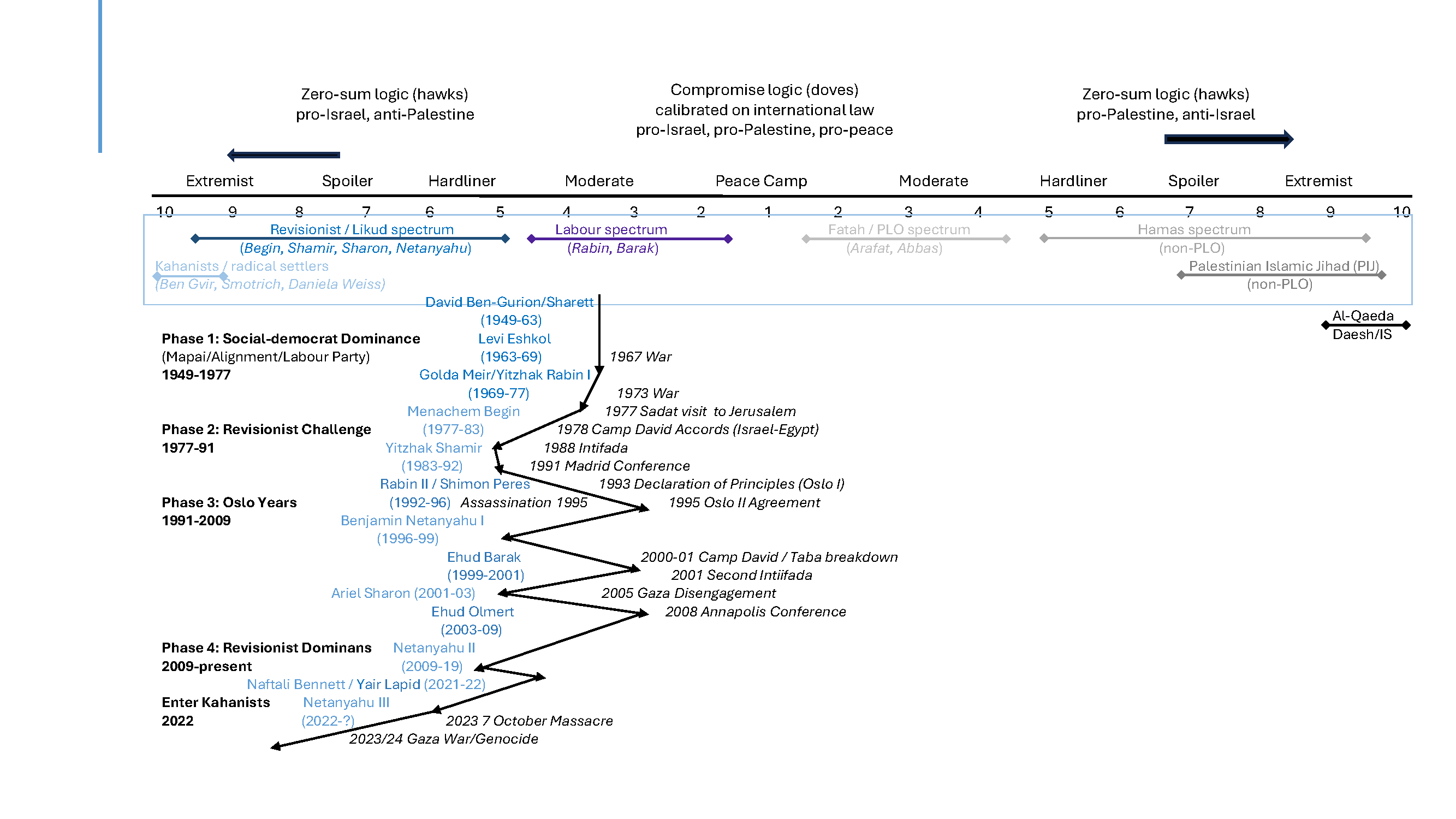
Laying out all the instances where these patterns came into play – though not always in neat consecutive three-stage cycles – would exceed the scope of this paper. The following overview will present some of the most concrete historic examples (and some counter-examples) as succinctly as possible, grouping them into four phases where the same patterns are discernable at the macro level.
Phase 1: Social-Democratic Dominance – “Israel of the Kibbutzim” (1948-1977): Slow erosion of moderate credibility.
Lausanne (1949). (1) Israel signs the Protocol on 12 May, the day after UN admission, accepting UNGA 181 and 194 as the basis for negotiations; Chief negotiator Eban “unreservedly” affirms readiness to implement 194. Within weeks FM Sharett tells the Knesset Israel is “not responsible in any way” for the refugees; the Absentees’ Property Law (March 1950) makes return legally impossible. (2) US delegate Mark Ethridge concludes: “The Arabs have made what the Commission considers very great concessions; the Jews have made none so far”;[17] President Truman warns Ben-Gurion of US “revision of its attitude toward Israel” if intransigence on refugees & territory continued;[18] no consequences follow. (3) FM Sharett’s preference for comprehensive peace is repeatedly overridden by Ben-Gurion; he finally resigns as Foreign Minister in 1956.
Counter-example (order (2) → (1) reversed): Suez (1956). (2) Eisenhower threatens sanctions; (1) Israel withdraws from Sinai by March 1957. The clearest case that enforcement was institutionally available when applied. Subsequent administrations declined the precedent.
Six-Day War / UNSC Resolution 242 (1967). (1) Israel accepts Res. 242, which calls for “withdrawal from territories occupied”. The first settlement (Kfar Etzion) is established three months later; construction continues without interruption for 58 years. (2) No serious enforcement of 242 follows, including after Sadat’s February 1971 initiative – full peace for full Sinai withdrawal, conveyed via the Jarring Mission – was rejected by Israel. (3) Two years later, the Yom Kippur War of 1973 undermines Mapai moderates. Begin’s Likud wins 1977 Knesset election.
Phase 2: Revisionist Challenge (1977-91): Hardline policies eventually produce international pushback, temporarily reversing the drift.
Camp David (1978) and Jerusalem annexation (1980). (1) Under intensepressure from US President Carter, Begin signs the Accords with Egypt and withdraws from the Sinai, but walks back the commitment to providing “full autonomy” for Palestinians within five years, then boosts settlement policy and annexes East Jerusalem in 1980; autonomy talks stall. (2) UNSC Res 478 censures the annexation “in the strongest terms.” No consequences, other than the withdrawal of 13 embassies from Jerusalem to Tel Aviv (symbolically replaced by evangelical International Christian Embassy Jerusalem). (3) Begin’s strategic alliance with evangelicals (especially Falwell’s Moral Majority) and collusion with the Reagan campaign contribute to Carter’s electoral defeat, externalizing the hawk-dove dynamic.[19]
Osirak airstrikes (1981). (1) Israel bombs the French-built Iraqi nuclear reactor in June (Operation Opera). (2) UNSC Res 487 condemns the strike unanimously. Begin phones evangelical leader Falwell before calling Reagan. (3) Likud comes first in the 1981 elections, winning five extra Knesset seats. Begin and his successor Shamir continue hardline policies.
Counter-example (Revisionist challenge reversed): Madrid (1991). (2) US President Bush Sr. freezes loan guarantees over settlements and refuses to negotiate, FM Baker publicly tells Israel: “when you’re serious about peace, call us.” (1) Shamir attends Madrid under pressure, loses credibility domestically. (3) Israeli voters elect Rabin in 1992 on the verdict that confrontation with Washington is unsustainable.
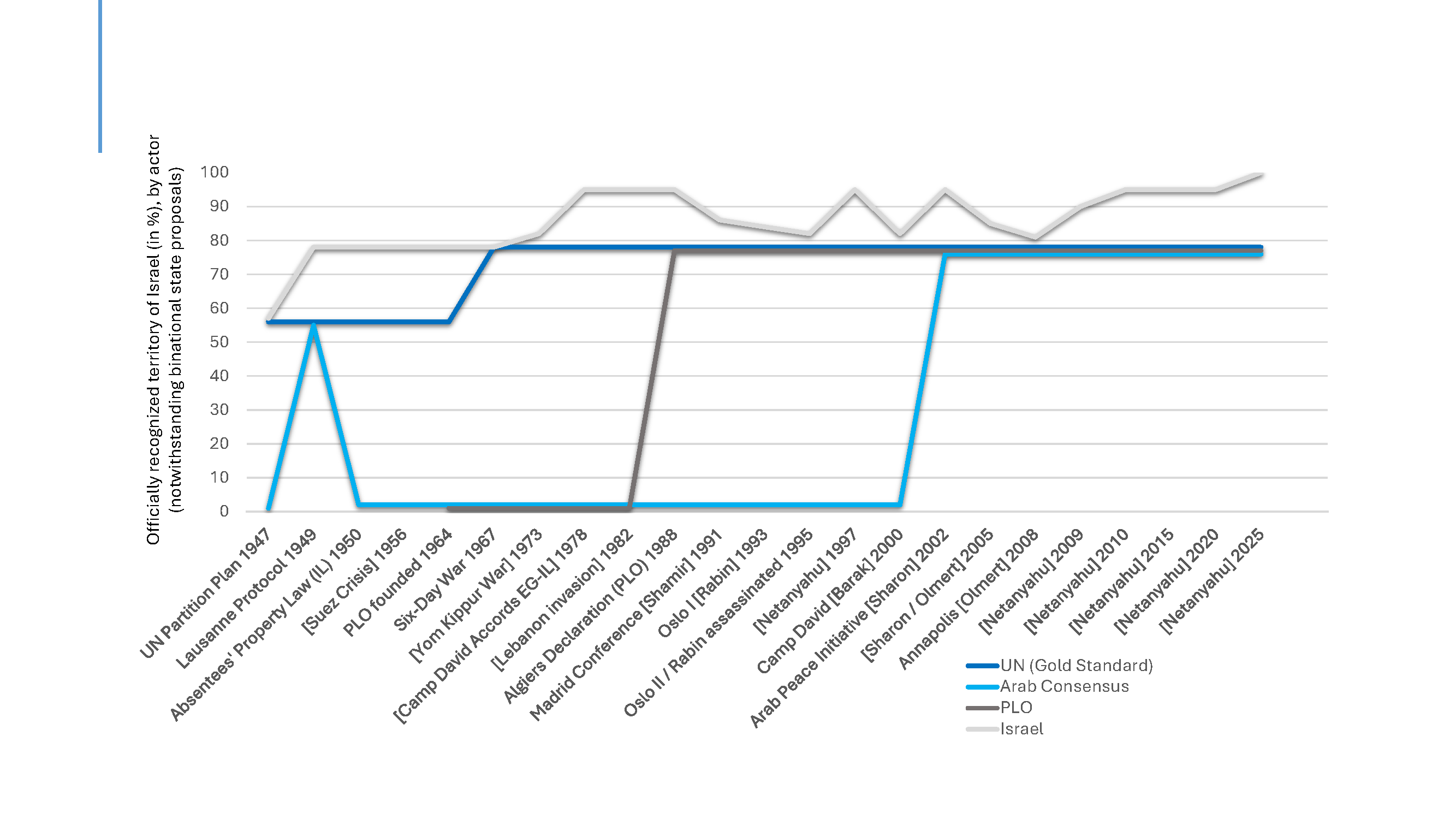
CHART 1 Evolution of Official Positions on the State of Israel’s Territory
Phase 3: Oslo Years – “Middle East Peace Process” (1992-2008). Initial drive soon falls back into old pattern.
Oslo and Rabin’s assassination (1993-1995). (1) Israel recognizes PLO as “representative of the Palestinian people,” commits to final-status negotiations, limited autonomy, maintains security control over 80% of West Bank; no commitment to Palestinian statehood (asymmetrical PLO recognition of “Israel’s right to exist in peace and security”; security cooperation). Once loan guarantees are restored, settlement expansion continues. (2) No international pushback; Rabin seems serious about making peace.(3) Rabin assassinated in November 1995, reverting to a pre-state pattern of assassinations of moderates who appear to threaten maximalist ambitions (Jacob Israël de Haan 1924; Chaim Arlosoroff 1933;[20] UN Mediator Count Bernadotte 1948 by Shamir’s Lehi) and remain without consequences for political instigators, e.g. public campaign portraying Rabin in SS uniform. Netanyahu wins the 1996 election, later boasts in private to have “de facto put an end to the Oslo Process.”[21]
Arab Peace Initiative (API – 2002) and the Quartet Roadmap (2003). (1) Sharon government dismisses API (offering full normalization with all Arab League and OIC states for withdrawal to 1967 lines, “just resolution” to refugee issue, Palestinian state with East Jerusalem as capital) as a “non-starter,”[22] conducts Operation Defensive Shield (Jenin), accelerates settlement expansion. Under international pressure, Israel commits to the 2003 Roadmap, including a settlement freeze; no freeze is implemented. (2) No real consequence (other than international condemnation of settlement decisions. (3) Sharon wins the 2003 election.
Gaza disengagement (2005), “Dahiya Doctrine” wars (2006-2021), Olmert’s last-ditch offer (2008). (1) Sharon’s unilateral withdrawal from Gaza presented as a concession, but not coordinated with the PLO/PA. The Dahiya doctrine, formulated in the 2006 Lebanon War, prescribes disproportionate destruction of civilian infrastructure as deterrence, applied in Gaza wars (2008/9, 2012, 2014, 2021). Civilian-casualty ratios surge. Annapolis conference inconclusive, Olmert makes last-minute offer (the most substantial ever). (2) UN investigations document the pattern (Goldstone Report 2009, Davis 2014); no sanctions, no arms-supply restrictions. No international pressure for territorial concessions (Obama prioritizes Iran deal). (3) Netanyahu returns to the premiership in 2009.
Phase 4: Revisionist Dominance (2009-present). Revisionismbecomes new mainstream.
Netanyahu’s Hamas strategy (2009-2022). (1) Under US pressure, Netanyahu concedes (non-sovereign) Palestinian state in Bar Ilan speech 2009, while expanding settlements and consolidating Hamas in Gaza to keep Palestinians divided as new doctrine “to prevent the establishment of a Palestinian state.” (March 2019 to Likud Knesset faction)[23] (2) No international objection. Trump moves US Embassy to Jerusalem, pushes for Abraham Accords. (3) Moderates become fringe in 2022 election: Labour four seats, Meretz out.
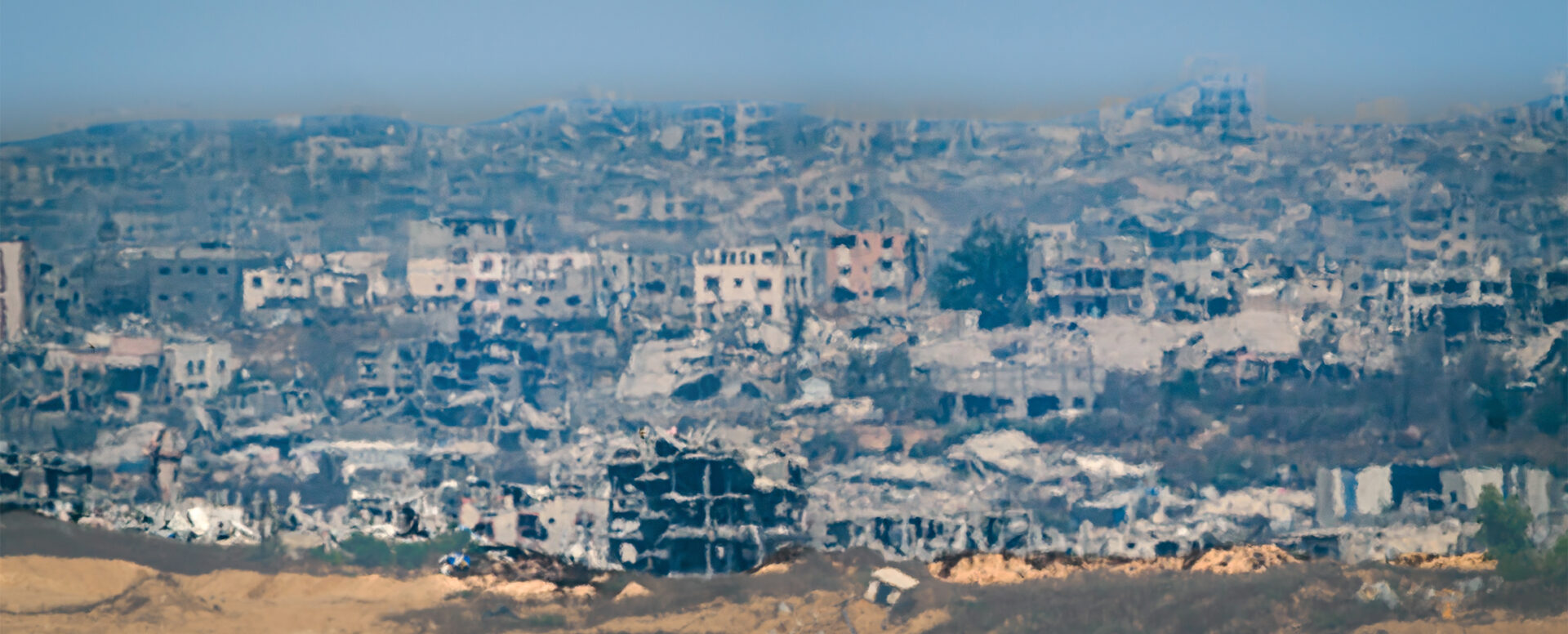
Enter Kahanists (2022-present). (1) December 2022 coalition incorporates extreme-right Kahanists previously banned in Israel. Massive settlement expansion; Security Minister Ben Gvir arms settlers, violence explodes in West Bank (“slow-motion ethnic cleansing”). (2) No international sanctions. Unprecedented solidarity after 7 October 2023 attacks. EU reaffirms Israel’s “right to self-defence,” even after ICJ finds plausible grounds for genocide (January 2024), declares occupation unlawful, amounting to racial segregation/apartheid (July 2024), and ICC issues arrest warrants against Netanyahu (November 2024). US, Germany boost arms shipments, block ceasefire calls at UNSC/EU. (3) Israel defies ICJ orders, bars UN-mandated investigators and humanitarian aid, destroys most of Gaza (explosive load equivalent to several Hiroshima bombs; >70k Palestinians killed); war expands across seven theatres; Israel attacks Iran (2025/26), invades Lebanon: “here to stay” (Defense Minister Katz, October 2025).
CHART 2 Visualizing Israel’s Ideological Drift
Conclusion
David Issacharoff’s recent Haaretz essay entitled “Israel’s Original Sin Is Also Its Best-kept Secret”[24] pinpoints the link between the events of 1948 and the ideological drift. The facts are well-documented, the text of Plan Dalet and names of every destroyed village are available at one’s fingertips; the operational orders and internal protocols, declassified in the late 1980s, have long been retrieved from the military archives and analysed by historians. There is remarkably little disagreement among Israeli, Arab and international scholars about the historical facts and even a broad consensus on their interpretation. Yet, the story told in public and taught in schools is a completely different one.
While Israel is not alone in cultivating an embellished version of its history in the collective memory, the academic consensus has also been thoroughly kept out of wider public discourse in other countries – so much so that some of the facts presented in this paper would be met with surprise, disbelief or even disapproval by uninitiated readers and policymakers. This is alarming because the enormous gap between common wisdom and historical fact betrays core tenets of the Enlightenment, namely the scientific method, rational empiricism, as well as – by the policies resulting from it – the universality of human nature. Its long-term effect has been to tolerate the ideological drift towards irrational and dehumanizing extremism.
Successive Israeli governments have tested
the limits of what they could do without
consequence. Each time they got away with
maximalist behaviour, the moderate voices
from within lost a measure of credibility
From the first missed opportunity at Lausanne in 1949 onward, successive Israeli governments have tested the limits of what they could do without consequence. Each time they got away with maximalist behaviour, the moderate voices from within lost a measure of credibility. Round after round, chutzpah triumphed over caution, turning pragmatism into unscrupulousness, and eventually into hubris. The brutality the world witnessed on 7 October 2023 should have been understood as a warning sign that things had been going in the wrong direction for far too long. It was not. The response was a further departure from humanist principles, pushing the long-drawn ideological drift generated by the accountability vacuum to its culmination point: the current Israeli government is run by actors who appear to believe there are no limits, who will not stop until they are stopped, and who have failed to register that the tide has turned against them. What most leading genocide experts have concluded constitutes genocide under the 1948 Convention is not contested as implausible by any recognized international scholar of the field. The only substantive counterargument brought forward by those who do not share the assessment, namely lack of sufficient evidence, is itself part of the pattern, as it is caused by Israel’s closure of Gaza to independent investigation, in defiance of the legally binding ICJ orders of 24 May 2024.
The structural variable in the equation that has produced
Israel’s ideological drift – as well as radicalization
across the region – is also the only variable that
can reverse it: accountability, applied equally to all sides
The question is no longer whether they will be stopped but when, and how much damage they can cause before it happens. The structural variable in the equation that has produced Israel’s ideological drift – as well as radicalization across the region – is also the only variable that can reverse it: accountability, applied equally to all sides. If and when it happens, the path from accountability to reconciliation and self-sustaining peace is still long – in Europe it took generations; but without it, the path is blocked. Yet, if it was possible in Europe after two world wars, it is also possible in the Middle East; the human clay is the same everywhere.
[1] “This Day in Jewish History / N.Y. Times publishes letter by Einstein, other Jews accusing Menachem Begin of fascism.” New York Times, 4 December 1948, open letter by Albert Einstein, Hannah Arendt, Sidney Hook, Isidore Abramowitz and 24 others.
[2] Full text of Plan Dalet available at Jewish Virtual Library, Palestine Studies, and Fanack,.
[3] Begin, Menachem The Revolt, New York: Nash Publishing, 1951 [1972 edition], p. 164.
[4] In early 1948, Ben-Gurion told an executive of the Jewish Agency: “I believe the majority of the Palestinian masses accept the partition as a fait accompli and do not believe it is possible to overcome or reject it … The decisive majority of them do not want to fight us.” Political and Diplomatic Documents, Document 274, p. 460, cited in: Pappé, Ilan: The Ethnic Cleansing of Palestine. Oxford: Oneworld Publications, 2006, pp. 60 f.
[5] Citation from a letter dated 26 February from Ben-Gurion to his second in command, Moshe Sharett, who was leading the diplomatic campaign in New York and had expressed his concern about the Haganah’s ability to defend the Yishuv. Quoted in: Ben-Gurion Archives, Correspondence Section, 23.02–1.03.48 document 59, cited in: Pappé, Ilan: op. cit., 2006, p. 46.
[6] Some recent examples: Donald Trump(“been going on for thousands of years”), B. Netanyahu,(“3,000-year-old Arab-Israeli conflict”), Mike Pompeo (“threats that have existed since the time of Esther” ~2,500 years ago), Thomas Friedman (“ancient struggle for land and meaning”), Joseph Ratzinger/Pope Benedict XVI (“ancient enmities”).
[7] Ben-Gurion, David “לבירור מוצא הפלחים” (“To Clarify the Origin of the Fellahin”), in: Luaḥ Aḥiʻever, Yr 1, New York, Summer 1917, pp. 118–127. Similar views on Semitic kinship were also presented by Israel Belkind, Hans Kohn, Ber Borochov, Yitzhak Ben-Zvi, who later became Israel’s second President, e.g. in his joint 1918 work with Ben-Gurion: Erets Yisroel in fergangenhayt un gegenvart (Eretz Israel in the Past and Present), and others. Cf. Pearl, Judea: “Early Zionists and Arabs,” Middle East Quarterly Vol. 15/4 (Fall 2008).
Apart from shared cultural-religious practices, their belief was based on linguistic particularities, such as ancient Hebrew place names that defied Roman rebranding and Hebrew/Aramaic (non-Arabic) vocabulary in Palestinian dialect. Modern population-genetic studies confirm genealogical overlap, e.g. Nebel, Almut et al.: “High-resolution Y-chromosome haplotypes of Israeli and Palestinian Arabs reveal geographic substructure and substantial overlap with haplotypes of Jews,” Human Genetics 107(6), 2000, pp. 630–641; Hammer, Michael F. et al.: “Jewish and Middle Eastern non-Jewish populations share a common pool of Y-chromosome biallelic haplotypes,” Proceedings of the National Academy of Sciences 97(12), 2000, pp. 6769–6774; Atzmon, Gil et al.: “Abraham’s Children in the Genome Era: Major Jewish Diaspora Populations Comprise Distinct Genetic Clusters with Shared Middle Eastern Ancestry,” American Journal of Human Genetics 86(6), 2010, pp. 850–859.
[8] Amnesty International (Jan. 2026): “Urgent Action: Halt the Eviction of Saleh Diab and His Family”; PBS News (April 2024): “Israel orders eviction of Palestinian family from east Jerusalem property, reigniting a legal battle”; Association for Civil Rights in Israel (June 2021): “Sheikh Jarrah: Discrimination, Evictions and Dispossession Under the Auspices of the Law.”
[9] Shimon HaTzadik (Simon the Just) was a high priest of the Second Temple dating from the 3rd century BC; he is not mentioned in the Quran or Hadith (nor the Protestant Bible). Klein, Menachem: “Joint Jewish and Muslim Holy Places, Religious Beliefs and Festivals in Jerusalem between the Late 19th Century and 1948.” Religions 9, no. 7 (2018), art. 220. Original source: Tamari, Salim & Nassar, Issam: Al-Quds al-ʿUthmaniyya fi-l-mudhakkirat al-Jawhariyya [Ottoman Jerusalem in the (Wasim) Jawhariyyeh Memoirs], vol. 1(1904–1917). Jerusalem: Institute of Jerusalem Studies, 2003, p. 74.
[10] For example, the Tomb of the Patriarchs (Hebron), the Tomb of Samuel/ Nabi Samwil (north of Jerusalem), Rachel’s Tomb (Bethlehem), Elijah’s Cave (Mount Carmel, Haifa), Joseph’s Tomb (Nablus), Tomb of David (Mount Zion, Jerusalem), and Nabi Musa (Moses, near Jericho). Tellingly, it was at one of these yearly celebrations that that coexistence flipped: The 1920 Nabi Musa riots are widely read as the tipping point where Jewish-Arab violence turned from a communal issue to a national one. Cf. Reiter, Yitzhak: “Joint Jewish and Muslim Holy Places, Religious Beliefs and Festivals in Jerusalem between the Late 19th Century and 1948.” Religions, 9(7), 2018; Canaan, Tawfiq Mohammedan Saints and Sanctuaries in Palestine. London: Luzac, 1927; Tamari, Salim: “A Palestinian archive of healing and protection: The legacies of Tawfiq Canaan.” (Lecture), Birzeit University Museum.
[11] The Faisal-Weizmann Agreement was signed by Hussein’s son Faisal in London on behalf of his father, the Sherif. It never took effect as Faisal’s (hand-written) condition that “the Arabs obtain their independence as demanded in my Memorandum dated the 4th of January 1919” to the British government be implemented without “the slightest modification or departure” was not met. Cf. Shlaim, Avi: The Iron Wall 2000, pp. 6-9; Khalidi, Rashid: The Iron Cage, 2006, chapter 1.
[12] Cf. Linebaugh, Peter: “Palestine & the Commons: Or, Marx & the Musha’,” The Commoner, 4 December 2024; Sabbagh-Khoury, Areej: Colonizing Palestine: The Origins of Settler Colonialism in the Jordan Valley. Stanford: Stanford UP, 2023. Rosenfeld, Henry: Hem Hayu Falachim / הם היו פלאחים. [They Were Fellāḥīn]. Tel Aviv: Ha-Kibbutz Ha-Meuchad, 1963/64.
[13] The most notorious among Ottoman urban landowners were the Beirut-based Sursock family, responsible for 58% of absentee land sales in Palestine at up to “40 times the market values.” Source: Alff, K.: “Changing Capitalist Structures and Settler-Colonial Land Purchases in Northern Palestine, 1897–1922.” International Journal of Middle East Studies. 2023;55(4):675-692. doi:10.1017/S0020743823001290. More sources in the Wikipedia entry “Sursock–Purchases”.
[14] According to the 1922 British Census, Palestine had a Jewish population of 84,000, of whom some had immigrated in the First and Second Aliyah (and stayed). According to Jewish Virtual Library, the Third Aliyah (1919–1923) increased their numbers by 40,000, the Fourth Aliyah (1924–1928) by another 80,000 and the Fifth Aliyah (1929–1939) by more than 250,000 Jewish immigrants.
[15] On the mirror effect and Palestinian radicalization, cf. “Dehumanizing the “Other” and Extremism Unleashed in the Context of the Gaza War” (by the same author) in IEMed Mediterranean Yearbook 2025, pp. 81-82.
[16] For example, hundreds of retired Israeli security officials, including several Mossad and Shin Bet Chiefs: “Former Shin Bet, Mossad heads urge Trump to ‘compel Netanyahu’ to end Gaza war.” Jerusalem Post, 3 August 2025; former PM Olmert: “Former Israeli leader says planned ‘humanitarian city’ in Gaza would be a ‘concentration camp’.” CNN, 14 July 2025; former Foreign Ministry Director-General Alon Liel “Former senior Israeli diplomat says UK support would secure Palestinian statehood.” Middle East Eye, 24 January 2025.
[17] FRUS 1949 Vol. VI, or Ethridge to Truman, 11 April 1949 (Truman Library) cited in: Neff, Donald “1949 Lausanne Conference Seals Fate of Palestine.” Washington Report on Middle East Affairs, 22 April 1996.
[18] US President Truman’s letter to Ben-Gurion, dated 28 May 1949.
[19] In March 2023, the New York Times revelation “A Four-Decade Secret: One Man’s Story of Sabotaging Carter’s Re-election.”, shed new light on the question of the Reagan campaign’s collusion with Iranian revolutionaries to thwart Carter’s reelection in November 1980 by delaying the release of 52 US diplomats held as hostages in exchange for covert arms shipments to Iran via Israel, as a precursor to the Iran-Contra Affair (but without the Nicaraguan element). Previous Congressional investigations had either omitted the election period or, like the 1993 House Task Force, found “no credible evidence” of collusion between the Reagan campaign and Tehran, until a former campaign member confirmed his participation in a Middle East mission with precisely that aim. Israeli arms deliveries to Iran were ongoing both before the release (October 1980, against Carter’s explicit policy) and immediately after and were coordinated, according to a 1982 Israeli source “at almost the highest of levels” with the US; in 1993 Shamir accidentally confirmed Israel’s involvement in an interview. Begin’s activities to prevent a second Carter presidency are well documented. Cf. Sick 1991; Parry 1993/2012; Eizenstat 2018; Unger 2024 Cf. Sick, Gary: October Surprise: America’s Hostages in Iran and the Election of Ronald Reagan, Times Books, 1991; Parry, Robert: “Shamir’s October Surprise Admission.” Consortium News, 3 July 2012.
[20] Arlosoroff’s high-level initiative for a binational political framework involving a Jewish-Arab federation in Palestine and Transjordan under Hashemite rule represented the most serious pre-state attempt to construct a Jewish-Arab coexistence framework, which would have allowed for Jewish settlement on both sides of the Jordan river. These activities led to calls for his removal; Revisionist radicals openly questioned his right to live. The murder was never resolved, but its later framing as being motivated primarily by his role in brokering the Haavara Agreement with Nazi Germany to facilitate Jewish emigration to Palestine appears less plausible in light of the circumstantial and structural particularities of the case.
[21] The video of Netanyahu’s private meeting with settlers was leaked in 2010: “Netanyahu admits on video he deceived US to destroy Oslo accord.” The National, 18 June 2010.
[22] “Arabs Offer Israel peace plan.” BBC, 28 March 2002.
[23] “Netanyahu: Money to Hamas part of strategy to keep Palestinians divided.” Jerusalem Post, 12 March 2019; “A Brief History of the Netanyahu-Hamas Alliance.” Haaretz, 20 October 2023; ‘Buying Quiet’: Inside the Israeli Plan that Propped Up Hamas.” New York Times, 10 December 2023.
[24] Issacharoff, David “Israel’s Original Sin Is Also Its Best-kept Secret.” Haaretz, 23 April 2026.
Photo: Bet Hanoun, Gaza-June 9,2025 – A wide angle view of Bet Hanoun in Gaza seen from Sderot, Israel. Sderot was the town bordering Gaza that was invaded by Hamas fighters October 7, 2023. Alan Kolnik / Shutterstock.