



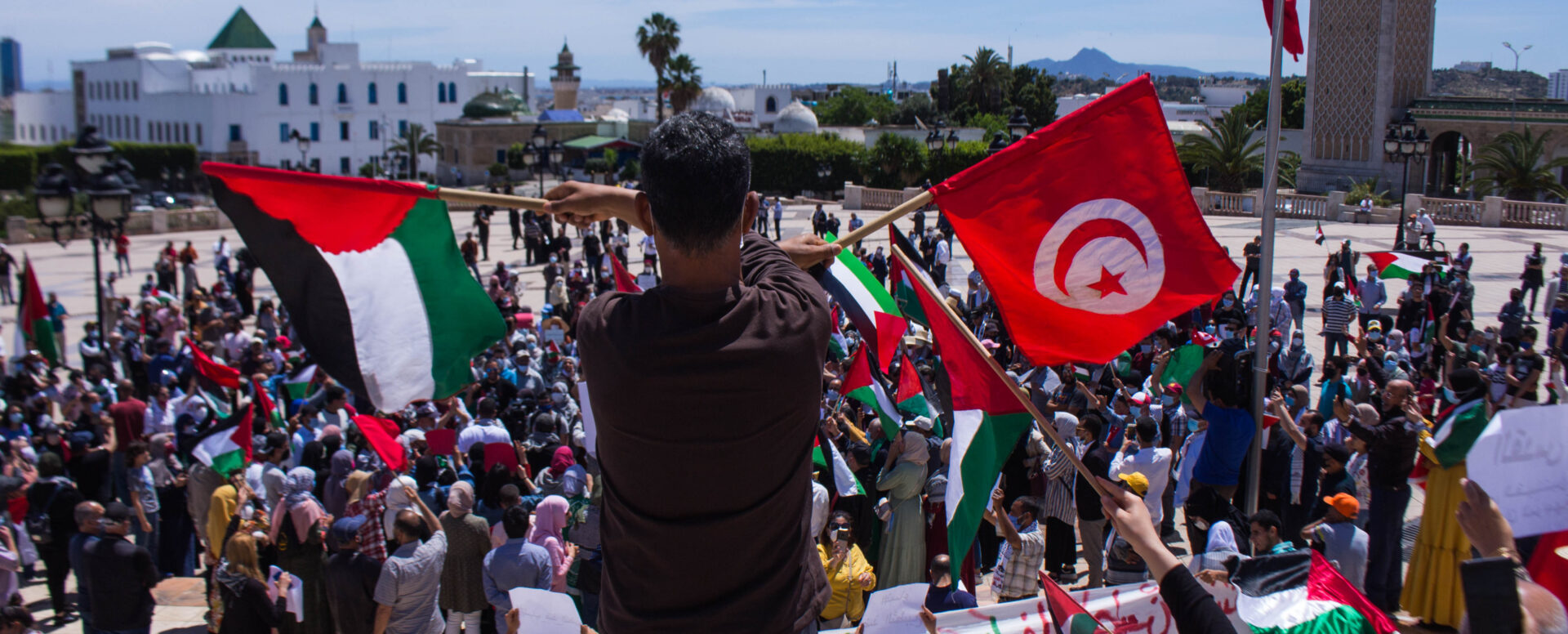
There is a question that has often been asked: why have the Arab countries been unable to confront the Zionist project since its inception in the last century and remained passive, quiet and on the sidelines since 2023 as Palestinians are being slaughtered in Gaza and a silent Nakba is taking place in the West Bank? In this article, I intend to answer this question.
When the Zionist project was set in motion during the First Zionist Congress, held in Basel in 1897, the Palestinians felt the threat of their displacement. The Balfour Declaration of 1917 confirmed their fear: Great Britain committed itself to the creation of “a Jewish national home in Palestine.” In 1922, the New League of Nations issued its British Mandate for Palestine. The first British Commissioner was Herbert Samuel, a committed Zionist who advanced Zionist aims by encouraging unlimited Jewish immigration that would permit a takeover of the country.
During that period, most of the Arab countries were either under colonial rule (the Maghreb), French (in Lebanon and Syria) or British (in Iraq and Palestine) mandate or other forms of direct or indirect European control (Aden and the Gulf Region). A simulacrum of independence was given to Egypt in 1922. Self-rule was granted to the newly born Hashemite monarchy of Iraq in 1920. During the 1920s, Arab countries were preoccupied with their domestic affairs.
In Palestine, the British mandatory power scrambled to nip the Palestinian national movement in the bud, resorting to its traditional policy of divide and rule. Given the traditional, conservative and divided nature of Palestinian Society, the British simply set Palestine’s big families (Husaini, Khalidi, Nashashibi etc.) against one another to serve their purposes.[1] Frustrated at their leadership, the Palestinian population started grassroots uprisings in the 1920s and 1930s. A massive armed revolt broke out and continued between 1936 and 1939. During this revolt, Arab volunteers arrived from across the region to join the Palestinian resistance against British policy and the Zionist project. The Palestinian issue became entrenched in the Arab collective consciousness as a primary colonial concern.
From the very beginning, the defence of Palestine
emerged as a mechanism for political legitimation,
regional leadership or as a means to divert attention
from domestic challenges
Nevertheless, the Arab states could not prevent the adoption of Resolution 181, which partitioned the Palestinian territory (1947), nor the creation of the State of Israel (15 May 1948) or expulsion of two-thirds of the Palestinian population between 1947 and 1948, called the Nakba.
While the Palestinian question has remained a core issue for the populations of the region, it has frequently served as an instrument in inter-state relations rather than a cause to be defended with absolute resolve. From the very beginning, the defence of Palestine emerged as a mechanism for political legitimation, regional leadership or as a means to divert attention from domestic challenges. As Elias Sanbar observed in 2025, every Arab state has attempted to capitalize on the immense mobilizing power of the Palestinian cause, often disregarding the actual rights of the Palestinian people.[2] The popular Palestinian adage — “Arab governments are for the cause of Palestine but against the Palestinians” — reflects this enduring bitterness.
This popular sentiment is perhaps overly categorical, as it generalizes across all Arab nations and various historical periods over the last century. Gulf states provided employment to hundreds of thousands of Palestinians who, in turn, supported their families in the occupied territories.Maghreb countries have maintained unconditional solidarity with Palestine, having experienced the hardships of colonization themselves. Nasser’s Egypt endured a heavy toll in human lives in its defence of the Palestinian people. But it would also be true to say that all countries have instrumentalized the Palestinian cause for their domestic legitimacy.
The Palestinian Question between the Two World Wars
Upon returning from the first World Zionist Congress in 1897, Theodor Herzl noted in his diary: “At Basel, I founded the Jewish State… perhaps in five years, and certainly in fifty, everyone will know it.” This remark proved prophetic: in 1947, the United Nations General Assembly adopted the partition resolution. For the Palestinians, this was a foretold catastrophe. The wording of the 1917 Balfour Declaration rendered Palestinians strangers in their own land and heralded their displacement.
During the British Mandate in Palestine (1922-1948), Palestinian resistance (1922, 1929 and 1936-1939) was severely repressed, confirming British support for the Zionist project. Consequently, Palestine became a core issue of Arab nationalism. Arab populations demanded that their respective states intervene to assist the Palestinian people. However, the independent Arab states lacked both military resources and combat experience, while others remained under colonial rule. To make things worse, Arab countries lacked a common front and were vying for leadership.
Indeed, by the early 1940s, the Hashemites of Iraq and Transjordan had launched two rival initiatives. The first, the “Fertile Crescent” project, sought to unite Syria, Transjordan and Palestine under the aegis of the Hashemite Kingdom of Iraq. The second, the “Greater Syria” project, aimed to regroup Syria and Palestine under the leadership of the Hashemite Emir of Transjordan. These ambitions alarmed Egypt, which perceived in these Hashemite designs a desire to establish a regional power capable of challenging the Egyptian monarchy. Egypt effectively neutralized both projects by inviting independent Arab states to discuss the creation of the League of Arab States. This process culminated in the Alexandria Protocol of 7 October 1944 and the subsequent signing of the Pact of the League of Arab States in Cairo on 22 March 1945.
From its inception, the League adopted the Palestinian question as its central cause. Of the 17 resolutions passed by the Council of the League of Arab States on 14 December 1945, 11 referred to Palestine. One of the League’s initial projects was the establishment of the Arab National Fund (Sanduq al-Umma al-Arabiyyah), designed to prevent the acquisition of Palestinian land by Jewish settlers. On 16 September 1947, the League’s Political Committee proposed the deployment of Arab troops to Palestine should the UN General Assembly vote for partition.
However, the Hashemites of Transjordan were pursuing alternative agendas. Despite Transjordan having ratified the League’s pact, King Abdullah — who was proclaimed King on 25 May 1946 — revived the Greater Syria project. When Syrian nationalists rejected the project, King Abdullah turned towards the Zionist leadership. He signalled that, in the event of Palestine’s partition, Transjordan was prepared to annex the Arab portion. On 17 November 1947, just days before the partition vote, King Abdullah met secretly with Golda Meir, the then acting director of the Jewish Agency’s Political Department, to discuss his plan to annex the remaining Palestinian territories.[3]
The Palestinian Nakba and the Arabs (1947-1951)
The Arab states proved unable to prevent the partition resolution of 1947, the creation of Israel in 1948 or the ethnic cleansing of Palestine. The forced exile of two-thirds (750,000) of the Palestinian population constituted a first “sociocide” — the abrupt collective disruption and systematic dislocation of a people from their ancestral land. Simultaneously, the massive influx of Palestinian refugees into Transjordan, Syria and Lebanon transformed the Palestinian question into a domestic concern for several Arab nations.
The magnitude of the disaster triggered widespread popular demonstrations across the Arab world, demanding military intervention to liberate Palestine. Consequently, Iraq, Egypt, Syria and Transjordan deployed troops, but these forces were outnumbered and outgunned by the Haganah and Jewish militias. Israel extended its territorial control over 78% of Palestinian land.
Following the defeat of the Arab armies in 1948, Egypt, supported by Saudi Arabia, sought to establish an autonomous Palestinian state and form a government under the authority of the Mufti of Jerusalem. King Abdullah, however, neutralized this initiative by convening a major Palestinian congress on 1 December 1948, which recognized his sovereignty over the West Bank and East Jerusalem. The Kingdom of Transjordan morphed into the Hashemite Kingdom of Jordan.
Predictably, the annexation of the remaining 22% of Palestinian territory by King Abdullah sparked fierce opposition in Syria, Saudi Arabia and Egypt. The Jericho Congress was denounced as a “Great Conspiracy” (al-Mu’amarah al-Kubra). Nevertheless, bolstered by British support, the King remained undeterred: on 25 December 1948, he pursued secret negotiations with Zionist leaders to wrap up his project. Ultimately, King Abdullah paid the highest price for his secret dealings with Israel: in July 1951 he was assassinated in the Al-Aqsa Mosque of Jerusalem after Friday prayers.
Palestine in the Arabist Era (1952-1967)
The Arab defeat of 1948-1949 left a profound sense of bitterness. As early as 1948, Constantine Zureik, a preeminent ideologue of Arab nationalism, published “Ma’na al-Nakba” (The Meaning of the Catastrophe), in which he criticized the incompetence and divisions of Arab leaders in the face of existential threats. Similarly, Palestinian intellectual Musa al-Alami protested against the instrumentalization of the Palestinian cause and advocated for unity and modernization. Both figures foresaw that, without a swift resolution, the Palestinian question would destabilize the entire Near East.
Indeed, the early 1950s witnessed significant upheavals directly linked to the Palestinian issue. Lebanese Prime Minister Riad al-Solh was assassinated on 13 July 1951, followed a week later by King Abdullah of Jordan at the Al-Aqsa Mosque — an event prefiguring the assassination of President Sadat of Egypt, thirty years later. In 1952, King Farouk of Egypt was toppled and exiled following the Free Officers’ Revolution. From this point forward, the Palestinian question became the cornerstone of a resurgent Arab nationalism, with Gamal Abdel Nasser emerging as its undisputed leader.
The Palestinian question became
the cornerstone of a resurgent Arab
nationalism, with Gamal Abdel
Nasser emerging as its undisputed leader
The Eisenhower administration attempted to court Nasser, hoping to integrate Egypt into the anti-Soviet camp, much as Turkey had been integrated into NATO in 1949. Nasser’s response to Secretary of State John Foster Dulles was unequivocal: the primary threat to Egypt does not come from the Soviet Union, but from Israel. Unsurprisingly, Nasser frequently referred to Palestine during his speech in which he announced the nationalization of the Suez Canal Company on 26 July 1956, framing the struggle against “imperialism and its agents” as a defence of Arab nationalism. Following the subsequent Israeli incursion into the Sinai and the joint Anglo-French offensive — known in the Arab world as the “Tripartite Aggression” — any lingering doubts vanished: Israel was perceived not as a “haven of peace” but as a strategic outpost of Western imperialism.
Nasser’s army was militarily defeated in the Suez Canal war, but Nasser reaped a political victory, solidifying his role as a pan-Arab leader and a founding father of the Non-Aligned Movement. Consequently, the Palestinian cause became inextricably linked to the Egyptian leadership, which caused significant anxiety among the Hashemite monarchies. While the Jordanian monarchy weathered the nationalist storm, the Iraqi monarchy was overthrown in 1958, the same year the United Arab Republic (Egypt-Syria) was proclaimed.
This period was marked by what Malcolm Kerr called “The Arab Cold War,”[4] which pitted the nationalist axis (Egypt, Iraq, Syria) against the monarchical axis (Saudi Arabia, Jordan). This polarization weakened the League of Arab States. Seeking to leverage its status as guardian of the Holy Sites, Saudi Arabia attempted to replace the Arab regional sub-system with a broader Islamic framework, leading to the creation of the Muslim World League and the Organization of Islamic Cooperation. Jordan joined the Saudi-led Islamic Pact as a counterweight to Nasserism. The Palestinian cause was caught between these two axes, and often utilized in a game of political competition between nationalists and Arabists. This was evident in 1964 with the creation of the Palestine Liberation Organization (PLO) at the Alexandria Summit. For Nasser, the PLO was a means to pre-empt the autonomous struggle of Yasser Arafat’s Fatah and to challenge the Jordanian monarchy. With Nasser in the driving seat, until 1967, Arabist ideology continued to be the primary source of political legitimacy, viewing Israel as the “national enemy” and Arab unity as the sole path to Palestinian liberation.
Palestine and the Arabs in the Statist Era (1967-1981)
On 5 June 1967, Israel launched a lightning offensive on several fronts, occupying the Egyptian Sinai, the Syrian Golan Heights, the Gaza Strip and the West Bank. Israel had never concealed its intention to dismantle the Nasserist regime and stifle the Arabist ideology, both perceived as existential threats to the Jewish State. The crushing June defeat of the Arab armies resulted in a geopolitical earthquake. The nationalist sentiment of the Arab masses, deeply wounded and disoriented, clung to Palestinian resistance.
The humiliated Arab states convened at the Khartoum Summit (29 August – 2 September 1967), merely reiterating their refusal to seek peace with Israel in a show of solidarity with the Palestinians. Two months later, Security Council Resolution 242 of 22 November 1967 totally ignored the Palestinians and treated the entire issue as a state-to-state matter between Israel and Arab countries. Still, the paradox of 1967 is that “by defeating the Arabs, Israel resurrected the Palestinians.”[5] In 1968, in the National Palestinian Council (the Parliament in exile), resistance movements held a majority. The Arab-sponsored chairman of the PLO, Ahmad Choukeiri, quit his post and was replaced by Yasser Arafat. The Palestinian resistance movement acquired salience, increased visibility and became emboldened, mainly after the Karamah Battle against Israel in 1968.
The Palestinian resistance suffered
from a congenital flaw: unlike
the Algerian or Vietnamese insurgencies,
it was organized outside Palestine
However, the Palestinian resistance suffered from a congenital flaw: unlike the Algerian or Vietnamese insurgencies, it was organized outside Palestine, primarily within refugee camps in Jordan and Lebanon. This armed presence in sovereign countries not only exposed those states to Israeli strikes but fundamentally threatened their internal sovereignty as Palestinian “fedayeen” established a “state within a state” and used Jordan as a launch pad for their operations against Israel. King Hussein feared for the survival of the Hashemite monarchy and, in September 1970, ordered his army to dismantle Palestinian guerrilla camps, killing thousands of Palestinian militants (in what was later called “Black September”) and forcing the rest into exile. On 28 September, Nasser succumbed to a heart attack, marking the eclipse of the Arabist nationalist ideology.
Under Sadat, Nasser’s successor, the tide of Pan-Arabism began to ebb as a statist ideology prevailed, crystallized in the slogan “Masr awwalan” (Egypt First). This shift became evident in 1971, as Sadat encouraged Islamic organizations to counterbalance Nasserist and leftist movements and amended the Constitution to declare Islam as the State’s religion. Given these new orientations, the 1973 October War was framed more as a war for the liberation of the Sinai than for the liberation of Palestine.
Subsequent events confirmed this trajectory: on 9 November 1977, Sadat informed the National Assembly of his readiness to address the Knesset to deliver a message of peace. He flew to Israel on 20 November on a historic trip to the country. Addressing the Knesset, he said: “I come to you today on solid ground to shape a new life and to establish peace.” His speech was an electric shock to stir the stagnant waters of diplomacy. While he mentioned Palestinian rights, he did not mention the PLO. Sadat’s unilateral move angered his Arab peers, who accused him of breaking the “Arab consensus.” An Arab summit in Algiers (2-4 February 1978) established a “Front of Steadfastness” to thwart the Egyptian initiative. This effort proved futile: the Camp David Accords were signed in September 1978. At the Baghdad Arab Summit (2-5 November 1978), Arab states unanimously rejected the Camp David Accords and proposed suspending Egypt’s membership in the League of Arab States and moving the Arab League’s headquarters from Cairo to Tunis. Arab countries viewed Sadat as a traitor to the Palestinian question and as an American “puppet.” Nevertheless, Sadat did not backtrack and signed a peace treaty with Israel on 26 March 1979, under the US aegis.
President Carter was instrumental in the signature of the peace treaty. In his book,[6] President Carter summarized the commitments of both countries to honour UN resolutions 242 and 338, which prohibit the acquisition of land by force and call for Israel‘s withdrawal from the Occupied Territories. Egypt recovered the Sinai, but negotiations regarding Palestinian autonomy stalled. Since the provisions of the agreement had not been honoured, President Carter did not hide his disillusion with Israel. “The Israelis, he recognized, have never granted any appreciable autonomy to the Palestinians, instead of withdrawing their military and political forces Israeli leaders have tightened their hold on the Occupied Territories.”[7] Indeed, just one year after the signature of the Israeli-Egyptian Peace Treaty, on 30 July 1980, the Israeli government passed a law annexing Jerusalem as the “eternal capital of the Jewish people.” This marked the collapse of the Palestinian component of the Camp David Accords. Sadat had regained sovereignty over the Sinai but lost Palestine. Israel succeeded in neutralizing a significant Arab actor. On 6 October 1981, Sadat was assassinated at the annual victory parade by an Egyptian army lieutenant: Khaled Istambouli.
Between 1973 and 1981, the PLO enjoyed significant diplomatic momentum and visibility. Popular Arab solidarity remained unwavering. The European Community engaged in the Euro-Arab Dialogue and recognized the Palestinian people’s right to self-determination in the Venice Declaration (15 June 1980) and called for the participation of the PLO in the negotiations.
However, the pragmatic shift of the PLO, which no longer demanded the total liberation of Palestine, displeased the Ba’athist regimes in Syria and Iraq. Syria sought to bypass the PLO by creating proxy resistance organizations like as-Sa’iqa or Ahmad Jibril’s PFLP-GC. Iraq followed suit with the Arab Liberation Front and Palestine Liberation Front. Thus, while Palestine had long divided the Arab states, the Arab states now began to divide the Palestinians and instrumentalize their legitimate cause.
Palestine and the “Petro-Dollarization” of the Arab Regional Sub-System
The assassination of Sadat left Saudi Arabia as the dominant regional actor. Enriched by the oil shocks of 1973 and 1979, Riyadh felt empowered to lead the Arab regional sub-system. The circumstances were favourable: Saudi Arabia possessed vast financial resources while its rivals were weakened—Sadat’s Egypt had been ostracized, Saddam Hussein’s Iraq was bogged down in his war with Iran (1980–1988) and Hafez al-Assad’s Syria was mired in the Lebanese Civil War.
It fell to Saudi Arabia to defend Palestinian rights. In August 1981, Crown Prince Fahd proposed a peace plan based on UN resolutions, calling for the Israeli withdrawal from occupied territories, including East Jerusalem, and the establishment of a Palestinian state. Crucially, point seven of the plan requested “recognition of the right of all states in the region to live in peace,” which implicitly signalled the recognition of the State of Israel. Normalization was becoming a tangible prospect.
This historic opportunity was missed. After destroying the Iraqi nuclear reactor at Osirak in June 1981, Israel annexed the Golan Heights in December 1981 and invaded Lebanon in June 1982. The PLO’s infrastructure was dismantled and Arafat was expelled. Left unprotected, Palestinian camps were at the mercy of the Phalangist militias and the Israeli army. Between 16 to 18 September 1982, two Palestinian refugee camps in Beirut, Sabra and Shatila, were the theatre of a horrible massacre (between 2,000 and 3,000 dead) perpetrated by right-wing Christian militias coordinating with Sharon’s forces throughout the siege of Beirut.
Though The Palestinian leadership had lost its bases in Jordan and Lebanon, the Palestinian cause had garnered immense international sympathy. As achieving military parity with Israel was impossible, the PLO focused on political, legal and moral legitimacy. Arafat accepted the Fahd Plan at the Fez Summit (1982) and reconciled with King Hussein, discussing a potential Jordano-Palestinian confederation.
However, Arab attention in the 1980s was largely diverted by the Iran-Iraq War. While most Arab states supported Iraq’s efforts to contain Iranian revolutionary activism, Syria broke the consensus by aligning with Khomeini’s Iran. Saudi Arabia, concerned by this Alawite-Shiite collusion, attempted to forge a “Sunni axis.” Jordan restored ties with Mubarak’s Egypt in 1984, and the 1987 Amman Summit paved the way for Egypt’s full reintegration into the “Arab family.”
In late 1987, a popular uprising (intifada) of unprecedented scale broke out in Occupied Palestinian Territories as an act of peaceful resistance to Israeli occupation. The mobilization was collective and largely non-violent, featuring youths throwing stones at armed soldiers. This peaceful resistance shifted global perception, highlighting the injustice of colonization and occupation. On 31 July 1988, King Hussein announced Jordan’s total administrative and legal disengagement from the West Bank, except for the Jordanian sponsorship of the Muslim and Christian Holy sites in Jerusalem. Three months later (12-15 November 1988) the Palestinian National Council in Algiers issued the Declaration of Independence.
The 1990s began with a significant setback. On 2 August 1990, Iraq occupied Kuwait. The subsequent US-led “Operation Desert Storm” triggered widespread anger among Arab populations who questioned the Western double standard: why Kuwait and not Palestine? Regrettably, the collateral damage of Iraq’s invasion of Kuwait was the PLO’s ostracization for not overtly and unequivocally condemning it. All Gulf regimes severed relations with the PLO and more than 250,000 Palestinians were expelled from Kuwait following accusations of their support for the Iraqi occupation. After Jordan and Lebanon, the Palestinian question had now become a destabilizing internal issue for Kuwait.
The Palestinian Question, Arab countries and the Oslo Process (1993–2010)
The Iraqi invasion of Kuwait and the subsequent Gulf War (1990–1991) proved to be tragic episodes. After 15 years of Lebanese civil war and eight years of bloody conflict between Iraq and Iran, the Arab regional system was shattered to the core. It is in this gloomy context that the Americans organized the Madrid Peace Conference in October 1991.
The outcome was negligible as negotiations on the Palestinian question stagnated. Yitzhak Rabin succeeded Shamir in 1992 and decided to adopt a more flexible stance. Secret negotiations in Oslo between Israeli and Palestinian emissaries led to an “Interim Agreement,” – known as the “Oslo Accord” – formally signed on the White House lawn on 13 September 1993. The Arab states were excluded from this process; no Arab leader attended the ceremony. Indeed, Algeria’s civil war was escalating, Iraq was under embargo, Syria was mired in Lebanon and Mubarak’s Egypt was in the grip of internal economic havoc.
The Oslo Interim Accord was essentially a promise of negotiation, undertaken under American sponsorship. It was intended to lead to an independent Palestinian state by 1999. However, the process quickly foundered. Rabin was assassinated by a Jewish extremist in 1994 and the Oslo Process then proved to be a farce and fantasy as it allowed Israel to tighten its grip on all the Palestinian territories.
Sensing the danger that the total deadlock posed to regional security, Arab states attempted to regain the initiative.At the Beirut Summit (28 March 2002), they proposed an “Arab Peace Plan,” proposing a full normalization of relations with Israel in exchange for full Israeli withdrawal from Arab occupied territories. Though welcomed in Europe and the United States, the plan was rejected by Israel. The subsequent American invasion of Iraq in March 2003 indefinitely postponed its consideration.
The geopolitical shifts triggered by the 2003 invasion diverted attention away from the Palestinian question, allowing Israel to continue colonizing the occupied territories without respite. While Arafat’s death in 2004 elicited great emotion, the election of Mahmoud Abbas in 2005 and the 2006 legislative elections generated little enthusiasm. Many in the Arab world questioned Western support for the Palestinian democratic process while the territories remained under occupation. Ultimately, Hamas won the elections but was denied its victory, leading to its seizure of Gaza and the establishment of a Hamas-led government in 2007. Saudi efforts at intra-Palestinian reconciliation in 2007 failed, as Arab nations chose to side with the Palestinian Authority, thereby exacerbating the internal Palestinian divide.
The Palestinian Question and the “Arab Spring” (2010–2017)
The social movements that emerged across several Arab countries beginning in December 2010 caught the world by surprise. The “Arab exception” thesis, which posited that Arabs were inert and resistant to democratic change, was debunked. Although pan-Arabist references to Palestine were almost absent in the protesters’ slogans, the role of satellite media and a restored sense of dignity outlined a new pan-Arab sentiment rooted in the rejection of foreign hegemony and the aspiration for freedom. Since independence, the history of the Arab world has been a litany of humiliations — not only from repression and underdevelopment but also from the ongoing tragedy in Palestine. For these protesters, Palestine remained the “mother of all humiliations.”
In fact, the first “spring” was Palestinian, dating back to the 1987 Intifada, which had ignited the Arab imagination. Throughout the region, populations compared the courage of Palestinian youth with the perceived cowardice of their own leaders. This sense of shame intensified during the second Intifada in 2000-2002. As Israeli tanks destroyed the Jenin camp, a Palestinian woman famously cried out, “Wen el-Arab?” (Where are the Arabs?). As noted by Jean-Pierre Filiu, no one answered: Arab leaders were gathered at the Beirut Summit while Arafat remained besieged in Ramallah. This cry was heard during the five Israeli offensives on Gaza in 2008, 2011, 2014, 2019 and 2021.
The Oslo Process proved to be a farce
and fantasy as it allowed Israel to tighten
its grip on all the Palestinian territories
The Arab Spring has since been perverted or confiscated. Polarization, chaos and war has dominated the media landscape. The Muslim Brotherhood won the elections in Morocco, Tunisia and Egypt. Their victory proved short-lived and ephemeral. Muslim parties were either electorally defeated (Morocco), harassed (Tunisia) or criminalized (Egypt). Syria had no election and suffered total devastation.
Since 2014, global attention has been focused on the Islamic State (Daesh). Palestine was no longer a primary mobilizing theme… Arab countries participated in the anti-Daesh, American-led coalition. In the 28th Arab League Summit, which took place at the Dead Sea on 29 March 2017, the Arab Leaders reaffirmed the Arab Peace Plan. This was to no avail, however, as President Trump recognized Jerusalem (including Occupied East Jerusalem) as the capital of Israel on 6 December 2017, and decided to relocate the American Embassy there.
These unilateral American initiatives meant endorsing the Israeli occupation of Jerusalem, the acceptance of Israel’s illegally built settlement and predetermining the fate of Jerusalem in the final status solution. Given the religious value of Jerusalem, the Holy city is a subject that enrages and enflames. It is no wonder that Arab and Muslim leaders were outraged and described Trump’s decision as illegal and dangerous. King Salman of Saudi Arabia was among the critics. Yet, paradoxically, it was Turkey, rather than Saudi Arabia, that organized an extraordinary summit of the Organization of Islamic Cooperation to denounce the American decision. Egypt called for a Security Council meeting to reaffirm international law, but an American veto predictably blocked the resolution. Divided and weakened, Arab States once again demonstrated their inability to defend Palestine and its people.
The Deal of the Century and the Abraham Accords (2020)
Adding insult to the injury, on 28 January 2020, President Trump announced his plan to solve the Palestinian-Israeli conflict, dubbed emphatically as the “Deal of the Century.” Presented at the White House, the Plan is an extremely hawkish pro-Israeli plan. It comes as no surprise that Netanyahu, who was the sole guest at the White House ceremony, applauded his friend “Donald,” qualifying the announcement as a “historic day.”[8] After the Balfour Declaration of 1917, which promised a homeland for the Jewish people, Trump’s Deal of the Century is simply an American version of the Balfour Declaration and a death knell of the two-state solution.
Trump’s plan removed all Palestinian rights from the table. But a few months later, on 15 August 2020, the United Arab Emirates announced that it was normalizing its relations with Israel. Bahrain joined the normalization accord on 15 September 2020. Hailed by Israel as a historic breakthrough, the so-called Abraham Accords lifted a taboo in Arab politics. Palestine has lost its symbolic centrality in official Arab politics and is no longer a major concern. The deal smashes Palestine’s veto power over Israel’s relations with its Arab neighbours, with no positive outcome for Palestine. Clearly, some Arab countries do not wish to remain “constrained” by automatic solidarity with the Palestinian cause. Domestic interests (security, economy, technology) prevailed.
The Deal of the Century and the Abraham
Accords tilted the balance of power
in the region in Israel’s favour
and emboldened the right-wing extremists
The Normalization Accords are a textbook case of Trump’s transactional foreign policy in the Gulf and elsewhere. To Morocco, Trump promised to recognize its sovereignty over Western Sahara. To Sudan he promised to take the country off the “terrorist list.” Thus, far from being a diplomatic breakthrough, the Accords appear to be a bargaining chip. Once again, the Palestinian issue was put on the backburner to Israel’s great satisfaction.
For the Palestinian People, the Abraham Accords were the latest stab in the back. There have been some protests in Morocco. But the monarchy has not backtracked. In the Emirates, Bahrain and Sudan, critical voices have been silenced. Other Arab countries voiced their concern but they could not reverse the course of events.
The Deal of the Century and the Abraham Accords tilted the balance of power in the region in Israel’s favour and emboldened the right-wing extremists, who became the kingmakers in Israel’s November 2022 elections. The 7 October 2023 deadly attack and the heartbreaking onslaught on Gaza offer ample evidence of the ripple effects of the unresolved Palestinian question.
The Arab States and the Gaza Tragedy
Hamas’ deadly attack on 7 October 2023 caught everybody off guard. There has been a flurry of speculations related to the reasons behind the attack:
1) The unbearable situation in Gaza after five destructive Israeli offensives between 2008 and 2021.
2) Hamas wanted to bolster its political fortunes and prove that it remains the “real resistance.” It also wanted to denounce the ineptitude and incompetence of the Palestinian Authority and possibly to inflame the whole region.
3) Hamas felt that the Deal of the Century, and the Normalization Accords were side-lining the Palestinian question and a potential Saudi-Israeli normalization would be the last nail in the coffin of Arab solidarity.
What Hamas did not foresee is the total destruction of Gaza and the genocidal onslaught of its population, with total impunity and zero accountability. The deafening silence of the Global West will remain a stain on its conscience for decades if not generations. But Gaza’s martyrdom will be remembered as the Arab States’ abandonment of Palestine.
All opinion polls revealed how shocked, saddened and angry the Arab peoples are. Most Arabs see Israel’s carnage in Gaza and harassment in the West Bank as a collective tragedy and a moral outrage. But Arab governments’ policies remained feeble and flimsy. It is true that Israel’s peace treaties with Jordan and Egypt are decidedly “cold ones.” But both countries have reaped diplomatic and security benefits and financial assistance from the US. The Normalization Accords seek the same objectives, but the populations of the Emirates, Bahrain, Sudan and Morocco turned a cold shoulder to them. In Morocco, to take one example, “the Israeli envoy struggled for months to rent an office space.”[9]
It is true that the Palestinian cause, once a central issue in the Arab world, has lost its salience in these countries. But it is also true that the last Arab public poll (2024) sees the Palestinian cause as an Arab issue and not exclusively a Palestinian one. A consensus of 92% believe that the Palestinian question concerns all Arabs. Countries like Egypt that signed a Peace Treaty with Israel, and other countries, like Sudan and Morrocco, that normalized relations with Israel, recorded significant increases since the last poll in 2022. In Morocco, the consensus rose from 59 to 95%, in Sudan from 68 to 91% and in Egypt from 75 to 94%.
Arab public opinion is almost unanimous in rejecting the recognition of Israel, at a rate of 89%, compared with only 4% who support it. The opinion poll was conducted in 16 Arab countries with the exception of the Emirates and Bahrain.[10] These results are just a rebuff of Israel’s narrative that has been marketing the notion that the Palestinian question no longer troubles the rest of the Arab World. In spite of some states’ normalization of relations with Israel, the Palestinian question resonates widely. Given this premise, most international observers have been expecting a more effective reaction from Arab governments and ask a simple question: why have Arab countries failed the Palestinians and abandoned them in their time of need?
Many reasons could be offered to explain their apathy and impotence:
- The abandonment of the Palestinians is directly related to the undemocratic nature of the Arab regimesand their continuing political dependence on the US, the main supporter of Israel’s colonial project.[11] As Arab governments became more authoritarian and expressions of solidarity with the Palestinian plight by Arab civil organizations viciously repressed, the space has shrunk for advocacy of the Palestinian cause. Sadly enough, Arab countries see grassroots activism as a potential threat to their survival as “the Palestinian issue is one that symbolizes a broader struggle for freedom and dignity,”[12] something which strikes a chord in many Arab regimes. Why then, shout the Palestinians of Gaza and the West Bank, ”have the streets of Arab states been unexpectedly very quiet compared to the streets of many non-Arab and non-Muslim countries”[13]? The rare street protests in Morocco, Jordan and Egypt have not been on a scale and intensity comparable to the protests in London, Brussels or Madrid.
- Seeking to maintain good relations with the US, Arab regimes gave Washington free rein to propose and impose its peace deals. No Arab country dared to raise its voice against the Trump administration. Qatar and Egypt brokered negotiations between Israel and Hamas. Some Arab countries provided humanitarian assistance to Gaza but were careful not to antagonize Israel or the US.
- The Palestinian political schism has also become a “a convenient excuse for Arab regimes” not to rally behind the Palestinian cause.
- Arab regimes loath being dragged into a regional war. They do not want to abandon their comfort. Socially and politically vulnerable, no Arab state wants to confront Israel.
[1] See Khalidi. Rashid: The Hundred Years’ war on Palestine, Profile Books, London, 2020, Chapter 1
[2] Sanbar, Elias: La Palestine expliquée à tout le monde, Seuil, Paris, 2025, p.63
[3] Shlaim, Avi: Collusion across the Jordan: King Abdullah, the Zionist Movement and the Partition of Palestine, Clarendon Press, Oxford,1988.
[4] Kerr, Malcolm The Arab Cold War: Gamal ʼAbd Al-Nasir and his rivals, 1958-1970, Oxford University Press, 1971.
[5] Khalidi, Ahmad Samih, “Ripples of the 1967 war.” Cairo review of global affairs, 20 (2017)8, quoted by Rashid Khalidi, op.cit. p.109
[6] Carter, Jimmy. Palestine, Peace not apartheid, Simon and Schuster, New York, 2006, p.48
[7] Ibid.p.52
[8] For a detailed analysis of the plan, see Khader, Bichara, “Palestine: the graveyard of Truth and International Law.” SAMSA, Brussels, 2025, pp.75-77
[9] The Economist, 24 August 2021
[10] Arabindex, 2024. https://arabindex.dohainstitute.org/EN/Pages/Index.aspx .
[11] Harb, Imad. “The Arab World has forsaken the Palestinian cause.” Al Jazeera, 2023. www.aljazeera.com/opinions/2023/5/14/the-arab-world-has-forsaken-the-palestine-cause.
[12] Giorgio Cafiero: “Why Arab Leaders aren’t helping the Palestinians in Gaza.” Responsible Statecraft, 20 May 2024. https://responsiblestatecraft.org/arab-leaders-not-helping-palestinians/.
[13] Ataman, Muhittin. “Why Arabs do not support Palestine?” SETA Foundation, 1 May 2024. www.setav.org/en/why-arabs-do-not-support-palestine.ng-agreements-in-libya.
Photo: Demonstration for standing with Palestine in Tunisia Tunis Kassba square. May 2021. By Brahim Guedich – Own work, CC BY-SA 4.0