



The Mediterranean has historically represented one of the world’s most interconnected yet fragmented regional spaces. For centuries, the basin functioned simultaneously as a corridor of exchange, a frontier of empires, and a meeting point between Europe, Africa and the Middle East. Economic interdependence, cultural circulation, and geopolitical competition have long coexisted within the region, generating highly differentiated development trajectories and persistent asymmetries between its northern and southern shores.
At the end of the 20th century, the launch of the Barcelona Process in 1995 marked one of the most ambitious attempts to transform the Mediterranean into a more integrated and cooperative economic space. The underlying expectation was that trade liberalization, institutional cooperation, capital inflows and deeper Euro-Mediterranean integration would progressively foster convergence between the advanced economies of the European Union and the developing economies of the southern and eastern Mediterranean. This vision was subsequently reinforced through the enlargement of the European Union, the creation of the Union for the Mediterranean and the broader acceleration of globalization processes during the 1990s and early 2000s.
Three decades later, however, the Mediterranean presents a far more complex picture. Although several countries experienced significant economic growth and deeper integration into global trade and investment networks, the expected process of convergence remained incomplete, uneven and often fragile. Large disparities in income, productivity, innovation capacity, institutional quality, infrastructure development and human capital continue to characterize the region. In many cases, periods of rapid economic expansion did not translate into sufficiently deep structural transformation or long-term resilience.
At the same time, the Mediterranean itself has been profoundly reshaped by a succession of major global and regional shocks. The 2008 global financial crisis, the sovereign debt crisis affecting southern Europe, the Arab uprisings, the Covid-19 pandemic, the acceleration of climate pressures and, more recently, the geopolitical consequences of the war in Ukraine have transformed the economic and strategic environment of the region. These shocks exposed structural vulnerabilities but also accelerated important geoeconomic transformations linked to energy security, logistics corridors, technological competition, supply chain reorganization and nearshoring dynamics.
In this evolving context, the Mediterranean is increasingly emerging not simply as a peripheral space between larger global powers, but as a strategic geoeconomic region (Capasso and Filoso, 2025). The growing importance of maritime routes, energy infrastructures, digital connectivity, logistics hubs, and technological ecosystems is progressively redefining the region’s role within the global economy. Consequently, Mediterranean convergence can no longer be interpreted exclusively through traditional indicators such as income growth or trade integration. Increasingly, it depends on the capacity of countries to combine productive transformation, innovation, human capital formation, energy transition and integration into new technological and logistical networks.
This paper argues that the Mediterranean has progressively evolved towards a differentiated and asymmetric geoeconomic system rather than towards a homogeneous space of convergence. While some economies succeeded in upgrading their productive structures and strengthening their integration into global innovation and logistics networks, others remained trapped in lower value-added activities, energy dependence, institutional fragilities or limited technological capabilities. The result has been the emergence of multiple Mediterranean development trajectories shaped not only by economic performance but also by different capacities to adapt to the ongoing reorganization of the global economy.
The paper is structured as follows. Section 2 analyses the main dynamics of Mediterranean convergence since the launch of the Barcelona Process, focusing on Gross Domestic Product (GDP) growth, productivity and human capital accumulation. Section 3 investigates why convergence remained structurally fragile, emphasizing industrial transformation, investment patterns and energy efficiency. Section 4 examines the emergence of a new Mediterranean geoeconomic order shaped by logistics infrastructures, energy corridors and innovation systems. Finally, the concluding section discusses the strategic conditions necessary to foster a more balanced and cooperative Mediterranean development trajectory in an age increasingly defined by interconnected transitions and geopolitical fragmentation.
Three Decades of (Incomplete) Convergence
The launch of the Barcelona Process in 1995 marked one of the most ambitious attempts to foster economic integration and shared prosperity across the Mediterranean region. Yet, rather than converging toward a homogeneous economic space, the Mediterranean has evolved into a differentiated and fragmented geoeconomic area characterized by multiple development paths, asymmetric integration and persistent structural disparities. While several economies experienced significant growth and partial catching-up processes, the overall convergence dynamic remained incomplete and highly selective (Capasso and Filoso, 2024).
CHART 1 Uneven Convergence across Mediterranean Economies (1995–2024)
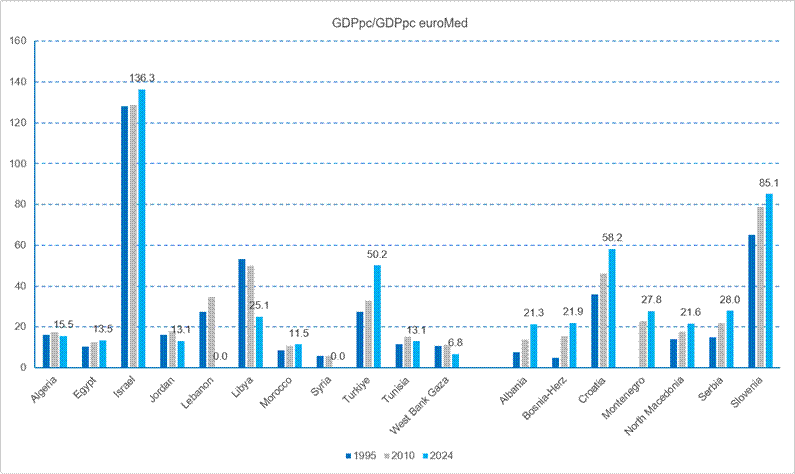
Chart 1 highlights the highly uneven nature of Mediterranean convergence between 1995 and 2024. While some countries improved their position relative to Europe, others stagnated or experienced only fragile and reversible catching-up processes. Israel stands out as the region’s most advanced economy, supported by an innovative and technology-intensive productive structure, whereas countries such as Egypt achieved only partial convergence, despite significant growth and integration into regional value chains. Other economies, including Jordan and Algeria, display persistent volatility and vulnerability to external shocks.
CHART 2 Diverging Growth Paths in the Mediterranean (1995 = 100)
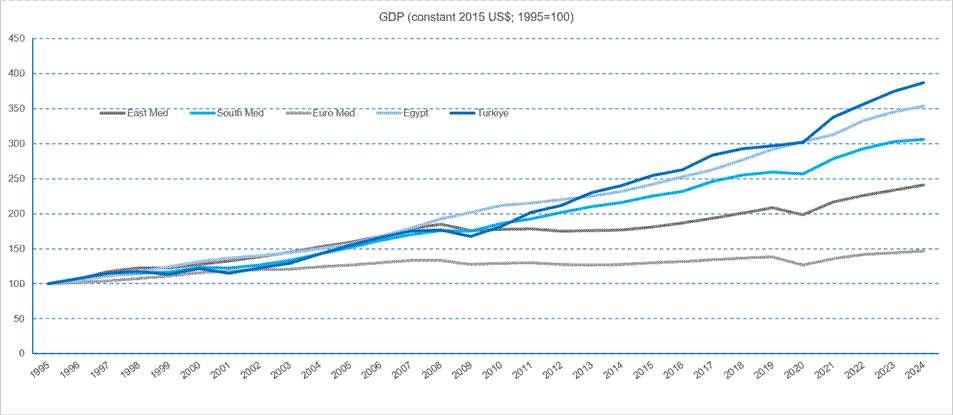
Chart 2 further clarifies the asymmetric nature of Mediterranean economic transformation by illustrating the cumulative dynamics of GDP (constant 2015 US$ and indexed to 1995 = 100).
Starting from the 1995 baseline, south Mediterranean economies more than tripled their aggregate GDP by 2024. This rapid expansion reflects a combination of demographic growth, urbanization, infrastructure investment, trade integration and the gradual incorporation of several economies into regional and global production networks. Countries such as Egypt and Morocco played a particularly important role in this process, benefiting from large domestic markets, logistics investments, industrial relocation processes and increasing integration with European value chains.
The eastern Mediterranean also displays a relatively dynamic trajectory, although with greater volatility. After a long expansion between the late 1990s and the mid-2000s, growth slowed considerably following the global financial crisis and the subsequent geopolitical instability affecting the area. Nevertheless, by 2024 the eastern Mediterranean economy remained substantially larger than in 1995, confirming the growing strategic importance of the region within Mediterranean economic dynamics. Türkiye progressively consolidated its role as a regional industrial and logistical hub, while Israel strengthened its position as a technology-intensive economy integrated into global innovation networks.
By contrast, the Euro-Mediterranean economies display a much more moderate growth trajectory. Aggregate GDP growth remains positive over the entire period, but significantly slower compared to the southern Mediterranean (Chart 2). This partly reflects the mature nature of European economies, characterized by lower demographic expansion and slower potential growth rates. Moreover, the structural impact of the 2008 global financial crisis and the subsequent sovereign debt crisis generated a prolonged period of stagnation across several southern European countries. The decline visible around 2009 and again during the pandemic shock in 2020 illustrates the vulnerability of mature Mediterranean economies to financial and external disruptions.
The decline visible around 2009 and again
during the pandemic shock in 2020 illustrates
the vulnerability of mature Mediterranean
economies to financial and external disruptions
Faster GDP growth in the southern Mediterranean did not necessarily translate into proportional convergence in productivity, technological capacity or institutional quality. Rather than resulting in a homogeneous convergence trajectory, the growth paths shaped a differentiated Mediterranean economic space characterized by mature post-industrial economies, emerging industrial hubs and structurally fragile systems.
Measured as GDP per person employed, productivity dynamics disclose far more clearly the structural asymmetries that are typical of the Mediterranean economic space (see Chart 3). Virtually all Mediterranean economies experienced significant productivity improvements between 1995 and 2024; however, the magnitude, quality and implications of these gains differ substantially across countries.
CHART 3 Productivity Gaps across the Mediterranean (1995–2024)
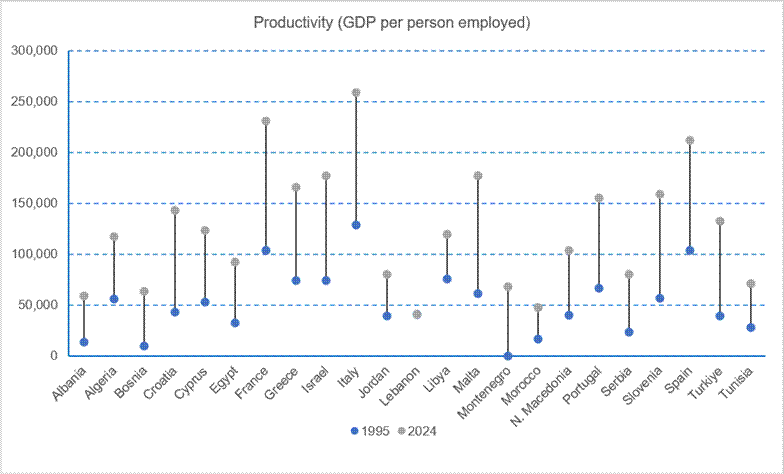
Italy, France, Spain and Israel remained positioned at the top of the Mediterranean productivity hierarchy in 2024, with GDP per person employed ranging from approximately 103,000 Purchasing Power Parity (PPP) dollars in Israel to more than 130,000 in Italy. These economies combine relatively advanced industrial and service structures, higher technological intensity, stronger institutional frameworks and greater integration into global innovation networks.
At the same time, the data reveal important catching-up dynamics in several southern and eastern Mediterranean economies. Türkiye represents perhaps the clearest example of sustained productivity convergence. Starting from around 39,000 PPP dollars per worker in 1995, the country more than doubled its productivity level by 2024, reaching approximately 93,000 PPP dollars per employed person. This reflects the progressive consolidation of Türkiye as a major industrial, logistical and manufacturing hub linking Europe, Asia and the Middle East.
The evolution of Morocco is also noteworthy. Although still characterized by a substantial productivity gap compared to the northern Mediterranean economies, Morocco increased GDP per person employed from around 16,000 PPP dollars in 1995 to more than 31,000 in 2024. Such improvement reflects gradual industrial upgrading processes connected to automotive production, logistics infrastructures and export-oriented manufacturing integration within Euro-Mediterranean value chains.
Several economies continue to display relatively low productivity levels despite periods of GDP growth and investment expansion. This is visible in parts of the southern Mediterranean, where economic growth has often been driven by demographic expansion, public expenditure, energy rents or low-value-added sectors rather than by sustained productivity gains. In these cases, economic integration with European markets did not automatically translate into deep structural transformation.
Chart 3 shows that GDP convergence did not necessarily translate into productivity convergence. Mediterranean asymmetries increasingly reflect differences in innovation capacity, technological sophistication, human capital and productive efficiency. In the current geoeconomic context shaped by digitalization, AI and energy transition, productivity becomes a key indicator of long-term competitiveness.
Educational dynamics help to further clarify these asymmetries. As Chart 4 shows, the accumulation of human capital has progressed significantly across the Mediterranean, although substantial differences persist in the capacity to transform educational expansion into productivity, innovation and structural transformation.
CHART 4 Human Capital and Educational Gaps Across the Mediterranean
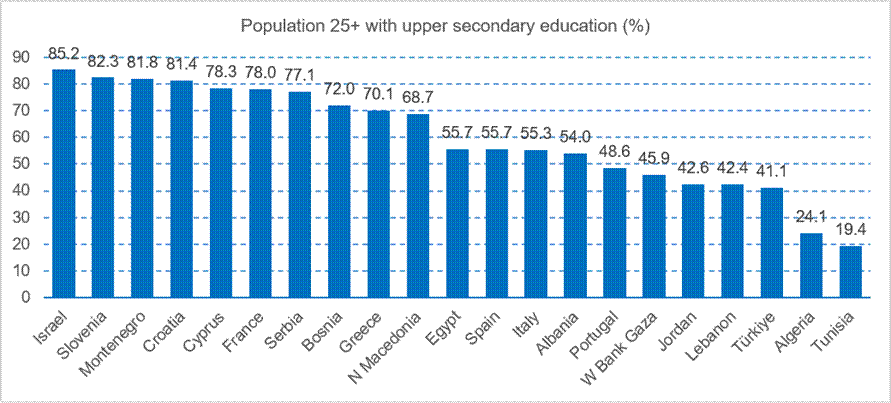
Countries such as Israel, Slovenia, Croatia and France display the highest shares of population aged 25+ with at least upper secondary education, reaching levels between roughly 77% and 85% in 2024. By contrast, several southern Mediterranean economies remain considerably below the regional frontier. In Algeria and Tunisia, for example, the share remains below 25%, while Türkiye records around 41%, highlighting the persistence of substantial educational and capability gaps across the region.
These dynamics suggest that Mediterranean convergence increasingly depends on the capacity to generate and retain human capital. Educational asymmetries help explain persistent differences in productivity, innovation and technological upgrading, reinforcing a broader Mediterranean knowledge divide.
Why Convergence Remained Fragile
Hence, despite significant economic expansion across large parts of the Mediterranean since the launch of the Barcelona Process, convergence remained partial, uneven and structurally fragile (Capasso and Filoso, 2025). The persistence of these asymmetries can largely be explained by the uneven capacity of Mediterranean economies to achieve deep productive, technological and institutional transformation. While some countries succeeded in strengthening their industrial base, improving innovation capabilities and integrating into regional and global value chains, others remained dependent on low-value-added sectors, energy rents, external demand or public expenditure dynamics. As a result, periods of rapid GDP growth often failed to translate into sustained productivity convergence, technological upgrading and long-term economic resilience.
Chart 5 provides further evidence that Mediterranean convergence remained structurally fragile because economic integration was not accompanied by a sufficiently balanced process of industrial transformation. The evolution of manufacturing value added as a share of GDP reveals a long-term reorganization of the Mediterranean productive geography rather than a homogeneous process of convergence.
CHART 5 Manufacturing Transformation across the Mediterranean
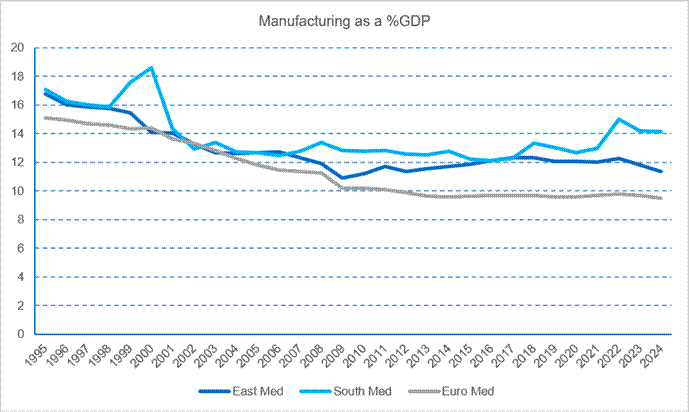
All three Mediterranean macro-regions experienced a decline in the relative weight of manufacturing between 1995 and 2024. However, the intensity and implications of this process differed substantially across the region. The Euro-Mediterranean economies display the most pronounced and persistent reduction in manufacturing shares, declining from around 15% of GDP in the mid-1990s to below 10% by 2024. This trend reflects the progressive transition of mature European economies toward service-oriented and knowledge-intensive activities, but also the impact of offshoring, global competition and the fragmentation of industrial production chains.
By contrast, the southern Mediterranean shows greater industrial resilience. Although manufacturing shares initially declined during the early phases of globalization, the trend stabilized over time and partially recovered after the late 2010s. This dynamic suggests that parts of the southern Mediterranean increasingly benefited from industrial relocation processes linked to lower labour costs, expanding logistics infrastructures and deeper integration into Euro-Mediterranean supply chains. Export-oriented manufacturing activities connected to automotive, textiles and intermediate production gradually strengthened the industrial role of countries such as Morocco and, to a lesser extent, Egypt.
The Mediterranean is not experiencing uniform deindustrialization but rather a redistribution of industrial functions across the region. While trade integration increased productive interdependence, industrial upgrading remained highly asymmetric. Several southern Mediterranean economies integrated into regional value chains without fully developing higher value-added industrial ecosystems or innovation-intensive production structures.
The Mediterranean is not experiencing
uniform deindustrialization but rather
a redistribution of industrial functions
across the region
Investment dynamics provide an important insight into these structural asymmetries. Chart 6 compares Gross Capital Formation and productivity levels across Mediterranean economies in 2024. The chart reveals a highly fragmented investment landscape and suggests that the quantity of investment alone does not necessarily guarantee productive convergence.
CHART 6 Investment and Productivity across Mediterranean Economies
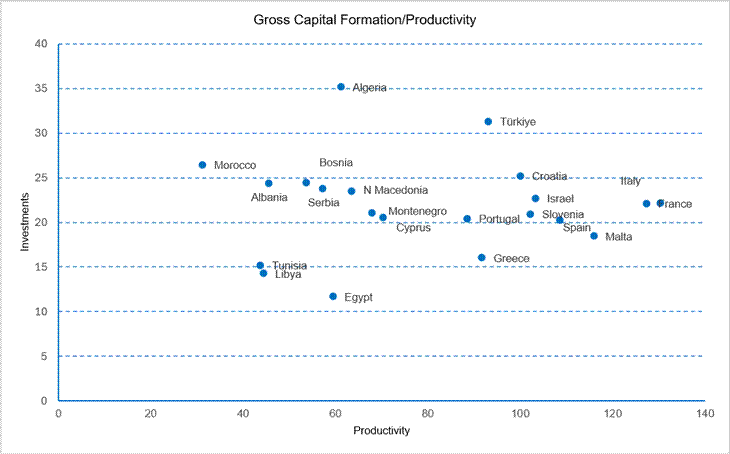
Several economies characterized by relatively high levels of capital formation continue to display only moderate productivity performance. Algeria represents the clearest example. Despite recording one of the highest levels of gross capital formation in the region — around 35% of GDP in 2024 — labour productivity remains relatively limited, at roughly 61,000 PPP dollars per employed person, well below the northern Mediterranean frontier. This suggests that a substantial share of investment has been concentrated in energy-related activities, public infrastructure or capital-intensive sectors with limited spillovers on technological upgrading and productive diversification.
A similar pattern, although less pronounced, can be observed in parts of the southern Mediterranean, where investment expansion has not always generated proportional improvements in productive efficiency. Egypt, for example, combines relatively low productivity levels — below 60,000 PPP dollars per worker — with comparatively modest productive returns from investment accumulation. In these cases, integration into global markets often remained concentrated in lower value-added segments of production, limiting the capacity of investment to produce deeper structural transformation.
By contrast, economies such as France, Italy and Israel combine comparatively moderate levels of capital formation — generally around 22–23% of GDP — with significantly higher productivity performance, exceeding 100,000 PPP dollars per employed person in 2024. This indicates that the quality, technological content and institutional efficiency of investment are at least as important as its overall volume. Mature Mediterranean economies tend to benefit from more sophisticated productive ecosystems, stronger innovation systems, and greater complementarities between capital accumulation, human capital and technological capabilities.
The quality, technological content
and institutional efficiency of investment
are at least as important as its overall volume
The chart also highlights the emergence of intermediate trajectories. Türkiye appears as one of the most dynamic cases of investment-led industrial transformation, combining high capital formation — above 31% of GDP — with substantial productivity gains, reaching more than 93,000 PPP dollars per employed person. Morocco also shows signs of gradual productive upgrading linked to logistics infrastructure, manufacturing integration and export-oriented industrial policies. Although Moroccan productivity remains comparatively low — around 31,000 PPP dollars per worker — investment levels approaching 26% of GDP suggest an ongoing process of industrial and infrastructural transformation. Nevertheless, even in these cases, convergence remains incomplete when compared to the productivity levels of the northern Mediterranean economies.
The structural asymmetries underlying Mediterranean convergence emerges strongly when one compares the capacity of Mediterranean economies to transform energy consumption into productive value (Chart 7).
CHART 7 Productivity and Energy Efficiency in Mediterranean Economies
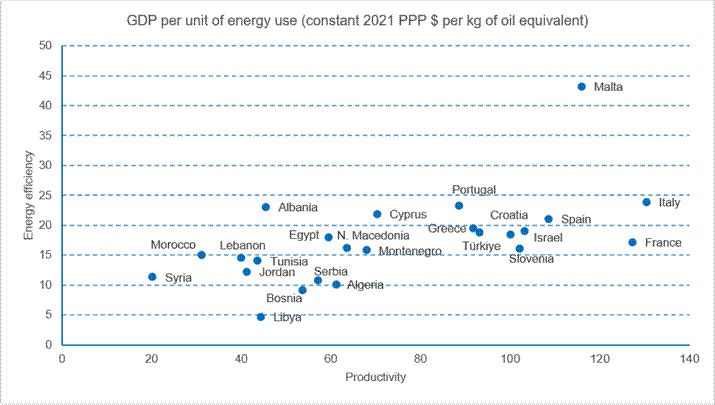
The northern Mediterranean economies generally combine relatively high productivity levels with comparatively efficient energy use. Italy, France and Spain occupy the upper-right section of the scatter in Chart 7, reflecting more advanced productive systems characterized by higher technological content, stronger service sectors and greater capacity to generate economic value with lower relative energy intensity. These economies benefit from decades of industrial upgrading, energy transition policies and more mature innovation ecosystems.
At the same time, the scatter in Chart 7 reveals the persistence of energy-intensive and lower-productivity models across parts of the southern Mediterranean. Economies such as Algeria and Libya remain positioned in the lower-middle section of the graph, combining moderate productivity with relatively weak energy efficiency. This partly reflects the structural weight of extractive sectors, hydrocarbon dependence and productive systems still characterized by limited technological diversification (Bosco and Canitano, 2025).
The Mediterranean divide is increasingly shaped
not only by differences in income or industrialization
but also by the capacity to combine productivity growth
with sustainable and efficient resource use
Intermediate trajectories also emerge. Türkiye combines relatively strong productivity performance with only moderate gains in energy efficiency, reflecting its manufacturing-intensive growth model, while service-oriented economies such as Croatia, Cyprus and Malta display comparatively stronger energy efficiency.
More broadly, one can argue that the Mediterranean divide is increasingly shaped not only by differences in income or industrialization but also by the capacity to combine productivity growth with sustainable and efficient resource use. In the context of accelerating energy transitions, climate pressures and geopolitical competition over energy corridors and infrastructures, energy efficiency is becoming a strategic component of long-term competitiveness.
This transformation is particularly relevant for the future of Mediterranean convergence. Economies capable of integrating technological upgrading, industrial transformation and energy efficiency are likely to strengthen their position within the emerging geoeconomic order. Conversely, countries remaining dependent on energy-intensive and low-value-added production models risk facing increasing difficulties in adapting to the new competitive environment shaped by decarbonization, digitalization and the reorganization of global value chains.
The New Geoeconomic Mediterranean
Over the last decade, the Mediterranean has progressively evolved from a peripheral space of globalization into a strategic geoeconomic corridor connecting Europe, Africa, the Middle East and Asia. The reorganization of global value chains, the growing importance of energy security, the acceleration of nearshoring strategies and the increasing relevance of logistics infrastructures have substantially reshaped the economic role of the region.
In this new environment, competitiveness increasingly depends not only on production costs or market size but also on the capacity to control flows: goods, energy, data, technologies and connectivity infrastructures. Logistics performance therefore becomes a crucial indicator of geoeconomic positioning, revealing the ability of Mediterranean economies to integrate into regional and global networks.
CHART 8 Logistics Performance across Mediterranean Economies
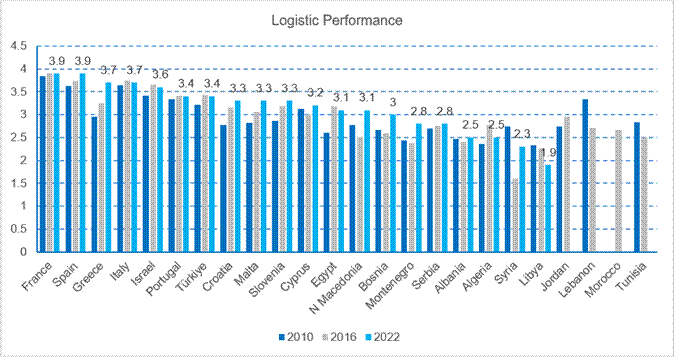
Chart 8 highlights substantial asymmetries in logistics performance across the Mediterranean region between 2010 and 2022. The Logistics Performance Index (LPI), developed by the World Bank, measures the overall efficiency of national logistics systems based on six dimensions: customs procedures, quality of transport and trade infrastructure, ease of arranging international shipments, quality of logistics services, tracking and tracing capabilities, and timeliness of deliveries. The index ranges from 1 to 5, with higher values indicating better logistics performance.
Northern Mediterranean economies continue to dominate the regional logistics hierarchy. France records one of the highest LPI scores in the region, increasing from 3.84 in 2010 to 3.9 in 2022. Spain displays a similar trajectory, improving from 3.63 to 3.9 over the same period, while Italy increased from 3.64 to 3.7. These performances reflect advanced transport infrastructures, integrated port systems, stronger institutional efficiency and deeper integration into European and global supply chains.
At the same time, the data reveal important catching-up dynamics outside the traditional Euro-Mediterranean core. Greece significantly improved its logistics performance, moving from 2.96 in 2010 to 3.7 in 2022, partly reflecting the growing strategic role of the eastern Mediterranean within global maritime routes and the expansion of port infrastructures linked to international investment flows. Similarly, Türkiye consolidated its position as one of the main logistical and industrial platforms (its LPI score increased from 3.22 to 3.4 between 2010 and 2022).
Several southern Mediterranean economies also display gradual improvements. Egypt increased its logistics performance from 2.61 in 2010 to 3.1 in 2022, while Morocco strengthened its role through major logistics investments such as Tanger Med, reaching an LPI score of 2.67 in 2022. By contrast, countries affected by prolonged instability and conflict, such as Libya and Syria, remain at the bottom of the regional ranking, with scores below 2.5, reflecting the direct impact of geopolitical fragmentation on connectivity and economic integration.
At the same time, several Balkan and southern Mediterranean economies continue to display relatively low logistics performance levels, reflecting infrastructural weaknesses, institutional bottlenecks, political instability and limited integration into higher-value regional networks. In countries affected by conflict and prolonged instability, such as Libya and Syria, logistics performance deteriorated significantly, illustrating how geopolitical disruptions directly affect connectivity and economic integration.
Economies capable of combining industrial upgrading, logistics integration and infrastructural modernization are likely to strengthen their strategic role within the evolving Mediterranean geoeconomic landscape.
Map 1 illustrates the emergence of a more interconnected and multipolar Mediterranean system structured around logistics hubs, energy corridors and innovation networks. Ports such as Tangier Med, Piraeus, Valencia and the Suez Canal increasingly function as strategic nodes within global supply chains, while the eastern Mediterranean is becoming central to the reconfiguration of European energy security.
MAP 1 The New Geoeconomic Mediterranean.
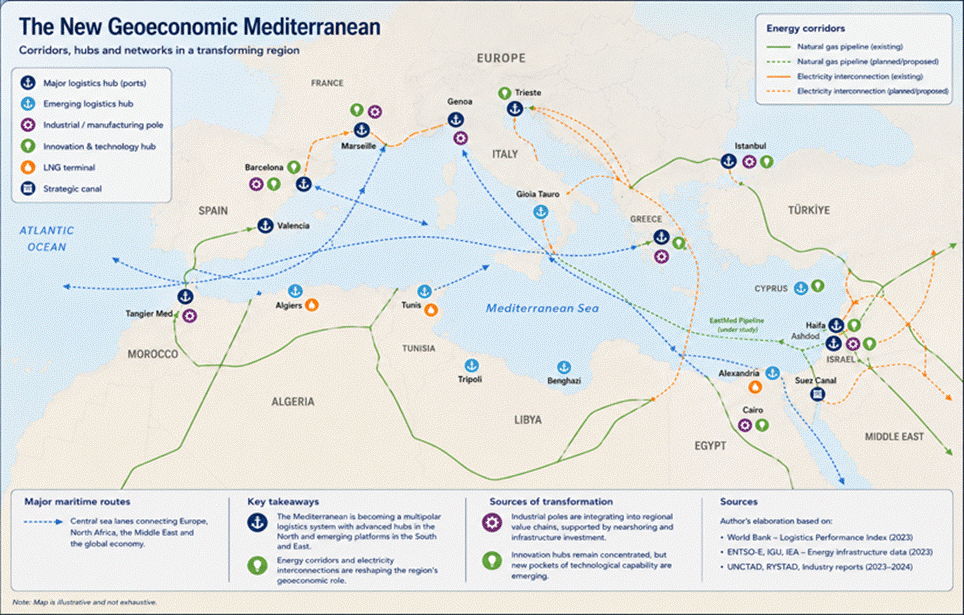
Innovation hubs remain strongly concentrated in a limited number of territories, particularly around Israel, northern Italy, southern France and parts of the Iberian Peninsula, revealing the persistence of a highly asymmetric geography of Mediterranean knowledge. This reinforces the idea that future convergence will depend increasingly on the capacity to integrate logistics, industrial transformation, energy transitions and innovation systems.
This transformation is not limited to trade and transport infrastructures. It increasingly extends to the geography of innovation and knowledge production. Chart 9 highlights one of the most important structural dimensions of the emerging Mediterranean geoeconomic order: the growing divergence in research and innovation capacity. Although most Mediterranean economies increased research and development expenditure between 2004 and 2023, the chart reveals a highly fragmented regional innovation landscape characterized by strong concentration and persistent technological asymmetries.
The most striking case is Israel, whose Research and Development (R&D) expenditure rose from already high levels in 2004 to more than 6% of GDP in 2023. Israel thus emerges not only as the leading Mediterranean innovation hub, but also as one of the most research-intensive economies globally. This reflects the consolidation of a highly knowledge-intensive model based on advanced technological ecosystems, strong university-industry linkages and integration into global innovation networks.
CHART 9 R&D and Innovation Gaps across Mediterranean Economies
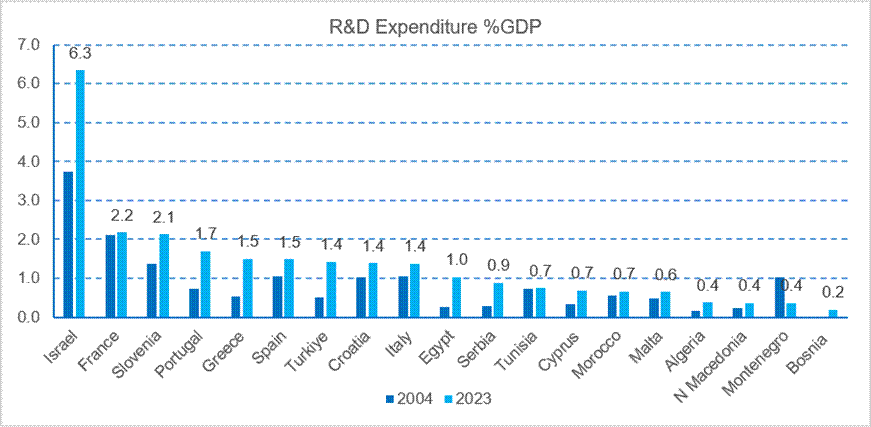
Several northern Mediterranean economies also strengthened their innovation systems over the last two decades. France maintains consistently high R&D intensity, while countries such as Portugal, Spain, Italy and Slovenia recorded significant improvements, supported in part by deeper integration into European research and technological frameworks.
At the same time, some southern Mediterranean economies display partial catching-up dynamics. Türkiye substantially increased research expenditure, suggesting gradual industrial and technological upgrading, while Egypt also improved its position, although remaining significantly below the northern Mediterranean frontier.
Nevertheless, the data clearly reveals the persistence of a broad Mediterranean technological divide. Several southern Mediterranean and Balkan economies continue to invest less than 1% of GDP in research and development, limiting their capacity to generate innovation, technological autonomy and higher value-added productive systems. In many cases, economic integration therefore remains concentrated in relatively low-cost manufacturing, logistics, tourism or resource-based activities rather than in knowledge-intensive sectors.
Conclusions: Towards a Shared Mediterranean Development?
The evidence discussed throughout this paper suggests that the Mediterranean is entering a new historical phase. Over the last three decades, the region has experienced significant economic growth, deeper trade integration, expanding infrastructure networks, and increasing participation in global value chains. Yet these transformations have not produced a sufficiently balanced process of convergence. Instead, the Mediterranean has progressively evolved into a differentiated geoeconomic space characterized by strong asymmetries in productivity, innovation capacity, logistics performance and technological development.
The central challenge for the coming decades is, therefore, not simply how to accelerate growth, but how to prevent the emerging Mediterranean order from evolving into a geography of permanent fragmentation and polarization. In an international environment increasingly shaped by geopolitical competition, technological transitions, energy reconfiguration and demographic pressures, the capacity to build forms of shared and interconnected development becomes crucial for the long-term stability of the region.
A first strategic dimension concerns human capital. The analysis presented in this paper shows that the Mediterranean divide is progressively evolving into a knowledge and capability divide. Countries that succeeded in improving productivity and strengthening their geoeconomic role are generally those that invested more effectively in education, research and technological capabilities. Conversely, economies characterized by weaker education systems and limited innovation ecosystems continue to face difficulties in achieving sustained structural transformation. Human capital, therefore, becomes not only a social objective but also a central condition for economic resilience, technological adaptation and competitiveness within the new global economy.
A second critical dimension concerns the construction of shared knowledge infrastructures. The Mediterranean increasingly requires interconnected research systems, digital infrastructures, technological platforms and innovation networks capable of reducing the region’s growing asymmetries. In a world shaped by artificial intelligence, digitalization and data-driven production systems, technological fragmentation risks reinforcing existing economic divides. By contrast, the development of cross-border research infrastructures, academic cooperation, scientific mobility and innovation ecosystems could strengthen the Mediterranean’s collective capacity to participate in the emerging knowledge economy.
The central challenge for the coming decades is
not simply how to accelerate growth, but how
to prevent the emerging Mediterranean order
from evolving into a geography of permanent
fragmentation and polarization
A third and equally important dimension concerns scientific and technological cooperation. The Mediterranean’s major challenges — energy transition, climate change, water scarcity, migration pressures, food security and demographic imbalances — are deeply interconnected and cannot be addressed through purely national approaches. The region increasingly needs forms of cooperative governance capable of linking economic integration with technological collaboration, knowledge sharing, and long-term strategic planning. In this perspective, scientific diplomacy may become one of the most important instruments for fostering trust, stability and convergence across a fragmented regional space.
More broadly, the future of Mediterranean convergence will depend on the capacity to develop a common strategic vision around the major interconnected transitions currently reshaping the region. Energy transition, digital transformation, demographic change, logistics reconfiguration and technological competition are not separate processes; they interact continuously and increasingly determine the new geography of power and development within the Mediterranean Basin.
Without a shared Mediterranean strategy capable of coordinating these transitions, the risk is that the region evolves towards a more polarized and hierarchical economic geography, where a limited number of highly connected hubs coexist with structurally marginalized areas increasingly excluded from technological and productive upgrading.
In this sense, the Mediterranean today appears not only as a space of unresolved asymmetries, but also as one of the key laboratories in which the future relationship between geoeconomics, technology, connectivity and regional cooperation will be shaped.
Bibliography
Bosco, Irene and Canitano, Giovanni. “The Geoeconomics of Energy in the Mediterranean: Demand, Supply, and the Nexus between Geopolitical Risk and Energy Security.” in Capasso, S. and Canitano, G. (eds.) Mediterranean Economies 2025, pp. 275-305, Bologna, Il Mulino, December 2024.
Capasso, Salvatore and Filoso, Valerio. “Navigating Divergence: Economic and Political Challenges in the Southern Mediterranean since the Barcelona Declarations.” in Capasso, S. and Canitano, G. (eds.) Mediterranean Economies 2024, , pp. 85-112, Bologna, Il Mulino, December 2024.
Capasso, Salvatore and Filoso, Valerio “Geoeconomic Realignment and Strategic Agency in a Fragmented Mediterranean.” in Capasso, S. and Canitano, G. (eds.) “Mediterranean Economies 2025. The Mediterranean as a laboratory of Geoeconomics and Global Transformations.” Il Mulino, 2025.
Header photo: Shutterstock.