



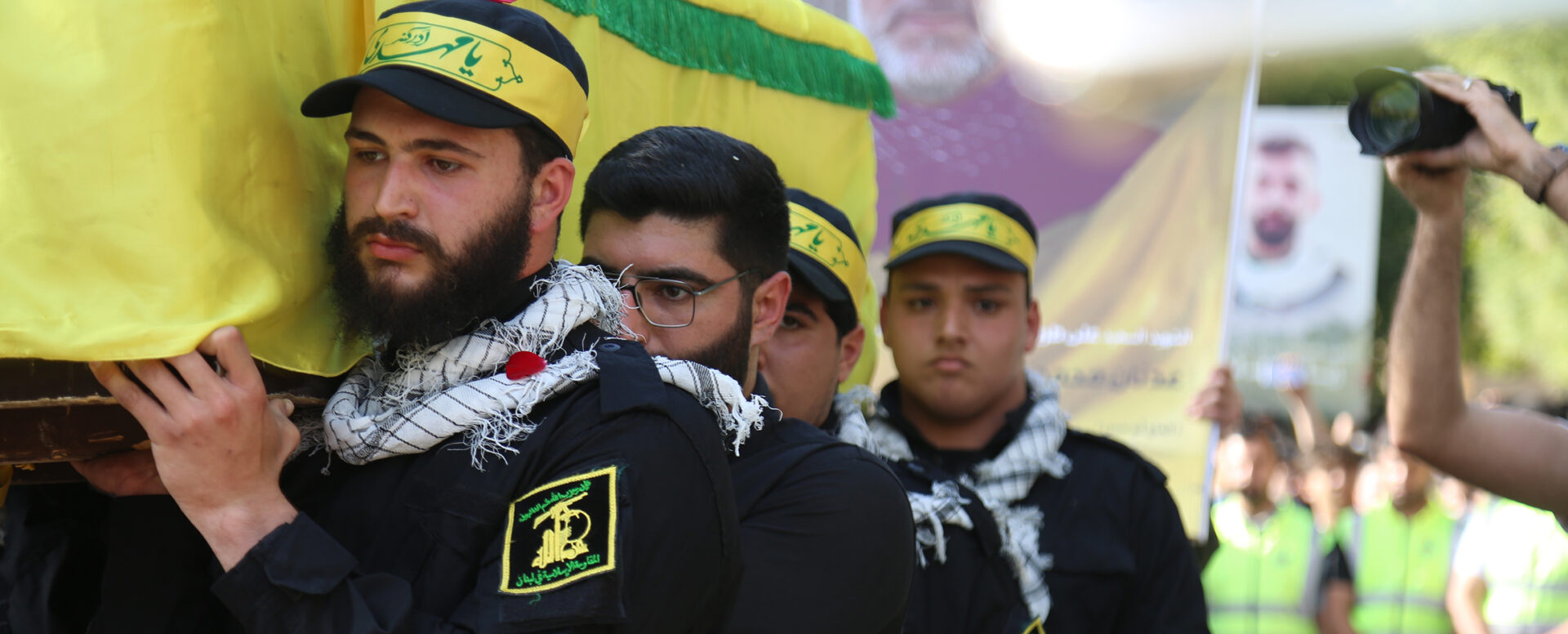
A series of crises surrounding Iranian strategic thinking has weakened the Axis of Resistance. From the 2020 assassination of Qasem Soleimani to the 2023 crisis in Gaza, the Twelve-Day War, or the 2026 war against Iran, the Axis’s internal cohesion has been compromised, although it has not yet completely collapsed. Israel has capitalized on the war-torn regional environment to illegally occupy new territories in Lebanon and Syria, whilst Tehran is shifting from “strategic patience” to “deterrence by punishment” with the aim of maintaining its regional influence.
Hamas and Islamic Jihad
The main pressure facing Hamas and Islamic Jihad aims to bring about their total disarmament in Gaza through a strategy of targeted assassinations. Since the 2023 crisis, Israel has assassinated senior Hamas leaders such as Saleh al-Arouri, Marwan Issa, Mohammed Deif, Ismail Haniyeh, and Yahya Sinwar. It has applied the same strategy to Islamic Jihad, assassinating commanders such as Nasser Moussa, Wael Abu-Fanounah, Mohammed Jaber, and Mohammed Shabana, the latter responsible for coordination with Hamas within the so-called Joint Operations Room of the Palestinian resistance factions.[1] In late January 2025, Hamas acknowledged that 16 of its senior leaders from its political bureau and military wing had been killed since the start of the war.[2]
Another Israeli strategy to gain ground in Gaza was the provision of funding and military assistance to criminal militias and historically “anti-Hamas” clans. These forces include the Popular Forces (Al-Quwwat ash-Shabiyya), estimated to have between 500 and 700 fighters. The group emerged in May 2024 under the leadership of Yasser Abu Shabab and Ghassan Duhine, who, moreover, are afforded easy access to humanitarian aid and other privileges. Other groups and figures receiving Israeli support include Yasser Khanidak (head of the Khanidak clan), Rami Khalas (head of the Hilles clan), the militias of the Counter-Terrorism Strike Force, led by Hossam al-Astal (a former member of the Palestinian Authority’s security forces), and the Doghmush and Mujaida clans, which are based on deep-seated tribal allegiances rather than loyalty to Hamas.[3]
Nevertheless, reports from 2025 indicated that the capability of Hamas and its allies to take back operational areas was growing.[4] Its police and security agencies have returned to 90% of its territory, where they now control crime and persecute those the group considers to be collaborators with Israel. Hamas authorities have also regained control over administrative functions, issuing identity documents and processing healthcare. They likewise have control over the judiciary and courts, to solve everyday societal problems. Since former US Secretary of State Antony Blinken’s remark, on 14 January 2025, that Hamas had recruited almost as many new militants as it had lost during the war, the organization has clearly endured as a political and social force in Gaza, with an estimated 25,000 fighters in “hibernation mode.” The al-Qassam Brigades have restored or preserved much of their tunnel network and, in some cases, even expanded it.[5]
Hezbollah
In the case of Hezbollah and its allies (the Lebanese Resistance Brigades, or Saraya al-Muqawama, and the al-Quds Brigades), the foreign pressure seeks not only their disarmament, but also to bring Lebanon into the Abraham Accords. Today, the US proposal includes voluntary disarmament, government control of the border with Syria, and an arms embargo in exchange for $2.5 billion in “emergency aid” from Washington for the Lebanese government, which is positioning itself as an ally of Washington in the midst of one of the most serious economic crises in its history.
A key point is Bekaa Valley, where, even before the war with Iran in 2026, the pressure against Hezbollah was creating a security vacuum that Israel was prepared to fill, given the severe limitations of the Lebanese armed forces. Israeli officials such as Amichai Chikli claimed, in 2025, that since “Israel was facing al-Qaeda and ISIS, it had to occupy Mount Hermon in Lebanon to safeguard its security.” As of February 2026, Israel was illegally occupying Labbouneh Hill, in the Tyre district; Jabal Blat, a mountain outside Ramieh offering a vantage point over the southern coast; Hamamis Hill, overlooking the Hasbaya region and the Israeli town of Metula; the mountain Jal al-Deir, located south of Aitaroun, in the Bint Jbeil district; and various posts along the Aaziyyeh Road (Markaba-Houla), a strategic position in the Marjayoun district overlooking several border towns.[6] In March 2026, in the midst of the war with Iran, Tel Aviv ordered the evacuation of more than 80 towns in southern Lebanon and the southern suburbs of Beirut (Dahiyeh), calling on some 700,000 people to leave.
The war with Israel has undeniably decimated Hezbollah’s special forces. Since October 2024, Tel Aviv has assassinated the movement’s leader, Hassan Nasrallah, as well as his successor, Hashem Safieddine, and members of the elite Radwan forces. These operations also encompassed civilian, economic, and cultural structures, including the destruction of homes and cemeteries, as witnessed in the village of Hula and in positions north of the River Litani, where Israeli forces razed almost 500 homes.[7] In January 2026, Lebanon filed a formal complaint with the UN Security Council, documenting 2,036 breaches of its sovereignty in the last three months of 2025 alone.
Without fully disarming, Hezbollah continues
to focus on spending, compensation, recruitment,
and training, as well as salaries and – most expensive
of all – restoring its military infrastructure
Nevertheless, following the outbreak of the war against Iran in 2026, Hezbollah launched dozens of waves of missiles and drones against Israel throughout March, opening a second front in the conflict. Most surprisingly, without fully disarming, Hezbollah continues to focus on spending, compensation, recruitment, and training, as well as salaries and – most expensive of all – restoring its military infrastructure by engaging in talks with regional players interested in stopping Israeli territorial expansion. These include Saudi Arabia and Turkey, as recalled in Israel’s May 2025 remarks accusing Ankara of financing “Hezbollah’s resurgence.”[8]
The Overthrow of Bashar al-Assad in Syria
The toppling of Bashar al-Assad in December 2024 was one of the most powerful blows to the Axis of Resistance. Al-Assad’s flight to Moscow entailed the expulsion of other Iranian-backed armed groups, such as the Fatemiyoun Brigade and the Zainabiyoun Brigade, whose members are mostly of Afghan origin. This process was triggered by Israel’s strikes on the Syrian defence ministry and Army General Command headquarters in Damascus, which wiped out all of Syria’s anti-aircraft batteries. At the time of writing of this article, the Israeli army has captured around 665 square kilometres of land in Syria (in addition to the 1,176 square kilometres it already occupied in the Golan Heights).[9]
Syria is currently divided into sectors. At the start of his tenure, Syria’s new leader, Ahmad al-Sharaa, faced multiple obstacles to consolidate his power. Despite the recognition of both the United Nations and the White House, he has failed to suppress the remaining insurgents loyal to the old regime, the Israel-aligned Druze, or the Kurdish population in the north of the country, with which there have been bloody clashes. The March 2025 massacre of Alawites, instigated by hardliners within Syria’s new government, involved abuses resulting in thousands of deaths and the displacement of at least 200,000 people.[10]
Meanwhile, in the country’s north, clashes with the autonomous Kurdish government began in early January 2026, in the Sheikh Maqsoud and Ashrafieh neighbourhoods of Aleppo. The al-Sharaa government launched a large-scale offensive, capturing key areas, such as Raqqa, Deir ez-Zor, and strategic oil fields, when the US failed to deliver the promised air support to the Kurdish militias.
Ansarullah and Hashd al-Shaabi (PMF)
In Yemen, Ansarullah took military action against Israel, as its support base remains highly pro-Palestinian.[11] Following the 7 October attacks, the group launched a campaign of strikes against commercial vessels with ties to Israel in Bab al-Mandab Strait. This prompted the Washington-led naval intervention Operation Prosperity Guardian, which, unlike other special operations, did not result in any significant casualties. In response, in August 2025, Israel launched another decapitation strategy, with which it assassinated the Houthi Prime Minister, Ahmed al-Rahawi, and his Chief of Staff, Mohammed al-Ghumari. As a result, the movement became more cautious about managing domestic politics, especially against the Presidential Leadership Council (PLC), an executive body controlled by Saudi Arabia, capitalizing on the yawning rifts that erupted between Riyadh and the United Arab Emirates in 2025.
As of the writing of this analysis, in the context of Operation Epic Fury against Iran, Ansarullah has decided to offer token support to Tehran. Unlike with causes primarily focused on Palestine, Ansarullah is aware that it is not in its interest to project an image of itself as an Iranian satellite state and has thus put off sensitive decisions for a more opportune time. Furthermore, the reduction in support from Tehran has exacerbated the country’s humanitarian crisis. With some 23 million Yemenis in need of some form of humanitarian aid, the movement aims to shore up its power within its grassroots, tribes, and family ties to replace the elites it lost last year. Needless to say, Israel’s recognition of Somaliland in December 2025 allows it to establish a base of influence in the Horn of Africa, from which to deter Ansarullah from any escalation.
The case of the PMF in Iraq is quite different. Iran’s Iraqi allies have used the 2023-2026 period to solidify their power in the provincial councils, increasing their control over budgets, territory and local security in Iraq. Since 2023, the PMF has used this strength to attack US forces in Iraq at least 160 times. The Kataib Hezbollah faction is the dominant group within the PMF, with an area of influence covering northern Baghdad and the Kurdish region of Erbil. On 12 March 2026, the PMF claimed responsibility for shooting down a US supply plane in the midst of the war with Iran.
Since 2023, the PMF has held 101 of the 285 seats on the country’s provincial councils, increasing its ability to exert influence and engage in patronage within the electoral and budgetary landscapes. Against this backdrop, it is now on track to become a parallel state within Iraq, and even a military one, given the joint exercises already taking place, enabled by its economic power and the possibility of doing business with the Iranian conglomerate Khatam al-Anbia. For example, in November 2022, the PMF formed the Muhandis General Company, acquiring extensive territory along the border with Saudi Arabia, a model inspired and advised by Khatam al-Anbia.[12] Thus, in the first three days of the 2026 war, the PMF launched drones and missiles at the Harir military base and Erbil International Airport, activating a defensive line against Kurdish militias.
Iran
Faced with this fragmentation of its allies, Iran had no choice but to take direct action against Israel, as witnessed by Operations True Promise 1 and 2 in 2024 and in its response to Israel’s attempted coup in June 2025, in which Iran sustained 1,046 casualties from both the Revolutionary Guard and its regular army.[13] Failing to respond to those attacks would have invited severe criticism of Iran as a ballistic power, not only within the country itself, but also within the broader Axis of Resistance, which had coordinated every attack against Israel based on the doctrine of strategic depth.
Whilst the “Twelve Day War” altered Iranian strategic thinking, in reality, it was the 2026 war that propelled Iran to focus on a strategy of total war based on the decentralization of its command structures across the country, especially once Israel decided to deploy its decapitation tactic against Ali Khamenei, who was assassinated on 28 February 2026.
The temporary abandonment of its proxy wars marked the start of sovereign deterrence, consisting of investing more money and effort in the production of high-precision missiles, drones, cyber warfare, asymmetric naval tactics, and nuclear ambiguity, all of which Iran controls self-sufficiently from underground cities.
In parallel, Iran has also opted for “deterrence by punishment,” manifested in reprisals against US interests throughout the Gulf region. In March 2026, it targeted 29 military and civilian sites linked to US interests across the six member states of the Gulf Cooperation Council (GCC).
Final Remarks
The reconfiguration of the Axis of Resistance points to a certain degree of fragmentation, in which the strength and activity of its members no longer depend on centralized coordination by Tehran, but rather on their own capabilities for territorial entrenchment and political resilience.
The PMF in Iraq, for example, have emerged as the most strengthened and stable player, transitioning from a militia to a “parallel state.” Hamas, in Gaza, is demonstrating exceptional operational resilience; despite the systematic assassination of its leadership, it has managed to redeploy its police and security forces in 90% of the territory. Meanwhile, Hezbollah, whilst the most vulnerable, still has sufficient ballistic capabilities to support Iran in the 2026 war. Ansarullah, in contrast, has opted to take a selective and pragmatic approach.
Undoubtedly, the fall of Bashar al-Assad in Syria played a key role in prompting each movement to choose between risky ideological activity or pragmatic structural survival, leaving Iran with allies that are more functional on their own than under its direct command.
In the wake of the 2026 war, Israel and the US are trying to change the rules of the game across the Arab world and Iran and will likely seek to stoke further sectarian tensions given the indications that, even as they are bombing Iran, Israeli operations are underway to seize more territory in Lebanon, Syria, and Palestine. In this regard, the political currents in all these groups will remain sensitive to these issues, including the possibility that they may enter into talks with other state actors beyond Iran to safeguard their own security interests.
[1] The Operations Room includes 12 military branches. See: Abu Amer, Adnan. “غرفة العمليات المشتركة للمقاومة في غزة نواة لـ”جيش التحرير.” Al Jazeera, 28 May 2021, www.ajnet.me/politics/2021/5/28/غرفة-العمليات-المشتركة-للمقاومة-في.
[2] Al Shaarq al-Awsat. “«حماس» تكشف عن قتلاها من القادة والمقاتلين وتنظم جنازات لهم,”
31 January 2025, https://aawsat.com/العالم-العربي/المشرق-العربي/5107192-حماس-تكشف-عن-قتلاها-من-القادة-والمقاتلين-وتنظم-جنازات-لهم.
[3] Adballah, Mahmoud. “What Israel got wrong twice: Rise of anti-Hamas militias and challenge of post-war governance.” Ahram Online, 3 November 2025, https://english.ahram.org.eg/News/556113.aspx.
[4] Shehada, Muhammad and Lovatt, Hugh. Dealing with Trump, Israel, and Hamas: The Path to Peace in the Middle East. European Council on Foreign Relations, December 2024, https://ecfr.eu/wp-content/uploads/2024/12/Dealing-with-Trump-Israel-and-Hamas-The-path-to-peace-in-the-Middle-East.pdf. See also: Khdour, Nasser. “After a year of war, Hamas is militarily weakened — but far from ‘eliminated.’” ACLED, 6 October 2024, https://acleddata.com/report/after-year-war-hamas-militarily-weakened-far-eliminated.
[5] Assali, Hadeel. “Notes on the Underground in Gaza.” Hot Spots, Fieldsights, 31 October 2024, www.culanth.org/fieldsights/notes-on-the-underground-in-gaza.
[6] The New Arab. “Indefinite occupation? Unpacking Israel’s aims in south Lebanon.” The New Arab, 12 March 2025, www.newarab.com/analysis/indefinite-occupation-unpacking-israels-aims-south-lebanon.
[7] Arraf, Jane and Rizkallah, Jawad. “Despite a ceasefire, Israel has demolished villages in southern Lebanon.” NPR, 3 November 2025, www.npr.org/2025/11/03/nx-s1-5566124/israel-south-lebanon-villages.
[8] Bozkurt, Abdullah. “Turkey accused of financing Hezbollah’s resurgence in Lebanon, sending planes loaded with cash.” Nordic Monitor, 5 May 2025, https://nordicmonitor.com/2025/05/turkey-accused-of-financing-hezbollahs-resurgence-in-lebanon-sending-cash-loaded-planes/.
[9] Middle East Monitor. “Israel minister calls for occupying Mount Hermon in Syria.” Middle East Monitor, 9 December 2024, www.middleeastmonitor.com/20241209-israel-minister-calls-for-occupying-mount-hermon-in-syria/.
[10] International Crisis Group. “Restoring Security in Post-Assad Syria: Lessons from the Coast and Suweida.” November 2025, www.crisisgroup.org/sites/default/files/2025-11/253-syria-post-assad.pdf.
[11] Peoples Company for Polls and Survey Research. Public Opinion Poll. No. 91, March 2024, https://pcpsr.org/en/node/973#:~:text=For%20the%20Arab/regional%20actors,23%25%20in%20the%20Gaza%20Strip.
[12] Alaaldin, Ranj. “The Popular Mobilization Force is turning Iraq into an Iranian client state.” Brookings Commentary, 2 February 2024, www-brookings-edu.translate.goog/articles/the-popular-mobilization-force-is-turning-iraq-into-an-iranian-client-state/?_x_tr_sl=en&_x_tr_tl=es&_x_tr_hl=es&_x_tr_pto=sge.
[13] Giustozzi, A. “Iranian Armed Forces and the 12-Day War.” The RUSI Journal, Vol. 170, No. 6–7, p. 116–123, 2025, https://doi.org/10.1080/03071847.2025.2590300.
Header photo: Hezbollah members carry the yellow flag-draped coffin of a senior official during his funeral in southern Lebanon on May 8, 2025. The event reflected military and symbolic presence. Shutterstock / Apps media production.