


Critical raw materials (CRMs) are rapidly becoming a central topic in foreign policy, international relations and the political economy in an increasingly geopolitically charged world. What makes a resource critical depends on who defines it, and different countries have presented different CRM lists. The core logic of these listings centres on the economic value of each resource as an input in production chains and the risks associated with accessing, storing or replacing them. Most importantly, these minerals are not just industrial inputs but strategic resources whose availability shapes countries’ ability to pursue digitalization, decarbonization, industrial competitiveness and energy security. Minerals and metals such as rare earths, niobium, phosphate, lithium, copper, cobalt, tantalum and manganese appear on most lists because they are essential for batteries, e-mobility technologies, solar panels, semiconductors, energy-efficient lighting, wind turbines and smartphones. As the world advances toward a more digital future and, simultaneously, seeks to transition to renewable energy sources to mitigate climate change, higher demand for these resources is expected to intensify geoeconomic competition, particularly among industrialized nations.
Within the European Union (EU), rising competitiveness pressures have prompted the creation of new policies that depart from the long-standing economic liberalism that has shaped the EU for many years (Herranz-Surralles, 2024). The European Council and Commission frame the twin green and digital transitions as central strategic objectives, leading to the launch of several major policy initiatives linked to accessing CRM, such as the 2022 REPowerEU, the 2023 Critical Raw Materials Act, the 2023 Net-Zero Industry Act and the 2025 Clean Industrial Deal. This shift aims to address the vulnerabilities exposed by the Covid-19 pandemic and Russia’s invasion of Ukraine, which revealed the fragility of the EU’s energy, technological and industrial supply chains. For decades, the EU benefited from an open and interconnected world economy, but it is now recognizing that interdependence can also be “weaponized” (Sovacool et al., 2023). This has led to a move toward what Ursula von der Leyen called “open strategic autonomy,” meaning a rearrangement of strategic policies to strengthen the EU’s capacity to act independently in vital areas while maintaining multilateral cooperation with willing partners whenever possible.
These minerals are not just industrial inputs
but strategic resources whose availability
shapes countries’ ability to pursue digitalization,
decarbonization, industrial competitiveness and energy security
The EU’s mineral policy is part of a broader shift toward a geoeconomic logic in which territory, supply chains and strategic autonomy are increasingly connected. The essential revamp of EU industrial policy, designed to counter economic slowdown and enhance competitiveness, relies significantly on gaining access to minerals that are not produced or processed within the union in sufficient quantities. A deeper issue is geopolitical concentration: a handful of countries, particularly China, control the bulk of global processing and refining, creating strategic choke points. In 2025, the EU still depended on a single third country for about 95% of rare-earth elements, 90% of permanent magnets, 59% of lithium and 63% of cobalt (European Commission, 2025). This high import dependence means that any supply shock — like geopolitical tensions, export restrictions, war or other disruptions – could threaten both economic stability and progress of the green and digital transitions. While the EU’s plan stresses domestic processing, European mining and recycling capabilities, these steps alone will be insufficient. Therefore, recalibrating partnerships with neighbouring countries, particularly those in the Euro-Mediterranean region, is crucial.
The Geoeconomic Turn
The so-called “geoeconomic turn” in the energy transition means that decarbonization is increasingly seen less as multilateral cooperation on emission-reduction targets and more as a profitable market and arena for technology competition among industrial economies (Meckling, 2025). Chinese dominance across renewable energy supply chains has spurred other major economies to launch their own green industrial policies, driven by both economic competitiveness and energy security. Competition has, in turn, driven down the implementation costs of green technologies to the point that, in 2025, many have achieved cost parity with hydrocarbon systems, enabling diverse energy transition strategies worldwide with varying levels of ambition. Thus, the geoeconomic turn makes energy transition dependent on the interplay between international trade and power, with political rivalries shaping economic policies, and vice versa (Cerioli, 2026).
The geoeconomic turn makes energy
transition dependent on the interplay between
international trade and power, with political
rivalries shaping economic policies, and vice versa
This condition enables the gradual use of economic policies that were long atypical under neoliberalism, prioritizing leadership vis-à-vis rivals. On the supply side, this involves promoting R&D and manufacturing through subsidies, tax credits, export bans, infrastructure investment, tariffs, joint venture requirements and import substitution. On the demand side, tools like public procurement, market commitments, deployment subsidies and regulatory standards aim to boost domestic adoption and efficient use of green technologies. Against this background, powerful industrial countries competing for leadership elaborate distinct strategies to secure raw materials, markets and infrastructure investments worldwide. Conversely, developing countries generally face three paths: deploying technologies with international finance (since advancing requires capital and knowledge concentrated in industrial powers), attempting some level of industrial upgrading within green value chains or risking exclusion from the process entirely (Meckling, 2025).
The EU’s CRM Policies
The EU is clearly responding to this geoeconomic turn by reorienting its foreign policy strategy to: i) secure critical resources, ii) reposition geopolitically in a multipolar world and iii) revitalize industrial competitiveness (Herranz-Surralles, 2024). Despite remaining the world’s largest consumer market, significant portions of European industry have lost global competitiveness in traditional sectors while lagging in innovation-driven technologies (van de Graaf et al., 2024). Internal asymmetries in production and market structures across Member States have also hindered the development of a cohesive regional industrial strategy, while social pressures mount over the creation of high-quality jobs and fears that the twin transition will displace workers (Muench et al., 2022). Externally, growing US protectionism and tensions with China heighten urgency. Therefore, the EU has increasingly framed decarbonization as an opportunity to simultaneously address domestic pressures, rebuild productive capacity, reduce external dependencies and restore global competitiveness.
Building on the 2020 Action Plan on Critical Raw Materials, the EU launched the European Critical Raw Materials Act (CRMA) in March 2023, which took effect in May 2024. The comprehensive, supranational framework aims to strengthen all stages of EU CRM value chains, diversify imports to reduce dependencies, improve monitoring to reduce supply risks, and promote circularity, recycling and sustainability (European Commission, 2023). It sets 2030 strategic domestic production targets for extraction, processing and recycling and simplifies regulatory processes to diversify suppliers and accelerate permitting for new projects. The CRMA is rooted in the 2023 Green Deal Industrial Plan and serves as the foundation for scaling up EU manufacturing of green technologies (van de Graaf et al., 2024). Importantly, it also supports strategic partnerships for raw materials with producing countries both inside and outside the EU, granting legally prioritized status to selected projects.
In December 2025, the EU Commission stepped up this geoeconomically driven strategy with the RESourceEU Action Plan, accelerating CRMA goals of supply security. Instead of setting new targets, it centralizes and aligns existing instruments across trade, industrial, environmental, defense and security policies, while introducing new conditionalities to support access to and stockpiling of resources. The plan prioritizes specific value chains for rare-earth permanent magnets, battery materials and defence-related raw materials, establishing a dedicated coordination centre (operational by mid-2026) and mobilizing €3 billion for investments in selected projects until 2027. Functioning as a matchmaking platform, RESourceEU promises to facilitate private investment, enable companies to aggregate demand, jointly purchase strategic raw materials, secure purchase agreements and organize stockpiling. It also aims to coordinate the main projects already approved within the CRMA framework and align funding mechanisms – such as the EIB, the InvestEU programme, or the Innovation Fund – and sector initiatives like the Battery Booster and the European Defence Industry Programme (European Commission, 2025).
The Euro-Mediterranean’s Strategic Relevance
The Euro-Mediterranean region emerges as a strategic CRM frontier, with significant resource endowments along its southern and eastern shores. In Europe, lithium deposits are found in Germany, Portugal, Serbia and Spain; nickel and copper in the Scandinavian countries; and strategic rare-earth deposits in Ukraine and Greenland, which have already sparked geopolitical ambitions among major powers. In North Africa, Tunisia and Morocco are major producers of phosphates and other minerals, while Algeria has large deposits of iron ore, zinc and gold. Turkey is also a key player, holding over 70% of the world’s boron reserves, which are needed for hydrogen storage and for activating small molecules, as well as large, untapped rare-earth deposits. It is also among the top producers of chromium and antimony, both of which are necessary for alloys and semiconductor technologies.
Beyond raw extraction, the region’s processing capacity remains underdeveloped, showcasing a high dependency on imports, particularly from China. Processing raw materials can be, in the absence of a better word, a dirty business, as it requires a lot of energy and, if that energy is not renewable, has an even greater potential for pollution beyond its usual risks of water and residue contamination. In Europe, copper is processed in Poland, lithium brine in Germany and nickel in Finland and Norway, while battery recycling capacities are found in France, Belgium and Poland. North African countries have been trying to improve their refining capabilities, but these efforts remain in the planning phase and depend on access to foreign capital and technology. Morocco and Tunisia can already process phosphate into acid, but they export a great part of these materials in their raw form. Egypt and Turkey are also working to build rare-earth processing plants to position themselves strategically within green value chains.
The region’s main strategic value, however, lies in its geography. The war in Ukraine and the ongoing crisis in Hormuz due to the United States and Israel’s war against Iran have exposed the fragility of global energy markets and reinforced the need for more reliable, regionally oriented strategies. Major ports in Tangier (Morocco), Alexandria (Egypt), Izmir (Turkey) and Piraeus (Greece) channel CRM to European industrial centres, while disruptions at chokepoints such as the Suez Canal, the Strait of Gibraltar or the Bosporus most definitely threaten global value chains. The region is also integrated by intercontinental gas corridors such as the TransMed (between Algeria, Tunisia and Italy) and the Medgaz (from Algeria to Spain). There are also clear synergies in the region for accelerating renewable energy production, given the abundant solar and wind resources surrounding the Mediterranean. Considerable focus is placed on so-called green corridors to intensify hydrogen production in Algeria and Morocco, which could not only be exported through planned pipelines – such as the SouthH2 Corridor, ALTEH2A or SunsHyne Corridor – but also possibly power new refining facilities that serve as connecting hubs for mineral producers and industries across the region.
A Wider CRM Strategy for the Broader Region
Despite its strategic relevance, North Africa is absent from the EU CRMA’s strategic partnerships, a notable omission given its deep historical, cultural and commercial ties, particularly since the 2008 Union for the Mediterranean (UfM) declaration. These partnerships instead include countries such as Argentina, Australia, Zambia, Norway, Serbia and Namibia. A strategic partnership with South Africa has already been approved under the new RESourceEU framework, and negotiations with Brazil are pending. While bilateral initiatives exist, such as raw materials and hydrogen agreements with Morocco and renewable energy talks with Tunisia and Egypt, they remain relatively fragmented and lack broader, regionally strategic coordination.
A step toward greater integration came with the 2021 Agenda for the Mediterranean, which frames renewable energy deployment, hydrogen production, electricity interconnections, energy efficiency and carbon emissions controls as shared goals to strengthen the Euro-Mediterranean Partnership. Its investment framework was later absorbed into the EU Global Gateway Initiative (GG), Europe’s primary vehicle for infrastructure investment in the Global South. Launched in 2021 to counter China’s global expansion through the Belt and Road Initiative (BRI), GG emphasizes private-sector investment, high ESG standards and blended finance delivered through Team Europe Initiatives (TEIs) across climate, energy, transport, health and education in different parts of the world (European Commission, 2021). Several GG projects have already been signed in Algeria, Egypt, Israel, Jordan, Lebanon, Morocco and Tunisia. Last year, announced flagship GG projects include the Morocco’s large-scale green hydrogen power plant, the Egypt-Greece HVDC cable, the Tunisia-Italy electricity interconnector, the Medusa submarine internet cable, and the Medlink project for large-scale renewable energy and high-voltage interconnectors between Algeria, Tunisia, and Europe. Another important framework for cooperation emerged with the November 2025 Pact for the Mediterranean, which includes an Action Plan to be announced in mid-2026, signalling a growing momentum.
Yet none of these initiatives constitutes a cohesive and collaborative CRM strategy for the Euro-Mediterranean region – at least not just yet. A sustainable approach must recognize the region as comprising countries with distinct national objectives yet harmonious synergies. While EU members prioritize accessing resources for industrial revitalization and accelerating their transitions amid growing energy security concerns, other Mediterranean developing nations seek partners that enable industrial catch-up, generate upstream and downstream linkages across sectors and, consequently, quality jobs and domestic market integration that benefit local populations (Cerioli, 2026). Scaling green value chains requires not just domestic institutions and political vision but also foreign technology, know-how and capital (Lema et al., 2025), areas where leading EU countries hold a comparative advantage. However, the GG and RESourceEU face structural challenges because, unlike China’s state-driven BRI investments, they rely on private capital, whose mobilization at scale remains up for debate. Moreover, tools such as demand aggregation, joint purchasing and price stabilization remain subject to legislative debate, lack binding force and depend heavily on the private sector (Leichthammer, 2025). Meanwhile, China continues to expand across the Mediterranean region, with long-term energy contracts and infrastructure projects being signed in Algeria, Egypt, Morocco, Hungary, Greece, and Portugal.
Conclusion
Those developing the EU’s CRM strategy, a crucial backbone for the twin transition’s success, must recognize that geographic proximity among Euro-Mediterranean nations enables not only stronger partnerships with trustworthy, friendly partners but also shorter logistics routes, resulting in cleaner supply chains and lower emissions. However, developing nations in the region should not be seen solely as suppliers of raw materials and cheaper energy to European industry, especially given Europe’s limited capacity for resource processing and renewable energy production. Projects focused solely on energy exports or resource extraction will not promote sustainable development for those who need it and, most importantly, will pose serious socio-environmental risks, including resource depletion, forced displacement, water contamination and soil degradation. This will only intensify patterns of asymmetry and inequality that have long harmed sustainable development and fair economic growth in North Africa (Hamouchene, 2023).
Projects focused solely on energy exports or resource
extraction will not promote sustainable development
for those who need it and, most importantly, will
pose serious socio-environmental risks
Instead, durable partnerships must prioritize joint green industrial projects that combine European technology with North African resources, generating jobs, increasing the efficient use of resources and energy, fostering economic diversification and delivering mutual benefits while honouring established sustainability commitments. This would fundamentally transform North-South relations within our highly asymmetrical global economy, establishing and consolidating a new framework in which developing and industrialized nations pursue shared climate goals with differentiated responsibilities — even in a brutally interest-driven, geopolitical world.
Bibliography
Cerioli, Luíza. “Green Windows or Old Traps? Geopoliticization, Extractivism, and Policy Challenges in the Global South.” Geopolitics, pp. 1–33, 2026.
European Commission. The Global Gateway. Joint Communication to the European Parliament, the Council, the European Economic and Social Committee, the Committee of the Regions and the European Investment, 2021.
European Commission. European Critical Raw Materials Act. Brussels: Publications Office of the European Union, 2023.
European Commission. RESourceEU Action Plan. European Union, 2025.
Hamouchene, Hamza. “The Energy Transition in North Africa: Neocolonialism Again!” in Hamouchene, Hamza & Sandwell, Katie (eds.) Dismantling Green Colonialism: Energy and Climate Justice in the Arab Region. London: Pluto Press, 2023.
Herranz-Surralles, Anna. “The EU Energy Transition in a Geopoliticizing World.” Geopolitics, pp. 1–31, 2024.
Leichthammer, Arthur. The EU’s critical raw materials predicament: ReSourceEU to the Rescue? Hertie School Policy Brief, 19/12/2025.
Lema, Rasmus; Rabellotti, Roberta and Ambrogi, Jonathan. “Seizing windows of opportunity in green global value chains: the role of industrial policies in middle-income countries.” Journal of International Business Policy 8 (3), pp. 341–372, 2025.
Meckling, Jonas. “The geoeconomic turn in decarbonization.” in Nature 645 (8082), pp. 869–876, 2025.
Muench, Stefan; Stoermer, Eckhard; Jensen, Kathrine; Asikainen, Tommi; Salvi, Maurizio and Scapoo, Fabiana. Towards a green & digital future. Key requirements for successful twin transitions in the European Union. Brussels: Europäische Gemeinschaften, 2022.
Sovacool, Benjamin K.; Baum, Chad and Low, Sea. “The next climate war? Statecraft, security, and weaponization in the geopolitics of a low-carbon future.” Energy Strategy Reviews vol. 45, 2023.
Van de Graaf, Thijs; Kribbe, Hans and Van Middelaar, Luuk. Energy diplomacy. Europe’s new strategic mission. Brussels Institute for Geopolitics, 2024.n it was in December 2024.
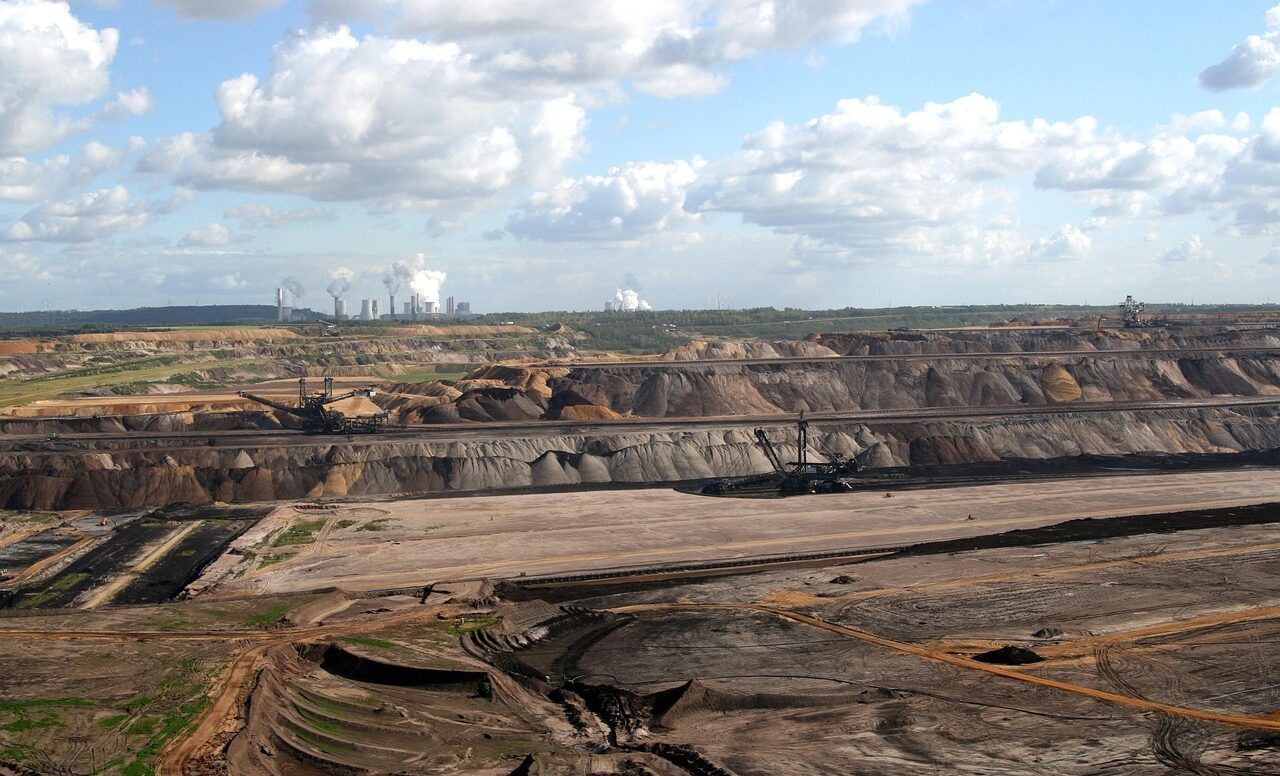
Photo: Coal mining. Pexels