


For over a decade, Tunisia was universally analyzed as the singular democratic exception in the Arab world; a vibrant, if volatile, laboratory of pluralism and institutional compromise. In contemporary regional analysis, however, the country is now presented through a fundamentally altered lens, having entered a phase of stark, enforced political predictability.
The legislative gridlocks and public friction that characterized the decade following 2011 have given way to an undeniable surface calm. The current authoritarian regime consistently frames this shift as a necessary, corrective restoration of state authority. Yet, for any attentive observer, this stability is not the product of resilient governance, but rather the silence that follows a comprehensive institutional demolition started in 2021. The stability exists precisely because the ground has been cleared of any competing power centres.
Crucially, this absolute consolidation of power does not represent a rupture with the political habits of Tunisia’s recent past, but rather their ultimate realization. While the current regime positions itself as a fierce antidote to the post-2011 Islamist-led governance, it operates as its structural mirror image. It replicates the exact same playbook of institutional capture, the systematic erosion of horizontal accountability, and the neutralization of independent oversight. The current system may now be deployed against those previous actors, but it relies on the very same mechanism: treating state institutions not as independent pillars of a republic, but as instruments to be monopolized and purged of dissent.
Stability is not the product of resilient
governance, but rather the silence
that follows a comprehensive
institutional demolition
As of 2026, this aggressive erasure of institutional friction has successfully secured a monopoly on powerbut it has created a deeply brittle façade, very much similar to the one Ben Ali established after 1987. By governing in a structural vacuum, the regime has eliminated and/or jeopardized the safety valves of the State. As a result, the signs of systemic fragility are spilling out into plain sight across every sector: from a paralyzed domestic economy and supply shortages to a suffocating civic space and transactional foreign policy.
The Dismantling of Institutional Balance
To understand how the current surface stability was achieved in Tunisia, one must examine the systematic removal of legal and political checks on executive power starting in 2021. This process focused heavily on reversing the institutional separation of powers that defined the post-2011 era. Rather than reforming state governance to improve its efficiency, the current authoritarian regime focused on a clear objective: eliminating any independent entity capable of oversight, dissent or disapproval.
The first major step in this process was the loss of judicial independence. In early 2022, the executive unilaterally dissolved the independent Supreme Judicial Council, the body explicitly tasked with protecting the judiciary from political interference, and replaced it with a temporary council appointed by the President and still functioning to this day. This was followed by decrees granting the executive direct authority to summarily dismiss judges and prosecutors, bypassing standard legal protections. By subordinating the courts to the presidency, the regime transformed the judiciary from an independent pillar of the republic into an administrative tool used to penalize political opposition and legitimize executive decisions.
By the 2025–2026 judicial year, this executive control reached a state of total institutional normalization. The AMT[1] has openly stated that the judiciary is operating for its third consecutive year completely stripped of institutional guarantees of independence. Instead of traditional, independent judicial movements, the Ministry of Justice now routinely manages the corps through direct administrative memos (“notes de service”). This mechanism allows the executive to constantly shuffle, appoint or dismiss judges and prosecutors at will, bypassing the protections outlined even in the new 2022 Constitution. Furthermore, the State has left key leadership positions, such as the ‘’Premier Président’’ of the Court of Cassation, deliberately vacant for years, enabling direct administrative management from the ministry. The pressure on independent oversight also targeted the magistrates’ organization itself, which faced administrative actions and legal warnings from the Prime Minister’s office in early 2026 surrounding its electoral congress.
Compounding this judicial subordination is a fundamental, long-standing structural void: the complete absence of a functioning Constitutional Court. This absence perfectly illustrates the continuity of political habits between the post-2011 Islamist-led governance and the current regime. For years, post-revolutionary coalitions delayed the creation of the court due to partisan gridlock, leaving the country without a supreme arbiter of constitutional law. The current regime directly exploited this institutional vacuum in 2021, executing its consolidation of power with no high court in existence to review or challenge the legality of its exceptional measures. Even under the 2022 constitutional framework, the court remains unestablished, ensuring that executive actions and legislative decrees continue to operate entirely free from constitutional oversight.
A similar process took place within the legislative branch. The highly pluralistic, though often fractured, Parliament of the pre-2021 decade was replaced by a heavily restricted legislative structure under the 2022 Constitution. The new framework systematically stripped parliament of its core oversight mechanisms: its power to censure the government was made nearly impossible, and its capacity to introduce independent legislation was radically curtailed. Combined with new electoral laws that marginalized organized political parties, the current Parliament has been reduced to, and brought back to, a pre-2011 role of a hollow chamber. It no longer functions as a space for genuine national debate or societal representation, acting instead as a passive body that rubber-stamps presidential decrees.
Ultimately, by dismantling the independent authority of both the courts and the legislature, the regime did not create a more effective state apparatus. Instead, it successfully executed a traditional authoritarian strategy. By clearing the ground of competing power centres, the executive now operates within a structural vacuum, entirely unhindered by internal checks but fundamentally isolated from the society it governs.
The Constriction of the Public Square and Civic Dynamics
To maintain its monopoly on power and prevent any organized disapproval, the authoritarian regime has deployed a dual strategy. It has implemented a highly restrictive legal framework to silence independent individual voices while simultaneously neutralizing the country’s traditionally vibrant civil society organizations and labour unions. By flattening the civic landscape, the executive has effectively removed the traditional intermediaries that once bridged the gap between the State and the public.
The primary tool used to restrict public debate and independent oversight is Decree 54, a piece of legislation enacted under the guise of combating cybercrime and the spread of “false news.” In practice, the broad and vaguely worded provisions of this decree have been systematically deployed to criminalize journalism, political commentary and everyday online dissent. Activists, public figures, defence lawyers and random citizens routinely face state prosecution, investigations and imprisonment for making public statements that question state decisions or criticize public officials. This aggressive use of the legal apparatus has successfully engineered a pervasive chilling effect, forcing a once-vocal independent media landscape into widespread self-censorship to avoid state targeting.
Beyond individual voices, the regime has focused on containing the collective infrastructure of Tunisian society. Independent non-governmental organizations (NGOs) and human rights associations, which served as critical watchdogs during the post-2011 decade, now operate under severe pressure. They face restrictive administrative and banking hurdles, intensive audits regarding international funding and state-backed rhetoric that frames independent civic activism as a form of foreign interference. This strategy of containment has also successfully neutralized the Union Générale Tunisienne du Travail (UGTT), the historically powerful labour union that once acted as a major political arbiter. By systematically shutting the union out of socioeconomic policy discussions and prosecuting local union officials, the regime has effectively crippled the UGTT’s capacity to mobilize collective opposition. Ultimately, by treating independent organizations and open debate as existential threats rather than essential safety valves, the regime has closed off all formal channels for expressing public grievances, leaving a rigid structure where social frustration can only accumulate beneath the surface.
The Monolithic Economy and Structural Failures
While the authoritarian regime has successfully cleared the political landscape of opposition, its absolute centralization leaves it deeply vulnerable when facing complex economic realities. By dismantling the spaces for transparent public debate and eliminating consultation with independent economic experts, business networks or labour unions, the State has isolated its decision-making apparatus. As a result, Tunisia’s governance model has proven structurally incapable of managing a compounding fiscal crisis, choosing to rely on administrative force and security measures rather than coherent economic strategy.
For any attentive observer of the past couple of years, the most visible symptoms of this institutional failure are found in the daily realities of the domestic marketplace. The country has been plagued by chronic, widespread shortages of essential, state-subsidized goods. Basic commodities such as flour, sugar, coffee, milk and fuel routinely vanish from shelves for weeks at a time. This structural scarcity is the direct consequence of a severe state liquidity crunch and an inability to reliably fund imports. This crisis unfolds against a backdrop of deeply stagnant growth, with annual GDP growth lingering at a muted 2.5% by the end of 2025, and dropping into negative territory at -0.3% quarter-on-quarter by early 2026.
Treating a complex macroeconomic crisis
and a deeply rooted informal structure as simple
security problems or conspiracy theories fails
to restore the market; it merely deepens the stagnation
The regime’s response to these systemic failures highlights the core weakness of absolute power. Rather than addressing the root causes of the crisis, such as structural supply chain blockages, a widening budget deficit or a lack of international investment confidence, the executive relies heavily on administrative decrees and rigid price controls. This rigidity is further complicated by Tunisia’s massive debt burden, with the government debt-to-GDP ratio reaching a precarious 82.9% by the end of 2025. With international funding markets largely restricted due to the political impasse, the State has increasingly forced local commercial banks and the Central Bank to finance its public deficit, crowding out private investment.
Furthermore, to maintain its veneer of total authority, the State routinely externalizes blame. This is particularly visible in how the regime interacts with the country’s vast informal sector. Because of decades of interrupted structural development, a massive portion of Tunisia’s economic activity and labour force operates within the informal economy, historically serving as a critical social safety valve for millions of citizens. Instead of implementing long-term policies to integrate this sector, the regime has increasingly used the security apparatus to criminalize local distributors, merchants and informal actors, labelling structural supply issues and standard currency-driven import delays as “illegal speculation” or hoarding. This strategy has created an environment of fear that further paralyzes commercial networks. Ultimately, treating a complex macroeconomic crisis and a deeply rooted informal structure as simple security problems or conspiracy theories fails to restore the market; it merely deepens the stagnation, demonstrating that a monopoly on political control cannot force a broken economic system to function.
The Mediterranean Pivot – Transactional Diplomacy and External Leverage
To understand how the current authoritarian regime maintains its international standing despite domestic regression, one must examine its evolving relationship with the wider Euro-Mediterranean region. Tunisia’s foreign policy has increasingly shifted into a purely transactional dynamic. Rather than building partnerships based on shared governance values or institutional development, as it tried to starting from 2011, the regime has successfully utilized external anxieties, specifically European concerns surrounding irregular maritime migration, to secure financial support and a degree of international legitimacy.
The core of this relationship relies on a clear trade-off: the regime positions itself as an essential gatekeeper of the central Mediterranean migration route. In exchange for strict maritime border containment, the State receives significant direct financial assistance, budgetary support and security equipment from both European institutions and European partners, mainly Italy. By enforcing this rigid control along its coastlines, the regime has made itself an indispensable partner in the short-term management of regional migration flows.
However, this transactional strategy creates a profound stability paradox. By prioritizing short-term maritime containment and surface-level predictability, external partners have largely chosen to remain quiet or downplay the systematic dismantling of Tunisia’s democratic institutions and the constriction of its civic space. This external silence helps subsidize the regime’s surface calm, but it ignores a much more volatile domestic reality. In its effort to enforce this alignment, the regime has increasingly adopted the rhetoric and methods of European far-right movements. This includes the state-level rise of overtly racist discourse, conspiracy theories regarding demographic engineering and the systematic criminalization of any local humanitarian or legal support provided to migrants.
By backing a rigid, isolated authoritarian system that relies on these divisive tactics while paralyzing its own domestic economy, external actors are inadvertently contributing to the very structural decay, social friction and lack of future opportunities that drive both Tunisians and sub-Saharan migrants to risk the sea in the first place. Ultimately, the regime’s external predictability is a commodity traded for political silence, masking an unsustainable domestic reality that remains deeply fragile.
Beyond its interactions with Europe, the regime’s external positioning is defined by a deep pragmatic dependency on regional neighbours and a carefully managed approach to wider Arab solidarity. This is most visible in Tunisia’s relationship with Algeria, which has evolved into a state of high asymmetry. Financially constrained and politically isolated, the Tunisian regime increasingly relies on Algiers for vital economic lifelines, including preferential energy supplies and direct budgetary loans. This stark dependency has effectively aligned Tunis with Algeria’s broader geopolitical agenda, significantly narrowing Tunisia’s traditional diplomatic flexibility within the Maghreb.
The regime’s external predictability
is a commodity traded for political silence,
masking an unsustainable domestic reality
Simultaneously, the regime’s stance on the wider region, particularly regarding the Palestinian cause and the war in Gaza, is defined by an absolute lack of meaningful engagement. Far from leading or echoing popular sentiment, the State has actively suppressed authentic expressions of solidarity. This domestic containment was made clear by the executive’s explicit opposition to legislative efforts aimed at criminalizing normalization with Israel, a highly sensitive issue given the regional backdrop of the Abraham Accords. Furthermore, the regime has gone so far in 2025/26 as to prosecute and persecute Tunisian and foreign activists associated with the humanitarian freedom flotillas to Gaza. While the State continues to cast standard, quiet votes in favor of Palestinian interests at the United Nations, its actual diplomatic voice on the global stage remains virtually inaudible. By maintaining this calculated passivity and a strict silence regarding wider regional conflicts, including the military escalations in Lebanon and developments involving Iran, the regime ensures it avoids any geopolitical friction that could complicate its delicate external survival.
Conclusion: The Horizon Beyond
The stark political predictability that defines contemporary Tunisia is ultimately the byproduct of a profound systemic fragility. By utilizing a familiar historical playbook of institutional capture and absolute centralization, the current authoritarian regime has successfully cleared the landscape of competing power centres. Yet, this aggressive erasure of internal checks and balances, independent judicial structures, and legislative oversight has not created a more efficient state apparatus. Instead, it has engineered a structural vacuum. By silencing the country’s vibrant civil society, restricting the media through punitive legal decrees and treating complex macroeconomic crises as security problems or conspiracy theories, the executive has effectively dismantled the essential safety valves of the republic.
This absolute concentration of power leaves the State deeply vulnerable in 2026 as it faces the limits of administrative force. On the domestic front, a paralyzed economic system, burdened by stagnant growth, a massive public debt, and structural shortages of basic goods, continues to severely test public endurance. Internationally, a highly asymmetric dependency on Algeria and a calculated passivity regarding the broader Middle East have reduced Tunisia’s diplomatic footprint to near invisibility. While the regime has successfully managed to trade short-term maritime border containment for European financial support and political silence, this transactional arrangement ignores the underlying reality. By backing a rigid, isolated system that accelerates domestic decay and social friction, external partners are subsidizing a surface-level calm that remains deeply unsustainable. As Tunisia moves through 2026, the regime stands completely alone at the centre of power, holding all the authority but bearing sole responsibility for a fractured state, leaving the country highly fragile and fundamentally ill-equipped to withstand the next inevitable systemic shock.
[1] In French, Association des Magistrats Tunisiens (AMT): On 25 May 2026, the main Judges association published a strong press release condemning the overall state of the judiciary in the country: https://businessnews.com.tn/2026/05/25/sonia-dahmani-ftdes-association-des-magistratsles-5-infos-de-la-journee/1403432/.
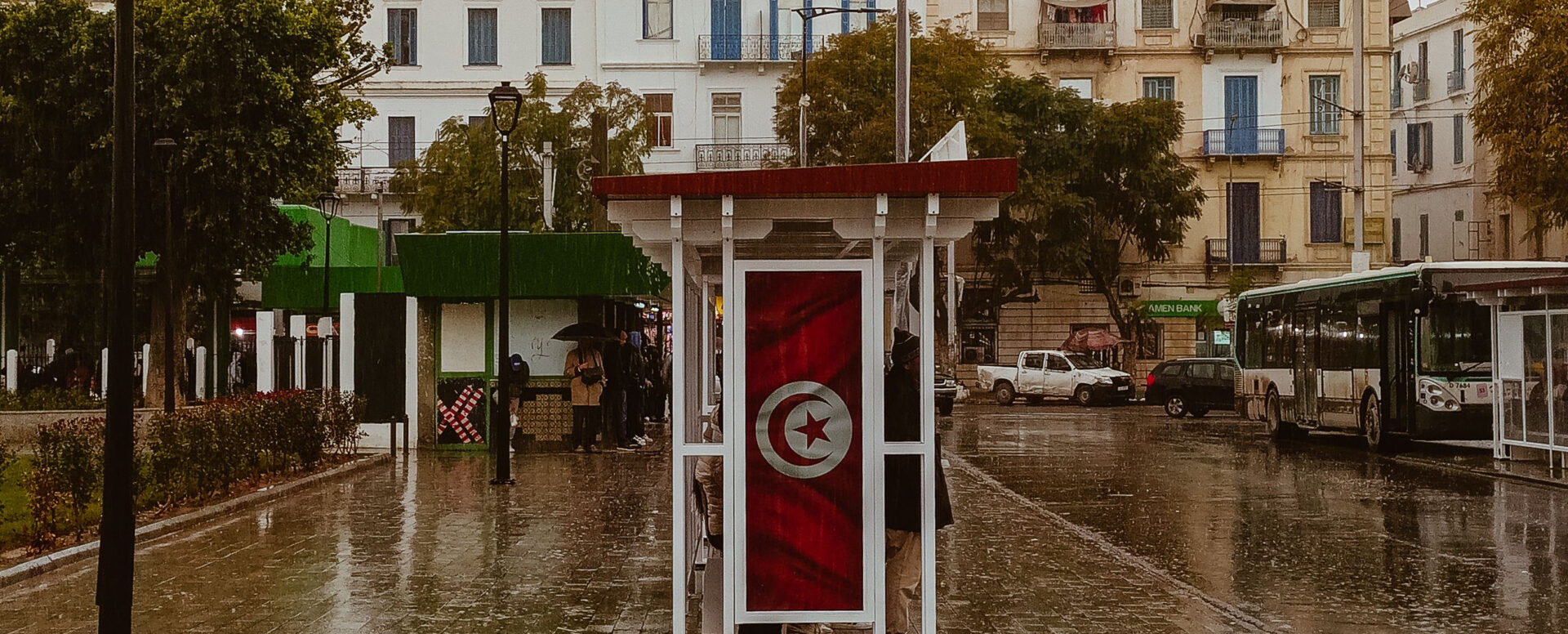
Header Photo: Tunis, Tunisia. June 20th, 2026. Pexels. Photographer: Chermiti Mohamed