


In the Euro-Mediterranean region, where one of the world’s youngest populations grapples with complex political, economic and social challenges, meaningful youth participation in multi-stakeholder dialogue has become increasingly urgent. Youth represent a significant demographic force — particularly in southern and eastern Mediterranean countries, where nearly half the population is under 25 — and are both disproportionately affected by systemic issues such as unemployment, gender inequality and political disenfranchisement, and uniquely positioned to address them. Institutions like the Union for the Mediterranean (UfM) and the Anna Lindh Foundation (ALF) have therefore prioritized youth engagement, recognizing it as essential to building inclusive, sustainable, and democratic societies on both shores of the Mediterranean.
This article explores the factors that influence effective involvement of young people in multi-stakeholder dialogue. These factors include the wider political and economic context, which is characterized by widespread political alienation, loss of social mobility and general economic opportunity and distrust or disinterest in democracy and its core institutions, such as public information, government and other institutions among young people. The first section defines multi-stakeholder dialogue, relying on examples of past dialogues, especially in relation to young people’s involvement. The second section examines barriers and opportunities associated with youth involvement in multi-stakeholder dialogue and the third, what external conditions and design of dialogue would potentially allow for effective involvement.
Defining Multi-Stakeholder Dialogue
Multi-stakeholder dialogue has been defined as “structured processes used to bring stake-
holders together to develop a shared understanding of issues, evidence and plans of action.”[1] The World Bank’s for Communication for Governance and Accountability Programme (CommGAP) defines multi-stakeholder dialogue both more generally and more focused on action and impact. Stakeholder dialogue is an “interactive, working communication process that involves all types of stakeholders in decision-making and implementation efforts,” and this communication is deliberately “two-way.” The intention is to increase understanding and relations so as to advance implementation of the dialogue’s conclusions. Critically, “stakeholder dialogue is generative – discourages blaming for the past and creates a shared future.” Dialogues should thus be inclusive, open, respectful, equal and transparent, and ensure that the necessary resources and commitment are in place to eventually generate some consensus and deliver results that in turn become “mainstreamed” rather than treated as an extraneous project or development.
Much of the CommGAP analysis relies on dialogue within business. Other definitions more explicitly include stakeholders conventionally excluded from discussions. For instance, the UN Environment Programme referred to specific multi-stakeholder dialogues on plastic pollution as “intended to engage and hear the voices of stakeholders that will be impacted by the international legally binding instrument on plastic pollution, but who normally do not participate directly in the negotiations.” The invitees to the dialogues thus included “Governments and sub-national actors (such as cities, regions, informal and cooperative workers, indigenous people and local communities), civil society organizations (CSOs), non-governmental organizations (NGOs), intergovernmental organizations (IGOs), research institutions and private sector stakeholders.”
In a 2024 report on increasing youth engagement with multi-stakeholder dialogue,[2] the Union for the Mediterranean defines this dialogue as “A collaborative approach to discussions that involves various actors from different sectors, such as governments, civil society, youth organizations, academia and the private sector. This type of dialogue seeks to integrate a wide range of perspectives to address complex regional or global challenges and ensure that solutions are co-created by all relevant stakeholders.” (p. 20) The challenge is how to design dialogues so that they do effectively involve young people.
Recent initiatives across the Euro-Mediterranean
space offer tangible frameworks and practices
aimed at integrating youth into policy processes and civic life
Recent initiatives across the Euro-Mediterranean space offer tangible frameworks and practices aimed at integrating youth into policy processes and civic life. Notably, the Union for the Mediterranean’s Youth Strategy 2030 and the accompanying UfM Youth Agenda: Call for Action lay the groundwork for inclusive youth engagement through structured multi-stakeholder dialogue, capacity-building and cross-sector collaboration. These efforts have materialized in activities such as the Med Youth Lab, which foster youth-led solutions on topics ranging from climate to social inclusion. The Med Youth Lab’s 2024 edition, for instance, included hands-on project development workshops, mentorship from policy experts and a pitch competition to support scalable youth-led initiatives.
The Anna Lindh Foundation’s Mediterranean Youth in Action (MYA) programme also contributes to this regional landscape by connecting grassroots initiatives with intercultural learning, advocacy and regional policy. Through youth exchanges, community-based training and the promotion of active citizenship, it strengthens young people’s role as multipliers of intercultural dialogue and agents of positive change.
While these initiatives mark important steps forward, they also reveal persistent structural challenges that will be explored further in the next section. As highlighted in the 2024 UfM Youth Engagement Outcome Document, youth engagement remains hindered by tokenism, fragmented initiatives and insufficient inclusion of marginalized voices, particularly young women and rural youth. Efforts must therefore continue to be guided by principles of co-ownership, legitimacy of youth CSOs and transparent dialogue mechanisms.
Identifying the Factors that Influence Participation of Young People
In their analysis of multi-stakeholder dialogues conducted in ten low- and middle-income countries on track to reduce child and maternal mortality rates in line with targets from the Sustainable Development Goals (SDGs), Frost et al (2016) found, like the World Bank explanation cited above, that factors like time commitment, relations between representatives of different sectors, influence over policy, knowledge of the relevant issues and leadership were all important to successful dialogues.
The 2024 UfM Youth Engagement Outcome Document listed key challenges to youth engagement as “inadequate frameworks for youth involvement in decision-making,” which translates into platforms for communication with policymakers that do not account enough for the lives and experiences of young people; weak monitoring and evaluation, which undermines accountability for producing outcomes from dialogue; and insufficient and/or ineffective means more generally for young people to engage substantively and satisfactorily. Involvement of young people becomes tokenistic and reliant on underfunded youth organizations and services, which often have little capacity to collaborate and present a more coherent narrative representing youth across cities, countries and regions. (p.10-11) Importantly, dialogue organizers, because of their own constraints, may end up not including young people from marginalized or vulnerable backgrounds, which the report states shows a “pressing need to develop new mechanisms that actively involve young people who traditionally have less access to dialogue opportunities.” (p.11) The result can be an exacerbation of mistrust and alienation between young people and older generations as well as institutions. The report calls for dialogue that can “create pathways for youth participation” that foster mentorship, communication and, significantly, “co-creation” of solutions.
Analysing the context for the Mediterranean Youth in Action Programme (MYA), Lamonica (2023) comments that despite greater attention to youth civic and political participation, “significant challenges persist” based on “structural, organizational, administrative, legal and financial barriers, and a lack of trust in institutions and politics” alongside deterioration of democratic values and institutions, economic crises, social inequality and political upheaval. (p.109)
This description of the challenges and barriers characterizing youth involvement in policymaking, whatever form it takes, is pervasive across political and economic contexts. Alienation and disaffection may be more pointed and explicit in non-democratic countries with high unemployment rates among young people, but the distrust, especially in politics, and pessimism about the future can be found across otherwise very different countries in terms of wealth, geography and income. The Power of Dialogue Consortium[3] (2024), which developed initiatives to encourage youth political participation in six countries, including Uganda, Burkina Faso, Tunisia, Guatemala, El Salvador and Colombia, names five challenges to this participation. Similar to Lamonica’s analysis of the Mediterranean context, these challenges include underrepresentation in policymaking and politics, socioeconomic inequality, inadequate implementation of existing legislation and resources to support youth political participation, the cost of participating in politics and, likewise, the impact of insufficient resources on the capacity to participate in politics. (p.5)
Survey data on how young people view politics, democracy and their own futures align with these common challenges to encouraging youth to become involved in civic and political life. An analysis of EU survey data (primarily Eurobarometer data from 2019-2021) published in 2021 on the attitudes of 16-30 years old found that young people generally prioritize health, the economic situation, and specifically job creation, social fairness and equality, education and climate change as policy issues that need to be addressed. The EU was viewed as a leader in protecting human rights, the rule of law and democracy. Two years later, however, an Open Society Barometer survey in 30 countries (over 36,000 respondents) found that while the overwhelming majority (86%) of respondents want to live in a democracy, they also generally trusted politicians less than other actors to serve their interests. On average, 62% of respondents regarded democracy as the preferred form of government (p.10); alarmingly, only 56% of respondents in the US felt this way, and other democracies, like Germany (60%), also fell under the global average. The same survey found that 42% of 18-35 year old respondents believed that “army rule and leaders who do not bother with parliament or elections” were a “good way” to run a country, versus 20% of over 56 years old and 33% of 36-55 years old. (p.19) Young people were also the least enthusiastic about democracy (p.6) an attitude reflected in increasing political support for far-right political parties.[4]
Though lack of opportunities does not always
generate distrust in the political system,
it has corresponded with voter participation
rates, voting preferences and civic engagement
The distrust in democracy and openness to authoritarianism compared to other age groups corresponds with inequality and employment trends, particularly since the financial crisis in 2007-08 and Covid-19. In 2024, the youth (15-24) unemployment rate in Spain was 26.7% and in Sweden, 23.7%. In the Mediterranean region, which has a large population of young people aged 15-29 compared to other regions, the unemployment rate has averaged around 25%. Besides Spain, Italy and Portugal both had youth unemployment rates above 20% as of June 2024, and France’s rate was 17.6%.[5] In North Africa, the rates were higher, with an average youth unemployment rate of 24.4% in 2023. More than 30% of young people were not in employment, education, or training (NEETs) in the same year and the vast majority in paid employment were working informally.[6]
Though lack of opportunities does not always generate distrust in the political system, it has corresponded with voter participation rates, voting preferences and civic engagement. For instance, polls in Spain regularly show relatively high support (25%+) among 18–24 year olds for the far-right Vox party, which has found the division between patriots and globalists, and the broader anti-establishment, anti-liberal values messaging to appeal to young people confronting high cost of living, overstretched public services and lack of affordable housing. Moreover, for young people, political participation is primarily regarded as voting or posting on social media, and less so participating in forums like the EU Youth Dialogue. What then can be done to convince and enable young people to participate in civic engagement, and particularly dialogues, which would enable interaction with other stakeholders with different perspectives? What has been achieved by programmes aimed at raising this participation and how?
How to Effectively Encourage Participation in Multi-Stakeholder Dialogue
Recommendations for including young people in dialogue and for making that inclusion meaningful have been consistent across projects. These recommendations emphasize institutionalization of youth involvement, leveraging existing initiatives for young people, proactive outreach to ensure marginalized youth participate, collaborating with CSOs offering youth services, sufficient resources to maintain dialogues and ensure outcomes, and respect for young people as co-creators and co-owners. For instance, to further its Youth Agenda, the Union for the Mediterranean calls for more mainstreaming of youth involvement; continuous structured dialogue with policymakers on issues relevant and of interest to young people, like education and climate change; monitoring and evaluation to demonstrate youth contributions; intergenerational communication; and building the skills and capacity of young people to input into policy and interact with other stakeholders.[7] A Council of Europe report examining forms of youth participation in decision-making across Europe also emphasized ensuring the inclusion of minority and disadvantaged groups, making sure that platforms for communication are comfortable and accessible for young people, developing skills for participation and providing adequate resources, maintaining monitoring and evaluation, and showing that the results of participation benefit young people.[8] The Power of Dialogue Consortium report, entitled “The Voice of Youth at the Table” (2024), recommends facilitating inter-generational dialogue, working with youth organizations and young people as co-creators, building upon existing initiatives with young people, providing sufficient resources for these initiatives and others, outreach that speaks directly to young people and extends deliberately to young people from diverse backgrounds, and mainstreaming young people’s political participation across sectors and within political parties.[9] (p.40)
To ensure young people are not merely consulted
but fully recognized as strategic partners, these efforts
must be supported by sustained funding, youth
advisory structures and consistent follow-up mechanisms
The Consortium report does add recommendations calling for increased research to “raise awareness about the risks and opportunities associated with young people’s evolving political perspectives and citizenship norms,” (p.40) devising “a simple analytical framework to enable actors to self-assess obstacles” to participation and create opportunities and “facilitate building bridges between informal and formal forms of participation.” The authors note that “Young people are very active in informal spheres but are seemingly unable to make the step to formal participation in politics.” It is this bridge that may be the most important for supporting youth engagement in multi-stakeholder politics and strengthening confidence and trust in politics and democracy more broadly. If young people distrust politics because it seems to yield few benefits for them – leaving an opening for non-democratic actors to galvanize their support-, then political participation must both be linked to a range of outcomes and be seen as a spectrum of opportunities and actions in itself. To enable and encourage youth involvement in multi-stakeholder dialogues, these dialogues should be situated within multiple, interconnected opportunities for participation that are clearly connected to possible impacts. For instance, if unemployment is a major concern, then dialogues should be seen as spaces to discuss employment policy and job creation with policymakers, skill development to enhance individual job possibilities, and a source of information to influence individual and collective political preferences, party membership and/or civic engagement, and sustained advocacy. The outcome of participation in a dialogue may not be a job, or it could be, but if situated within a process and range of political activities, its recommendations would influence policymaking and reflect the pressures and anxieties affecting younger generations facing high unemployment rates and financial insecurity. Participants would also see a trajectory between the dialogues and other forms of participation, raising the importance of multi-stakeholder dialogues as avenues for engagement and as mechanisms for expanding faith in politics and trust in institutions and values. Building on this need for systemic, interconnected opportunities for youth engagement, the increasing prioritization of youth participation by regional institutions such as the Union for the Mediterranean and the Anna Lindh Foundation represents a crucial opportunity. Through frameworks such as the UfM Youth Agenda and the Mediterranean Youth in Action Programme, these actors are contributing to a broader shift from symbolic inclusion to structured co-leadership and intergenerational dialogue. To ensure young people are not merely consulted but fully recognized as strategic partners, these efforts must be supported by sustained funding, youth advisory structures and consistent follow-up mechanisms. Ultimately, meaningful youth participation in multi-stakeholder dialogue is not just a matter of policy effectiveness — it is key to ensuring that young people feel seen, heard and empowered to shape the future of the region they will inherit.
[1] Frost, Laura; Hinton, Rachael; Pratt, Beth Anne; Murray, John; Arscott-Mills, Sharon; Jack, Susan; de Francisco, Andres & Kuruvilla, Shyama. “Using multistakeholder dialogues to assess policies, programmes and progress for women’s, children’s and adolescents’ health.” Bulletin of the World Health Organization 2016 (94) 393–395 doi: http://dx.doi.org/10.2471/BLT.16.171710.
[2] Union for the Mediterranean. “Increasing Youth Involvement in Multistakeholder Dialogue: Youth-Responsive implementation of the UfM Youth Agenda. UfM Youth Engagement Series 2024: Outcome Document.”
[3] The Netherlands Institute for Multiparty Democracy (NIMD), Goree Institute (GORIN), the Centre for Mediterranean and International Studies (CEMI), and Akina Mama wa Afrika (AMwA). The Consortium was funded by the Dutch Ministry of Foreign Affairs.
[4] The Rassemblement National received 30% of the youth vote in the last EU election, and in eastern Germany, the AFD won between 29 and 38% of the youth vote in some regions. www.freiheit.org/human-rights-hub-geneva/gen-z-survey-committed-human-rights-worried-about-democracy-0.
[5] Based on Eurostat data – www.statista.com/statistics/613670/youth-unemployment-rates-in-europe/.
[6] ILO (2024) Global Employment Trends for Youth 2024: Middle East and North Africa, August 2024, p.1.
[7] Increasing Youth Involvement in Multistakeholder Dialogue: Youth-Responsive implementation of the UfM Youth Agenda (2024), pp.16-19.
[8] Crowley, Anne and Moxon, Dan. New and innovative forms of youth participation in decision-making processes, Council of Europe, 2017.
[9] Other reports not related to dialogue make similar recommendations. For example, see Models & Programs for Youth’s Governance& Participation in Planning: More Inclusive & Sustainable Cities, Sustainable Cities Youth 2030 Cities Team, December 2023, which recommends that “Activities should prioritize meaningful and inclusive youth participation in decision-making processes related to urban development, involving them in shaping policies and initiatives that impact their lives,” “Collaboration, including adult partnerships with stakeholders from various sectors, is essential to achieve comprehensive solutions,” “Data and evidence-based approaches can also track youth well-being and guide policy implementation,” “A holistic approach should address diverse needs such as education, health, employment, and social inclusion,” “Capacity building and amplifying youth voices are crucial for effective participation,” and “Ensuring the model is adaptable to local contexts, considering unique challenges and promoting sustainable and inclusive development.” (p.66)
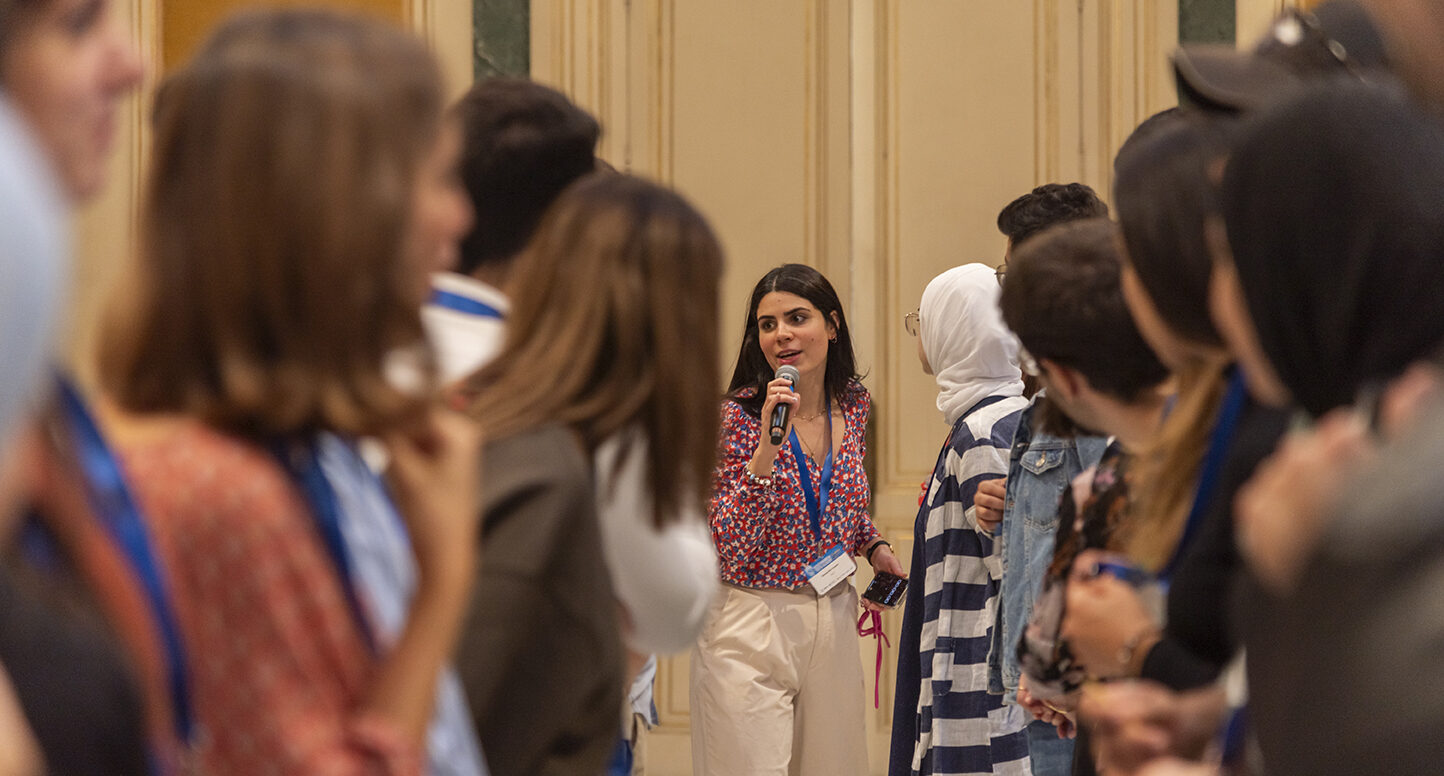
Photo: Mediterranean Youth Academy in Barcelona (2023). Photo: Union for the Mediterranean.