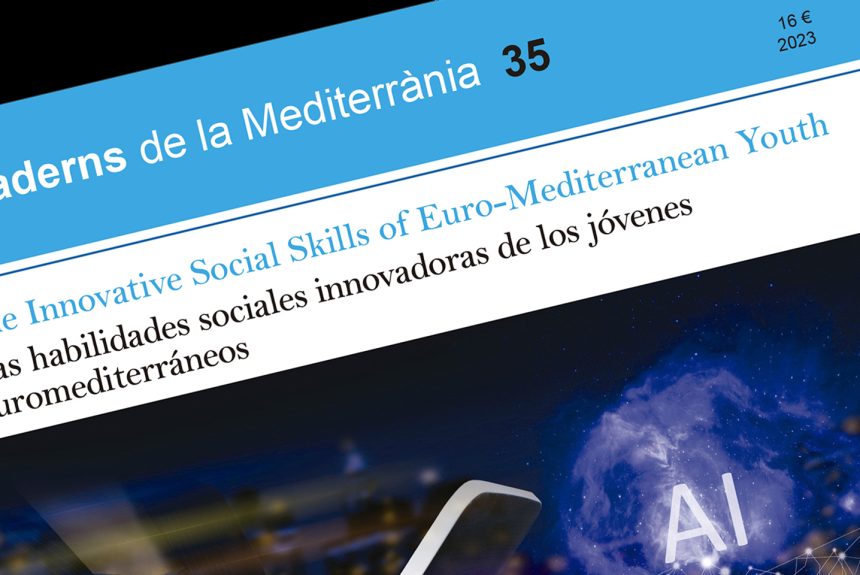
Introduction to the QM35 issue by Maria-Àngels Roque, Editor-in-Chief of the journal.
The IEMed is programming a new series of concerts with the aim of bringing the music, songs, instruments and sounds characteristic of various Mediterranean peoples and cultures closer to the public.
En un intento por contrarrestar los tópicos sobre los árabes, productores y guionistas americanos terminan por reforzar involuntariamente los estereotipos.
Los jóvenes de la región MENA se concentran en el sector informal y con trabajos temporales, lo que provoca una fuga de cerebros.
¿Existe un creciente chií? ¿Cuáles son los objetivos de Irán? Con la expansión del grupo Estado Islámico, ¿la convivencia chiíes-suníes en la región MENA se verá afectada?
Pasado-presente, anticolonialismo-modernismo, Occidente-Oriente son binarios del cine árabe, que se debate entre asimilación y rechazo de los mensajes orientalistas.
Desde 2001, Hollywood ha recurrido al realismo, la historia y la personificación para incorporar un discurso de victimización y trauma en sus películas.
El medio que más ha contribuido a la construcción del imaginario orientalista es el cine, donde lujo, despotismo y sensualidad, y hoy terrorismo, son sinónimo de Oriente.
Catàleg de l'exposició que acull el Museu Episcopal de Vic que vol mostrar aspectes essencials de l'activitat viatgera medieval i el turisme de l'època.
Con motivo de la celebración de las exposiciones dedicadas al pintor Josep Tapiró y Baró IEMed organizó un simposio internacional para revisar, desde una perspectiva interdisciplinaria, la historia del Marruecos.
The Arab authors, through their translated novels, have tried to explain to the world what was happening in their countries, a reality often ignored and treated superficially from neighboring Europe.
Why was the scope of political activism on social media so overestimated during the Arab Spring? And how has the utopian idea that changes would come through mobilization and the ability to increase social interaction on the Internet lost strength?
Salima Ghezali analyzes the gap between the media and the Algerian population that can lead to different questions shared with other political situations in a world marked by globalization.