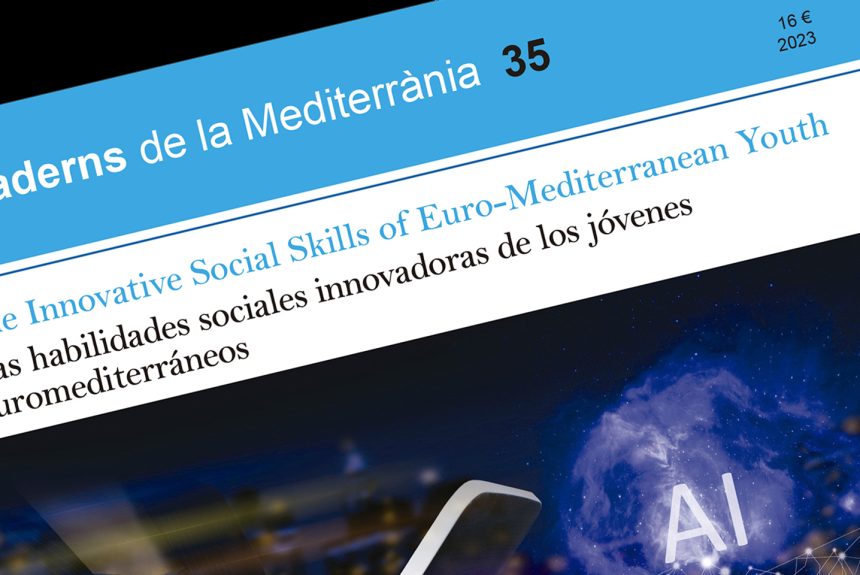
Introduction to the QM35 issue by Maria-Àngels Roque, Editor-in-Chief of the journal.
Falta de financiación, planteamientos burocráticos y politización del patrimonio a causa de su relación con la identidad, factores que impiden una protección básica.
Tras el abandono y el vandalismo, la falta de policía y ejército, de autoridad y orden, hace que el futuro y el destino de los bienes culturales sean muy inciertos.
La révolution nommée printemps arabe prend des idéaux démocratiques les principes fondateurs qui permettront la décolonisation des dictatures, souvent soutenues par des gouvernements étrangers, démocratiques ou pas.
The Mediterranean region is in turmoil. Many countries around the Mediterranean have been shaken by protests, unrest and upheaval.
The publication in 1978 of Edward Said’s Orientalism meant a renewal in the field of literary and cultural studies.
In 2014, the European Institute of the Mediterranean (IEMed) celebrates 25 years of its work fostering actions and projects that contribute to awareness and exchange between Mediterranean societies.
Historically, the Mediterranean region has demonstrated a creative strength derived from the richness of its societies.