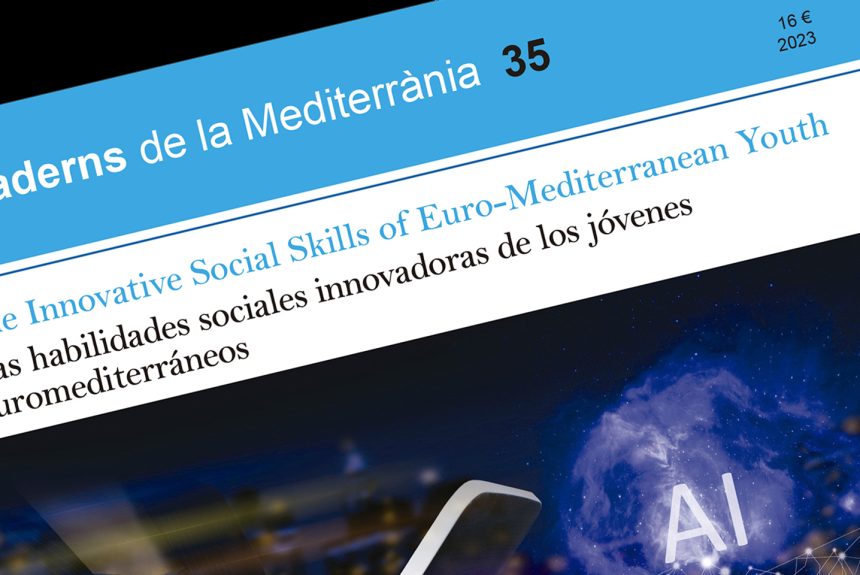
Introduction to the QM35 issue by Maria-Àngels Roque, Editor-in-Chief of the journal.
Al relegar a amplias capas de la sociedad a la marginalidad económica e identitaria, Europa se equivoca; también cuando menosprecia la vitalidad democrática de sus vecinos musulmanes.
Los nuevos proyectos de ciudad se basan en una reinterpretación moderna de los esquemas urbanísticos y constructivos de la ciudad árabe tradicional.
Las producciones serias relacionadas con la revolución y que intentan abrirse camino, surgen de cineastas jóvenes que siempre han estado al margen de la industria.
La joven creación se inserta en formas globalizadas en las que pretende hacer oír su propia voz, afirmando una identidad basada en la experiencia.
La raíz de la revolución no está en el islamismo moderado, sino en el éxito del movimiento de oposición social e intelectual, laico, a pesar de las restricciones del gobierno.
The Mediterranean is experiencing a process of structural transformation, which is severely affecting its respective societies. The changes are the result of popular uprisings in the Arab world and of economic and financial crisis in the eurozone.
No study, analysis or history of modern society is complete without a focus on the nexus of sport, society, culture, politics and development.
Before the Arab Spring, discussing Arab media consisted nearly exclusively of describing the exceptional success of Al Jazeera. Since then, however, things have changed.
Sign up for our newsletter and be up-to-date with upcoming events and latest publications.
Please, choose language:
English Spanish Catalan French
This will close in 0 seconds