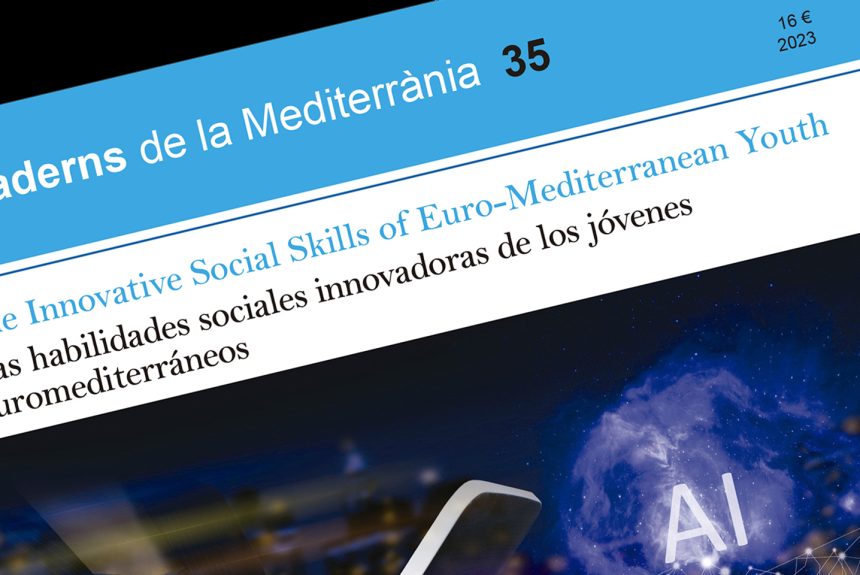
Introduction to the QM35 issue by Maria-Àngels Roque, Editor-in-Chief of the journal.
Existe una nueva variedad de árabe, el e-Arabic, que ha dejado de ser un fenómeno marginal para pasar a formar parte de la literatura árabe dominante.
European culture programmes have finally begun regularly including exhibitions about the East.
We can say that language is the direct expression of a people’s culture. Hence, the official use of a language that nobody speaks in formal fields such as literary and scientific knowledge or politics reveals a strong marginalisation of the populat...
Originated from Sufi movements that took place in the Middle East in the 11th and 12th, the Bektashi Order founds in Albania his Torch Land.
News in the West about Arabs is based on four stereotypes: the heartless terrorist, the corrupt leader, the fanatical fundamentalist, and the uncultured immigrant.
Syria, the country known as “the heart of the Middle East” because of its complex and extremely rich history, has become a battlefield.
La vie en Libye, depuis la fin de la révolution et la mort du colonel Mouammar Kadhafi, n’est, certes, pas facile, mais pleine d’énergie, pleine d’espoir.
Given that in recent decades the study of emigration has become a priority in our globalised communities, the study of the effect of the different contemporary migration waves on creation and the consequences for art poses, above all, a future challe...
La Méditerranée est une nouvelle frontière entre le monde développé et le monde en développement. Ce bassin est l'une des zones les plus sensibles au monde où se nouent de multiples rapports qui définissent le phénomène des migrations.
The typical cuisine of a place is always the result of an evolution based on contributions of the different peoples who have passed through the place in question.
The identity of the Jewish people is formed by elements that involve migration and exile. Since their common origin, both Sephardic and Ashkenazic Jews have had peculiarities derived from the history of their respective exiles.
Sign up for our newsletter and be up-to-date with upcoming events and latest publications.
Please, choose language:
English Spanish Catalan French
This will close in 0 seconds