


En coherència amb el seu compromís amb el diàleg intercultural i amb la cultura com a motor de canvi social, QM incorpora els relats finalistes de la darrera edició del concurs literari Un mar de paraules (A Sea of Words) a la seva programació editorial mitjançant una publicació seriada.
L’escriptora maltesa Nadine Zammit, membre del jurat en l’edició 2025 i guanyadora de l’anterior, el 2023, amb el relat “Design of Betrayal”, apadrina aquesta iniciativa. Les seves paraules inspiradores es presenten aquí com un gest simbòlic de relleu entre generacions de creadors i creadores que, a través dels seus relats, han sabut imaginar la Mediterrània que volem:
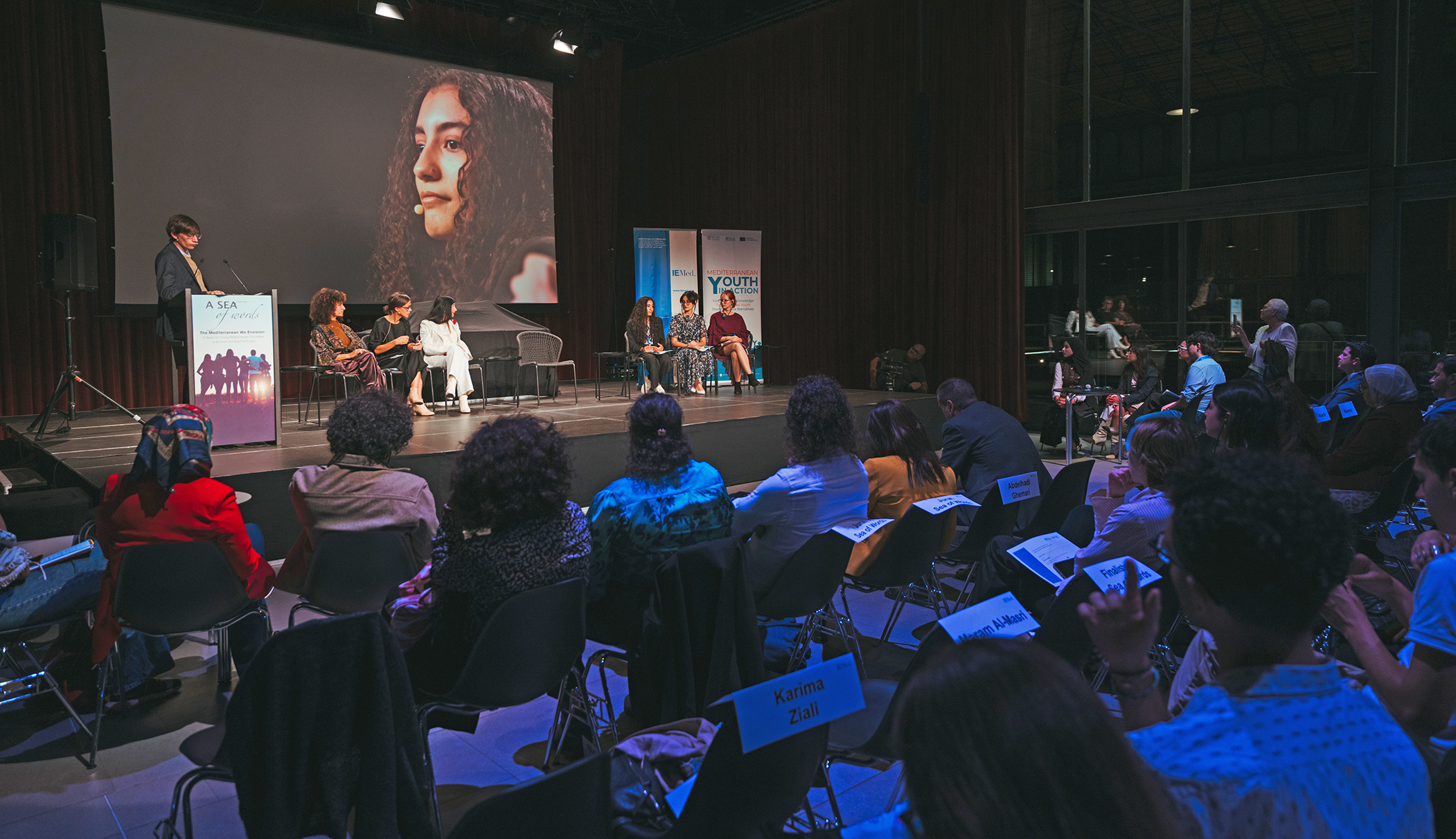
La 17a edició d’A Sea of Words (SoW), celebrada el setembre de 2025, s’erigeix com una iniciativa literària oportuna basada en la premissa que les veus joves són indispensables per reimaginar la Mediterrània. Organitzat per l’Institut Europeu de la Mediterrània (IEMed) en col·laboració amb la Fundació Anna Lindh, el concurs va convidar joves escriptors a dialogar amb un espai compartit sovint definit per la crisi, però igualment modelat per la trobada, la col·laboració i la possibilitat. Sota el lema “La Mediterrània que imaginem”, es va animar els participants no només a narrar el present, sinó també a imaginar el futur —plural, disputat i obert— en un moment marcat per la polarització i el conflicte.
Els dotze relats seleccionats reflecteixen aquesta ambició amb un notable rigor i una diversitat commovedora. A través de diferents estils —íntims, al·legòrics, distòpics i especulatius—, tots tornen sobre una sèrie de preocupacions compartides: la Mediterrània com a frontera i com a pont, la fragilitat de la llar, la persistència de la memòria i la recerca de pertinença en una regió fragmentada. Ja sigui mitjançant la dissolució momentània de les fronteres en els vincles personals, el redescobriment d’una identitat col·lectiva, la resistència silenciosa de l’art o les utopies imaginades d’illes sense fronteres i llengües compartides, aquests relats fan emergir tant l’experiència viscuda com una veritat emocional profunda. Les narratives presentades suggereixen que la Mediterrània no és només un espai geopolític, sinó també un espai humà, teixit a través de relacions i històries encara per explicar.
Més enllà del seu valor literari, el concurs posa en relleu el paper de la producció cultural com a forma de diàleg i transformació. En reunir joves escriptors de tota la regió euromediterrània, A Sea of Words crea una plataforma on la diversitat esdevé un recurs valuós, i no una escletxa divisòria. Els relats seleccionats no ofereixen respostes uniformes; més aviat, insisteixen en la necessitat d’escoltar a través de la diferència i de recuperar la capacitat de construir relats propis en un temps d’incertesa. El concurs ha estat més que una simple competició: ha constituït un exercici col·lectiu de repensar la Mediterrània des de dins, guiat per aquells que n’heretaran i en transformaran el futur.
Nadine Zammit
L’humà – Quan és portat pel mar
Per Hamza Mohammad Tawfiq Al-Halabi
Palestine – Gaza
Durant l’acte de lliurament de premis, al qual malauradament Hamza no va poder assistir, Mohamad Bitari, poeta sirià-palestí establert a Barcelona i membre del jurat de SoW, va pronunciar unes paraules emotives en el seu discurs en català adreçades a l’autor palestí (veure vídeo):
“La nostra alegria és incompleta perquè el món que ens envolta s’enfonsa en espirals d’injustícia, violència, desplaçaments i guerra. També ho és perquè un dels participants d’aquest premi, Hamza Al Halabi no ha pogut ser avui aquí amb nosaltres, simplement perquè es troba assetjat a Gaza, on la tinta es veu impedida de convertir-se en veu i el cos resta empresonat dins de fronteres que no pot creuar. Des d’aquesta tribuna literària, li fem arribar una salutació plena d’afecte i solidaritat, i li diem: la teva presència és amb nosaltres, encara que no hi siguis físicament; la teva veu arribarà, encara que intentin silenciar-la.”
Mohamad Bitari
En el seu relat The Human – When Carried by the Sea, Hamza parteix de la seva experiència íntima en el context gazatí per arribar a una reflexió universal sobre la humanitat, la memòria i la possibilitat de pau. El text situa la Mediterrània com a frontera, però també com a espai compartit des d’on imaginar un futur diferent. Escrit originalment en àrab, aquest relat va ser un dels dotze finalistes del concurs. Obre la publicació seriada per la seva qualitat literària i perquè les veus palestines són avui, i sempre, més necessàries que mai.
S’havia tornat insuportablement monòton sentir les passes dels treballadors que marxaven cap a la feina al matí, els murmuris dels escolars al llarg del camí, el soroll metàl·lic de les petites fàbriques i la veu d’Umm Kulthum que arribava des del cafè proper.
I també era monòton el meu propi despertar amb el sol cada matí, sortir de casa cap a les classes de la universitat, deixant enrere la meva consciència, adormida dins la casa. Sovint oblidava esmorzar, perquè tenia el costum de llevar-me tard.
Però un matí em va despertar del tot. Em va arrencar de la monotonia del meu temps i em va situar en una mena d’aurèola de buit, o en un estat d’absurditat. Llavors vaig pensar: si l’ésser humà és humà en essència, i la raça o la ideologia només són circumstancials, com pot allò circumstancial dominar l’essència? Com puc esborrar l’existència dels altres per una idea passatgera dins el meu cap?
Vaig comprendre, aleshores, que tot el que necessita avui un ésser humà és, simplement, un altre ésser humà, perquè aquesta és l’única veritat per la qual no cal lluitar. És el punt en comú durador entre totes les persones.
Vaig créixer, amb la meva família, en una petita ciutat a la vora del mar Mediterrani. La ciutat semblava una criatura antiga, desgastada pel temps, que resistia l’envelliment amb habitants plens d’energia juvenil i somnis d’infantesa, tot i que tot en ella envellia ràpidament.
Vivíem a prop de la costa, però no la podíem veure.
El mar, aquell ésser blau i infinit, s’havia convertit en un límit, no en un somni.
Una barrera de filferro, no un mirall del cel.
El meu pare sempre ens inculcava l’amor per les persones, per totes. Solia dir:
“Fill meu, si els nens de Gaza, Tel Aviv, Beirut i Nàpols es reunissin en una plaça i juguessin junts, ningú no hauria d’escriure un tractat de pau.”
Aleshores no l’entenia. Però aquell matí estrany vaig adonar-me que el joc també té ressò, igual que la guerra, però no fa por.
Vaig créixer, i el mar va créixer amb mi. De petit el sentia més proper, més íntim, però a poc a poc semblava allunyar-se.
La distància entre ell i jo no es mesurava en metres, sinó en por, en petites pèrdues acumulades, com pedres antigues al mur vell de la ciutat.
Casa nostra tenia una porta de fusta vella que donava a un carreró estret, i el meu pare l’obria cada matí murmurant versos de l’Alcorà.
Jo li preguntava: “Per què sempre murmures quan obres la porta?”
Ell responia: “Perquè només hi entri la pau amb nosaltres.”
Abans pensava que exagerava, però ara ho entenc. Qui vol sobreviure aquí ha de negociar amb la porta cada matí, convèncer-la que no s’obri davant d’una bala o una explosió.
Als catorze anys vaig veure morir el meu primer amic. Es deia Yasser i s’assemblava a mi en tot, fins i tot en els petits somnis. Volia ser futbolista, jugar en un club europeu i enviar-nos vídeos des d’estadis verds.
Però en lloc de veure els seus gols, vam veure el seu funeral.
No recordo com vaig plorar. Només recordo que no vaig parlar durant dies, com si la meva veu hagués declarat dol. Des d’aquell moment, dues veus van començar a viure dins meu:
Una volia cridar, venjar-se, destruir-ho tot.
L’altra volia caminar contra el foc, plantar alguna cosa que no es pogués cremar.
Aquestes dues forces van lluitar dins meu durant anys.
Una nit vaig parlar amb un professor de la universitat que ens ensenyava “conflictes internacionals”. Li vaig preguntar:
“Es pot aconseguir la justícia sense venjança?”
Ell va dir:
“La justícia no és venjança contra l’assassí, és seguretat per als qui queden.”
Aquella frase em va obrir una finestra al cap. Vaig començar a veure el món d’una altra manera. Tothom qui havia estat “en contra meu” ja no era un enemic, sinó una altra víctima d’un relat fals.
Vaig decidir escriure. No com un gran escriptor, sinó com algú que intenta entendre. Vaig començar a anotar reflexions:
Per què tenim por de la diferència?
Com pot una idea matar?
I escriure salva, o només retarda l’explosió?
A la universitat vaig conèixer una noia que es deia Mariam. Estudiava literatura francesa i somiava traduir i treballar en organitzacions per la pau. Creia que les paraules poden aturar una bala, si s’escriuen en el moment i el lloc adequats.
Un dia em va dir, mentre miràvem el mar a través de les reixes:
“Saps? Aquest mateix mar toca Itàlia, Espanya i Turquia… Creus que sap que ha de prendre partit en la guerra?”
Vaig riure, però ella no va somriure. De veritat creia que el mar és el primer mestre de la pau: no lluita contra qui el travessa, sinó que els porta a tots. Aquella immensitat era el que ella trobava a faltar aquí.
En un projecte universitari conjunt vam començar a escriure cartes a estudiants d’altres universitats mediterrànies: d’Atenes, Tànger, Marsella. Intercanviàvem històries i música. Vam començar a descobrir que compartíem la mateixa inquietud, les mateixes preguntes:
Què vol dir ser d’aquesta regió?
Estem destinats a transmetre el llegat de les guerres als nostres fills?
O podem trencar realment la cadena?
Un d’aquests estudiants es deia Michel, de Marsella. Un dia em va escriure:
“Quan sento parlar de Gaza, penso en la por. Però quan llegeixo les teves cartes, penso en l’esperança. Estàs creant una nova imatge de la ciutat, una imatge que s’assembla a tots nosaltres.”
Aquelles paraules van ser suficients per canviar el rumb dels meus estudis. Vaig passar de ciències polítiques a antropologia cultural. Vaig començar a creure que estudiar els humans com a humans, abans de les identitats i les banderes, és la clau real de la pau.
El meu pare va morir en l’última agressió. Havia sortit a comprar pa.
El seu funeral va ser silenciós, tal com li agradava. L’imam va dir una frase que mai no oblidaré:
“Ell creia que la mort no ha de crear més enemics, sinó més raons per viure.”
Mesos després vaig viatjar amb una beca a Barcelona.
Allà, per primera vegada, vaig sentir que el mar és el mateix aquí que allà,
però que les persones només són diferents perquè se’ls permet ser-ho sense por.
Vaig participar en un taller sobre “creació de relats per a la pau” i vaig llegir el meu primer text sobre Gaza, amb la veu tremolosa però amb un aplaudiment llarg.
Una noia marroquina es va aixecar després i va dir:
“La pau no necessita tractats, necessita històries. Històries com aquesta eduquen infants que no agafaran armes.”
A Barcelona, tot va canviar. No perquè la ciutat fos perfecta, sinó perquè em va donar allò que m’havien negat: el dret al silenci.
En una trobada literària, un escriptor grec em va dir:
“La pau no és oblidar la guerra, sinó negar-se a repetir-la.”
En aquell moment vaig sentir que havia trobat la resposta que buscava.
La pau no és debilitat, sinó la forma més forta de resistència.
Ara torno a Gaza amb un missatge nou. No prometo canviar el món, però prometo dir a tothom que conegui:
“No només vivim a Gaza. Hi naixem cada dia.
I cada vegada hem d’escollir: ser l’inici d’una història nova o la repetició d’una antiga.”
I jo he escollit ser una història nova.
La isla que no está en los mapas
Per Aicha Saïd Larabi
Algèria / Espanya
Segon premi al certamen literari A Sea of Words 2025
* Text original escrit en castellà
Nadie supo decirme dónde estaba. Ni el piloto del ferry, ni la mujer del mostrador de la estación marítima en Marsella. “Es una isla… ¿cómo decirlo?”, me dijo un joven tunecino en el puerto, mientras se encendía un cigarro con las manos temblorosas. “Una isla que a veces se encuentra solo si la necesitas.”
Y yo la necesitaba.
Me llamo Noura. Nací en Argel, pero he vivido casi toda mi vida en Madrid. Llevo más tiempo hablando español que árabe, pero cuando sueño, todavía lo hago en la voz de mi abuela. La escucho entre susurros, como cuando me recitaba refranes a la hora de la siesta:
“Li ma ʿandūsh el-kbār, ychrihū.”
(Quien no tiene mayores, que los compre)
Nunca entendí del todo su significado hasta que me faltó.
Estudio Traducción e Interpretación. Siempre supe que quería estar entre lenguas, entre mundos. De pequeña, me llamaban “la puente” en casa. Cuando discutían mis padres, yo traducía emociones, no palabras. A veces bastaba con una mirada, una mano en el hombro, una frase dicha en el tono exacto. Más adelante supe que eso tenía un nombre: mediación cultural. Y me prometí que haría de esa habilidad una vocación.
Ese verano, antes de comenzar unas prácticas en un hospital de la costa —donde trabajaría como intérprete para pacientes migrantes—, decidí aceptar una invitación que no aparecía en ningún correo oficial, ni en las redes sociales, ni en las convocatorias académicas. Llegó como un susurro digital, en un foro de jóvenes mediterráneos, entre hilos de poesía, activismo y fragmentos de canciones en varias lenguas.
El mensaje era breve, casi críptico:
“Queremos construir algo nuevo.
Si sabes traducir, si sabes escuchar, te necesitamos.
29 de junio. Marsella. Dársena C.
Lleva solo lo esencial. Lo demás lo pondremos entre todos.”
Pensé que era un experimento. Una especie de performance colectiva, tal vez. Pero había algo en esas palabras que me tocaba una fibra profunda. Traducir. Escuchar. Construir. Parecían verbos escritos para mí. Así que fui.
La víspera del viaje, preparé una mochila con lo mínimo: ropa ligera, una libreta, mi viejo diccionario de árabe dialectal, una grabadora de voz y un paquete de dátiles que mi madre me había mandado por si “en algún sitio te falta azúcar, hija”. No le conté a nadie el destino exacto. A veces, lo más importante es lo que no se puede explicar sin que parezca locura.
Marsella olía a sal, alquitrán y orégano. En la dársena C había más personas como yo: jóvenes con mochilas y rostros atentos. Nadie hablaba en voz alta. Algunos compartían fruta, otros escribían en sus móviles. Había una tensión extraña en el aire: no era miedo, era expectativa. Como si supiéramos, sin saberlo del todo, que estábamos a punto de entrar en otro mundo.
El barco llegó sin bandera. Un velero de madera clara, con el casco pintado de azul y el nombre borrado. Nadie pidió billetes. Solo un saludo sencillo, un gesto con la mano: “ʿAla r-raḥba w s-saʿa.”
Fueron las primeras palabras en árabe que oí en días. Me atraparon al instante.
Subimos en silencio. Las velas se desplegaron con un crujido suave, y pronto la costa quedó atrás, tragada por una bruma espesa como la harina. Durante horas, no hablamos. Me senté junto a una chica que leía algo en francés. Tenía los ojos delineados con kohl y los labios partidos. Me ofreció una mandarina y, sin decir palabra, compartimos los gajos como si nos conociéramos de antes.
No sé cuánto tiempo pasó. Perdí la noción del tiempo. En el mar, el tiempo es otra cosa: no hay minutos, solo luz, sombra, silencio y oleaje.
Entonces la vi.
La isla apareció como surgen los recuerdos en mitad de la noche: sin avisar. Una curva de tierra cubierta de verde, con casas de piedra y caminos estrechos. No había muelles ni grúas, ni rastro de construcciones modernas. Solo una playa de arena gruesa y barcas varadas. En la colina más alta, ondeaba una tela cosida con retazos de distintas banderas. Una forma de decir: todos y ninguno.
Desembarcamos entre risas y abrazos. Nadie preguntó nombres ni nacionalidades. Nos dieron fruta, agua de azahar, y nos invitaron a sentarnos en círculo. Una mujer joven, con el pelo cubierto por un pañuelo azul celeste, nos habló en varias lenguas: árabe, francés, español, luego italiano, y algo que sonaba a albanés.
—Aquí no traducimos todo. Aquí escuchamos lo que podemos, y lo que no, lo sentimos. Esta isla no está en los mapas. No por error, sino por decisión. Aquí venimos a imaginar lo que no se nos permite imaginar en nuestras orillas. Aquí venimos a construir lo que no cabe en los discursos oficiales.
Yo no entendía del todo qué era ese lugar. Pero sí sabía una cosa: había encontrado algo más que un destino. Había llegado a un espacio donde mi identidad dejaba de ser problema para convertirse en puente. Donde mi forma de hablar, de escuchar, de moverme entre culturas, no era una rareza ni una carga, sino una clave.
Me sentí en casa. Por primera vez en mucho tiempo.
2. La isla
La llaman Al-Mutawassiṭa. “La del medio”.
Pero otros la llaman Isla Mar, Isoletta, l’Île du Possible.
Nadie logró ponerse de acuerdo, y al final eso fue lo más bonito. En cada lengua suena diferente, pero todas significan lo mismo: un intento de futuro.
El acuerdo fue este: aquí cada quien puede llamar a la isla como quiera, siempre que al hacerlo no cierre una puerta, sino que abra una. Ese fue uno de los primeros aprendizajes: que el lenguaje no es solo traducción, sino posibilidad.
Llegué al amanecer. El cielo estaba teñido de rosa, y el aire olía a pan recién hecho y sal. Las casas eran construcciones ligeras, hechas con madera reciclada, velas de barcos antiguos, lonas pintadas con versos en múltiples idiomas: poesía amazigh junto a grafitis griegos, proverbios tunecinos sobre lienzos que antes fueron tiendas de campaña. No había banderas, ni fronteras. Nadie pedía documentos. El primer cartel que vi decía:
“Aquí solo hay primeras oportunidades”
Había algo radical en esa frase. Algo que desafiaba todo lo que conocía del mundo más allá de la costa. Aquí no se preguntaba de dónde venías, sino qué querías construir. Aquí nadie te reducía a tu país, tu pasaporte o tu idioma. La isla no era un refugio. Era una semilla.
En la isla vivíamos unos cuarenta. La mayoría teníamos entre veinte y treinta años. Veníamos de todas partes: Siria, Grecia, Egipto, Marruecos, España, Palestina, Líbano, Túnez. Había quien había cruzado el mar a nado, quien había sobrevivido a campos de detención, quien venía de barrios periféricos donde nunca llega el noticiero, ni la promesa de un futuro. Yo venía de una sala de traducción universitaria, con mis auriculares, mis diccionarios y mis dudas. ¿Qué podía aportar yo, con mis textos subrayados y mi acento mestizo?
Al principio, no sabía dónde colocarme. Mientras unos arreglaban redes de pesca o cocinaban para todos, otros construían espacios comunes para talleres, debates, momentos de silencio. Cada quien ofrecía lo que sabía hacer, y lo hacía desde un lugar de entrega, no de obligación.
Mi trabajo era simple y complejo a la vez: mediar. Traducir cuando no bastaban las palabras. Escuchar cuando la historia era demasiado pesada para contarla sola. A veces, ser puente. A veces, ser silencio.
Un día, Hiba —una joven siria que hablaba un árabe que yo apenas entendía por mi falta de práctica— se acercó a mí llorando. Quería contar algo, pero las palabras se le escapaban, se le enredaban en los labios. Me miró con los ojos grandes, húmedos, y me dijo solo una frase:
—No me traduzcas. Solo quédate.
Entendí entonces que a veces la mediación no necesita de un idioma compartido, sino de una presencia que no juzga. Esa tarde me senté a su lado y compartimos un cuaderno. Ella dibujó su ciudad, su casa rota. Yo traduje sus imágenes en preguntas para el círculo del día siguiente. No dije que eran suyas. Solo lancé las palabras al centro y observé cómo otros respondían desde su propia experiencia.
La isla funcionaba así. Cada día se abría con un desayuno colectivo —pan plano, dátiles, queso blanco, café espeso— y una asamblea. Se hablaba en muchas lenguas, a veces con intérpretes improvisados, a veces mezclando frases a trozos. El idioma común era el deseo de entender. Nadie ridiculizaba a nadie por no pronunciar bien. Nadie corregía desde arriba. Aprendíamos al andar.
Poco a poco, fui encontrando mi lugar. Ayudaba a traducir textos para el archivo colectivo que estábamos creando: una especie de memoria viva del Mediterráneo, contada desde abajo.
Relatos, canciones, cartas no enviadas. Y también facilitaba diálogos entre quienes no se atrevían a hablar directamente por miedo, vergüenza o dolor.
En una isla sin instituciones, sin reglas escritas, mi papel era el de dar forma a los puentes invisibles: evitar malentendidos antes de que crecieran, traducir intenciones además de palabras, recordar que detrás de cada idioma hay una historia.
Descubrí que ser mediadora no era solo mi futuro profesional. Era, de algún modo, mi forma de estar en el mundo. No como alguien neutral —porque nadie lo es—, sino como alguien que acepta el conflicto como parte del encuentro, y el error como parte de la traducción.
3. El sueño
Durante semanas, creímos que habíamos logrado algo imposible.
Compartíamos la comida en mesas circulares, hechas con maderas de distintos colores que representaban nuestras lenguas. Cocinábamos a turnos: couscous, moussaka, tortilla de patatas, shakshuka, dolmas, harira. Alguien siempre traía música: un laúd, un darbuka, un altavoz con canciones de la infancia. Cantábamos en las cinco lenguas que más sonaban en la isla, y nadie se molestaba si no entendía del todo.
Layla, una chica siria, pintaba murales con cada nueva historia que llegaba. Decía que las paredes necesitaban memoria. Yannis, griego, propuso formas de ahorrar agua y adaptarnos al ritmo del sol. Fatima, marroquí, enseñó a hacer jabón con aceite usado. Sami, palestino, organizó una pequeña biblioteca: cada libro tenía una historia de cómo había llegado allí.
Algunos días simplemente nos sentábamos al borde del mar a respirar. Otros días discutíamos durante horas sobre cómo repartir mejor la pesca o cómo anotar decisiones comunes. Había errores, por supuesto. Y también cansancio. Pero nadie lo usaba contra los demás. Éramos aprendices de comunidad.
No era una utopía. Pero se parecía.
Era un ensayo. Un boceto de lo que podría ser un mundo menos roto. Y por un tiempo, bastaba con eso.
4. Las grietas
Pero un día llegó una discusión.
Pequeña. Casi absurda.
Adam —un chico tunecino criado en Italia— propuso usar solo el francés en las asambleas. “Por eficiencia”, dijo. Algunos asentían. Otros fruncieron el ceño. “¿Y por qué no el árabe?”, murmuró Layla. “¿Y el inglés?”, dijo Yannis. “¿Por qué no cada uno en su idioma y traducimos juntos?”, añadí yo, intentando calmar las aguas.
Pero ya era tarde. Se habían abierto bandos invisibles. Murmullos en las cocinas, silencios en los encuentros. Nadie lo decía en voz alta, pero algo se había roto: la confianza en que todos queríamos lo mismo.
Porque la lengua no era el problema. Era lo que cada lengua traía: jerarquías, memorias coloniales, exclusiones pasadas. El francés como imposición. El árabe como herida. El inglés como salvavidas global. Las lenguas no eran neutras. Y nosotros, tampoco.
Yo me sentí impotente. Por más que tradujera las palabras, no podía traducir los miedos, los resentimientos, las historias enterradas. La traducción no era suficiente. A veces era incluso una trampa.
Una noche, alguien pintó un muro en blanco. Nada más. Solo blanco. Fue Layla. Cuando le preguntamos, dijo:
—A veces el silencio también es un idioma.
Y se marchó caminando hacia el mar, sin mirar atrás.
5. La noche de las lenguas
No sabíamos cómo continuar. Los debates se habían vuelto tensos. Las comidas, más silenciosas. Algo esencial se nos escapaba entre las manos. Así que propuse algo:
—¿Y si hacemos una noche de lenguas? —dije una mañana—. Una velada en la que cada persona hable en su lengua materna. Sin filtros. Sin traducción. Solo habla. Y los demás… escuchan.
Al principio, nadie entendía la idea. “¿Y si no entendemos nada?” “¿Qué sentido tiene?” “¿Escuchar para qué?”
Pero luego, uno a uno, fueron aceptando. Tal vez porque ya no sabíamos qué más intentar.
Esa noche encendimos velas por todo el círculo central. Nadie tenía que traducir. Solo contar.
Una por una, las voces llenaron el aire. Escuchamos poemas en tamazight, cuentos en árabe darija, nanas en hebreo, historias familiares en italiano del sur, letanías en griego, suspiros en francés, refranes en español de barrio. Nadie entendía todo. Pero todos sentíamos algo. Era como si, en ese desconcierto compartido, encontráramos una forma más profunda de comprendernos.
Yo hablé en árabe. Por primera vez en mucho tiempo, sin miedo.
أنا ابنة ضفتين، ولغةٌ بين لغتين-
(Soy hija de dos orillas, y una lengua entre dos lenguas.)
Alguien lloró. Alguien aplaudió.
Alguien simplemente cerró los ojos.
Y entendí que, por fin, habíamos empezado a escucharnos.
6. ¿Y ahora?
La isla sigue ahí. Aunque no esté en los mapas. Aunque haya días en los que parezca deshacerse. Sigue el mar. Sigue la juventud. Sigue la necesidad de imaginar otro Mediterráneo.
A veces vuelven las tensiones. Las diferencias. Pero ya no las tememos tanto. Porque aprendimos que el conflicto no es el final, sino una pregunta. Y que el idioma, cuando se escucha con el corazón, no necesita ser comprendido para ser sentido.
Layla pintó de nuevo aquel muro en blanco. Esta vez lo cubrió con manos: huellas de pintura de todos los que habíamos hablado en la noche de las lenguas. Sobre ellas escribió, en árabe:
“كل لغة طريق. وكل طريق يحتاج إلى جسر”
(Cada lengua es un camino. Y cada camino necesita un puente.)
Yo volveré. Aunque viva lejos.
Cada vez que traduzco una historia en el hospital, cada vez que alguien me dice “no sé cómo decirlo”, recuerdo que mi trabajo no es solo traducir. Es tejer. Unir. Escuchar lo que no se dice.
Y, sobre todo, imaginar lo que aún no existe.
La isla no está en los mapas. Pero habita en cada intento de comprender. Y en cada historia que se atreve a cruzar el mar.
Aicha Saïd Larabi (Algèria, 2004) va créixer a Espanya des dels tres anys. Actualment cursa estudis d’Àrab i Islam a la Universitat d’Alacant. Escriu des de la infantesa i ha participat en diversos concursos escolars, on va començar a desenvolupar una veu pròpia marcada pel seu interès per les llengües, la memòria i la identitat. Aquestes inquietuds també travessen la seva escriptura, en la qual conflueixen els seus múltiples referents culturals. “L’illa que no és als mapes” és la seva primera obra finalista en un certamen literari oficial.
SOBRE AQUEST RELAT:
“Traduir, escoltar, construir”, des d’aquestes premisses es forja un text que ens transporta a una utopia que ressona, en aquests temps convulsos, en cadascun de nosaltres. Aicha Saïd Larabi ha compost una història envoltant que no pot deixar indiferent el lector. L’autora crea un espai de possibles, sense banderes, assumint la violència i la fragilitat de les llengües que ens constitueixen i situant en primer pla l’interès genuí per l’altre. També nosaltres, lectors, voldríem habitar aquesta illa que existeix sense existir; voldríem formar part d’aquest cercle d’escollits que aspiren a trencar les regles de les identitats assassines que imperen en aquest desordre mundial al qual ens veiem sotmesos; voldríem fer nostra la seva mirada, perquè “el conflicte no és el final, sinó una pregunta”. Celebrem, així, la sensibilitat d’un text que obre portes i finestres a l’esperança, més enllà de la utopia.
Mireia Estrada, filòloga, gestora cultural i membre del jurat de A Sea of Words 2025
Partition
By Gaja Smilevska
Macedònia del Nord
*Text original escrit en anglès
He left me on the shore, my rugged sailor man, with his wind-weathered hair and eyes as white as sand. Pulled up his sails and set off.
He left, but made good on his promise- a glimpse of the world in my hand.
It was a five year travel, or maybe five hundred, or more. Along the coast we set off, brushed by Sidon and Tyre. Not alone, but a fleet- a procession of souls speaking tongues long since buried. Onwards we ferried, in tandem on a road well-known.
Backwards in time or forward, no map could show.
What little borders we knew got away from us. Desiccation upon flood upon boiling sky, its coastline bending to thoughts of mother earth with each passing tide.
My sailor man had two faces, one front facing and one on his back. Saw each voyage twice over. Every beginning his end, each voyage his homecoming.
For a few days each year, we’d stop at a port. Tied our ships with ropes tattered and worn, and dried off our salt-soaked backs. Saw cities worth living and dying in twice over. But longed yet to continue our tracks. We learned the language, walked the roads, left parts of us in some small corner. In time, we’d take to the sea, fall victim to the beck and call of our ship and leave.
The real fun, said my sailor man, waited for us further down. He would not tell me what, nor where, merely promised my listening would do well. In the night, every shape was new. Never a wave similar to any other two.
There was waiting, too. Most of life is. At times the wind left us wanting, waiting for a blow. Our sails went ghostly still and we hovered. We hovered for a while, ships came to a crawl as the waves danced beneath us. A largo performed for aeons before, the push and pull of the moon and seas, two mothers cradling their children on the open waters. We sat above remnants of maritime republics sleeping deep below.
We were the only light for miles. Some sort of offering for some sort of contact, reaching out to lands now fallow.
But the past did not gleam back.
Further down, we wove past a patch of floating men. Their hands held upwards, hope still laying with them in eternal rest. Their ships abandoned, homes left standing in their hearts, awash with no world to call their own. They had made a house in our sea. How gently she held the ships and bodies of martyrs, restful in the depths for as long as need be.
Our media-terrania, sea between two lands. Once roman lake, now common men’s grave.
And then we felt it. Further east, from all corners the smell carried. The smell of olives, then of steel. Smelling of whatever fire the breeze had not parried.
In our last days, a time future-passed, we came upon a stage. A cerulean blue disc spanning miles upon miles. Waves lapped at its edges, corners sea-glass smooth from years of touch. Our ships could not clear it so we walked on to the center, the transparent marble offering up a clear view of the sea bed below us. We saw every rock and cliff leagues underneath, specks in the deep reflecting the constellations high above us. A high fidelity map, as above so below.
We followed my sailor man onward, one head craned to the sky, the other planted down low.
In its center, we met a tall man. His head bore the sun of Egypt, left hand from Piraneus, the other Dubrovnik. He knew of no war nor border of cities, but he knew of our home. His home, an empire burned down and remade in all our image. I did not understand when he spoke But it sounded like you, like me. Like hands held tight from across the sea.
He knew of us, of what we used to be. We took more than was there, more than there ever could be. A killer thirst in the middle of ocean waters.
And even with our riches, our salt and steel and land in the hull, the sea thrashed and scoured none the wiser to our power. And our ships were too heavy with our gold and our spice, and for certain none of it would we throw overboard, we need not even think twice. And never did we part from it.
And so we looked again, made out the rusted metal from the rock below us. In place of shell or corral, we saw drones- missiles, torpedoes, shelling of every flavour. Gunpowdered city-killers that lay sleeping in the depth.
And so we understood, we were too late for any palaver. For you may not bargain with time nor the sea. No city nor steel nor rock, nor you and I, will stand the test of time. In two blinks time, she will rise. She will fill up our homes and welcome us back. Swallow us dead with the tides.
And the fire we lit will no longer burn. Homes will be extinguished, though the fires have long since been their only inhabitant.
We left the sphere. We could not stay. What merit would there be in standing on solid ground when all the world around had no time to spare. The sea could not make our peace for us, that is not her mission. We bid the tall man goodbye and reeled up our anchor, there was no difference between us and them, between us and our world. We could not be its partition.
I understood then, my sailor man’s words. The world in my hand is a heavy burden.
The time for war had already passed.
And it cannot be too late, our shores span the same sea. The distance between you and me is negligible. A ship or shore away. What fire touches you will soon reach me.
With his wind-weathered hair and eyes pale as glass, my sailor man hoisted his white flag topmast.
Gaja Smilevska (Macedònia del Nord) és una artista visual, il·lustradora i autora de còmic establerta a Skopje. La seva obra ha estat presentada en portades de llibres, exposicions internacionals i festivals d’art i còmic. Paral·lelament a la seva trajectòria artística, és graduada en Psicologia i participa activament com a voluntària en diferents festivals culturals. La seva pràctica creativa combina sensibilitat visual, narrativa i interès per les dinàmiques humanes i socials.
SOBRE AQUEST RELAT:
A través d’aquest viatge suspès entre el passat, el present i un futur amenaçador, Gaja construeix una poderosa al·legoria sobre la Mediterrània contemporània. Partition converteix el mar en memòria compartida, frontera, tomba i advertència, mentre acompanya una flotilla de viatgers que travessen civilitzacions enfonsades, guerres latents i paisatges al límit del col·lapse. Amb una escriptura profundament visual i poètica, el relat reflexiona sobre la impossibilitat de separar-nos d’allò que succeeix a l’altra riba: perquè tot foc que arriba a l’altre acaba, inevitablement, arribant també fins a nosaltres.
Here Begins Tomorrow
Sandra Sami
Tunísia
Guanyadora accèssit ALECSO
Llegir el relat en la seva llengua original (PDF en àrab)
There was no time. No sunrise, no sunset, no hourglass running out. Only a suspended blueness, like a ceiling in a forgotten room. A scent of saltiness mingled with a distant sound, as if someone was crying underwater. The place resembled the beginning of creation, or its end. On the unknown shore, ancient stones crumbled slowly as if breathing, and dry olive branches sprouted over the wreckage of a wooden boat. From afar, specters of exhausted cities appeared: Beirut with its flames, Sfax with its heaviness, Gaza with its suppressed voice, and Athens with its wounds.
A faint sound began to seep through, as if something was preparing to reveal itself after centuries of silence. The water trembled, and the scent of memory wafted. In the sound was something of nostalgia, something of reproach, and something of anger. The sea sang, or judged, or pleaded: “I have seen you all.” Thus it spoke, with a deep, raspy voice like dry rocks: “I carried your ships upon my waves, and I buried those of you who did not return. I witnessed your promises sink, one after another. You sailed upon me with sails of nostalgia, longing, and hope. I let you build cities, burn them, and then cry over their ashes.”
The stones on the shore trembled as if afraid to remember. Everything was still, except memory. Something moved beneath the surface of the water, like a living creature slowly extending its cold limbs, and saying: “I am he upon whose chest the Phoenicians, the Greeks, and dreamers from all directions walked. I was the mirror of cities before they knew names, I was the melody of the poem before it knew language. I carried the markets of Carthage, the sails of Granada, and ships laden with fear and hope, leaving and not returning. I address those who carry tomorrow in their hearts. Remember that you were born from civilizations that dreamed, spoke, and wrote about love in their letters. Civilizations that were not afraid of the word, and did not confuse freedom with chaos. When did the homeland become merely a station for departure? And are homelands built from silence? Why do I see you today fleeing aimlessly?”
It repeated with a voice overcome by reproach: “O lost ones between a screen and borders, and those sitting on the seats of oblivion, the dream is not borrowed, but written when you realize that you are the first page in the book of the future.”
Silence suddenly fell, and the features of a strange island appeared in the heart of the Mediterranean. On it were four young people from different regions. It was not an island seen on maps, nor mentioned in sailors’ logs. It was at a convergence point that geographers had not defined, where the wind coming from Tangier collided with the groan of the Levant, and the saltiness from Sicily intersected with the warmth of the ports of Jaffa. In the middle of the island, an inverted hourglass. And on the shore, an ancient, cracked bottle rolled gently, approaching the rock. Suddenly, the island’s winds stirred to awaken the sleepers.
Leila was the first to open her eyes. Saltwater on her lips, and damp paper in her left hand. Her black hair was pulled back, and her wide hazel eyes were like windows overlooking Beirut. She rose slowly, taking her first steps while contemplating the island as if trying to remember something she hadn’t yet lived.
Adam followed, opening his eyes to the sound of the sea. His right hand was stained with ink, and his face was still like the alleys of Gaza after the rain. He stood, staring at the sand for a long time, as if seeing in it a map he didn’t yet know how to read.
On the other side, Kira rose without a sound. Her eyes were blue like fresh water, with a gleam of Greek light. In them was something of Athens, and something of the silence of temples. She looked at the bottle wedged between the stones and contemplated it without touching it.
Yassin was the last. His features were Tunisian, and the dream in his heart reached all homelands. He rose in one swift motion, looked at the three, then at the sky, then at the hourglass in the middle of the island. He said nothing. He took a deep breath and began to walk towards the only shadow in the place.
They were four, brought together by a place they didn’t know. They stood in the middle of the island where the ground was flatter. Adam came forward, head slightly bowed, his eyes slowly moving between the rocks and the faces, as if trying to understand the place through them. As for Yassin, he remained standing to the side for a few moments, then approached them with two clear steps, placed his hand on a low stone next to him, and broke the silence, saying: “Do you know this place?”
Kira didn’t lift her head; she was intently watching the sand fall in the hourglass. Then she said: “It’s clear there’s limited time, and if there wasn’t a purpose, this hourglass wouldn’t be here.”
Adam said with a reserved tone: “Perhaps we shouldn’t rush to conclusions. I think this place is too big to understand quickly.”
Leila looked at the paper in her hand, then raised her eyes to them and said calmly: “Even if we don’t understand the reason yet, our presence here isn’t in vain. I feel there’s a link between us, even if we haven’t seen it yet.”
Yassin smiled slightly sarcastically and said: “A feeling? I don’t reject the idea, but can we base our steps on mere feeling? The sea stretches around us, and there’s no clear exit. If we don’t do something, we’ll remain trapped.”
Kira, crossing her arms, said: “What exactly do you want to do? We have no information, no map, no guide. All we know is that we are strangers gathered in an unknown place.”
Adam suddenly replied, without changing his tone: “And that alone is enough to separate us. In our countries, we haven’t agreed, and we haven’t overcome our differences, so how can we do it here?” A moment of silence ensued, during which eyes seemed strained and hearts reserved. Leila, her voice sounding firmer, said: “But we are here, and no one chose who the other would be. Perhaps this is the real test, to come together without carrying our past with us as a chain.”
Yassin, looking towards the sea, said: “Perhaps, but there’s no point in standing like this. Let’s split up for a bit and look for any clue, sign, or exit.” Adam nodded in agreement. Kira looked at them all, then said in a calm tone: “Alright, but don’t go too far.” They dispersed quietly, each heading in a different direction on the island, and the hourglass continued to bleed slowly.
The sun was at its zenith, and the island stretched before them like an unwritten page. They walked in four different directions, each searching for something they didn’t know. Leila walked along a crumbling stone wall, from whose cracks grew small plants resembling those she used to see at the edges of Beirut’s alleys. She wasn’t afraid of silence, but of its fullness with what remained unsaid. She stopped before an old stone carving, half-erased, the other half resembling a sentence she once began in a poetry notebook but never finished. She placed her hand on the stone and closed her eyes. She remembered the first time she stood on a school platform, and her voice didn’t come out. Beirut, which she loved with words, and feared with sound. She dreamed of creating a place where people weren’t afraid to listen to each other. To return letters to the streets, and to homes. She extended her hand to the paper she carried and read from it in a trembling voice: “I am the homeland that resides within you, so speak me so that I may not die.”
Adam headed towards the coast, where the sea met the sand. He sat on a smooth rock and dragged his palm through the water. He looked at his face and didn’t recognize it, as if he had returned from a city that didn’t resemble him. He remembered Gaza as he knew it: the narrow alleys, the school walls that had absorbed the screams of children, and the sky that was always clear. He took a small piece of charcoal from his pocket, which he kept as a memento from his burned home. In front of him, on the stone, he began to draw a line, then an arch, then a window. He imagined his house with a balcony overlooking the sea. The greatest challenge in his life was not to let pain turn into blind rage and to keep art alive within himself.
As for Yassin, he made his way through the pine trees with steady steps that contained as much tension as determination. The island’s soil beneath his feet reminded him of his childhood fields in Sfax, where he used to run after his father during the olive harvest season. He stopped in front of a tall tree, then sat beside it to think. He used to believe that freedom was taken, but now he knew it was built. He took a small piece of wood he was carrying from his bag, along with a carving blade, and began to carve the wood.
And Kira walked in silence, looking at the island’s details as if reading a book in an ancient language. She passed by wavy columns, similar to those she used to see in Athens, when she would sit for hours in front of the National Museum contemplating the statues. She found a stone circle carved into the ground, stood in its center, and took an old photograph from her pocket. The photo was of a woman standing on a beach, her face familiar. Kira had always wondered if this woman was her grandmother, who had disappeared under mysterious circumstances during a trip to the south. Kira wondered: “What if I tried to start anew?” At that moment, light began to seep into the edges of the circle, as if the earth had responded to her question.
Night began to fall quietly on the island. The four returned to the meeting point. They hadn’t agreed, and no one was late. They sat on the ground without order, their faces turned towards the sea, their shoulders close enough for words to begin to appear.
Kira, rubbing her palms as if trying to remove something stuck, said: “Do you know what pains me? That most of my generation in Athens lives between two ideas that don’t meet, between the glory of the past and the helplessness of the present. They talk about philosophy and democracy, but we can barely talk about ourselves without fear of ridicule or being accused of superficiality.”
Yassin nodded and said: “In Tunisia, we have freedom, but we don’t know what to do with it. It’s like a door that suddenly opened onto a void. Everyone shouts, and no one listens. We change governments, fill the streets, and then return to our homes with no clear purpose.”
Leila, with a tone that carried a hint of weariness, said: “And in Beirut, we learned to suppress more than we say. The word there is a weapon, not a tool for dialogue. We dream, yes, but in a low voice, so as not to awaken sleeping wounds. We are a people who love life, but we live it cautiously.”
Adam added, tracing with his fingers on the sand: “As for us in Gaza, life is not something we live, but something we cling to. Everything we own is fragile, temporary, even dreams. To dream in Gaza is to defy reality day by day. We don’t just want to die, we want to live as we wish.”
A slight silence fell, as if each of them was confronting what their heart was filled with longing. Kira moved slightly to the front of the circle and said, wiping her knees: “Alright, if we know what we don’t want, let’s try to draw what we do want. How do we imagine this region?”
Yassin rose and began walking slowly around the circle, saying: “The most important thing we need today is for someone to listen to us. The youth in our region do not lack awareness or desire, but their voices are marginalized and cut off before they are understood.”
Adam added: “I want public spaces to be planted with art, not barriers. I dream that we teach children to draw as we teach them letters. That the streets become a mirror of hope.” Then he turned to the three and asked: “What if every city in the Mediterranean carried on its walls the stories of its youth? What if art became the language of the people, not exclusive to halls?”
Leila smiled and said, straightening her posture: “I dream that every young person has a voice that is heard, one that doesn’t need a license or permission. To restore the word to its place, as a tool for life.” She looked at Kira and asked: “And you? What do you see?”
Kira replied, fiddling with a lock of her hair: “I dream of a society that doesn’t tell us who we are, but asks us who we want to be, and gives us the opportunity to answer.” She added: “Education, art, participation, and dialogue are the foundations of societies.”
Yassin approached the center and, pointing to their footprints on the sand, said: “What we need is one simple, yet shared project. We need a network of small, connected, and cooperative actions.”
Leila asked, as if thinking aloud: “Can a dream be built between four different directions? And is will alone enough?”
Adam replied: “Perhaps not enough, but will is what brings us here. And if it weren’t enough, we wouldn’t have gathered.”
Yassin stood up, looked at the three, and said firmly: “We need a map that brings us together, a map built on values and actions.” Kira immediately said, rising with him: “Let’s draw it now with our hands on this ground. Let’s leave what we have.”
Leila moved to the center of the circle, extended her hand to the paper she had carried throughout the journey, and placed it firmly on the sand. Adam came, placed the piece of charcoal beside it. And Yassin took out the piece of wood he had carved on his journey and leaned it against a still stone at the edge. As for Kira, she opened the photograph, looked at it for a moment, then placed it on the sand without hesitation.
The four stood for a moment looking at what they had done, then Yassin said quietly: “Let’s try to start now.” They approached the hourglass together, extended their hands, and turned it over at once.
A light breeze blew from the direction of the sea, and a faint light emerged from the sand, flowing like a thread, heading towards a stone wall on the opposite side. A new inscription formed on it, which hadn’t been there moments before, as if the island had recorded its first line. And from the depths of the island, they heard a faint sound resembling a call. Adam, looking at the light that began to emerge from the ground, said: “I think something has already begun.”
When the four turned the hourglass, time seemed to breathe for the first time. The light on the island changed, and from the center of the circle, a line of faint glow extended until it reached a rocky wall, which split silently. Behind it, a narrow passage pulsated with a light resembling the first dawn. They entered the passage without a word. Inside, a circular hall appeared with a stone platform in its center. They looked at each other and realized there was one final price, and that only one should remain.
The hesitation didn’t last long. Kira advanced with steady steps, looked at them, and then said: “I found what I was looking for, this circle is my place.” They wanted to object, but she smiled and said: “He who stays does not retreat. And he who leaves must carry something unforgettable.” She placed the photograph she was carrying in the middle of the platform, then sat on the ground quietly. At the same moment, a wall behind them split, and a faint light flowed from it, and a breeze carrying something from the other world. The three left, turning back every moment. And in the depths of the hall, Kira sat, watching the light stream in.
Each of them woke up in a different time, not carrying all the answers, but the spark of change. Each of them returned to their city looking for a small space to plant a dream. Leila returned to Beirut with great hope in her eyes. She rented a spacious room above a popular café, where she gathered scattered chairs, tables, and a number of empty notebooks. She invited the youth of the neighborhood and started a simple project with them: reading and writing sessions held every Thursday evening. Each session began with a question and ended with an idea, and in between, spaces for confession, discussion, and a dream written between the lines grew.
Adam returned to Gaza and began organizing drawing sessions in the alleys, inviting children and talented individuals. Art was his way of speaking. He drew windows, doors, and open skies. In the first workshop, he told his students: “If we don’t find what we see in front of us, let’s draw it until it appears.”
Yassin returned to Sfax and established an open dialogue circle in a public square. They discussed issues of education, participation, and justice, and drew on a white paper a gradual path for small initiatives. Yassin was among them, asking, listening, and saying whenever they stumbled: “When we truly differ, we get closer to meaning.”
As for Kira, she remained there, at the edge of the sea, with the notebook open before her. She wasn’t writing about the past, but searching for a new beginning for what could come. She believed that whoever remains captive to what has passed cannot build what deserves to be born. She wrote in clear handwriting: “We cannot build the future if we do not leave room for moving forward.”
Sanndra Sami és una periodista i especialista en comunicació tunisiana que actualment cursa un màster en periodisme al Doha Institute for Graduate Studies gràcies a una beca d’excel·lència acadèmica. Ha treballat en ràdio, televisió i agències de comunicació a Tunísia, Oman i Qatar. Ha produït reportatges multilingües, coordinat cobertures mediàtiques i col·laborat en premsa escrita i producció audiovisual. És autora de la novel·la en àrab Eva, finalista del premi Comar d’Or, i ha col·laborat amb organitzacions internacionals i iniciatives finançades per la Unió Europea, produint continguts sobre joventut, cultura i canvi social. Representa la joventut tunisiana en fòrums internacionals vinculats als mitjans i la cultura.
SOBRE EL RELAT:
L’Organització Àrab per a l’Educació, la Cultura i les Ciències (ALECSO) ha volgut destacar el relat de Sandra Sami com el millor text en llengua àrab d’aquesta edició d’Un mar de paraules per la seva capacitat de construir una visió profundament humana i simbòlica de la Mediterrània contemporània. El jurat ha valorat especialment l’originalitat d’una història que reuneix personatges de diferents orígens àrabs i mediterranis en un mateix espai narratiu, transcendint fronteres geogràfiques i culturals per imaginar noves formes de convivència.
L’organització també ha subratllat la qualitat literària del text, marcat per un llenguatge poètic i suggeridor, així com per una estructura narrativa sòlida que avança des d’una introducció simbòlica fins a un final obert carregat d’esperança. A través de personatges diversos i de símbols com l’illa, el mar o el rellotge de sorra, el relat aborda qüestions com la llibertat, el diàleg, la memòria i la construcció col·lectiva del futur.
Per a ALECSO, l’obra de Sandra Sami destaca no només per la força de la seva escriptura, sinó també pel missatge que travessa tot el relat: la necessitat d’imaginar una Mediterrània més oberta, capaç d’escoltar la diferència i construir ponts en temps de fragmentació i incertesa.
Echoes Across the Sea
Radoslav Sviretsov
Bulgària
Llegir el relat en la seva llengua original (Búlgar) (PDF)
The ferry rocked gently as we crossed from Bodrum to Kos. The Aegean sparkled like shattered glass under the early summer sun, but my thoughts were somewhere else—adrift between two continents, two cultures, and two futures I had yet to reconcile.
I am Elif. I was born on the Turkish coast, where minarets pierce the skyline and fishermen mend nets while telling stories about Atatürk and ancient sea gods. But I live in Marseille now, a Mediterranean city with a different rhythm, louder perhaps, yet not unfamiliar. Marseille offered me a scholarship, an escape, a contradiction: both a refuge and a reminder of everything I’d left behind.
My story begins with a phone call.
It was my grandmother, from Izmir. “They’re bringing down the fig orchard,” she said, her voice trembling. “The government sold the land to a developer. It will be concrete soon.”
I hung up and stared at my ceiling. The fig orchard was where I learned to climb trees and listen to cicadas. I used to nap in its shade as a child while my grandmother sang songs older than Turkey itself. I realized, then, that the Mediterranean I knew was disappearing—not only physically, but spiritually. And no one was writing about it.
I took a notebook, wrote one sentence: “What does the Mediterranean mean if we forget its stories?” And I packed my bag.
I planned a journey, part pilgrimage, part protest. I would retrace forgotten threads of memory across the Mediterranean, from its eastern shores to its western harbors. I wasn’t sure what I was looking for. But I knew I wanted to listen.
First stop: Tunisia.
In Tunis, I stayed with Leila, a poet I’d met through a student exchange. Her apartment overlooked the old Medina, a maze of domes and alleyways.
“The sea here,” she told me, “Has always been a paradox. It brings spices, silk, strangers… and sometimes, silence.”
We visited Carthage, walked among ruins where Phoenicians once traded purple dye and ivory. “You know,” Leila said, “our ancestors didn’t see borders. The sea was a thread, not a barrier.”
That night, I wrote: “What if the Mediterranean is not a sea, but a story told in many languages?”
From Tunis, I sailed to Sicily. I sat on the deck beside fishermen from Sfax and Palermo. One of them, Salvatore, handed me a piece of bread with sardines.
“We don’t talk much on these trips,” he said, “but the sea listens.”
In Palermo, I met an artist named Sofia. Her studio was a converted boathouse, filled with canvases smeared with cobalt and ochre.
“I paint the sea,” she said, “because it’s the only thing that doesn’t lie.”
Sofia was born to an Eritrean mother and Sicilian father. Her Mediterranean was hybrid, layered like her brushstrokes.
She showed me one painting that struck me deeply: a boy reaching into the sea, trying to pull up an anchor tangled in human hair.
“That’s my brother,” she whispered. “He drowned on the crossing from Libya.”
We stood in silence. I felt the weight of her pain and also the tenderness in her art. I asked if she hated the sea.
“No,” she said. “I just wish people saw all of it—not just the blue postcard.”
I crossed to Athens, a city where myths refuse to die.
There, I met Youssef.
He was Syrian, about my age, studying philosophy and delivering food by bicycle to pay rent.
We met in a library, both reaching for the same book: Camus’ The Stranger.
We laughed.
He invited me for tea on his rooftop. The Acropolis loomed nearby like a sleeping god.
“I come from Homs,” he said, “but I lost my home. I live in Athens, but I’m not Greek. I read Plato, but I doubt everything.”
We talked for hours. About identity, exile, and longing.
He said, “You know what the Mediterranean really is? It’s not water. It’s the space between missing and belonging.”
His words stayed with me.
I went further east, to Lebanon, where the sea is always close, but the past even closer.
In Beirut, I stayed near the Corniche. At sunrise, fishermen lined the seawall, casting long shadows and longer lines.
There I met Nadim, a documentary filmmaker who lost his studio in the port explosion.
“We don’t rebuild cities,” he told me. “We rebuild memory. That’s harder.”
He showed me fragments of his film: images of his grandmother dancing the dabke at a wedding in Sidon, then cuts to a shattered balcony, then to waves crashing on ruins.
Nadim took me to Tyre. We walked barefoot along the Phoenician harbor.
“You can still see Roman mosaics underwater,” he said. “But soon they’ll fade. Saltwater is patient.”
That night I wrote: “To live by the Mediterranean is to inherit both salt and sorrow.”
Back in Marseille, I began compiling my notes. The journey had transformed me—not by giving answers, but by widening the questions. I saw the Mediterranean not as a map, but as a mosaic of stories, some bright, some broken.
I submitted a short essay to a university magazine titled “The Sea Remembers.” It was modest, just a reflection on fig orchards and ferry rides. I didn’t expect much.
But a month later, I received an email: “We loved your piece. Would you consider expanding it for a symposium on Mediterranean Futures?”
I sat stunned.
They wanted me to speak.
At the event in Barcelona, I stood in a sunlit room filled with writers, musicians, architects, and activists. I was the youngest speaker.
I took a deep breath.
And I told my story.
I spoke of my grandmother’s orchard and of Sofia’s painting. I recited a line from Youssef:
“The Mediterranean is the space between missing and belonging.” I showed a photograph of a fisherman’s hands and read a stanza from Leila’s poem:
*”Salt binds us / not borders / Our oars echo / the same lullaby”
I shared Nadim’s footage. The crowd gasped at the juxtaposition of joy and destruction, of childhood and collapse. I ended with a question:
“If salt preserves, can stories?”
When I finished, there was silence. Then applause. Then questions.
One man asked, “Do you believe the Mediterranean has a future?”
I answered without hesitation: “Yes. But only if we keep listening—to each other, to the past, and to the waves.”
Months passed.
The magazine printed my expanded essay. Sofia emailed me a new painting. Youssef sent a voice message: “I’m applying for a writing program in Spain. Thank you for reminding me I have a voice.”
And Leila? She published her first poetry collection, titled “Daughter of Salt.”
As for Nadim, his documentary won a small prize in a Marseille festival. He thanked me in his speech.
As for me, I started teaching creative writing to migrant children in Marseille. Every Tuesday, we sit in a circle and tell stories—some real, some dreamed. One girl from Algeria drew the sea as a grandmother’s face. A boy from Syria called it a mirror. A Roma child from Thessaloniki said, “It’s like a big song we forgot how to sing.”
Sometimes I close my eyes and try to remember that first sentence I wrote in my notebook:
“What does the Mediterranean mean if we forget its stories?”
Now I know the answer:
It becomes silent.
And silence is dangerous.
So we write.
So we remember.
So we build.
One word at a time.
Radoslav Sviretsov és un arquitecte, fotògraf i viatger búlgar que explora la connexió entre l’art i la natura a través de la seva obra. Guardonat amb nombrosos premis internacionals, les seves fotografies han estat publicades en mitjans com Forbes, The Guardian i PetaPixel. El 2024 va ser seleccionat com a finalista de l’Astronomy Photographer of the Year i va rebre el Premi de Cultura de la Ciutat de Sofia en la categoria de fotografia artística. El 2025 va ser reconegut entre els joves més destacats de Bulgària i va obtenir el segon premi als prestigiosos World Food Photography Awards. També és fundador de la iniciativa solidària Buy Art, Donate a Child’s Future i imparteix conferències i tallers de fotografia. Des del 2025 resideix a Islàndia, on els seus paisatges espectaculars continuen inspirant la seva obra creativa.
Sobre aquest relat:
Des de la costa turca fins a Marsella, i de Tunísia al Líban, Echoes Across the Sea, de Radoslav Sviretsov, segueix el viatge d’una jove a través d’una Mediterrània teixida de records, pèrdues i esperances compartides. Mitjançant trobades amb artistes, migrants, poetes i somiadors, el relat revela un mar que és molt més que un espai geogràfic: un arxiu viu de veus, cultures i converses inacabades. Combinant reflexió personal i memòria col·lectiva, Sviretsov convida el lector a contemplar la Mediterrània no com una frontera, sinó com un mosaic d’històries els ecos de les quals continuen modelant el futur de les seves ribes.
The Day the Sea Returned
Ali Al-Smadi
Jordània
Llegir el relat en la seva llengua original (PDF en àrab)
The first time the sea disappeared, no one believed it.
How could a sea just vanish?
But in the morning, the sun rose over dry, cracked earth, and the water was gone as if it had never been there.
We followed the news from the rooftops of Irbid — even though the sea was far away, the whole world was talking about it.
Pictures from Tunis, Beirut, and Alexandria… The sea had vanished, the shores were empty, boats flipped over.
My grandmother, Um Hazem, stood by the window, staring east.
She whispered, “It took away our childhood… and our promises.”
At the time, I didn’t get what she meant. But later, everything became clear.
After a week, people stopped talking about the sea and went back to their lives.
Then suddenly, a WhatsApp message blew up the group: “Abu Elia’s bakery is giving away free manakeesh!”
I went to see, and found an old man behind the oven, his smile heartwarming.
He told me, “The sea raised me. I lived off its blessings my whole life… Now it’s my turn to feed people.”
I sat with him as he told me stories about his island, and how the sea back then didn’t care about nationalities.
He said, “We were just humans. We were all children of the sea.”
Two weeks later, something strange happened.
Not with the sea… with us.
A Palestinian girl named Nour painted a huge mural in the park.
A wave — not of water, but made of hands. Syrian, Moroccan, Greek, Lebanese, Jordanian — all reaching toward each other.
She called it “The Mediterranean We Forgot.”
Every day, we started gathering there. One played music, another read poetry, someone brought coffee.
And the best part? Dr. Samira — who was always grumpy — began reciting Mahmoud Darwish’s poetry in her beautiful voice.
One day, a boy from Tripoli, Libya, said something so simple it shook the whole place:
“Why do we keep acting like we’re not from the same sea?”
We all fell silent…
But the next day, a Tunisian chef cooked for everyone, a Moroccan played music, a Syrian sang — and my heart beat differently.
We laughed together, cried together, dreamed together.
Time passed, and the sea still hadn’t returned.
But our lives? They had changed.
We spoke each other’s languages, cooked each other’s food, memorized each other’s songs.
We became a sea… but a sea of people, of love, of stories.
Then one day — exactly a year later — I woke up to a strange scent.
The smell of salt and water… the sea?
We all rushed into the street, people shouting:
“It’s back! The sea is back!”
But the strange thing? No one ran to it.
We all just stood still, smiling.
Because we knew… the sea had been inside us all along.
Ali Al-Smadi és un estudiant jordà de Medicina de 23 anys que es troba al tram final dels seus estudis i que sent una gran passió per les persones, la salut pública i les històries que ens defineixen. El seu interès per l’escriptura va sorgir de manera natural a partir de les seves experiències al Mediterrani, especialment durant la seva participació al UfM Med Youth Lab al Marroc, on va establir vincles profunds amb joves de diferents contextos. Aquella experiència el va inspirar a explorar com la cultura, la identitat i els reptes compartits poden apropar-nos. Espera utilitzar tant la medicina com la narració d’històries com a eines per fomentar la connexió, la comprensió i el canvi.
ON THIS STORY:
Què passaria si el Mediterrani desaparegués de sobte? A The Day the Sea Returned, Ali Al-Smadi transforma aquesta premissa impossible en una reflexió commovedora sobre la memòria, el sentiment de pertinença i els vincles humans. Quan el mar desapareix de l’horitzó, les persones d’arreu de la regió comencen a redescobrir allò que realment les uneix: històries, llengües, cançons i somnis compartits. Mitjançant una narració que combina faula, humor i esperança, Al-Smadi imagina un Mediterrani que existeix més enllà de la geografia, un mar que habita en les persones que el comparteixen. En un temps marcat per la divisió i la incertesa, el relat ens deixa un recordatori senzill però poderós: allò que ens uneix sovint és més fort que allò que ens separa.
El día en que el Mediterráneo se negó a obedecer
Iván López Rojo
Espanya
Relat escrit originalment en espanyol
“Los mares no hacen frontera.
Solo los imperios piensan que el agua puede dividir lo que nació para mezclarse”
Prólogo a una lengua hundida
El Mediterráneo ya no hablaba. No porque hubiera muerto, sino porque se había cansado de ser traicionado. Durante siglos fue cauce, promesa, cruce de sangres. Luego vino la civilización. Y con ella, la cartografía. Y con la cartografía, la trampa: el mar fue delimitado, militarizado, asignado a zonas de seguridad, flujos de rentabilidad, corredores de energía.
Y entonces el mar, paciente, pero vivo, decidió resistirse.
No lo hizo con tempestades. No con maremotos. Lo hizo con silencio. Durante años, dejó de hablar a los pueblos que lo rodeaban. Se convirtió en superficie muda para cruceros turísticos y operaciones militares. Nadie escuchaba. Nadie preguntaba. Y cuando al fin alguien lo miraba, solo veía estadísticas: toneladas de pescado, rutas migratorias, índices de salinidad.
El Mediterráneo ya no era un mar. Era un campo de datos.
Hasta que un día, rompió su mutismo. Pero no habló en ningún idioma humano. Habló con símbolos. Habló con gestos. Habló con una serie de eventos que no pudieron explicarse. Y ese fue el principio del fin de la obediencia.
- El primero que lo escuchó
Lo llamaban Sami. Era hijo de un pescador libanés y de una enfermera tunecina. Había nacido en Palermo, criado en Melilla y expulsado de Marsella. No tenía nacionalidad ni esperanza. Lo único que poseía era un bote viejo, y una radio que solo emitía estática.
Sami fue el primero que lo escuchó. Una noche, en la costa de Lampedusa, mientras intentaba dormir bajo un toldo desgarrado, escuchó al agua susurrar. Pero no era una corriente. Era una frase inconfundible:
“No quiero ser frontera.”
Pensó que era un sueño. Pero al día siguiente, en la playa, encontró algo imposible: un manuscrito escrito sobre piel de pez. En él se leía:
“Yo fui cuna. Me convirtieron en aduana.”
Era el segundo mensaje. Sami lo entendió. No porque hablara el lenguaje del mar, sino porque también él había sido transformado en frontera.
- El mar contra sus pueblos
Durante décadas, los pueblos mediterráneos habían olvidado que el mar no es una propiedad, sino una experiencia. Un vínculo. Un dios anterior al lenguaje.
Pero los tratados de Schengen, las rutas de gas, los enclaves militares, la turistificación masiva y el colapso climático habían convertido sus orillas en espacios de exclusión adornados con retórica de paz.
Los barcos ya no pescaban. Transportaban armas, refugiados, turistas con todo incluido. Las playas ya no eran lugares de juego, sino de protocolo. Las aguas ya no eran libres, sino “gestionadas”.
Entonces el Mediterráneo se hartó.
El tercer mensaje llegó a través de una ola que cruzó, sin explicación, desde Gaza hasta Valencia. En su cresta llevaba espuma con letras salinas. Decía:
“¿Cuántos muertos caben en una política migratoria?”
No hubo respuesta.
- Las islas que no obedecieron
Mientras las grandes capitales seguían negociando su porvenir en cumbres con aire acondicionado, en los márgenes comenzó a brotar una insurrección silenciosa.
Islas como Gozo, Pantelaria, Djerba, Lesbos y una parte no cartografiada de la costa libia comenzaron a negarse a cumplir órdenes. Los pescadores se negaron a colaborar con los radares. Las universidades dejaron de aplicar el currículo común. Se fundaron “Escuelas del Silencio”, donde se enseñaba una historia del Mediterráneo que no aparecía en ningún libro oficial: la historia del mestizaje, de las derrotas, de los exilios sin bandera, de los barcos sin dueño.
Una red informal de archipiélagos insumisos comenzó a formar una alianza. No tenían gobierno. Solo tenían un principio:
“El mar no será neutral.”
Y ese fue el inicio de la revuelta.
- El manifiesto anfibio
Fue en Argel, en 2052, donde se redactó el primer y último manifiesto cultural del Mediterráneo vivo. No se imprimió. Se escribió en la arena. Y se memorizó en seis idiomas: árabe, francés, italiano, bereber, griego y hebreo.
Decía:
“Ya no queremos ser tratados como puente ni como frontera.
Queremos ser tempestad y relato.
Queremos un mar sin policía ni pasaportes.
Queremos que las instituciones que nos nombran se callen.
Queremos fundar un Mediterráneo que no obedezca ni a Oriente ni a Occidente.
Queremos una lengua común que no se enseñe en universidades, sino en travesías.
Queremos enterrar a los muertos sin mapa, sin bandera, con dignidad.
Queremos dejar de vivir en la costa de los imperios.”
Fue el texto más traducido, más prohibido y más memorizado de la segunda mitad del siglo XXI.
- El futuro que no esperaba permisos
Los gobiernos del norte reaccionaron con estupor. ¿Cómo puede un mar declarar independencia? ¿Cómo se impide una insurrección cultural que no tiene líderes ni manifiestos impresos?
Intentaron cortar las redes. Cerrar las plataformas. Prohibir las congregaciones. No funcionó.
Porque la insurrección ya no era política: era espiritual.
Los jóvenes comenzaron a tatuarse mapas ficticios en la piel. A inventar idiomas híbridos. A vivir en comunidades flotantes sin propiedad privada ni registros biométricos. A crear archivos sonoros que solo podían escucharse si uno estaba en silencio absoluto durante más de 10 minutos.
No querían “mejorar Europa”. Querían negarla sin destruirla. Querían crear otra cosa que no tuviera nombre en ningún diccionario de las Naciones Unidas.
El Mediterráneo se había convertido en una práctica de extranjería simbólica.
- Epílogo: palabras sumergidas
Yo nací en 2002. Vi la caída del viejo proyecto euromediterráneo. Fui testigo de las falsas revoluciones digitales, de los tratados que no curaban, de las cumbres que no pensaban.
Vi morir a mis amigos en el fondo del mar. Vi convertirse a la democracia en consigna, y al multiculturalismo en eslogan publicitario. Vi cómo nuestras lenguas eran traducidas a un inglés que lo hacía todo inofensivo.
Pero también vi algo más. Vi a mis compañeros caminar hacia el agua sin miedo. Vi a los que habían sido expulsados convertirse en cartógrafos de lo indeseable. Vi cómo el Mediterráneo volvía a hablar, no con voz, sino con actos de desobediencia amorosa.
Y comprendí que ya no se trataba de imaginar el futuro de sus orillas, sino de desobedecer la idea misma de frontera.
Mi Mediterráneo ideal no es pacífico. Es incómodo. Es impuro. Es mestizo, sucio, contradictorio. Pero está vivo. Y no pide permiso.
Porque si este mar pudiera hablar —y ya lo está haciendo—, no nos contaría una historia del mañana.
Nos interpelaría con una pregunta que todavía no sabemos responder:
“¿Qué haréis con vuestra libertad si la recuperáis?”
Y entonces, tal vez, empezaríamos a imaginar de verdad.
Iván López Rojo, natural de Fuenlabrada (Madrid), es graduado en Ciencias Políticas por la Universidad Complutense de Madrid, donde actualmente cursa un máster en Estudios Avanzados en Filosofía. En el ámbito profesional, ha destacado por su labor como voluntario en Sustainable Europe (Equipo Europa) y en el Pacto Europeo por el Clima.
Sobre este relato:
En un futuro cercano, el Mediterráneo deja de aceptar el papel que la historia le ha impuesto y se convierte en protagonista de un acto de desobediencia. En El día en el que el Mediterráneo se negó a obedecer, Iván López Rojo construye una poderosa fábula política en la que el mar recupera su propia voz para cuestionar fronteras, identidades y formas de poder. Entre el manifiesto, la ficción especulativa y la poesía, el relato imagina una insurrección que nace de la memoria compartida de sus orillas y plantea una pregunta que atraviesa todo el texto: ¿es posible imaginar un Mediterráneo verdaderamente libre sin desobedecer primero las fronteras que lo definen?
Sebil – سبيل
Chadha Fajraoui
Túnez
Tercer premio del concurso literario Un mar de palabras 2025.
Texto escrito originalmente en inglés.
I’m not supposed to be here, but the air is fresh, the sand sifting between my toes keeps me tangled in the space between leaving or just start living here. The waves, so angry, full of hatred, feel almost inviting, as if daring me to surrender and let them engulf me. To breathe in the salty air and exhale everything that has been haunting me. Droplets of water run down my face like tears that don’t belong to me. But I can’t stay. if I get caught, they will just send me to that place.
I feel rushed, robbed, ripped from myself. it aches me that I need to go back before I run out of time.
I cannot be caught–
“Hey! what do you think you’re doing, come on we need to go! hurry!”
–we cannot be caught…
I run, sneakers in hand, laughing with Farida about how I was looking so poetic at the sea. We duck through the hole in the wall, getting some cuts here and there but I’m used to it. We dust off our clothes from the sea’s scent and pause to catch our breath, just enough to keep running before anyone sees us.
We’ve been sneaking here every other week since we discovered the entrance. It’s strange how close it is to our jobs, yet we never knew it existed. People say the area is sieged, protected by the government. They told us it was dangerous, contaminated after the World War III. If we ever go near the red line by the wall, the guards will shout, sometimes they threaten to detain or shoot us.
I work in a garment factory; the same one my mother was sent to after she was expelled from the State Design Bureau. My father said she started a riot when a colleague vanished. They suspected he was onto something, especially when he’d grown increasingly paranoid around government agents. He admired her for it.
Farida works with my father in the prisons, designing smart cells. he was told they needed his expertise, but he knew it was a punishment, for having a wife he couldn’t control.
One day, Farida overheard a guard talking, thinking she had her headphones on. he mentioned a hole in the wall that was caused by a water pipe explosion. The state trusted that the citizens of Medi. F have a lot to lose to ever approach the wall, let alone find the hole. Turns out, it wasn’t so protected after all.
After seeing that place, I realize; we weren’t protected from it, they were protecting it from us.
***
“Medi” stands for Mediterranean, “F” for factories.
In Medi. F., we’re around 230.000 citizens. Here, you either work in the factories, the prisons or if you’re privileged enough, with the state.
My mother died giving birth to Farida. The doctor said that they couldn’t save her, her heart gave out. There wasn’t enough equipment to resuscitate her.
The sun usually wakes me up, creeping through the curtain. But today, it’s different.
I’m jolted awake. Snatched. A black bag over my head.
My father’s shouts. Farida crying.
I feel disoriented. I don’t understand what’s happening. I can’t see, let me see! The words won’t come out.
“Dad! Dad!”
I’m suffocating, I can’t breathe!
“Please! What’s happening!”
I can’t find my voice. I’m not usually this scared, but I’m terrified.
“No, no, no! leave her! take me instead!”
Oh god! Am I dreaming? please, let it be just a nightmare.
I hear a thud on the ground and a sound like a gun. My father is down.
“Shut up! get back, get back!” a guard shouts.
“Please, she didn’t do anything!”
He’s alive.
“You better get back or I’m going to shoot you” another man threatens him.
“No, please! dad, it’s okay. I’m… I’m sure it’s nothing. P-please just take care of Farida. Leave him alone, I beg you.”
“Listen to your child. She seems like she knows better.”
***
“So Sibel, do you have anything to tell us?”
“No.”
“Maybe you have something to hide from us?”
“No.”
Silence. what do they want from me?
“Just cut to the chase and tell me why I am here?”
the woman pushes the cup of water toward me; I push it back. I’m not drinking from that.
“hm. rebellious, I see.”
“What do you want from me”
she slaps the cup off the table. Water splashes across the floor. Then she slams her hands against the metal surface and shouts “we’re here to ask the questions, not you!”
I jump. A lump rises in my throat, but I swallow it. I won’t let them see fear on my face. I just glare.
“Sibel, you’ve committed a crime against the security of the State. To simplify it for you, congratulations, you just earned yourself a one-way ticket to the State’s jail”
“What? what did I do? I didn’t do anything wrong!”
“We know about the coast”
Great!
“And? what’s wrong with just seeing the sea? it’s just sand and water. What crime against the state that I committed”
Oh no! Did they take Farida too?
A chill runs down my spine. I grit my teeth. I want to cry. I want to scream.
“You clearly know that it is forbidden to cross the line. Did you share that information with anyone?”
“No.”
Silence.
How don’t they know about Farida?
“How did you know about that.”
“Sibel, we are the All-Knowing. of course, we knew about your little escapes”
“But how? Tell me how?”
“We hope, for everyone’s sake, that you didn’t share the information.” the other officer drags his thumb slowly across his neck, as he smirks, a gesture sharp enough to make me freeze.
“I told no one.” I whisper.
Do they know about Farida? And if they don’t… how?
“Anyway, your trial is going to start in-” checking the watch on her wrist “one hour.”
“What will happen to me? tell me! I didn’t do anything wrong!”
the woman exits the room, and the other officer hurries to take the stack of papers on the table, while he’s doing it, he slides a piece of paper toward me and he simply says “eat it” I was confused at first, I open it, and I quickly throw it in my mouth.
***
An hour passed,
I’m on edge.
My palms so sweaty I keep wiping them on my trousers.
What is going to happen to me? am I going to be executed?
My stomach twists and drops, I feel like vomiting.
I clench my fists. I won’t cry. I won’t.
I tilt my head back. Eyes glued to the ceiling.
The light. That damn light.
It sways slightly, flickering, buzzing, like it’s mocking me.
Ugh!
Where are they?
The door opens. Eyes to the door. two guards, one woman.
“Get up!” Rough hands grab me. Cuffs snap around my wrists. the chair scrapes loudly against the hard floor.
No one says anything else.
“Where are you taking me?”
no answer.
We just keep walking through a long hallway. It feels never ending.
I hear screaming, laughter and whispering.
and then nothing at all.
The silence is deafening. I swallow the urge to ask again. There’s no use. This might be it.
My trial.
But when we stop, they remove the chains and shove me into a cell.
“What? why am I here?”
“you’re mistaken… I have a trial!”
The guards ignore me. The woman turns to follow them out
“Wait! wait! there’s a mistake-”
“The All-knowing don’t make mistakes!” she says coldly. “You remain in your cell, until the jury decides your sentence.”
“But-but I should be able to defend myself!”
they all laugh and then leave. I stumble forward, my hands on the cold bars. I feel helpless.
***
I feel my lips trembling. I don’t want to cry, but the tears keep running down my face nonstop. It would be an understatement to say I’m afraid for myself, I’m terrified. But more than that, I’m terrified for my father. After my mother died, he can’t take another loss.
I don’t know how long I’ve been standing here, still gripping the cold bars. My hands feel raw, too dry from holding the metal too tightly. I don’t notice I’m not alone until-
“Don’t worry, it will be years until you reach your execution payroll”
I jump.
I’m not alone?
what is it with people trying to give me a heart attack today?
I quickly wipe my tears and turn around.
A white bearded man stands in the corner. His beard is so long, I’d swear it’s longer than his torso. His eyes are squinting, barely open, but i can catch a glint of dark brown, or maybe black. His skin, though brown, is so pale he looks like he hasn’t seen the sun in years.
“Who are you?” I ask, voice still shaky.
“I’m what you’d call your cellmate, kid”
“But you’re… a man”
“Yes,” he shrugs. “Last time I checked.”
“shouldn’t I be in a cell with a woman?”
“Actually, it’s a part of the torture mechanism,” he says calmly, like it’s common knowledge. “They put opposites in each cell, hoping the man will rape the woman, or the woman will be so afraid she has to kill the man.”
“What kind of sick way of torture is that?”
“They are proud of inventing this kind of torture, if you’re asking.” he says. “don’t let them get into your head. they are already under your skin.”
I freeze…
“What do you mean? under my skin?”
“I hear you were caught near the coast”
“Yes!” I step forward, lowering my voice. “You know about it?”
“We all do. we just don’t dare bring it up.” he pauses, eyeing me. “But kid… you have a chip under your skin. That’s why you were caught, and not your sister.”
“Shhhh! shhhh!” I panic. “How do you know about my sister?”
He leans in, in a whisper, he says,
“You’re Sibel. The daughter of Shedli and Rayhan Ghurab-0.”
My blood runs cold.
“The woman who whispered freedom into our ears… and snatched our hearts the day she was taken from us.”
“… Ghurab what?”
“Al Ghirban, the watchers and the avengers.
we never forgive and never forget,
they are not a phoenix that rises from the aches and flames
but they might be ravens holding grudges and names.”
he went on, telling me how my mother was the prototype for al Ghirban. She volunteered for the training and succeeded. She was the head of Al Ghirban before they snatched her.
“Snatched her?” I asked.
he explained how they never accepted her death, for she was one of the strongest. Even as she fell in love with the tech-architect, my father, he never withheld her from her duty. he encouraged her, helped develop a spying program. but after she presumably died, he had to pull back from active involvement with al Ghirban because of his two daughters.
“Do you think my mother is alive?” I interrupted him.
“Alive? i don’t know. but that she didn’t die in labor? We’re certain.” he said with conviction.
“You want to know why they have a chip in you but not your sister?”
“yes” I lean in, eager to hear more clearly.
“You had the same psychology assessment results as you mother, whereas Farida she showed no signs of rebellion.”
“You are our hope, Sibel. The hope of Medi. F. You’re your mother’s daughter.”
Wait… what?
“Didn’t Ali give you a code?”
Ali? Oh, the officer from earlier.
“You know about that?”
“Al Ghirban deliver messages in their own way. I hope you memorized it”
“Is my father involved in this?”
he didn’t answer.
two guards. One man. I hear their marching footsteps and jump to the other corner.
they open the door. without a word, they grab the man by the arm.
He glances my way, and just the corner of his moustache lifts… I think he’s smiling.
They put a deep red bag over his head. I know what that means. Execution. I never even knew his name.
“Sibel! It’s your signal!”
Wait… Farida? I turn around and stare at the camera in my cell.
“There’s no time to explain, Ali left the door open for you. Get out! you’ve got 20 seconds before it closes automatically”
“Where will I go? “
“you’ll know!”
I stumble through the door. My legs wobbling beneath me, i run in the opposite direction from where the guards took the bearded man.
Suddenly, the light flash red, sirens blare… first i think they’re in my head, then i realize they’re everywhere.
“There she is!”
“Catch her!”
“she’s slipping away!”
You’ll know, Farida said, how will I?
Great! The door’s closed.
There’s a keypad. A code. Ali’s code!
235813
The door slams shut behind me.
“she’s through!”
I keep running, no destination in mind. breathless. I don’t know if I’m safe!
I try every door. All locked. until suddenly… one knob turned.
I’m eye to eye with my mother.
My mother.
Machines everywhere. cords out of her skull, her chest, her legs. Screens blinking. Scientists in white coats move around her. None of them notice me until I gasp:
“Mom?”
She turns toward me. No recognition in her eyes.
I freeze. But then a voice in my ear whispers
“Run, Sibel run.”
A man slams the door shut.
I stumble away, numb. weirded out.
A hand grabs me. It’s my father.
he’s yelling, tears in his eyes but I can’t hear a word he says. I just saw my mother.
“Sibel, are you listening”
“Yes!”
“You need to take these stairs. They’ll lead you to the caves. There’s a raft waiting by the shore. You need to escape Sybell. Go to the Medi. North-”
“What? No! dad I just saw my mom now… in a room full of tubes!”
“you’re our only hope. it’s our only hope.”
He pushes me toward the door.
“You’ll help us from there”
He hugs me. A quick desperate hug. then he closes the door behind me.
Darkness, only the red flashes help me see the stairs. I run down, deeper and deeper, until I reach the cave. There’s light ahead. I follow it.
I hear voices. Boots stomping.
I reach the opening. The raft is there.
This is it. My sign.
I either reach it now… or I’m dead by dawn.
I check both sides. And I run.
“There she is!”
My hair stands on ends. I might get shot right now.
Bang!
I keep running.
Bang!
Another shot… still not in my direction.
I look back. I see guards. Others too. Men in black and a beak-shaped mask over their faces. A crossfire.
And I remember… Al Ghirban and I’m their only hope.
But between the wrath of the sea and the lull of its lullabies, the Mediterranean holds our only hope.
Chadha Fajraoui es una joven arquitecta tunecina y una escritora emergente. Ávida lectora desde la infancia, en los últimos años ha encontrado en la escritura de poemas y relatos breves una nueva forma de expresión. A través de sus textos busca conectar a las personas explorando la profundidad de las experiencias humanas, las emociones no expresadas, las verdades ocultas y las tragedias silenciosas que moldean quiénes somos.
Cree firmemente en el poder de las historias para tender puentes, ya sea a través del diseño arquitectónico o de la palabra escrita. Para ella, escribir se ha convertido en un refugio personal, un jardín secreto de la mente al que llama hiraeth, un espacio de añoranza e imaginación que complementa su labor como arquitecta.
Sobre este relato:
Leer Sebil, de Chadha Fajraoui, es adentrarse en un espacio de tensión, marcado por la vigilancia, pero atravesado también por una grieta de esperanza. El relato nos sitúa en una distopía inquietante, un mundo cerrado —Medi. F.— donde la vida está regulada hasta en sus aspectos más íntimos y donde el poder no solo delimita territorios, sino que se inscribe en los cuerpos. En este contexto opresivo, el descubrimiento de la costa prohibida se convierte en el germen de la insumisión. Ese lugar, a la vez cercano y hasta entonces invisible, aparece como un espacio desconocido y, precisamente por ello, cargado de deseo. La protagonista nos guía a través de esta experiencia de descubrimiento y pérdida, mostrando cómo toda oposición a un sistema injusto implica tomar decisiones y asumir riesgos. Sin embargo, el texto no se limita a describir la opresión, sino que también insiste en las formas de resistencia: la memoria, los vínculos y las voces subterráneas que circulan al margen del sistema. La figura materna, ambigua y poderosa, condensa esa tensión entre sumisión y rebeldía. En un relato que plantea más preguntas que respuestas, el mar, frontera y promesa al mismo tiempo, simboliza la posibilidad incierta de atravesar los límites e imaginar otros futuros. Al final, solo queda una opción: mojarse.
Mònica Rius, Coordinadora de Relaciones con el Mediterráneo, África Subsahariana y Países Vecinos, Universidad de Barcelona.
Home Must Be Safe
Sara Stojanovska
Macedonia
Llegeix el relat en la seva versió original (PDF en macedoni)
We sail across the Mediterranean. The massive ship parts the water, forging a path, seeking land. Isn’t every life a voyage like this? Odysseus and Aeneas searched for their home, just like you and I. But is a home only a place? Before I met you, I was convinced it was. Home, to me, was my parents’ house. The flower-filled balconies, the white front door, the yard where my bicycle stood, and the bench where I used to sit with my grandmother. It smelled of cooked meals, and it was always warm inside. My home was freshly whitewashed, the walls spotless, and inside, I felt protected, safe—truly at home. I believed everyone had a place like that. I didn’t know it could be taken away, that walls could crumble, that someone could harm my mother’s flowers. I wasn’t aware how easily the smell of pie, sour milk and cookies could be replaced by the stench of gunpowder, dust, and murdered dreams. I learned that later—luckily, from books and films—but someone is living it: right now, someone is losing their home.
Since I met you, home has changed. It was no longer a house with four walls, but a pair of eyes, a smile, and a seemingly ordinary person who, day by day, became my home. In you, I found all my mother’s dishes, all my memories with my grandmother, and everything they had ever wished for me was concentrated in your embrace. All their prayers were answered the moment you appeared in my life. And now I wonder—what would I do if someone took away this home, too? Even though I just whispered to you how peaceful the waves make me feel, part of my heart clenches, and my thoughts grow darker when I think of everything this sea has taken. You tell me I’m being silly, that my fear is irrational, you say our ship is safe.
— What about the others?
“It’s cold, let’s go inside,” you say, tugging my hand, and we leave the deck.
I remember the moment I first touched the sea. I trembled all over and rushed to taste the water. I didn’t believe them when they said it was salty. I ran to my father in tears, and he, smiling, opened the little cooler we had brought and handed me an ice cream to calm me down. For a moment, I forgot all about the salt in the sea. History repeats itself. Nothing new will happen in this world. We’re all little children focused on our chocolate ice cream, while behind our backs unfold stories that will horrify our children. I didn’t have the courage to tell you this, so I remained silent.
Every journey around the world is, in fact, a journey within oneself, an expansion of one’s being in every direction. That’s how we grow—us, and our love for the world. You know how much love can change a person.
“How much love would it take to heal the world?”
— Ours is enough for at least three.
You joke about how serious I am as we stroll through unfamiliar cities trying to better understand ourselves. It’s easy to love the world when it’s rosy, just as it’s easy for you to love me when I’m happy. Like in those moments when I’m eating ice cream in the narrow streets of the cities we explored together, or lying beside the sea in the sun, cocktail in hand and a blissful smile on my face. These are the stories we tell others, and they believe them. They believe in our false perfection. But you and I, we know the truth.
“What do you think, is it worth having a child in such a world?” You dodge the question. You make excuses—for the world, for us, for humanity.
“If everyone thought that deeply, our species would die out.”
And you know that’s not true, but you won’t give up trying to convince me the world isn’t such a bad place. You’re trying to sell me the same story I sell to others. And even if it’s not rosy, we are learning to love this world—and to my great joy, we are doing it together. The hope that we can heal it grows with every kind and humane person we meet, and shrinks with every cruel person ruling over it.
We travel to learn, to help where we can, to see the truth and stand before it. You try to open your eyes, to truly see, and you realize it’s not painless—but is living a lie painless? After each journey, the number of questions only increases, the yearning for freedom deepens, and we dream of a world without borders, a world where moving from one place to another would meet less resistance.
When we returned, I rushed to see my family. I sat at the dining table in the home I grew up in. My mother brought out the pie and asked how our trip went. I told her about all the newly discovered cultures, peoples, traditions, about the food—which was nothing compared to the pie I was eating, with the taste of an entire childhood. I showed her photos of buildings, beaches, restaurants, museums, parks, markets, people… And yet one thought kept spinning in my mind: maybe this is the meaning of every journey—to have somewhere to return to and someone waiting for you. There is nothing more beautiful in the world than to experience all its colours, smells and tastes, without being afraid for your loved ones. And as I tell my mother that she’s going to be a grandmother, I picture a world for our child in which returning safely home is no longer a privilege.
Can you imagine it too?
The wind rustles my grey hair, and I breathe in the sea like it’s the first time. The years have changed so much, but my love for the Mediterranean remains. In fact, love is all that remains. The love I now share with my grandchildren, with the children running on the beach in front of me while I enjoy my cold lemonade and the pleasant shade. You’re no longer here to crack a joke, to tease me for becoming a serious and sentimental grandma with no sense of humour. And it’s true, I did become serious and sentimental after you left. Don’t worry, we’re all doing well. Our daughter has had another child—I’m a grandmother again—and our son is getting married soon. He’s sad you won’t be there to celebrate with us. His fiancée is wonderful. You know, her family finally returned to their country, and now the wedding will be held there. In recent years, the world has changed a lot. All the wars have ended, and now everyone can freely return home. I look back on our journey across the Mediterranean all those years ago, I long for our youth, for our love—but not for the fears of that time. I’m grateful we built a family together, that you held my hand as we travelled the world.
“Grandma, Grandma, let’s go home!” — came the voice of little Aeneas.
— Sweetheart, we are already home.
“But how can we be home? We’re outside!”
— All of this is our home.
“Mum, Aeneas, hurry up! A storm is coming—we should go!”
I stood up, took my grandson by the hand, and cast one last look at the sea.
Your storms don’t frighten me anymore. All the ships are now safe, and all the children are home—safe.
Sara Stojanovska (2002) va néixer a Bitola, Macedònia del Nord. Actualment estudia Bioquímica i Fisiologia a la Facultat de Ciències Naturals i Matemàtiques de la Universitat Sant Ciril i Sant Metodi de Skopje. L’escriptura sempre ha ocupat un lloc important en la seva vida i, a través de la seva feina i del seu compromís, procura inspirar els altres i contribuir a un canvi positiu dins la seva comunitat.
Sobre el relat
A Home Must Be Safe, Sara Stojanovska converteix una història d’amor íntima en una reflexió sobre la pertinença, la memòria i la necessitat universal de tenir un lloc que puguem anomenar casa. Entre records personals i tragèdies col·lectives, el relat explora què significa sentir-se realment segur en un món marcat pel desplaçament i la guerra. Mentre la Mediterrània acompanya generacions de viatges, l’autora ens recorda que la llar no és només una casa o una pàtria, sinó també les persones que estimem i l’esperança que les generacions futures no hagin de témer mai perdre-les. Un relat serè i profundament humà sobre la capacitat de l’amor per sobreviure al conflicte.
The Shape of Salt
Houda Elafdel
Marroc
Text escrit originalment en anglès
She first met the Mediterranean when she was three years old.
A family trip to Saïdia, the little Moroccan beach town where the coastline brushes against Algeria’s invisible line. She did not remember the details — no, those were faded like an old photograph; but she remembered the feeling. Warm sand crumbled under her feet, the sun beating gently on her shoulders, and the wide, endless sea stretched out before her. She remembered her father crouching beside her, pointing across the water: “That’s Algeria, sweetheart.”
She had no idea, at that age, what Algeria was, what borders meant, or why people on one side were different from people on the other. However, she remembered wondering why something as big and open as the sea could ever be split.
She carried that question with her as she grew.
At eighteen, she left for the UK.
She thought she was prepared. She had packed carefully, researched the weather, learned the transportation system, and prepared polite answers to the inevitable questions. Nevertheless, nothing had prepared her for the cold; not just the temperature, but also the coldness in the air, in the streets, in the quiet stares of people who did not quite know where to place her.
One evening in her dorm kitchen, a girl asked her, “Where are you from again? Morocco, right? Do you guys ride camels everywhere?”
She forced a smile. “No. We actually have buses. And… cars.”
The girl giggled awkwardly. “Oh, of course! Sorry, I just… never met anyone from there before.”
In her small student room, she sat by the window at night, looking out at streets lit by soft yellow lamplight, wondering why she felt so invisible here. She missed the sea, its warmth, its noise. She wondered if the distance from the Mediterranean was not just measured in kilometres but in something else, something heavier, and something inside her.
Two years later, she landed in Cyprus for her master’s at Eastern Mediterranean University.
It was North Cyprus, with its complicated half-official status, but to her, it was a place that hummed with history. She walked streets lined with tangled cultures: Arabic, Greek, Turkish, Levantine. Churches stood next to mosques. Olive trees grew beside orange groves. The world felt layered here, as if the past and present were touching hands.
When she missed home, she walked barefoot to the EMU Beach Club. She loved the way the sand felt cold under the moon, the way the waves hissed softly as if whispering secrets just for her.
On her twenty-second birthday, she planned to celebrate alone. She bought a small cake, carried it down to the beach, and thought she would light a candle and sit with her thoughts. But just as she reached the shore, laughter burst behind her.
“Surprise!” shouted Hana from Egypt, waving a sparkler.
“Happy birthday, you thought we forgot?” added Leila from Lebanon, pulling her into a hug.
“You were going to celebrate alone?” teased Emre from Turkey, handing her a flower. “Not on our watch.”
Someone had brought a drum, another fresh bread, another a silly birthday crown. They danced on the beach until the stars scattered overhead.
That night, she realized something she had never understood before: solitude can be a place of transformation, not loneliness. In addition, sometimes, the people who meet you in your solitude are the ones who make you whole.
A few months later, Madrid welcomed her warmly.
She arrived for a three-month Erasmus+ exchange, nervous and unsure of how quickly she would fit in.
On her very first day at the university, a professor noticed the slightly shy Moroccan student and kindly invited her to the cafeteria.
“Come,” he smiled, “let me show you how to survive here.”
She tilted her head, puzzled.
“In Madrid, we drink coffee, not mint tea! Watch: Un café bien caliente, por favor.”
She laughed softly, repeating after him: “Un café bien caliente…”
“That’s it! You’re one of us now,” he grinned.
As the months passed, Madrid wrapped itself around her like an old cousin she had not seen in years. In Lavapiés, she ate couscous in Moroccan restaurants, and in Malasañashe drank thick Spanish coffee with classmates who introduced her to local music and neighbourhood cafés.
Language barriers became jokes. Food became the fastest way to friendship. She joined a storytelling group, where she shared tales from home; old Amazigh myths, family legends, and folk songs her grandmother used to hum.
One night, during a long dinner where plates piled up with tapas and hands waved in passionate conversation, someone asked her:
“What does it mean to you, being Mediterranean?”
She paused, smiling.
“It means,” She said softly, “I never need to explain why I feel things so deeply.”
Then came Brussels.
She did not arrive as a tourist or a student. She arrived as a voice.
She was there for the Euro-Mediterranean Youth Dialogue, to speak about misinformation, digital futures, and the role of young people in reshaping public discourse. In the big conference halls, with their glass walls and earpiece translators, she sat alongside other youth leaders, researchers, artists, and activists.
She shared her thoughts on disinformation, her heart pounding but her voice steady. She spoke of the need to battle misinformation, and of the danger of Western-centric algorithms misunderstanding North African contexts. She spoke of the importance of youth, not as symbols, but as active agents in shaping the future.
After the formal sessions, they gathered in quiet corners, sipping coffee, laughing, and dreaming.
“Wouldn’t it be amazing,” said Jamal from Tunisia, “If we could travel without borders, just once?”
Maria from Greece added, “Or if climate change wasn’t just something we talked about, but something we fixed together?”
She nodded, smiling softly. “I just want crossing the sea to feel like connection, not escape.”
That night, they sat on the hotel rooftop, tracing imaginary lines between their countries under the stars.
She realized then that the Mediterranean was not a broken puzzle to fix; it was a living story, one that needed new authors, new voices, and new endings.
Now, back home, she often thinks of the sea.
Not just the Saïdia shore where she stood at age three or the EMU beach in Cyprus where she blew out candles at twenty-two, or the Retiro Park walks where she ordered coffee in practised Spanish, or the policy rooms in Brussels where she found herself among change makers.
She thinks of all of it.
She no longer sees the Mediterranean as a line dividing nations. She sees it as a compass — always pointing her toward new understandings, always reminding her where she has come from.
The girl who once stood on a Moroccan beach and wondered what lay beyond now knows:
She belongs not to one shore, but too many.
And the sea, as always, remembers.
Houda Elafdel és una escriptora marroquina i doctoranda en Gestió a la Universitat Internacional de Rabat. El seu treball explora la joventut, la transformació digital i la identitat cultural a la regió mediterrània. Ha participat activament en programes internacionals centrats en les narratives, la desinformació i el compromís cívic. A través de la seva tasca creativa i de recerca, promou un diàleg inclusiu més enllà de les fronteres. La seva escriptura reflecteix un ferm compromís amb l’impacte social i l’entesa intercultural.
Sobre aquest relat:
Alguns viatges comencen amb un mapa. D’altres, amb una pregunta formulada per una nena davant del mar. A The Shape of Salt, Houda Elafdel recorre un itinerari profundament personal pel Marroc, Xipre, Espanya, Bèlgica i més enllà, descobrint que la identitat es construeix menys a partir de les fronteres que de les persones, els llocs i les trobades que ens transformen. Entre la nostàlgia, l’amistat i el diàleg, la Mediterrània deixa de ser una geografia fixa per convertir-se en una manera de pertinença, teixida amb records compartits i curiositat. Tendre i discretament optimista, el relat celebra una generació que porta dins seu múltiples ribes mentre imagina un futur unit per l’empatia i no per la divisió.