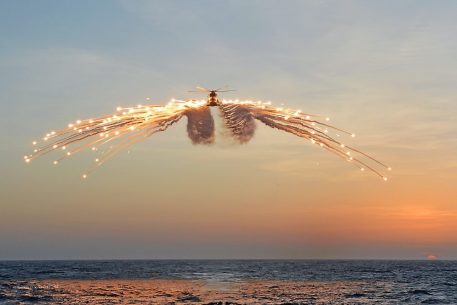
This paper aims to assess the concurrent need to secure European interests in the maritime domain vis-à-vis threats originating from the area going from the Mediterranean to the Strait of Hormuz.
Despite the considerable attention deradicalization policies have received and continue to receive, they are still underresearched, not fully understood and remain controversial.
Sometimes qualified as ‘lone wolves’, terrorists are often actually part of a network that has allowed them to travel to the lands of jihad and prepare their action in their country of residence and/or the land of their citizenship.
Putting an end to the ongoing political and military conflict in Libya requires effectively dealing with one of the major security threats: militias and armed groups.
The devastation of the country since 2011 has caused the biggest humanitarian disaster in the Middle East since the end of World War II: nearly half a million dead and more than half of the Syrian population has converted to refugees or moved.
The main network of think tanks on politics and security in the Mediterranean is holding its 2017 annual assembly and conference.
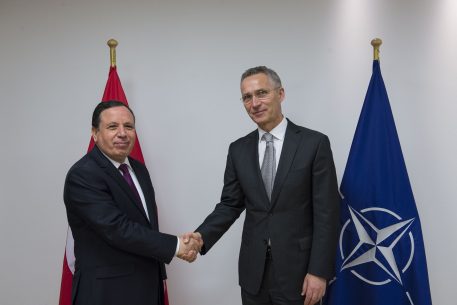
In light of the security challenges of the post-Arab Spring, Tunisia has been seeking for new international partnerships and assistance in order to modernise its defence forces and tackle security threats.
The Republic of Montenegro is soon to become a member of NATO. The inclusion of this country in the framework of NATO and the EU is likely to ensure its stability and contribute to the stability of the region.
The chosen reconstruction process and model will be critical to define the reconfigurations in Syria and Libya and give shape to that new order and power-sharing structures settling down with peace.
The case of Tunisia is one of the most interesting to study in terms of adaptation of a transitional regime to a new counter-terrorism strategy and of the influence the EU could exert on the development of policies in the security sector.
Security is a key challenge for Tunisia’s democratic transition. Despite significant increase in foreign support to the Tunisian security sector, a lack of integrated security-development strategy may erode the country’s progress towards stabilit...
The only feasible way to reach lasting conflict resolution in Syria requires external actors finding a reconciliation of interests that goes far beyond the Syrian conflict. There is a need for a U.S.-EU-Russian grand bargain.
The Maghreb has faced serious security challenges in recent years. Although many pundits focus attention on “terrorism,” they often overlook the nexus between bad governance and violent extremism.