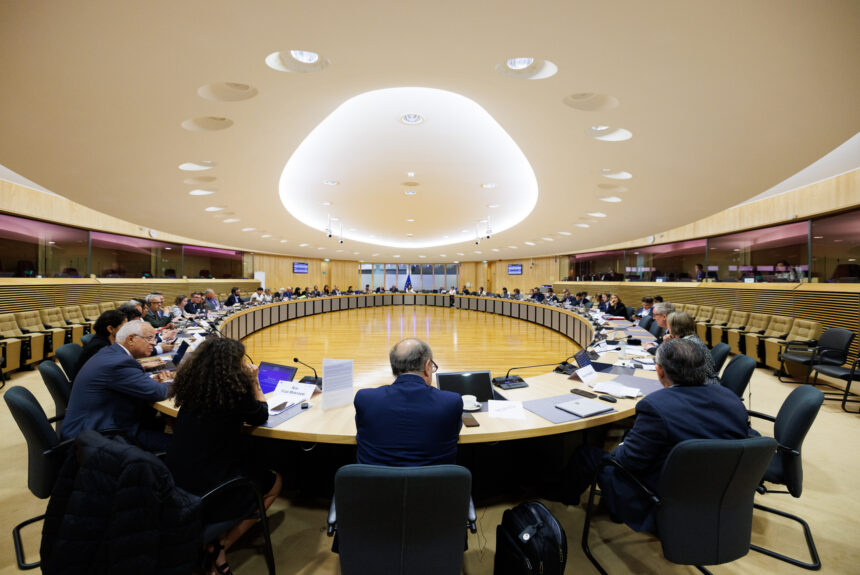
The success of the New Pact will depend on its capacity to turn consultation into genuine partnership, to balance ambition with realism and to show it has learned from past experience.
For at least three decades now religion has been re-entering the public sphere and politics in Europe and globally. Its re-emergence, however, bears little resemblance to the past when the religion-state coupling was unequivocal.
El cambio constitucional en Turquía daría lugar a un nuevo sistema presidencialista, que concentra en la actualidad todo el poder ejecutivo. La capacidad del Parlamento de controlar al gobierno ha sido mermada bajo el nuevo sistema.
The constitutional change approved in the 2017 referendum and contested internally and externally, gives rise to a new presidential system in Turkey. Is Turkey important to the EU? And what are Turkey's interests in the Mediterranean?
The main candidates of ERC, JxCAT, Catalunya en Comú, PSC, Ciutadans and PP defend their programs in an electoral debate moderated by Mònica Terribas.
In recent years it has appeared that Russia has returned to become a major player in the Middle East and North Africa. While some have pointed at the new “Russian moment” as mere opportunism, others have attributed it to a broader strategy.
This paper seeks to trace and explain the diverging and non-linear trajectories of the three central Maghreb countries’ foreign policies towards the EU since the 2011 Arab Uprisings.
Over the last few years, the myth of a Russian “return” to the MENA region has captured increasing attention all over the area and beyond. Is the growing Russian assertiveness in the region enough to speak of a proper Moscow “strategy”?
Christian Danielsson, Director-General of Neighborhood and Enlargement Negotiations (DG-NEAR) of the European Commission, explains his vision on the EC´s Mediterranean agenda as well as the challenges and opportunities facing the region.
Complementary to the Aula Mediterrània 2018-2019 conference series, this research workshop takes place to tackle a broad range of issues affecting the Mediterranean region bringing together experts on various topics related to the Euro-Mediterranean...
Twenty-five years ago, the EU and Southern Mediterranean governments committed themselves to a programme of pan-regional integration. Since then they have gradually turned their backs on this ambitious aim.
Half-hearted EU programs in countries such as Morocco run the risk of inadvertently strengthening the hybrid regime in place.
None of the milestones set nearly 25 years ago in the launch of the Euro-Mediterranean Process in Barcelona have been met due to the transformations with which Euro-Mediterranean policy has been adapted.
Sign up for our newsletter and be up-to-date with upcoming events and latest publications.
Please, choose language:
English Spanish Catalan French
This will close in 0 seconds