The success of the New Pact will depend on its capacity to turn consultation into genuine partnership, to balance ambition with realism and to show it has learned from past experience.
Over the course of the 2010s, relations between the United Arab Emirates and several countries of the Western Balkans have increasingly tightened. Starting from 2010, good relations have been propelled by a boom of investments.
This year, as it celebrates the 25th anniversary of the Barcelona Declaration and the launching of the Euro-Mediterranean Partnership, the European Union is dealing with a flurry of new actors that have recently emerged in the Mediterranean region.
Yemen entered its sixth year of conflict in March 2020. Yemeni confrontations and foreign armed interventions on its soil have caused “the worst humanitarian crisis in the world,” according to the UN.
Geopolitics is back. A more aggressive great power competition and the disruptive effects of new technologies have given new impetus to the analysis of the impact of geography on political decisions.
Despite the setbacks caused by the great pandemic of 2020, China's Belt and Road initiative is likely to actively shape the post-COVID-19 realities in the Balkans.
After the rupture of diplomatic relations between the United States and Iran due to the occupation of the US embassy in Tehran, the extremely poor bilateral relations seemed detrimental to the evolution of relations between Iran and the Gulf states.
With Europe caught up in responding to the health and economic crises at home, and Africa facing already devastating economic consequences, the basis of the relationship has shifted.
Geographically, the Maghreb is an integral part of the African continent. And yet, very often, the countries and societies from the Maghreb have given priority to other geographic or cultural identities.
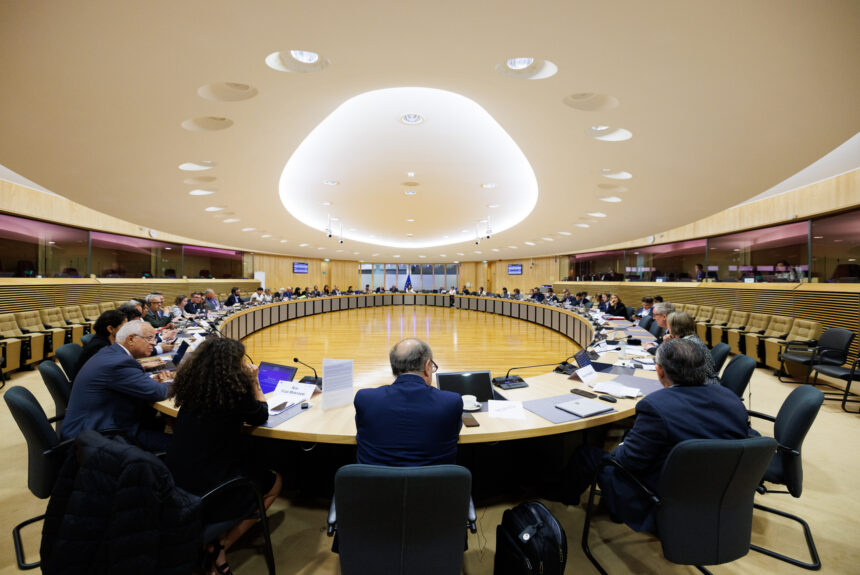
This second dialogue provides information not only on the impact of Covid-19 on the countries of the Southern Mediterranean and the support that the EU has provided to the region, but also on the possible future scenarios for Euro-Mediterranean coope...
Back in February 2018, the European Commission published its Strategy for the Western Balkans. The Strategy offered a clear path towards reform and EU membership for candidate countries.
The United States has been a Mediterranean power for well over 200 years, but without devoting much attention to the Mediterranean as a strategic space in its own right.
Twenty-five years ago, the Final Declaration of the Euro-Mediterranean Conference held in Barcelona in 1995 was approved. This began a new era in the relations between Europe and the Arab Countries of the Southern and Eastern Mediterranean.
Sign up for our newsletter and be up-to-date with upcoming events and latest publications.
Please, choose language:
English Spanish Catalan French
This will close in 0 seconds