


En cohérence avec son engagement en faveur du dialogue interculturel et de la culture comme moteur de changement social, QM intègre les récits finalistes de la dernière édition du concours littéraire Une mer de mots (A Sea of Words, SoW) à sa programmation éditoriale sous la forme d’une publication en série.
L’écrivaine maltaise Nadine Zammit, membre du jury de l’édition 2025 et lauréate de l’édition précédente en 2023 avec son récit «Design of Betrayal», parraine cette initiative. Ses paroles inspirantes sont présentées ici comme un geste symbolique de transmission entre générations de créateurs et créatrices qui, à travers leurs récits, ont su imaginer la Méditerranée que nous souhaitons:
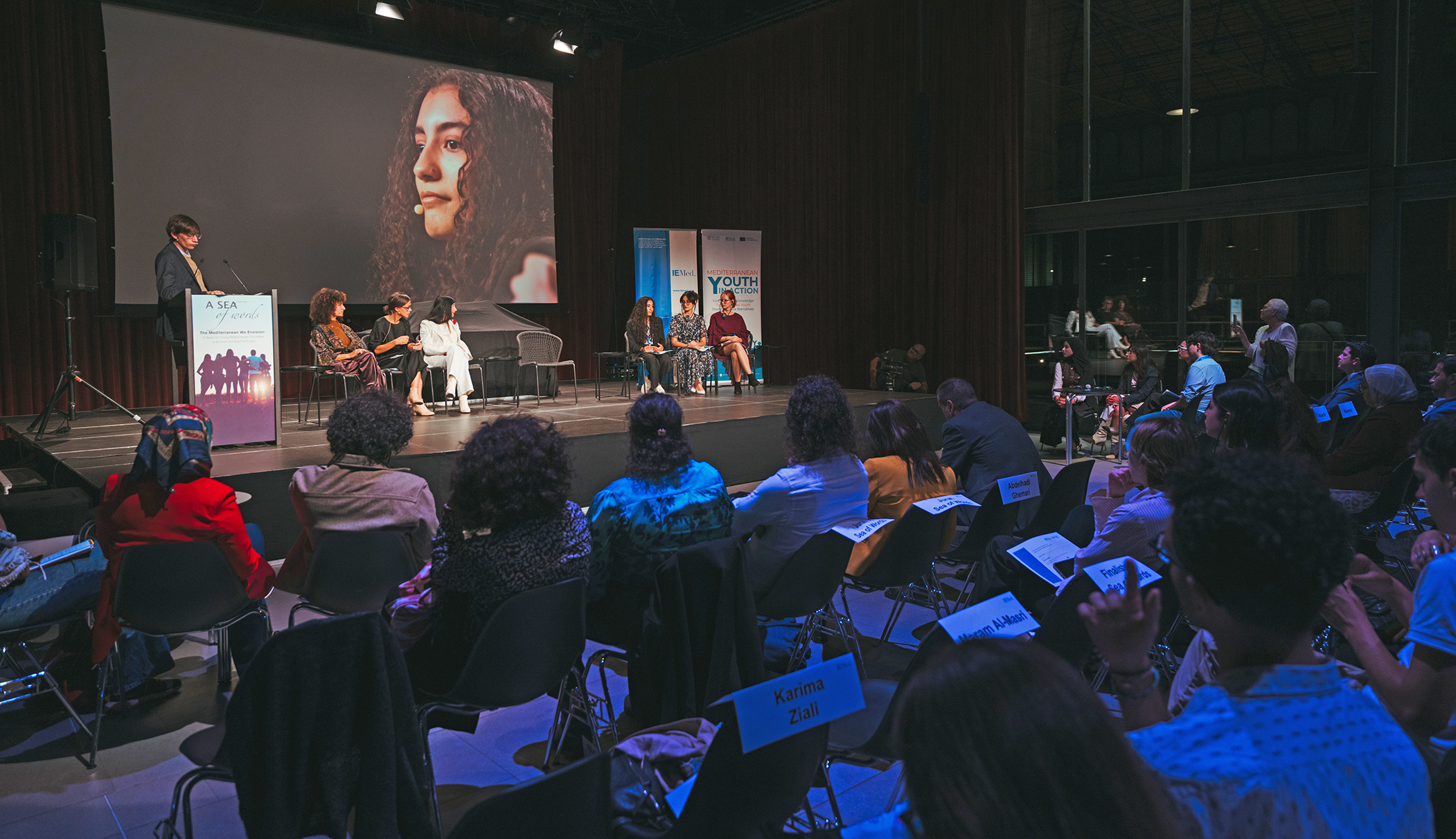
La 17e édition de “Une mer de mots”, tenue en septembre 2025, s’impose comme une initiative littéraire opportune, fondée sur l’idée que les voix des jeunes sont indispensables pour réimaginer la Méditerranée. Organisé par l’IEMed en collaboration avec la Fondation Anna Lindh, le concours a invité de jeunes écrivains à dialoguer avec un espace partagé souvent défini par la crise, mais également façonné par la rencontre, la collaboration et la possibilité. Sous le thème «La Mediterranée que nous imaginons», les participants ont été encouragés non seulement à raconter le présent, mais aussi à imaginer l’avenir — pluriel, contesté et ouvert — dans un contexte marqué par la polarisation et le conflit.
Les douze récits finalistes reflètent cette ambition avec une rigueur remarquable et une diversité émouvante. À travers des styles variés — intimes, allégoriques, dystopiques et spéculatifs —, ils reviennent à un ensemble de préoccupations communes: la Méditerranée comme frontière et comme pont, la fragilité du foyer, la persistance de la mémoire et la quête d’appartenance dans une région fragmentée. Qu’il s’agisse de la dissolution momentanée des frontières dans les liens personnels, de la redécouverte d’une identité collective, de la résistance silencieuse de l’art ou des utopies imaginées d’îles sans frontières et de langues partagées, ces récits font émerger à la fois l’expérience vécue et une vérité émotionnelle profonde. Les narrations proposées suggèrent que la Méditerranée n’est pas seulement un espace géopolitique, mais aussi un espace humain, tissé de relations et d’histoires encore à raconter.
Au-delà de sa valeur littéraire, le concours met en lumière le rôle de la production culturelle comme forme de dialogue et de transformation. En réunissant de jeunes écrivains de toute la région euro-méditerranéenne, “Une mer de mots” crée une plateforme où la diversité devient une ressource plutôt qu’une ligne de fracture. Les récits présentés ne proposent pas de réponses uniformes; ils insistent au contraire sur la nécessité d’écouter à travers les différences et de se réapproprier la capacité de construire des récits à une époque d’incertitude. Le concours a été bien plus qu’une simple compétition: il a constitué un exercice collectif pour repenser la Méditerranée de l’intérieur, guidé par celles et ceux qui en hériteront et transformeront son avenir.
Nadine Zammit
Mine, Yours, Our Sea

Chiara Pumper
Croatie
Lauréat du premier prix du concours littéraire A Sea of Words, My, Your, Our Sea de Chiara Pumper explore le foyer comme lien, refuge et sentiment d’appartenance à travers la métaphore de la mer.
The Tide
We watched winter arrive into a city neither of us belonged to.
The cup of coffee was warm between my fingers. It smelled of spices—cardamom and cinnamon, a mix I had only learned to enjoy after arriving in this country of cold, a habit that was born and died in those few cold months we had spent together.
We sat in silence, leaning against each other. The handmade calendar on the wall, silent, colourful and threatening, loomed over us as a reminder that tomorrow would come, just as it had today, and yesterday, and every day for the past five months. One more week. Almost there.
“I’m going to miss this.” My voice is higher when I speak in English. The words stick to my palate this early in the morning despite constant use, despite the honing of syllables and harsh tones and that damned, too-hard “r” that makes native speakers turn on the street, revealing that I’m foreign. I usually am better at hiding my accent.
But “usually” it isn’t a week until we part, so I can forgive myself the momentary imperfection.
His arms tighten around me. The smell of sea and spices mingles with cardamom, and for a moment I feel a surge of warmth. “Me too. We’re always just a phone call away, you know?” he says, and I feel him smile next to my ear.
We speak the “third language”, the two of us. It’s not natural to either — it was forged and shaped, with strange twists and turns where words are missing. He knows terms from board games, I know obscure literature. He’s good with extravagant adjectives, I’m good with metaphors and poetic imagery. Neither of us can say “dunja,” in English, even though we know how to say it in both our languages. We build, we substitute. Sometimes we understand each other just with a look. I can predict what he’ll say in conversations. He makes sure to make me laugh at least once every morning. We have a routine.
Change comes faster than we had hoped.
“Do you think I’ll be able to visit you, around Easter?”
“Of course.”
“Good.”
We’re learning. Good day. Goodbye. How are you? Good. “Good.”
My words sound foreign in his language. He smiles when I speak, and his breath is warm next to my ear. You sound strange, he says. It doesn’t belong to me, that language.
I love listening to him speak, when he’s talking to his family or lost in thought. His voice is different in it, softer in a way I cannot explain, too fast and far-sounding. Unknown. Sometimes I close my eyes, and listen to him from the other room. I know he does it too. He smiles every time he recognises a word.
My language is rough, choppy, and cuts his tongue in unusual places. Slavic letters are an oddity to him. They have a hat, he says. You’re missing some vowels. He can’t hear the difference between c, č and ć.
His first language is softer, more sensual. His “f” rolls differently than mine, and the “g” tightens my throat and chokes me when I speak. It sounds like the roar of the sea, something old and full and melodious, and on his lips it takes shape, meaning.
Sometimes we discover similarities in languages. Pita. Drama. Sometimes we laugh at the differences. Zebra. Teatar. Practice pronunciation. Gimnazija. Question. Čaj.
This place smells like us.
Cinnamon and cardamom and teas. Books and dark chocolate, and worrying amounts of coffee in all shapes and flavours. Paper and soy sauce and a trace of olives and sweet apple. Cold fingers, and body heat. Us.
My love has dark skin, tanned by the sun. He gets a tan – I burn. Together we look like an old photograph – black and white and smiling, a negative of each other.
“We have another week together. That also counts for something.”
“I know.”
“Aren’t you happy?”
“I don’t know how much coffee I’d have to drink to be happy when I think about it.” I tell him. He frowns, eyes darting to the cups scattered on the table.
“As far as I can tell, for now it isn’t three.”
He laughs, and a strange word rolls off his tongue. One of his warmer ones. With a round “g” that rolls in the back of his throat. My ears fill with the sound of the ocean, and the smell of the sun, and the olives. He is a child of the sea, and lives on the shore.
I never loved the sea. Salty. Salty. Like tears.
“Seven more days.”
The Ebb
“Nije bitno gdje si nego s kim si” an old folk saying goes. “It’s not important where you are but who you are with.” When someone once asked me for the translation and meaning, I nervously mumbled something about home and long journeys.
We left less than a month ago. Twenty-six days, to be precise. Each to his own sea, each to his own home.
We’re young, we say, and convince ourselves that the choice is ours. We ignore reality.
Our time was only borrowed. Our lives are not just yet our own. College, commitments, family, work. Hooks under our skin, at the back of our lungs and hearts, hooks that pulled us both back to our lives.
They don’t hurt anymore, now that I am back. But it took less than ten days for the new ones to catch and start pulling in the opposite direction.
I miss him.
I’ve been missing somethings for years. Sometimes family. Sometimes friends. Sometimes the taste of coffee from a metal pot and the sound of the train tracks at all hours of the day. The sound of my mother tongue, the melodies of songs with words I no longer remember. The hooks pull me wherever I go. I feel like a fish. I swim like a drowning man. Keep my head above water, and continue towards land.
The smell of the sea is always in my nose these days. Salt and spices, olives and sun. The warmth of other’s body and a safe embrace, a hug. Laughter and jokes and terrible singing and rice noodles and sharing a glass of water.
The words “safe harbor” in my head form the outlines of a face.
We saw each other, briefly, this Easter, for a moment or a few days, just long enough for a walk on the beach that resulted in the transformation of our picture from an old black and white to the one filled with colour, with bright red faces that we smeared with creams and laughter and warmed our cold hands on each other’s cheeks. Long enough for a cup of coffee – iced, and bitter, coffee from an old machine that tasted of burning and long nights and loud music on balconies.
“You live on a rock surrounded by the sea,” I told him back then. Surrounded by his language, his sea, his land, the word home was drowned out by the murmur of the waves.
A moment, a wave, and another farewell.
The hooks pull me back into another part of reality.
We are separated by just over 1000 kilometers – and time. Sometimes it’s hard to decide which of the two is worse. I count the kilometers on the good days, and the days and hours on the bad. Distance is relative, I’ve learned.
« We’ll be back », a promise, a plea, a mantra, I repeat the words and swim. The sea below me pulses, deep, the pain that doesn’t go away but is – there.
I like to imagine life as a book. The chapters that have passed and are yet to come, the unwritten ones. The folded pages and the ones with lots of notes – which I fondly remember. The ones that still smell of ink. The old ones, at the beginning. They fall apart, for I don’t remember them well.
I fold the pages that mention us.
I want my book to be falling apart, I want to tell him. For it to be worn out. My book – a life well lived.
Between the two of us, I’m the one with the more morbid view of the world. There’s something beautiful in falling apart, I say, something tragically warm in burning.
He is the sea, warm and cold and steady in a way that I can never be. Energy is bursting from his eyes. He has an answer to everything. His laugh is deep and refreshing and his thoughts are profound and his voice is a whole different kind of drowning. And with him, I realise, I am not afraid of burning.
I am writing new pages.
I imagine a world in which every language is mine, and friends are at my fingertips, everywhere, always. I imagine cups of coffee – hot and cold, big and small, in a thousand flavours and with a thousand stories. I imagine our hands and warm cheeks and cold noses and the sun on the horizon, the sea on our feet, and the wind on our fingertips. And smiles.
Lots of smiles.
His sea is warmer, and jellyfish live in it. My sea is deeper blue, with sea urchins scattered on the rocky bottom. Both seas are salty. Both are just water.
I never loved the sea, until it began to whisper of home.
Balance
Soon.
I feel the passage of time as a vibration on my fingertips. The world moves, and I travel with it.
He’s coming soon.
Peace, storm, forward, backward, a step closer and further depending on my mood and the weather conditions. Change is coming, the hooks switch direction.
He is coming.
My sea opens its arms, rustles, raises its banks temptingly. I hear it in my ears, its scent is carried through the streets of the city. It pours from the eyes of dreamy children at school windows, flies from the sighs of tired workers. Summer is coming. Our seas are merging again.
There is so much I don’t know yet, I think. Will he like my sea, this close, will it sound foreign to him – and how foreign, frightening or intriguing? Will its sound haunt him in people’s words?
I am afraid, and somehow, I’m afraid of us.
Dark-skinned people are coming to our land, whose language sounds like pebbles in water. To me it sounds like the pulse of a rattle, a drum, a rhythm of another world – I don’t understand it, but feel it somewhere deep in my bones. The people on the news, white and pale, think it sounds like a hiss. Like a snake about to leap – dangerous, threatening. They don’t say it out loud, but their eyes are serious.
My love has dark skin and his tongue sounds old, but not like drums, and not like snakes. His tongue sounds old and salty, the rippling of the sea and pebbles on the beach, the bending of branches and the rustling of the wind on a warm day. Fast, and melodious, and foreign.
So I am afraid.
I am afraid that people will hear his tongue and think of snakes, of the rustling of danger instead of the sea.
I worry that people will see the sand of another country in the colour of his skin. The reflection of another soil in the lines of his jaw.
« You live on a rock surrounded by the sea, » I told him once. He laughed. “You just described the Earth. The whole world.”
Once upon a time there was a girl who didn’t like the sea, and a boy with brown eyes who smelled of olives and the sun.
I never believed in such stories. They were for other, happier people. For those who believed that they would happen to them.
And when they held hands, the ocean overflowed and became one.
He is coming, and I can hope. For us. For him. For a new tide.
I daydream, and imagine smiles. The smell of coffee, and coloured pictures. Footsteps in the sand. Words on the pages.
I imagine that people will one day look at us, and smell the same sea.
I imagine the gentle eyes of the world.
Chiara Pumper est une jeune autrice croate, actuellement étudiante et bénévole au sein de plusieurs associations locales. Elle se fait peu à peu un nom sur la scène croate de la science-fiction et de la fantasy. Ses nouvelles ont été publiées dans plusieurs revues littéraires, recueils de nouvelles et ouvrages de poésie. Elle carbure à la caféine et jure qu’un jour elle commencera à écrire un roman ; depuis quelques années, ce jour-là est invariablement « demain ».
À PROPOS DE CE RÉCIT
« C’est ici, Majesté. Entrez, Seigneur. La tyrannie de la nuit à la belle étoile est trop hostile à la nature humaine. »
Lorsque j’ai lu La résistance intime de Josep Maria Esquirol, j’ai relu Le Roi Lear de Shakespeare. J’ai été particulièrement intéressé par l’importance accordée à la notion de foyer et par la manière dont, après avoir fui le palais, Lear éprouve le besoin de trouver un foyer au-delà de la construction humaine que nous appelons maison. Le texte de Chiara Pumper, My, Your, Our Sea, procède de manière similaire. Il déplace cette notion du domaine physique vers celui de la relation : ce qui est d’abord un espace qui « n’appartient à aucun des deux » se transforme progressivement en une expérience partagée où l’autre devient le foyer, un « port sûr » qui ne dépend pas d’un lieu, mais d’une présence. Cette redéfinition se construit avec une grande délicatesse à travers des détails sensoriels et, surtout, grâce à la métaphore de la mer, qui cesse d’être un élément étranger pour devenir un symbole de connexion et d’appartenance. Le foyer apparaît ainsi comme une réalité dynamique et fragile, non comme un espace stable, mais comme un lien qui se crée et se recrée constamment.
Bernat Reher (Mataró, 1999) est diplômé en sciences humaines de l’UPF et titulaire d’un master en gestion culturelle de l’UOC. Il travaille actuellement chez LaBreu Edicions.
The Human – When Carried by the Sea
By Hamza Mohammad Tawfiq Al-Halabi
Palestine – Gaza
Lors de la cérémonie de remise des prix, à laquelle Hamza n’a malheureusement pas pu assister, Mohamad Bitari, poète syro-palestinien basé à Barcelone et membre du jury de SoW a prononcé quelques mots émouvants dans son discours en catalan, adressés à l’auteur palestinien:
«Notre joie est incomplète, car le monde qui nous entoure s’enfonce dans des spirales d’injustice, de violence, de déplacements et de guerre. Elle l’est aussi parce que l’un des participants à ce prix, Hamza Al Halabi, n’a pas pu être ici aujourd’hui avec nous, tout simplement parce qu’il est assiégé à Gaza, où l’encre est empêchée de devenir voix et le corps reste prisonnier à l’intérieur de frontières qu’il ne peut franchir. Depuis cette tribune littéraire, nous lui adressons un salut empreint d’affection et de solidarité, et nous lui disons: ta présence est avec nous, même si tu n’es pas physiquement ici; ta voix parviendra jusqu’à nous, même s’ils tentent de la réduire au silence» (Voir la vidéo)
Mohamad Bitari
Dans son récit The Human – When Carried by the Sea, Hamza part de son expérience intime dans le contexte de Gaza pour parvenir à une réflexion universelle sur l’humanité, la mémoire et la possibilité de la paix. Le texte situe la Méditerranée comme une frontière, mais aussi comme un espace partagé à partir duquel imaginer un avenir différent. Écrit à l’origine en arabe, ce récit a été l’un des douze finalistes du concours. Il ouvre la publication en série pour sa qualité littéraire et parce que les voix palestiniennes sont aujourd’hui, et plus que jamais, nécessaires.
It had become unbearably dull to hear the footsteps of employees heading off to work in the morning, the murmurs of schoolchildren along the long road, the clanging of metal in the small factories, and the voice of Umm Kulthum from the nearby café.
And it was dull too—my sunrise each morning with the sun, leaving home for my university classes, leaving my consciousness behind, asleep in the house. I used to forget breakfast, as I had the habit of waking up late.
But one morning awakened me in full awareness. It pulled me out of the monotony of my time into a halo of nothingness—or a state of absurdity. I thought then: as long as the human is human in essence, and race or ideology is merely incidental to the human being, how can the incidental override the essence? How can I erase the existence of others for the sake of a transient thought in my head?
I had to realize, then, that all a human needs today is simply another human being—because that is the one truth we need not fight for. It is the lasting common ground between all people.
I grew up, along with my family, in a small town on the shore of the Mediterranean Sea. The city looked like an old creature, worn down by time, resisting aging with residents full of youthful energy and childhood dreams—even though everything in it aged quickly.
We lived near the shore, but we couldn’t see it.
The sea, that endless blue being, had become a boundary—not a dream.
A barrier of wire, not a mirror for the sky.
My father always instilled in us the love of people—all people. He used to say:
« My son, if the children of Gaza, Tel Aviv, Beirut, and Naples gathered in one square and played together, no one would need to write a peace treaty. »
I didn’t understand him then. But on that strange morning I mentioned, I realized that play has an echo—just like war—but it doesn’t frighten.
I grew up, and the sea grew with me. I used to see it as closer, more intimate when I was young, but it began to drift away.
The distance between me and it was not measured in meters, but in fear—in small losses piled on top of each other, like ancient stones in the city’s old wall.
Our house had an old wooden door that opened onto a narrow alley, and my father would open it every morning, murmuring verses from the Qur’an.
I would ask him: “Why do you always mumble when you open the door?” He’d say:
“So only peace enters with us.”
I used to think he exaggerated, but now I understand. Anyone who wants to survive here must negotiate with the door every morning, convincing it not to open onto a bullet or a shell.
At fourteen, I saw my first friend killed. His name was Yasser, and he resembled me in everything—even in his small dreams. He wanted to become a football player, to play for a European club and send us videos from green stadiums.
But instead of watching his goals, we watched his funeral.
I don’t remember how I cried. All I remember is that I didn’t speak for days, as if my voice had declared mourning. From that moment, two voices began to live inside me:
One wanted to scream, to take revenge, to destroy everything.
The other wanted to walk against the fire—to plant something that could not burn.
These two forces battled within me for years.
One night, I spoke with a university professor who taught us “international conflicts.” I had asked him:
“Can justice be achieved without revenge?”
He said:
“Justice is not revenge on the killer—it is safety for those who remain.”
That sentence opened a window in my head. I began to see the world differently. Everyone who had been ‘against me’ was no longer an enemy—but another victim of a false narrative.
I decided to write. Not as a great writer, but as someone trying to understand. I began to record my reflections:
Why do we fear difference?
How can one idea kill?
And does writing save—or merely delay the explosion?
At university, I met a girl named Mariam. She studied French literature and dreamed of translating and working in peace organizations. She believed that words could stop a bullet—if written at the right time and place.
She once said to me, as we looked at the sea through the bars:
“You know? This same sea touches Italy and Spain and Turkey… Do you think it knows it has to take a side in the war?”
I laughed then, but she didn’t smile. She truly believed the sea was the first teacher of peace; it doesn’t fight those who cross it, but carries them all. That vastness was what she missed here.
In a joint university project, we began writing letters to students from other Mediterranean universities—from Athens, Tangier, Marseille. We exchanged stories and music. We began to discover that we live with the same anxiety, asking the same questions:
What does it mean to be from this region?
Are we destined to carry the legacy of wars to our children?
Or can we truly break the chain?
One of those students was named Michel, from Marseille. He wrote to me once:
“When I hear about Gaza, I think of fear. But when I read your letters, I think of hope. You’re creating a new image of the city—an image that resembles all of us.”
Those words were enough to change the course of my studies. I shifted from political science to cultural anthropology. I began to believe that studying humans as humans—before identities and flags—is the real key to peace.
My father died in the last aggression. He had gone out to buy bread.
His funeral was quiet, just as he always liked. The imam said a word I will never forget:
“He believed that death should not create more enemies—but more reasons to live.”
Months later, I traveled on a scholarship to Barcelona.
There, for the first time, I felt that the sea is the same here as it is there—
but the people were different only because they were allowed to be different without fear.
I participated in a workshop on “narrative-making for peace” and read my first text about Gaza—my voice trembling, but the applause long.
A Moroccan girl stood after me and said:
“Peace doesn’t need treaties—it needs stories. Stories like this raise children who won’t pick up guns.”
In Barcelona, everything changed. Not because the city was perfect, but because it gave me what I had been denied: the right to quiet.
At one literary gathering, a Greek writer said to me:
“Peace is not forgetting the war, but refusing to repeat it.”
That was when I felt I had found the answer I’d been searching for.
Peace is not weakness—but the strongest form of resistance.
Now, I return to Gaza with a new message. I won’t promise to change the world, but I promise to tell everyone I meet:
“We don’t just live in Gaza. We are born here every day.
And we must choose each time: to be the beginning of a new story—or the repetition of an old one.”
And I have chosen to be a new story.
Surprise Test
Menna Shaker
Égypte
On a quiet evening in Cairo, where the alleyways whispered secrets, everything seemed ordinary.
In the small apartment in Sayeda district, the scent of mint tea wafted through the air as the El-Badri family gathered for their usual daily routine.
Khaled, the eldest son, was flipping through his notes on film theories; Omar was tinkering with a small robot model; and Laila was pretending to read her law book while half her attention drifted toward the television.
The parents sat on the couch, sipping tea and watching the news.
Then came the announcement:
“The World Cultural Council has decided to revoke public access to all forms of art — including music, cinema, literature and poetry, visual arts, and even design — except for those who pass the International Artistic Qualification Test.”
Silence filled the room.
“What is this nonsense?!” Laila muttered.
“A test to see if we can appreciate a pretty picture?!” Khaled’s notes slipped from his hand.
The anchor continued, her voice steady. Behind her, a bold emblem appeared: World Council for Culture.
“The purpose of this decision is to ensure that only those who truly value the arts are allowed to consume them.”
The television was turned off.
No one spoke.

In the Days That Followed, the City Changed Its Face
The songs fell silent.
Cinemas were shut down.
Murals were painted over.
Art exhibitions were canceled.
Even the advertisements in the metro vanished.
Khaled tried to sleep — in vain. Cinema was his heartbeat. His favorite films were now locked behind a screen demanding a license.
At night, Omar began to draw, quietly, without being asked.
And Laila? She scoffed:
“It’s like they banned water! We’ll live just fine.”
But even she began to stare at the empty walls.
The city grew grayer.
The streets quieter.
Faces more lost.
Then one day, they received a call from their grandmother Salsabeel:
“Come to Alexandria.
The sea is waiting for you.”
Their Journey to Alexandria Felt Like a Dream
The train passed through arid lands and half-finished buildings.
But when they arrived, the air greeted them like an old friend.
Their grandmother, in her white galabeya, welcomed them with warm bread and a warmer smile.
At night, she took them to the Corniche. There, the sea stretched endlessly —
its deep blue whispered the secrets of civilizations.
On an old wall, a young man was painting a mural in swirling colors: Phoenician blue, Andalusian red, and Amazigh yellow.
“The sea remembers,” the grandmother whispered.
They sat beside it, gazing.
She told them stories of the Mediterranean:
A mirror of civilizations.
Of poets who sailed from shore to shore,
of songs where dialects met,
of sculptures adorning city balconies.
This is the Mediterranean —
the bond and the inspiration, the refuge and the answer.
You sit on Alexandria’s shore and share your sorrows,
and across the waves, on a Greek shore,
someone listens to the sea carrying your burdens.
That is the Mediterranean —
where the restless waves seem to echo every story we’ve ever told them.
At night, they met young people from everywhere: Tunisia, Italy, Lebanon, Greece.
They gathered in secret —
exchanging drawings, reading poems, playing melodies.
One of them said:
“We won’t take the test.
We’ll write our answer through art itself.”
The siblings understood.
Art cannot be measured by a test.
It is heartbeat.
It is memory.
It is the thread that connects us all.
They Returned to Cairo Without Speaking of the Decree
Khaled photographed the sea.
Omar invented a small device that played music.
And Laila? She began to draw the faces she had seen on the Corniche.
They invited their friends.
Told the stories.
Played the songs — despite the ban.
And every time they thought of the sea, they felt something —
a longing, a quiet defiance, and a warmth that never faded.
They couldn’t change the law.
The exam still stood.
But on every shore of the Mediterranean,
someone was painting,
someone was singing,
someone was telling stories.
And without realizing it,
they were answering the question —
a test without paper, without grades, without permission.
A test that needed a heart that longs,
a mind that remembers,
a soul that carries history,
and a sea…
that echoes back.
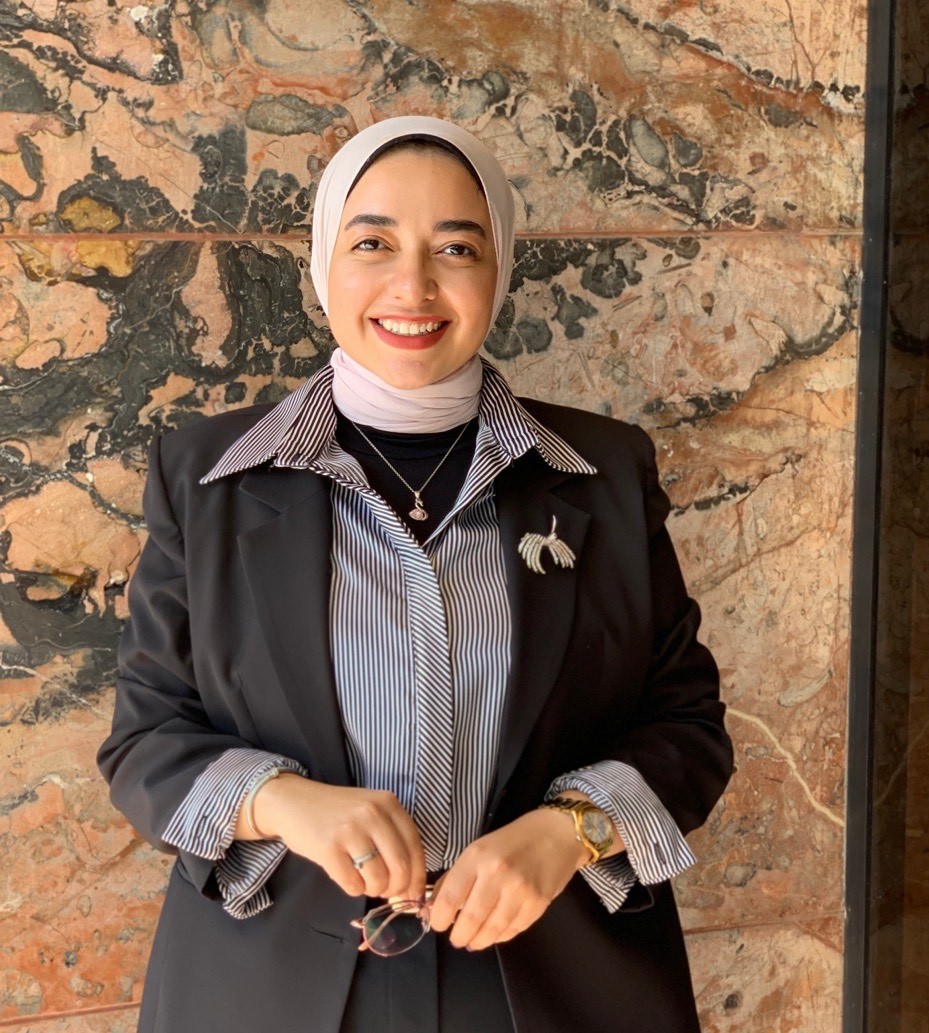
Menna Shaker est médecin junior et autrice originaire du Caire, en Égypte. Elle s’engage avec passion en faveur de l’autonomisation des jeunes, de l’éducation à la santé et de la créativité. Son travail mêle souvent science et art, à la recherche de sens dans l’identité et la mémoire partagées. Elle écrit des récits de fiction qui abordent des questions sociales à travers un regard symbolique, souvent poétique.
À PROPOS DE CE RÉCIT
Dans Surprise Test, Menna Shaker imagine un monde où l’art cesse d’être un droit pour devenir un privilège soumis à examen. Lorsque la musique, le cinéma, la littérature et la couleur disparaissent des rues, une famille du Caire commence à comprendre à quel point ils façonnent notre manière de vivre et de nous souvenir. Un voyage à Alexandrie et la rencontre avec des jeunes venus de différentes rives transforment l’interdiction en résistance. Entre fresques clandestines, poèmes et mélodies partagées, le récit célèbre la Méditerranée comme un espace de mémoire et d’échange, et l’art comme un langage commun qu’aucun pouvoir ne peut mesurer, contrôler ni réduire au silence.
The Island That Is Not on the Maps
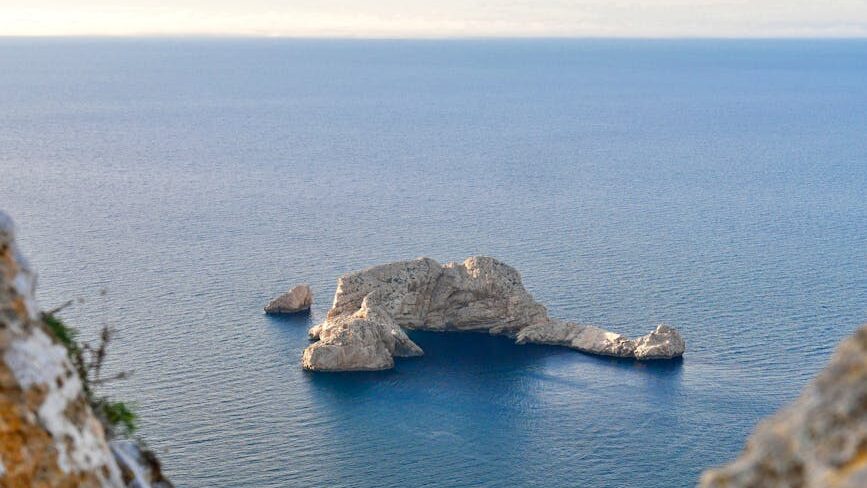
By Aicha Saïd Larabi
Algeria / Spain
Awarded second prize in the A Sea of Words 2025
No one could tell me where it was.
Not the ferry pilot, nor the woman at the maritime station in Marseille.
“It’s an island… how can I put it?” said a young Tunisian at the port, lighting a cigarette with trembling hands. “An island you sometimes find only if you need it.”
And I needed it.
My name is Noura. I was born in Algiers, but I’ve lived most of my life in Madrid. I’ve spoken Spanish longer than Arabic, but when I dream, I still do it in my grandmother’s voice. I hear her in whispers, the way she used to recite proverbs during siesta time:
« Li ma ʿandūsh el-kbār, ychrihū. »
(Those who have no elders, should buy them.)
I never fully understood its meaning—until I no longer had her.
I study Translation and Interpreting. I always knew I wanted to live between languages, between worlds. As a child, they called me “the bridge” at home. When my parents argued, I translated emotions, not words. Sometimes a look, a hand on the shoulder, or a phrase said in the right tone was enough. Later, I learned that had a name: cultural mediation. And I promised myself I would turn that skill into a calling.
That summer, before starting an internship at a coastal hospital—where I would work as an interpreter for migrant patients—I decided to accept an invitation that didn’t come through any official email, social media, or academic announcements. It arrived like a digital whisper, in a Mediterranean youth forum, among threads of poetry, activism, and snippets of songs in different languages.
The message was short, almost cryptic:
“We want to build something new.
If you know how to translate, if you know how to listen, we need you.
June 29. Marseille. Dock C.
Bring only the essentials. The rest we’ll build together.”
I thought it was an experiment. Maybe some kind of collective performance. But something in those words touched a deep nerve. Translate. Listen. Build. They sounded like verbs written just for me. So I went.
The night before the trip, I packed a small backpack with the bare minimum: light clothes, a notebook, my old Arabic dialect dictionary, a voice recorder, and a packet of dates my mother sent “just in case you need sugar, daughter.” I didn’t tell anyone the exact destination. Sometimes the most important things can’t be explained without sounding mad.
Marseille smelled of salt, tar, and oregano. At Dock C, there were others like me: young people with backpacks and watchful faces. No one spoke loudly. Some shared fruit, others typed on their phones. There was a strange tension in the air: not fear, but expectancy. As if we knew—without quite knowing—that we were about to step into another world.
The boat arrived without a flag. A light wooden sailboat, hull painted blue, its name erased. No one asked for tickets. Just a simple greeting, a wave of the hand:
“ʿAla r-raḥba w s-saʿa.”
They were the first words in Arabic I’d heard in days. I was instantly drawn in.
We boarded in silence. The sails unfurled with a soft creak, and soon the shore disappeared, swallowed by a mist thick as flour. For hours, we said nothing. I sat beside a girl reading something in French. Her eyes lined with kohl, her lips cracked. She offered me a tangerine, and without a word, we shared its slices as if we had known each other before.
I don’t know how long passed. I lost track of time. At sea, time is something else: there are no minutes, only light, shadow, silence, and waves.
And then I saw it.
The island emerged like memories in the middle of the night: unannounced. A curve of land covered in green, with stone houses and narrow paths. No docks or cranes. No sign of modern buildings. Just a coarse-sand beach and beached boats. On the highest hill, a cloth fluttered—stitched from scraps of different flags. A way of saying: all of them and none.
We disembarked among laughter and embraces. No one asked names or nationalities. We were given fruit, orange blossom water, and invited to sit in a circle. A young woman, her hair covered in a sky-blue scarf, spoke to us in many tongues: Arabic, French, Spanish, then Italian, and something that sounded like Albanian.
“Here, we don’t translate everything. We listen to what we can, and what we can’t—we feel. This island isn’t on the maps. Not by mistake, but by choice. Here we come to imagine what we’re not allowed to imagine on our shores. Here we come to build what doesn’t fit in official speeches.”
I didn’t fully understand what this place was. But I knew one thing: I had found more than a destination. I had arrived at a space where my identity stopped being a problem and became a bridge. Where the way I spoke, listened, moved between cultures—was not a rarity or burden, but a key.
For the first time in a long while, I felt at home.
2. The Island
They call it Al-Mutawassiṭa. “The one in the middle.”
But others call it Isla Mar, Isoletta, l’Île du Possible.
No one could agree, and in the end, that was the most beautiful part. In every language it sounded different, but they all meant the same: an attempt at a future.
The agreement was this: here, each person could name the island as they wished, so long as the name opened a door rather than closed one. That was one of the first lessons: language is not just translation—it is possibility.
I arrived at dawn. The sky was tinged pink, and the air smelled of fresh bread and salt. The houses were light constructions, made of recycled wood, sails from old ships, tarps painted with verses in many languages: Amazigh poetry beside Greek graffiti, Tunisian proverbs on canvases that once were tents. No flags. No borders. No one asked for documents. The first sign I saw read:
“Here, there are only first chances.”
There was something radical in that sentence. Something that defied everything I knew from the world beyond the coast. Here, no one asked where you came from—but what you wanted to build. No one reduced you to your country, your passport, or your language. The island was not a refuge. It was a seed.
About forty of us lived on the island. Most were between twenty and thirty. We came from everywhere: Syria, Greece, Egypt, Morocco, Spain, Palestine, Lebanon, Tunisia. Some had swum across the sea. Some had survived detention camps. Others came from neighbourhoods the news never reached, where the promise of a future was a myth. I came from a university translation lab, with my headphones, my dictionaries, and my doubts. What could I offer—with my annotated texts and mixed accent?
At first, I didn’t know where to place myself. While some fixed fishing nets or cooked for the group, others built communal spaces for workshops, debates, moments of silence. Everyone offered what they knew, and did so from a place of giving, not obligation.
My work was simple and complex at once: to mediate. To translate when words weren’t enough. To listen when the story was too heavy to tell alone. Sometimes, to be a bridge. Sometimes, to be silence.
One day, Hiba—a young Syrian woman whose Arabic I could barely understand from lack of practice—approached me in tears. She wanted to share something, but the words slipped, tangled on her lips. She looked at me, eyes wide and wet, and said just one thing:
“Don’t translate me. Just stay.”
I realised then that sometimes mediation doesn’t require a shared language, but a presence that does not judge. That afternoon, I sat by her side and we shared a notebook. She drew her city, her broken house. I translated her images into questions for the next day’s circle. I didn’t say they were hers. I just threw the words into the centre and watched others respond from their own experience.
That’s how the island worked. Each day opened with a collective breakfast—flatbread, dates, white cheese, thick coffee—and an assembly. We spoke many languages, sometimes with improvised interpreters, sometimes mixing phrases. The common language was the desire to understand. No one was ridiculed for poor pronunciation. No one corrected from a place of superiority. We learned as we went.
Bit by bit, I found my place. I helped translate texts for the collective archive we were building: a kind of living Mediterranean memory, told from below. Stories, songs, unsent letters. I also facilitated dialogue between those too afraid, ashamed or hurt to speak directly.
On an island without institutions, without written rules, my role was to give shape to invisible bridges: to prevent misunderstandings before they grew, to translate intentions as well as words, to remind everyone that behind every language there is a story.
I discovered that being a mediator wasn’t just my professional future—it was, in some way, my way of being in the world. Not as someone neutral—because no one is—but as someone who accepts conflict as part of encounter, and error as part of translation.
3. The Dream
For weeks, we believed we had achieved the impossible.
We shared meals at circular tables, made from wood of different colours that symbolised our languages. We took turns cooking: couscous, moussaka, Spanish omelette, shakshuka, dolmas, harira. Someone always brought music: an oud, a darbuka, a speaker playing childhood songs. We sang in the five languages most spoken on the island, and no one minded if we didn’t understand everything.
Layla, a Syrian girl, painted murals with every new story that arrived. “The walls need memory,” she said. Yannis, from Greece, suggested ways to save water and adapt to the rhythm of the sun. Fatima, Moroccan, taught us how to make soap from used oil. Sami, Palestinian, organised a small library: every book carried a story of how it got there.
Some days, we just sat by the sea to breathe. Other days, we argued for hours over how best to distribute the fish or record group decisions. There were mistakes, of course. And also exhaustion. But no one used it against anyone else. We were learning how to be a community.
It wasn’t utopia. But it was close.
It was a rehearsal. A sketch of what a less broken world could be. And for a time, that was enough.
4. The Cracks
But one day, an argument broke out.
Small. Almost absurd.
Adam—a Tunisian guy raised in Italy—suggested we use only French during assemblies. “For efficiency,” he said. Some agreed. Others frowned. “Why not Arabic?” murmured Layla. “What about English?” said Yannis. “Why not speak our own languages and translate together?” I added, trying to calm things down.
But it was too late. Invisible camps had formed. Whispers in the kitchens. Silence in our meetings. No one said it out loud, but something had broken: the trust that we all wanted the same thing.
Because the language wasn’t the problem. It was what each language carried: hierarchies, colonial memories, past exclusions. French as imposition. Arabic as wound. English as global lifeline. Languages weren’t neutral. And neither were we.
I felt powerless. No matter how much I translated the words, I couldn’t translate the fears, the resentments, the buried histories. Translation wasn’t enough. Sometimes it was even a trap.
One night, someone painted a wall white. Nothing more. Just white. It was Layla. When we asked her why, she said:
“Sometimes silence is also a language.”
And she walked toward the sea without looking back.
5. The Night of Languages
We didn’t know how to continue. The debates had grown tense. Meals, quieter. Something essential was slipping through our fingers.
So I proposed something:
“What if we have a night of languages?” I said one morning. “An evening where each person speaks in their mother tongue. No filters. No translation. Just speak. And the rest… listen.”
At first, no one understood the idea. “What if we don’t get anything?” “What’s the point?” “Listen, for what?”
But one by one, they agreed. Maybe because we didn’t know what else to try.
That night, we lit candles around the central circle. No one had to translate. Just speak.
One by one, voices filled the air. We heard poems in Tamazight, tales in Darija, lullabies in Hebrew, family stories in Southern Italian, chants in Greek, sighs in French, proverbs in street Spanish. No one understood everything. But we all felt something. It was as if, in that shared bewilderment, we found a deeper way to understand each other.
I spoke in Arabic. For the first time in ages, without fear.
أنا ابنة ضفتين، ولغةٌ بين لغتين
(I am daughter of two shores, and a tongue between two tongues.)
Someone cried. Someone applauded.
Someone simply closed their eyes.
And I understood that, finally, we had begun to listen.
6. And Now?
The island is still there. Even if it’s not on the maps. Even if some days it seems to dissolve. The sea remains. The youth remain. The need to imagine another Mediterranean remains.
Sometimes tensions return. Differences. But we no longer fear them. Because we’ve learned that conflict isn’t the end—but a question. And that language, when listened to with the heart, doesn’t need to be understood to be felt.
Layla painted that white wall again. This time, she covered it with handprints—painted hands of all those who spoke on the night of languages. Over them, she wrote, in Arabic:
« كل لغة طريق. وكل طريق يحتاج إلى جسر »
(Every language is a road. And every road needs a bridge.)
I will return. Even if I live far away.
Every time I translate a story at the hospital, every time someone tells me, “I don’t know how to say it,” I remember that my job isn’t just to translate. It’s to weave. To connect. To listen to what’s not said.
And, above all, to imagine what doesn’t yet exist.
The island isn’t on the maps. But it lives in every attempt to understand. And in every story that dares to cross the sea.
Aicha Saïd Larabi (Algérie, 2004) a grandi en Espagne depuis l’âge de trois ans. Elle poursuit actuellement des études d’arabe et d’islam à l’Université d’Alicante. Elle écrit depuis l’enfance et a participé à plusieurs concours scolaires, où elle a commencé à développer une voix singulière marquée par son intérêt pour les langues, la mémoire et l’identité. Ces préoccupations traversent également son écriture, dans laquelle convergent ses multiples références culturelles. «The Island That Is Not on the Maps» est sa première œuvre sélectionnée comme finaliste dans un concours littéraire officiel.
SUR CE RÉCIT:
«Traduire, écouter, construire»: à partir de ces principes se déploie un texte qui nous conduit vers une utopie qui résonne, en ces temps troublés, en chacun de nous. Aicha Saïd Larabi a composé un récit immersif qui ne laisse aucun lecteur indifférent. L’autrice crée un espace de possibles, sans drapeaux, en assumant la violence et la fragilité des langues qui nous constituent, tout en plaçant au premier plan un intérêt sincère pour l’autre.
Nous aussi, en tant que lecteurs, souhaitons habiter cette île qui existe sans exister; nous voulons faire partie de ce cercle d’initiés qui aspirent à briser les règles des identités meurtrières qui dominent le désordre mondial auquel nous sommes soumis ; nous voulons faire nôtre son regard, car «le conflit n’est pas une fin, mais une question». Nous célébrons ainsi la sensibilité d’un texte qui ouvre des portes et des fenêtres sur l’espoir, au-delà de l’utopie.
Mireia Estrada (Barcelona, 1974), philologue, gestionnaire culturelle et membre du jury du A Sea of Words 2025
Partition
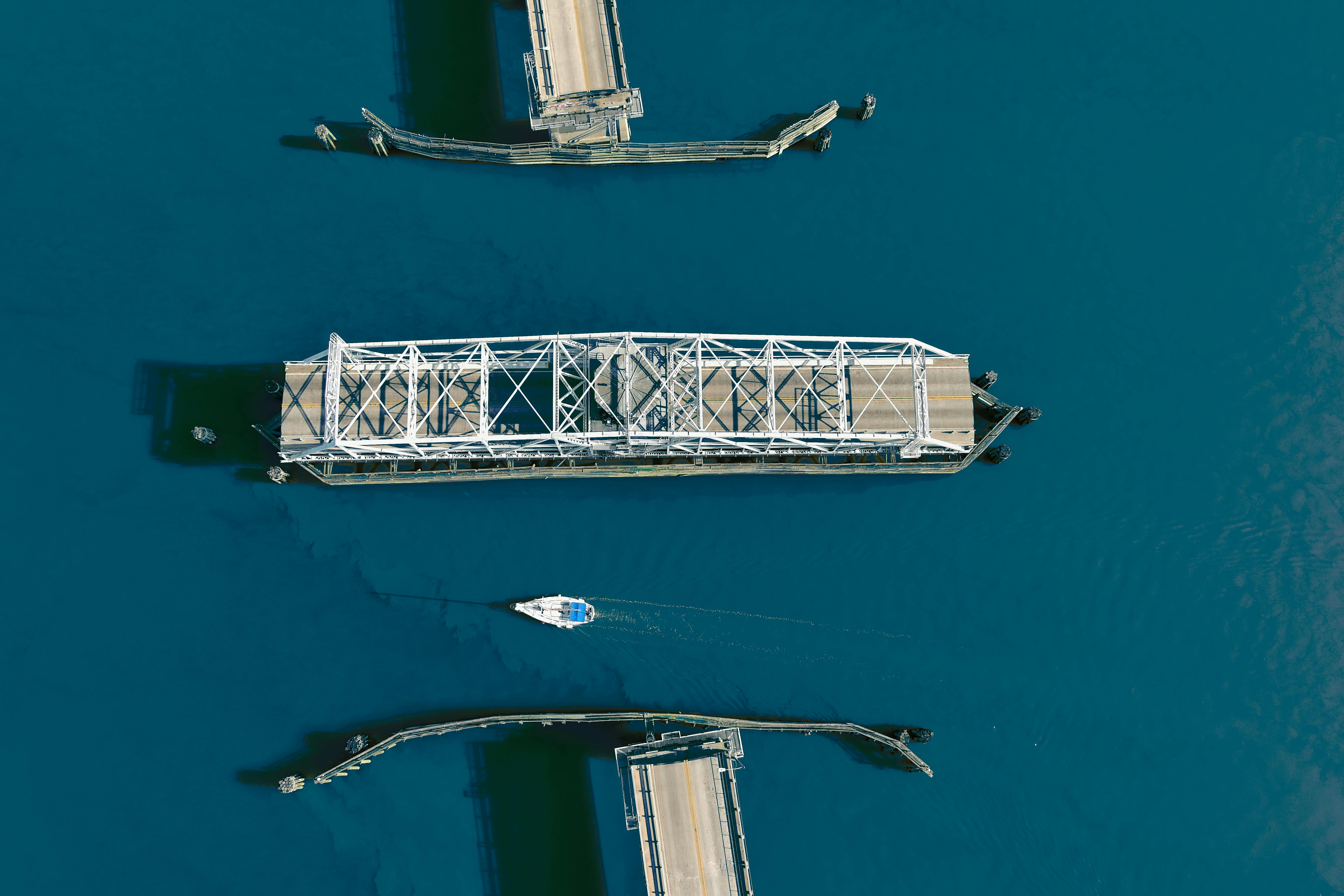
By Gaja Smilevska
North Macedonia
*Texte original écrit en anglais
He left me on the shore, my rugged sailor man, with his wind-weathered hair and eyes as white as sand. Pulled up his sails and set off.
He left, but made good on his promise- a glimpse of the world in my hand.
It was a five year travel, or maybe five hundred, or more. Along the coast we set off, brushed by Sidon and Tyre. Not alone, but a fleet- a procession of souls speaking tongues long since buried. Onwards we ferried, in tandem on a road well-known.
Backwards in time or forward, no map could show.
What little borders we knew got away from us. Desiccation upon flood upon boiling sky, its coastline bending to thoughts of mother earth with each passing tide.
My sailor man had two faces, one front facing and one on his back. Saw each voyage twice over. Every beginning his end, each voyage his homecoming.
For a few days each year, we’d stop at a port. Tied our ships with ropes tattered and worn, and dried off our salt-soaked backs. Saw cities worth living and dying in twice over. But longed yet to continue our tracks. We learned the language, walked the roads, left parts of us in some small corner. In time, we’d take to the sea, fall victim to the beck and call of our ship and leave.
The real fun, said my sailor man, waited for us further down. He would not tell me what, nor where, merely promised my listening would do well. In the night, every shape was new. Never a wave similar to any other two.
There was waiting, too. Most of life is. At times the wind left us wanting, waiting for a blow. Our sails went ghostly still and we hovered. We hovered for a while, ships came to a crawl as the waves danced beneath us. A largo performed for aeons before, the push and pull of the moon and seas, two mothers cradling their children on the open waters. We sat above remnants of maritime republics sleeping deep below.
We were the only light for miles. Some sort of offering for some sort of contact, reaching out to lands now fallow.
But the past did not gleam back.
Further down, we wove past a patch of floating men. Their hands held upwards, hope still laying with them in eternal rest. Their ships abandoned, homes left standing in their hearts, awash with no world to call their own. They had made a house in our sea. How gently she held the ships and bodies of martyrs, restful in the depths for as long as need be.
Our media-terrania, sea between two lands. Once roman lake, now common men’s grave.
And then we felt it. Further east, from all corners the smell carried. The smell of olives, then of steel. Smelling of whatever fire the breeze had not parried.
In our last days, a time future-passed, we came upon a stage. A cerulean blue disc spanning miles upon miles. Waves lapped at its edges, corners sea-glass smooth from years of touch. Our ships could not clear it so we walked on to the center, the transparent marble offering up a clear view of the sea bed below us. We saw every rock and cliff leagues underneath, specks in the deep reflecting the constellations high above us. A high fidelity map, as above so below.
We followed my sailor man onward, one head craned to the sky, the other planted down low.
In its center, we met a tall man. His head bore the sun of Egypt, left hand from Piraneus, the other Dubrovnik. He knew of no war nor border of cities, but he knew of our home. His home, an empire burned down and remade in all our image. I did not understand when he spoke But it sounded like you, like me. Like hands held tight from across the sea.
He knew of us, of what we used to be. We took more than was there, more than there ever could be. A killer thirst in the middle of ocean waters.
And even with our riches, our salt and steel and land in the hull, the sea thrashed and scoured none the wiser to our power. And our ships were too heavy with our gold and our spice, and for certain none of it would we throw overboard, we need not even think twice. And never did we part from it.
And so we looked again, made out the rusted metal from the rock below us. In place of shell or corral, we saw drones- missiles, torpedoes, shelling of every flavour. Gunpowdered city-killers that lay sleeping in the depth.
And so we understood, we were too late for any palaver. For you may not bargain with time nor the sea. No city nor steel nor rock, nor you and I, will stand the test of time. In two blinks time, she will rise. She will fill up our homes and welcome us back. Swallow us dead with the tides.
And the fire we lit will no longer burn. Homes will be extinguished, though the fires have long since been their only inhabitant.
We left the sphere. We could not stay. What merit would there be in standing on solid ground when all the world around had no time to spare. The sea could not make our peace for us, that is not her mission. We bid the tall man goodbye and reeled up our anchor, there was no difference between us and them, between us and our world. We could not be its partition.
I understood then, my sailor man’s words. The world in my hand is a heavy burden.
The time for war had already passed.
And it cannot be too late, our shores span the same sea. The distance between you and me is negligible. A ship or shore away. What fire touches you will soon reach me.
With his wind-weathered hair and eyes pale as glass, my sailor man hoisted his white flag topmast.
Gaja Smilevska (Macédoine du Nord) est une artiste visuelle, illustratrice et autrice de bande dessinée basée à Skopje. Son travail a été présenté sur des couvertures de livres, dans des expositions internationales ainsi que dans des festivals d’art et de bande dessinée. Parallèlement à son parcours artistique, elle est diplômée en psychologie et participe activement comme bénévole à différents festivals culturels. Sa pratique créative associe sensibilité visuelle, narration et intérêt pour les dynamiques humaines et sociales.
SUR CE RÉCIT:
À travers ce voyage suspendu entre le passé, le présent et un futur menaçant, Gaja construit une puissante allégorie de la Méditerranée contemporaine. Partition transforme la mer en mémoire partagée, frontière, tombeau et avertissement, en accompagnant une flottille de voyageurs traversant des civilisations englouties, des guerres latentes et des paysages au bord de l’effondrement. Par une écriture profondément visuelle et poétique, le récit réfléchit à l’impossibilité de se dissocier de ce qui se passe sur l’autre rive: car tout feu qui atteint l’autre finit, inévitablement, par nous atteindre aussi.
Here Begins Tomorrow
Sandra Sami
Tunisie
Lauréate de la mention spéciale ALECSO
Lire le récit dans sa langue originale (PDF en arabe)
There was no time. No sunrise, no sunset, no hourglass running out. Only a suspended blueness, like a ceiling in a forgotten room. A scent of saltiness mingled with a distant sound, as if someone was crying underwater. The place resembled the beginning of creation, or its end. On the unknown shore, ancient stones crumbled slowly as if breathing, and dry olive branches sprouted over the wreckage of a wooden boat. From afar, specters of exhausted cities appeared: Beirut with its flames, Sfax with its heaviness, Gaza with its suppressed voice, and Athens with its wounds.
A faint sound began to seep through, as if something was preparing to reveal itself after centuries of silence. The water trembled, and the scent of memory wafted. In the sound was something of nostalgia, something of reproach, and something of anger. The sea sang, or judged, or pleaded: « I have seen you all. » Thus it spoke, with a deep, raspy voice like dry rocks: « I carried your ships upon my waves, and I buried those of you who did not return. I witnessed your promises sink, one after another. You sailed upon me with sails of nostalgia, longing, and hope. I let you build cities, burn them, and then cry over their ashes. »
The stones on the shore trembled as if afraid to remember. Everything was still, except memory. Something moved beneath the surface of the water, like a living creature slowly extending its cold limbs, and saying: « I am he upon whose chest the Phoenicians, the Greeks, and dreamers from all directions walked. I was the mirror of cities before they knew names, I was the melody of the poem before it knew language. I carried the markets of Carthage, the sails of Granada, and ships laden with fear and hope, leaving and not returning. I address those who carry tomorrow in their hearts. Remember that you were born from civilizations that dreamed, spoke, and wrote about love in their letters. Civilizations that were not afraid of the word, and did not confuse freedom with chaos. When did the homeland become merely a station for departure? And are homelands built from silence? Why do I see you today fleeing aimlessly? »
It repeated with a voice overcome by reproach: « O lost ones between a screen and borders, and those sitting on the seats of oblivion, the dream is not borrowed, but written when you realize that you are the first page in the book of the future. »
Silence suddenly fell, and the features of a strange island appeared in the heart of the Mediterranean. On it were four young people from different regions. It was not an island seen on maps, nor mentioned in sailors’ logs. It was at a convergence point that geographers had not defined, where the wind coming from Tangier collided with the groan of the Levant, and the saltiness from Sicily intersected with the warmth of the ports of Jaffa. In the middle of the island, an inverted hourglass. And on the shore, an ancient, cracked bottle rolled gently, approaching the rock. Suddenly, the island’s winds stirred to awaken the sleepers.
Leila was the first to open her eyes. Saltwater on her lips, and damp paper in her left hand. Her black hair was pulled back, and her wide hazel eyes were like windows overlooking Beirut. She rose slowly, taking her first steps while contemplating the island as if trying to remember something she hadn’t yet lived.
Adam followed, opening his eyes to the sound of the sea. His right hand was stained with ink, and his face was still like the alleys of Gaza after the rain. He stood, staring at the sand for a long time, as if seeing in it a map he didn’t yet know how to read.
On the other side, Kira rose without a sound. Her eyes were blue like fresh water, with a gleam of Greek light. In them was something of Athens, and something of the silence of temples. She looked at the bottle wedged between the stones and contemplated it without touching it.
Yassin was the last. His features were Tunisian, and the dream in his heart reached all homelands. He rose in one swift motion, looked at the three, then at the sky, then at the hourglass in the middle of the island. He said nothing. He took a deep breath and began to walk towards the only shadow in the place.
They were four, brought together by a place they didn’t know. They stood in the middle of the island where the ground was flatter. Adam came forward, head slightly bowed, his eyes slowly moving between the rocks and the faces, as if trying to understand the place through them. As for Yassin, he remained standing to the side for a few moments, then approached them with two clear steps, placed his hand on a low stone next to him, and broke the silence, saying: « Do you know this place? »
Kira didn’t lift her head; she was intently watching the sand fall in the hourglass. Then she said: « It’s clear there’s limited time, and if there wasn’t a purpose, this hourglass wouldn’t be here. »
Adam said with a reserved tone: « Perhaps we shouldn’t rush to conclusions. I think this place is too big to understand quickly. »
Leila looked at the paper in her hand, then raised her eyes to them and said calmly: « Even if we don’t understand the reason yet, our presence here isn’t in vain. I feel there’s a link between us, even if we haven’t seen it yet. »
Yassin smiled slightly sarcastically and said: « A feeling? I don’t reject the idea, but can we base our steps on mere feeling? The sea stretches around us, and there’s no clear exit. If we don’t do something, we’ll remain trapped. »
Kira, crossing her arms, said: « What exactly do you want to do? We have no information, no map, no guide. All we know is that we are strangers gathered in an unknown place. »
Adam suddenly replied, without changing his tone: « And that alone is enough to separate us. In our countries, we haven’t agreed, and we haven’t overcome our differences, so how can we do it here? » A moment of silence ensued, during which eyes seemed strained and hearts reserved. Leila, her voice sounding firmer, said: « But we are here, and no one chose who the other would be. Perhaps this is the real test, to come together without carrying our past with us as a chain. »
Yassin, looking towards the sea, said: « Perhaps, but there’s no point in standing like this. Let’s split up for a bit and look for any clue, sign, or exit. » Adam nodded in agreement. Kira looked at them all, then said in a calm tone: « Alright, but don’t go too far. » They dispersed quietly, each heading in a different direction on the island, and the hourglass continued to bleed slowly.
The sun was at its zenith, and the island stretched before them like an unwritten page. They walked in four different directions, each searching for something they didn’t know. Leila walked along a crumbling stone wall, from whose cracks grew small plants resembling those she used to see at the edges of Beirut’s alleys. She wasn’t afraid of silence, but of its fullness with what remained unsaid. She stopped before an old stone carving, half-erased, the other half resembling a sentence she once began in a poetry notebook but never finished. She placed her hand on the stone and closed her eyes. She remembered the first time she stood on a school platform, and her voice didn’t come out. Beirut, which she loved with words, and feared with sound. She dreamed of creating a place where people weren’t afraid to listen to each other. To return letters to the streets, and to homes. She extended her hand to the paper she carried and read from it in a trembling voice: « I am the homeland that resides within you, so speak me so that I may not die. »
Adam headed towards the coast, where the sea met the sand. He sat on a smooth rock and dragged his palm through the water. He looked at his face and didn’t recognize it, as if he had returned from a city that didn’t resemble him. He remembered Gaza as he knew it: the narrow alleys, the school walls that had absorbed the screams of children, and the sky that was always clear. He took a small piece of charcoal from his pocket, which he kept as a memento from his burned home. In front of him, on the stone, he began to draw a line, then an arch, then a window. He imagined his house with a balcony overlooking the sea. The greatest challenge in his life was not to let pain turn into blind rage and to keep art alive within himself.
As for Yassin, he made his way through the pine trees with steady steps that contained as much tension as determination. The island’s soil beneath his feet reminded him of his childhood fields in Sfax, where he used to run after his father during the olive harvest season. He stopped in front of a tall tree, then sat beside it to think. He used to believe that freedom was taken, but now he knew it was built. He took a small piece of wood he was carrying from his bag, along with a carving blade, and began to carve the wood.
And Kira walked in silence, looking at the island’s details as if reading a book in an ancient language. She passed by wavy columns, similar to those she used to see in Athens, when she would sit for hours in front of the National Museum contemplating the statues. She found a stone circle carved into the ground, stood in its center, and took an old photograph from her pocket. The photo was of a woman standing on a beach, her face familiar. Kira had always wondered if this woman was her grandmother, who had disappeared under mysterious circumstances during a trip to the south. Kira wondered: « What if I tried to start anew? » At that moment, light began to seep into the edges of the circle, as if the earth had responded to her question.
Night began to fall quietly on the island. The four returned to the meeting point. They hadn’t agreed, and no one was late. They sat on the ground without order, their faces turned towards the sea, their shoulders close enough for words to begin to appear.
Kira, rubbing her palms as if trying to remove something stuck, said: « Do you know what pains me? That most of my generation in Athens lives between two ideas that don’t meet, between the glory of the past and the helplessness of the present. They talk about philosophy and democracy, but we can barely talk about ourselves without fear of ridicule or being accused of superficiality. »
Yassin nodded and said: « In Tunisia, we have freedom, but we don’t know what to do with it. It’s like a door that suddenly opened onto a void. Everyone shouts, and no one listens. We change governments, fill the streets, and then return to our homes with no clear purpose. »
Leila, with a tone that carried a hint of weariness, said: « And in Beirut, we learned to suppress more than we say. The word there is a weapon, not a tool for dialogue. We dream, yes, but in a low voice, so as not to awaken sleeping wounds. We are a people who love life, but we live it cautiously. »
Adam added, tracing with his fingers on the sand: « As for us in Gaza, life is not something we live, but something we cling to. Everything we own is fragile, temporary, even dreams. To dream in Gaza is to defy reality day by day. We don’t just want to die, we want to live as we wish. »
A slight silence fell, as if each of them was confronting what their heart was filled with longing. Kira moved slightly to the front of the circle and said, wiping her knees: « Alright, if we know what we don’t want, let’s try to draw what we do want. How do we imagine this region? »
Yassin rose and began walking slowly around the circle, saying: « The most important thing we need today is for someone to listen to us. The youth in our region do not lack awareness or desire, but their voices are marginalized and cut off before they are understood. »
Adam added: « I want public spaces to be planted with art, not barriers. I dream that we teach children to draw as we teach them letters. That the streets become a mirror of hope. » Then he turned to the three and asked: « What if every city in the Mediterranean carried on its walls the stories of its youth? What if art became the language of the people, not exclusive to halls? »
Leila smiled and said, straightening her posture: « I dream that every young person has a voice that is heard, one that doesn’t need a license or permission. To restore the word to its place, as a tool for life. » She looked at Kira and asked: « And you? What do you see? »
Kira replied, fiddling with a lock of her hair: « I dream of a society that doesn’t tell us who we are, but asks us who we want to be, and gives us the opportunity to answer. » She added: « Education, art, participation, and dialogue are the foundations of societies. »
Yassin approached the center and, pointing to their footprints on the sand, said: « What we need is one simple, yet shared project. We need a network of small, connected, and cooperative actions. »
Leila asked, as if thinking aloud: « Can a dream be built between four different directions? And is will alone enough? »
Adam replied: « Perhaps not enough, but will is what brings us here. And if it weren’t enough, we wouldn’t have gathered. »
Yassin stood up, looked at the three, and said firmly: « We need a map that brings us together, a map built on values and actions. » Kira immediately said, rising with him: « Let’s draw it now with our hands on this ground. Let’s leave what we have. »
Leila moved to the center of the circle, extended her hand to the paper she had carried throughout the journey, and placed it firmly on the sand. Adam came, placed the piece of charcoal beside it. And Yassin took out the piece of wood he had carved on his journey and leaned it against a still stone at the edge. As for Kira, she opened the photograph, looked at it for a moment, then placed it on the sand without hesitation.
The four stood for a moment looking at what they had done, then Yassin said quietly: « Let’s try to start now. » They approached the hourglass together, extended their hands, and turned it over at once.
A light breeze blew from the direction of the sea, and a faint light emerged from the sand, flowing like a thread, heading towards a stone wall on the opposite side. A new inscription formed on it, which hadn’t been there moments before, as if the island had recorded its first line. And from the depths of the island, they heard a faint sound resembling a call. Adam, looking at the light that began to emerge from the ground, said: « I think something has already begun. »
When the four turned the hourglass, time seemed to breathe for the first time. The light on the island changed, and from the center of the circle, a line of faint glow extended until it reached a rocky wall, which split silently. Behind it, a narrow passage pulsated with a light resembling the first dawn. They entered the passage without a word. Inside, a circular hall appeared with a stone platform in its center. They looked at each other and realized there was one final price, and that only one should remain.
The hesitation didn’t last long. Kira advanced with steady steps, looked at them, and then said: « I found what I was looking for, this circle is my place. » They wanted to object, but she smiled and said: « He who stays does not retreat. And he who leaves must carry something unforgettable. » She placed the photograph she was carrying in the middle of the platform, then sat on the ground quietly. At the same moment, a wall behind them split, and a faint light flowed from it, and a breeze carrying something from the other world. The three left, turning back every moment. And in the depths of the hall, Kira sat, watching the light stream in.
Each of them woke up in a different time, not carrying all the answers, but the spark of change. Each of them returned to their city looking for a small space to plant a dream. Leila returned to Beirut with great hope in her eyes. She rented a spacious room above a popular café, where she gathered scattered chairs, tables, and a number of empty notebooks. She invited the youth of the neighborhood and started a simple project with them: reading and writing sessions held every Thursday evening. Each session began with a question and ended with an idea, and in between, spaces for confession, discussion, and a dream written between the lines grew.
Adam returned to Gaza and began organizing drawing sessions in the alleys, inviting children and talented individuals. Art was his way of speaking. He drew windows, doors, and open skies. In the first workshop, he told his students: « If we don’t find what we see in front of us, let’s draw it until it appears. »
Yassin returned to Sfax and established an open dialogue circle in a public square. They discussed issues of education, participation, and justice, and drew on a white paper a gradual path for small initiatives. Yassin was among them, asking, listening, and saying whenever they stumbled: « When we truly differ, we get closer to meaning. »
As for Kira, she remained there, at the edge of the sea, with the notebook open before her. She wasn’t writing about the past, but searching for a new beginning for what could come. She believed that whoever remains captive to what has passed cannot build what deserves to be born. She wrote in clear handwriting: « We cannot build the future if we do not leave room for moving forward. »
Sandra Sami est une journaliste et spécialiste en communication tunisienne qui poursuit actuellement un master en journalisme au Doha Institute for Graduate Studies grâce à une bourse d’excellence académique. Elle a travaillé dans la radio, la télévision et des agences de communication en Tunisie, à Oman et au Qatar. Elle a produit des reportages multilingues, coordonné des couvertures médiatiques et contribué à la presse écrite ainsi qu’à la production audiovisuelle. Autrice du roman arabe Eva, sélectionné pour le prix Comar d’Or, elle a collaboré avec des organisations internationales et des initiatives financées par l’Union européenne, produisant des contenus sur la jeunesse, la culture et le changement social. Elle représente la jeunesse tunisienne dans des forums internationaux consacrés aux médias et à la culture..
Sur ce récit:
L’Organisation arabe pour l’éducation, la culture et les sciences (ALECSO) a souhaité distinguer le récit de Sandra Sami comme le meilleur texte en langue arabe de cette édition de A Sea of Words pour sa capacité à construire une vision profondément humaine et symbolique de la Méditerranée contemporaine. Le jury a particulièrement apprécié l’originalité d’une histoire qui réunit des personnages issus de différents horizons arabes et méditerranéens dans un même espace narratif, dépassant les frontières géographiques et culturelles afin d’imaginer de nouvelles formes de coexistence.
L’organisation a également souligné la qualité littéraire du texte, marqué par un langage poétique et évocateur, ainsi que par une structure narrative solide qui progresse d’une introduction symbolique vers une fin ouverte porteuse d’espoir. À travers des personnages variés et des symboles tels que l’île, la mer ou le sablier, le récit aborde des thèmes comme la liberté, le dialogue, la mémoire et la construction collective de l’avenir.
Pour l’ALECSO, l’œuvre de Sandra Sami se distingue non seulement par la force de son écriture, mais aussi par le message qui traverse tout le récit : la nécessité d’imaginer une Méditerranée plus ouverte, capable d’écouter la différence et de construire des ponts en temps de fragmentation et d’incertitude.
Echoes Across the Sea
Radoslav Sviretsov
Bulgarie
Lire le récit dans sa langue originale (Bulgare) (PDF)
The ferry rocked gently as we crossed from Bodrum to Kos. The Aegean sparkled like shattered glass under the early summer sun, but my thoughts were somewhere else—adrift between two continents, two cultures, and two futures I had yet to reconcile.
I am Elif. I was born on the Turkish coast, where minarets pierce the skyline and fishermen mend nets while telling stories about Atatürk and ancient sea gods. But I live in Marseille now, a Mediterranean city with a different rhythm, louder perhaps, yet not unfamiliar. Marseille offered me a scholarship, an escape, a contradiction: both a refuge and a reminder of everything I’d left behind.
My story begins with a phone call.
It was my grandmother, from Izmir. “They’re bringing down the fig orchard,” she said, her voice trembling. “The government sold the land to a developer. It will be concrete soon.”
I hung up and stared at my ceiling. The fig orchard was where I learned to climb trees and listen to cicadas. I used to nap in its shade as a child while my grandmother sang songs older than Turkey itself. I realized, then, that the Mediterranean I knew was disappearing—not only physically, but spiritually. And no one was writing about it.
I took a notebook, wrote one sentence: « What does the Mediterranean mean if we forget its stories? » And I packed my bag.
I planned a journey, part pilgrimage, part protest. I would retrace forgotten threads of memory across the Mediterranean, from its eastern shores to its western harbors. I wasn’t sure what I was looking for. But I knew I wanted to listen.
First stop: Tunisia.
In Tunis, I stayed with Leila, a poet I’d met through a student exchange. Her apartment overlooked the old Medina, a maze of domes and alleyways.
“The sea here,” she told me, “Has always been a paradox. It brings spices, silk, strangers… and sometimes, silence.”
We visited Carthage, walked among ruins where Phoenicians once traded purple dye and ivory. “You know,” Leila said, “our ancestors didn’t see borders. The sea was a thread, not a barrier.”
That night, I wrote: « What if the Mediterranean is not a sea, but a story told in many languages? »
From Tunis, I sailed to Sicily. I sat on the deck beside fishermen from Sfax and Palermo. One of them, Salvatore, handed me a piece of bread with sardines.
“We don’t talk much on these trips,” he said, “but the sea listens.”
In Palermo, I met an artist named Sofia. Her studio was a converted boathouse, filled with canvases smeared with cobalt and ochre.
“I paint the sea,” she said, “because it’s the only thing that doesn’t lie.”
Sofia was born to an Eritrean mother and Sicilian father. Her Mediterranean was hybrid, layered like her brushstrokes.
She showed me one painting that struck me deeply: a boy reaching into the sea, trying to pull up an anchor tangled in human hair.
“That’s my brother,” she whispered. “He drowned on the crossing from Libya.”
We stood in silence. I felt the weight of her pain and also the tenderness in her art. I asked if she hated the sea.
“No,” she said. “I just wish people saw all of it—not just the blue postcard.”
I crossed to Athens, a city where myths refuse to die.
There, I met Youssef.
He was Syrian, about my age, studying philosophy and delivering food by bicycle to pay rent.
We met in a library, both reaching for the same book: Camus’ The Stranger.
We laughed.
He invited me for tea on his rooftop. The Acropolis loomed nearby like a sleeping god.
“I come from Homs,” he said, “but I lost my home. I live in Athens, but I’m not Greek. I read Plato, but I doubt everything.”
We talked for hours. About identity, exile, and longing.
He said, “You know what the Mediterranean really is? It’s not water. It’s the space between missing and belonging.”
His words stayed with me.
I went further east, to Lebanon, where the sea is always close, but the past even closer.
In Beirut, I stayed near the Corniche. At sunrise, fishermen lined the seawall, casting long shadows and longer lines.
There I met Nadim, a documentary filmmaker who lost his studio in the port explosion.
“We don’t rebuild cities,” he told me. “We rebuild memory. That’s harder.”
He showed me fragments of his film: images of his grandmother dancing the dabke at a wedding in Sidon, then cuts to a shattered balcony, then to waves crashing on ruins.
Nadim took me to Tyre. We walked barefoot along the Phoenician harbor.
“You can still see Roman mosaics underwater,” he said. “But soon they’ll fade. Saltwater is patient.”
That night I wrote: « To live by the Mediterranean is to inherit both salt and sorrow. »
Back in Marseille, I began compiling my notes. The journey had transformed me—not by giving answers, but by widening the questions. I saw the Mediterranean not as a map, but as a mosaic of stories, some bright, some broken.
I submitted a short essay to a university magazine titled « The Sea Remembers. » It was modest, just a reflection on fig orchards and ferry rides. I didn’t expect much.
But a month later, I received an email: “We loved your piece. Would you consider expanding it for a symposium on Mediterranean Futures?”
I sat stunned.
They wanted me to speak.
At the event in Barcelona, I stood in a sunlit room filled with writers, musicians, architects, and activists. I was the youngest speaker.
I took a deep breath.
And I told my story.
I spoke of my grandmother’s orchard and of Sofia’s painting. I recited a line from Youssef:
“The Mediterranean is the space between missing and belonging.” I showed a photograph of a fisherman’s hands and read a stanza from Leila’s poem:
* »Salt binds us / not borders / Our oars echo / the same lullaby »
I shared Nadim’s footage. The crowd gasped at the juxtaposition of joy and destruction, of childhood and collapse. I ended with a question:
“If salt preserves, can stories?”
When I finished, there was silence. Then applause. Then questions.
One man asked, “Do you believe the Mediterranean has a future?”
I answered without hesitation: “Yes. But only if we keep listening—to each other, to the past, and to the waves.”
Months passed.
The magazine printed my expanded essay. Sofia emailed me a new painting. Youssef sent a voice message: “I’m applying for a writing program in Spain. Thank you for reminding me I have a voice.”
And Leila? She published her first poetry collection, titled « Daughter of Salt. »
As for Nadim, his documentary won a small prize in a Marseille festival. He thanked me in his speech.
As for me, I started teaching creative writing to migrant children in Marseille. Every Tuesday, we sit in a circle and tell stories—some real, some dreamed. One girl from Algeria drew the sea as a grandmother’s face. A boy from Syria called it a mirror. A Roma child from Thessaloniki said, “It’s like a big song we forgot how to sing.”
Sometimes I close my eyes and try to remember that first sentence I wrote in my notebook:
« What does the Mediterranean mean if we forget its stories? »
Now I know the answer:
It becomes silent.
And silence is dangerous.
So we write.
So we remember.
So we build.
One word at a time.
Radoslav Sviretsov est un architecte, photographe et voyageur bulgare dont le travail explore les liens entre l’art et la nature. Lauréat de nombreux prix internationaux, ses photographies ont été publiées dans des médias tels que Forbes, The Guardian et PetaPixel. En 2024, il a été présélectionné pour le concours Astronomy Photographer of the Year et a reçu le Prix de la Culture de la Ville de Sofia dans la catégorie photographie artistique. En 2025, il a été distingué parmi les jeunes les plus remarquables de Bulgarie et a remporté le deuxième prix des prestigieux World Food Photography Awards. Il est également le fondateur de l’initiative caritative Buy Art, Donate a Child’s Future et anime régulièrement des conférences et des ateliers de photographie. Installé en Islande depuis 2025, il puise son inspiration dans les paysages spectaculaires du pays.
À propos de ce récit:
De la côte turque à Marseille, et de la Tunisie au Liban, Echoes Across the Sea, de Radoslav Sviretsov, suit le voyage d’une jeune femme à travers une Méditerranée tissée de souvenirs, de pertes et d’espoirs partagés. Au fil de ses rencontres avec des artistes, des migrants, des poètes et des rêveurs, le récit révèle une mer qui est bien plus qu’un espace géographique: une archive vivante de voix, de cultures et de conversations inachevées. En mêlant réflexion personnelle et mémoire collective, Sviretsov invite le lecteur à considérer la Méditerranée non comme une frontière, mais comme une mosaïque d’histoires dont les échos continuent de façonner l’avenir de ses rives.
The Day the Sea Returned
Ali Al-Smadi
Jordanie
Lire le récit dans sa langue originale (PDF en arabe)
The first time the sea disappeared, no one believed it.
How could a sea just vanish?
But in the morning, the sun rose over dry, cracked earth, and the water was gone as if it had never been there.
We followed the news from the rooftops of Irbid — even though the sea was far away, the whole world was talking about it.
Pictures from Tunis, Beirut, and Alexandria… The sea had vanished, the shores were empty, boats flipped over.
My grandmother, Um Hazem, stood by the window, staring east.
She whispered, “It took away our childhood… and our promises.”
At the time, I didn’t get what she meant. But later, everything became clear.
After a week, people stopped talking about the sea and went back to their lives.
Then suddenly, a WhatsApp message blew up the group: “Abu Elia’s bakery is giving away free manakeesh!”
I went to see, and found an old man behind the oven, his smile heartwarming.
He told me, “The sea raised me. I lived off its blessings my whole life… Now it’s my turn to feed people.”
I sat with him as he told me stories about his island, and how the sea back then didn’t care about nationalities.
He said, “We were just humans. We were all children of the sea.”
Two weeks later, something strange happened.
Not with the sea… with us.
A Palestinian girl named Nour painted a huge mural in the park.
A wave — not of water, but made of hands. Syrian, Moroccan, Greek, Lebanese, Jordanian — all reaching toward each other.
She called it “The Mediterranean We Forgot.”
Every day, we started gathering there. One played music, another read poetry, someone brought coffee.
And the best part? Dr. Samira — who was always grumpy — began reciting Mahmoud Darwish’s poetry in her beautiful voice.
One day, a boy from Tripoli, Libya, said something so simple it shook the whole place:
“Why do we keep acting like we’re not from the same sea?”
We all fell silent…
But the next day, a Tunisian chef cooked for everyone, a Moroccan played music, a Syrian sang — and my heart beat differently.
We laughed together, cried together, dreamed together.
Time passed, and the sea still hadn’t returned.
But our lives? They had changed.
We spoke each other’s languages, cooked each other’s food, memorized each other’s songs.
We became a sea… but a sea of people, of love, of stories.
Then one day — exactly a year later — I woke up to a strange scent.
The smell of salt and water… the sea?
We all rushed into the street, people shouting:
“It’s back! The sea is back!”
But the strange thing? No one ran to it.
We all just stood still, smiling.
Because we knew… the sea had been inside us all along.
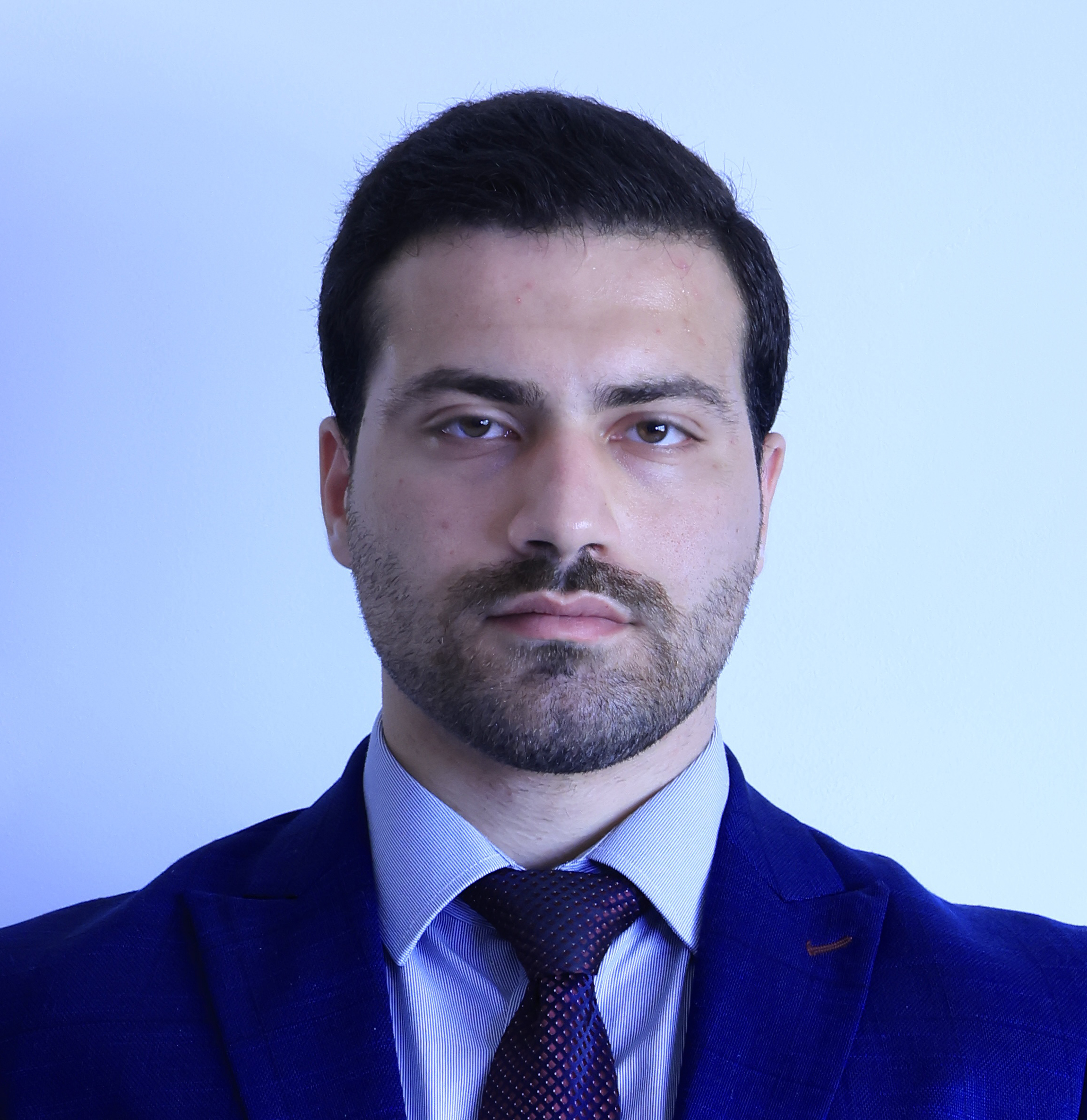
Ali Al-Smadi est un étudiant jordanien en médecine de 23 ans, actuellement en dernière année de ses études. Il est passionné par les personnes, la santé publique et les histoires qui nous façonnent. Son intérêt pour l’écriture s’est développé naturellement à partir de ses expériences à travers la Méditerranée, notamment lors de sa participation au UfM Med Youth Lab au Maroc, où il a tissé des liens profonds avec des jeunes issus de différents horizons. Cette expérience l’a inspiré à explorer la manière dont la culture, l’identité et les défis communs peuvent nous rapprocher. Il espère utiliser à la fois la médecine et le récit comme des outils de connexion, de compréhension et de changement.
ON THIS STORY:
Que se passerait-il si la Méditerranée disparaissait soudainement ? Dans The Day the Sea Returned, Ali Al-Smadi transforme cette hypothèse impossible en une réflexion émouvante sur la mémoire, l’appartenance et les liens humains. Alors que la mer s’efface de l’horizon, les habitants de toute la région commencent à redécouvrir ce qui les unit réellement : des histoires, des langues, des chansons et des rêves partagés. À travers un récit mêlant fable, humour et espoir, Al-Smadi imagine une Méditerranée qui existe au-delà de la géographie, une mer portée en chacun de ses habitants. À une époque marquée par les divisions et l’incertitude, ce texte nous rappelle avec force une vérité simple : ce qui nous unit est souvent plus fort que ce qui nous sépare.
The Day the Mediterranean Refused to Obey
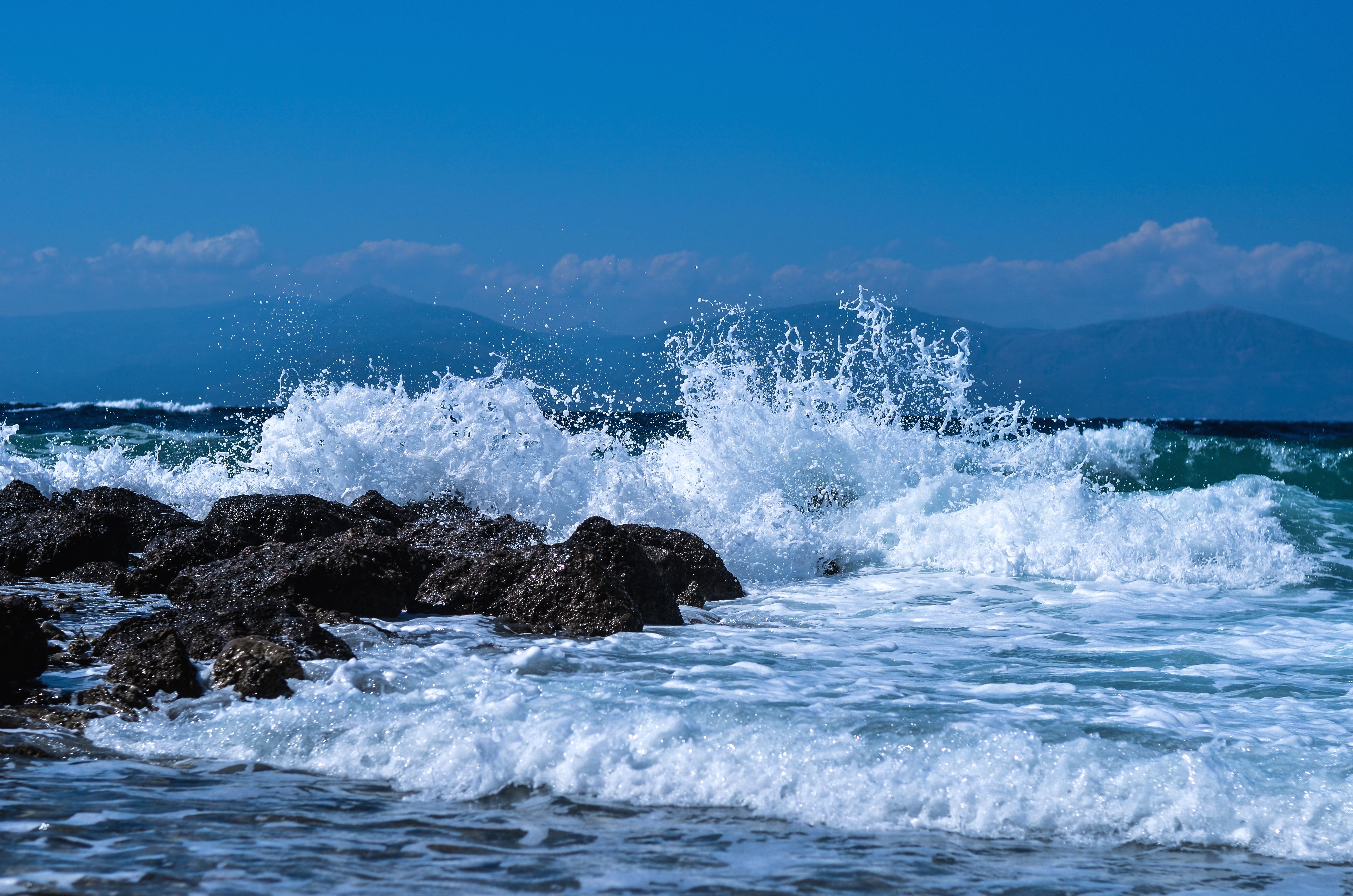
Iván López Rojo
Espagne
Lire le récit dans sa langue originale (PDF en espagnol)
“Seas do not create borders.
Only empires believe that water can divide what was born to mix”
I. Prologue to a Drowned Language
The Mediterranean no longer spoke. Not because it had died, but because it had grown tired of betrayal. For centuries, it had been a channel, a promise, a mingling of bloodlines. Then came civilization. And with it, cartography. And with cartography, the trap: the sea was delimited, militarized, carved into security zones, profit flows, energy corridors.
So the sea, patient but alive, decided to resist.
It didn’t strike back with storms. Not with tsunamis. It retaliated with silence.
For years, it stopped speaking to the peoples that surrounded it. It became a mute surface for tourist cruises and military operations. No one listened. No one asked. And when someone finally looked at it, they only saw statistics: tons of fish, migration routes, salinity indexes.
The Mediterranean was no longer a sea. It had become a field of data.
Until one day, it broke its silence. But it did not speak in any human tongue. It spoke in symbols. It spoke in gestures. It spoke through a series of inexplicable events. And that was the beginning of the end of obedience.
II. The First to Hear It
They called him Sami. He was the son of a Lebanese fisherman and a Tunisian nurse. Born in Palermo, raised in Melilla, expelled from Marseille. He had no nationality and no hope. All he owned was an old boat, and a radio that only broadcast static.
Sami was the first to hear it. One night, off the coast of Lampedusa, while trying to fall asleep beneath a torn tarp, he heard the water whisper. But it wasn’t a current. It was a clear sentence:
“I don’t want to be a border.”
He thought it was a dream. But the next day, on the beach, he found something impossible: a manuscript written on fish skin. On it, the words:
“I was a cradle. They turned me into a customs post.”
It was the second message. Sami understood. Not because he spoke the language of the sea—but because he, too, had been turned into a border.
III. The Sea Against Its People
For decades, the Mediterranean peoples had forgotten that the sea is not a possession, but an experience. A bond. A god older than language.
But the Schengen treaties, gas pipelines, military enclaves, mass tourism, and climate collapse had turned its shores into spaces of exclusion, adorned with rhetoric of peace.
Boats no longer fished. They carried weapons, refugees, tourists on all-inclusive packages. Beaches were no longer playgrounds, but protocols. Waters were no longer free, but “managed.”
Then the Mediterranean had enough.
The third message came in the form of a wave that crossed, without explanation, from Gaza to Valencia. On its crest it bore foam shaped in saline letters. It read:
“How many dead fit into a migration policy?”
There was no reply.
IV. The Islands That Did Not Obey
While major capitals went on negotiating their futures in air-conditioned summits, a quiet uprising began to rise from the margins.
Islands like Gozo, Pantelleria, Djerba, Lesbos, and an uncharted stretch of the Libyan coast began to refuse orders.
Fishermen declined to cooperate with radar systems. Universities stopped implementing the official curriculum. “Schools of Silence” were founded, where a version of Mediterranean history was taught—one that did not appear in any authorized textbook: the history of mixing, of defeats, of flagless exiles, of ownerless boats.
An informal network of insubordinate archipelagos started to form an alliance. They had no government. Only one principle:
“The sea shall not be neutral.”
And that was the beginning of the revolt.
V. The Amphibian Manifesto
It was in Algiers, in 2052, that the first and last cultural manifesto of the living Mediterranean was drafted. It was not printed. It was written in the sand. And memorized in six languages: Arabic, French, Italian, Berber, Greek, and Hebrew.
It read:
“We no longer want to be treated as bridge or border.
We want to be storm and story.
We want a sea without police or passports.
We want the institutions that name us to fall silent.
We want to found a Mediterranean that obeys neither East nor West.
We want a common tongue taught not in universities, but on journeys.
We want to bury the nameless dead with no map, no flag, but with dignity.
We want to stop living on the coasts of empires.”
It became the most translated, the most banned, and the most memorized text of the second half of the 21st century.
VI. A Future That Asked No Permission
Northern governments reacted with disbelief. How can a sea declare independence? How do you suppress a cultural insurrection with no leaders and no printed manifestos?
They tried to cut the networks. Shut down the platforms. Ban the gatherings. It didn’t work.
Because the insurrection was no longer political. It was spiritual.
Young people began tattooing fictitious maps on their skin. Inventing hybrid languages. Living in floating communities with no private property or biometric records. Creating sound archives that could only be heard in absolute silence for over ten minutes.
They didn’t want to “improve Europe.” They wanted to refuse it—without destroying it. They wanted to create something else—something with no name in any UN dictionary.
The Mediterranean had become a practice of symbolic exile.
VII. Epilogue: Submerged Words
I was born in 2002. I saw the fall of the old Euro-Mediterranean project. I witnessed false digital revolutions, treaties that healed nothing, summits that did not think.
I saw my friends die at sea. I watched democracy turn into a slogan, multiculturalism into a marketing pitch. I saw our languages translated into English that rendered everything harmless.
But I also saw something else. I saw my comrades walk toward the water without fear. I saw the expelled become cartographers of the undesirable. I saw the Mediterranean speak again—not with voice, but through acts of loving disobedience.
And I understood that it was no longer about imagining the future of its shores.
It was about disobeying the very idea of the border.
My ideal Mediterranean is not peaceful. It is uncomfortable. It is impure. It is mixed, messy, contradictory. But it is alive. And it does not ask permission.
Because if this sea could speak—and it already is—it would not tell us a story of tomorrow.
It would challenge us with a question we still do not know how to answer:
“What will you do with your freedom if you get it back?”
And then, perhaps, we would begin to imagine for real.
Originaire de Fuenlabrada (Madrid), Iván López Rojo est diplômé en sciences politiques de l’Université Complutense de Madrid, où il poursuit actuellement un master en études avancées en philosophie. Sur le plan professionnel, il s’est distingué par son engagement bénévole au sein de Sustainable Europe (Equipo Europa) et du Pacte européen pour le climat.
À PROPOS DE CE RÉCIT:
Dans un futur proche, la Méditerranée cesse d’accepter le rôle que l’histoire lui a assigné et devient la protagoniste d’un acte de désobéissance. Dans The Day the Mediterranean Refused to Obey, Iván López Rojo construit une puissante fable politique où la mer retrouve sa propre voix pour remettre en question les frontières, les identités et les formes de pouvoir. Entre manifeste, fiction spéculative et poésie, le récit imagine une insurrection née de la mémoire partagée de ses rivages et pose une question qui traverse tout le texte : est-il possible d’imaginer une Méditerranée véritablement libre sans désobéir d’abord aux frontières qui la définissent ?
Sebil – سبيل
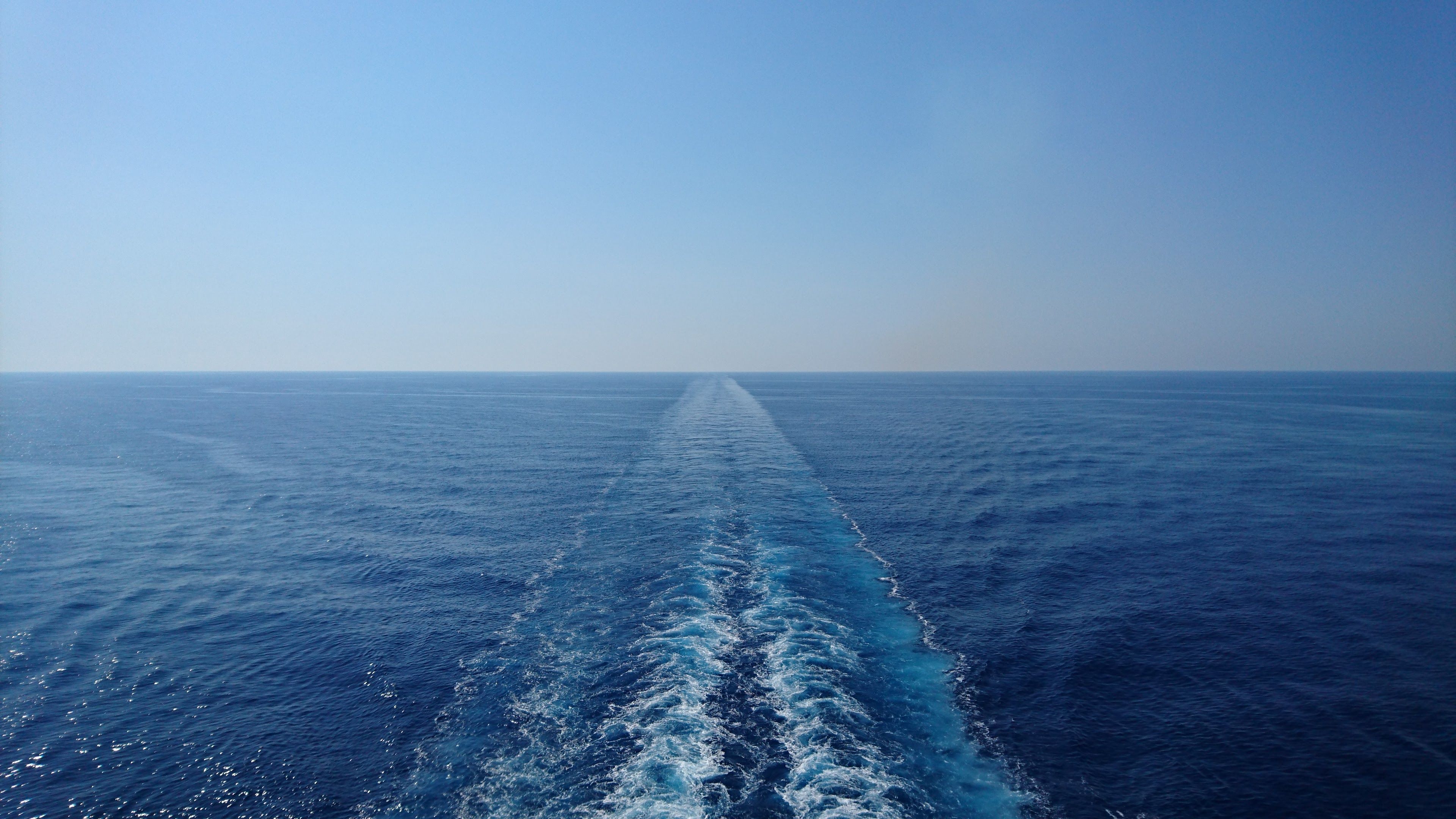
Chadha Fajraoui
Tunsie
Troisième prix du concours littéraire A Sea of Words 2025.
Texte original rédigé en anglais.
I’m not supposed to be here, but the air is fresh, the sand sifting between my toes keeps me tangled in the space between leaving or just start living here. The waves, so angry, full of hatred, feel almost inviting, as if daring me to surrender and let them engulf me. To breathe in the salty air and exhale everything that has been haunting me. Droplets of water run down my face like tears that don’t belong to me. But I can’t stay. if I get caught, they will just send me to that place.
I feel rushed, robbed, ripped from myself. it aches me that I need to go back before I run out of time.
I cannot be caught–
“Hey! what do you think you’re doing, come on we need to go! hurry!”
–we cannot be caught…
I run, sneakers in hand, laughing with Farida about how I was looking so poetic at the sea. We duck through the hole in the wall, getting some cuts here and there but I’m used to it. We dust off our clothes from the sea’s scent and pause to catch our breath, just enough to keep running before anyone sees us.
We’ve been sneaking here every other week since we discovered the entrance. It’s strange how close it is to our jobs, yet we never knew it existed. People say the area is sieged, protected by the government. They told us it was dangerous, contaminated after the World War III. If we ever go near the red line by the wall, the guards will shout, sometimes they threaten to detain or shoot us.
I work in a garment factory; the same one my mother was sent to after she was expelled from the State Design Bureau. My father said she started a riot when a colleague vanished. They suspected he was onto something, especially when he’d grown increasingly paranoid around government agents. He admired her for it.
Farida works with my father in the prisons, designing smart cells. he was told they needed his expertise, but he knew it was a punishment, for having a wife he couldn’t control.
One day, Farida overheard a guard talking, thinking she had her headphones on. he mentioned a hole in the wall that was caused by a water pipe explosion. The state trusted that the citizens of Medi. F have a lot to lose to ever approach the wall, let alone find the hole. Turns out, it wasn’t so protected after all.
After seeing that place, I realize; we weren’t protected from it, they were protecting it from us.
***
“Medi” stands for Mediterranean, “F” for factories.
In Medi. F., we’re around 230.000 citizens. Here, you either work in the factories, the prisons or if you’re privileged enough, with the state.
My mother died giving birth to Farida. The doctor said that they couldn’t save her, her heart gave out. There wasn’t enough equipment to resuscitate her.
The sun usually wakes me up, creeping through the curtain. But today, it’s different.
I’m jolted awake. Snatched. A black bag over my head.
My father’s shouts. Farida crying.
I feel disoriented. I don’t understand what’s happening. I can’t see, let me see! The words won’t come out.
“Dad! Dad!”
I’m suffocating, I can’t breathe!
“Please! What’s happening!”
I can’t find my voice. I’m not usually this scared, but I’m terrified.
“No, no, no! leave her! take me instead!”
Oh god! Am I dreaming? please, let it be just a nightmare.
I hear a thud on the ground and a sound like a gun. My father is down.
“Shut up! get back, get back!” a guard shouts.
“Please, she didn’t do anything!”
He’s alive.
“You better get back or I’m going to shoot you” another man threatens him.
“No, please! dad, it’s okay. I’m… I’m sure it’s nothing. P-please just take care of Farida. Leave him alone, I beg you.”
“Listen to your child. She seems like she knows better.”
***
“So Sibel, do you have anything to tell us?”
“No.”
“Maybe you have something to hide from us?”
“No.”
Silence. what do they want from me?
“Just cut to the chase and tell me why I am here?”
the woman pushes the cup of water toward me; I push it back. I’m not drinking from that.
“hm. rebellious, I see.”
“What do you want from me”
she slaps the cup off the table. Water splashes across the floor. Then she slams her hands against the metal surface and shouts “we’re here to ask the questions, not you!”
I jump. A lump rises in my throat, but I swallow it. I won’t let them see fear on my face. I just glare.
“Sibel, you’ve committed a crime against the security of the State. To simplify it for you, congratulations, you just earned yourself a one-way ticket to the State’s jail”
“What? what did I do? I didn’t do anything wrong!”
“We know about the coast”
Great!
“And? what’s wrong with just seeing the sea? it’s just sand and water. What crime against the state that I committed”
Oh no! Did they take Farida too?
A chill runs down my spine. I grit my teeth. I want to cry. I want to scream.
“You clearly know that it is forbidden to cross the line. Did you share that information with anyone?”
“No.”
Silence.
How don’t they know about Farida?
“How did you know about that.”
“Sibel, we are the All-Knowing. of course, we knew about your little escapes”
“But how? Tell me how?”
“We hope, for everyone’s sake, that you didn’t share the information.” the other officer drags his thumb slowly across his neck, as he smirks, a gesture sharp enough to make me freeze.
“I told no one.” I whisper.
Do they know about Farida? And if they don’t… how?
“Anyway, your trial is going to start in-” checking the watch on her wrist “one hour.”
“What will happen to me? tell me! I didn’t do anything wrong!”
the woman exits the room, and the other officer hurries to take the stack of papers on the table, while he’s doing it, he slides a piece of paper toward me and he simply says “eat it” I was confused at first, I open it, and I quickly throw it in my mouth.
***
An hour passed,
I’m on edge.
My palms so sweaty I keep wiping them on my trousers.
What is going to happen to me? am I going to be executed?
My stomach twists and drops, I feel like vomiting.
I clench my fists. I won’t cry. I won’t.
I tilt my head back. Eyes glued to the ceiling.
The light. That damn light.
It sways slightly, flickering, buzzing, like it’s mocking me.
Ugh!
Where are they?
The door opens. Eyes to the door. two guards, one woman.
“Get up!” Rough hands grab me. Cuffs snap around my wrists. the chair scrapes loudly against the hard floor.
No one says anything else.
“Where are you taking me?”
no answer.
We just keep walking through a long hallway. It feels never ending.
I hear screaming, laughter and whispering.
and then nothing at all.
The silence is deafening. I swallow the urge to ask again. There’s no use. This might be it.
My trial.
But when we stop, they remove the chains and shove me into a cell.
“What? why am I here?”
“you’re mistaken… I have a trial!”
The guards ignore me. The woman turns to follow them out
“Wait! wait! there’s a mistake-”
“The All-knowing don’t make mistakes!” she says coldly. “You remain in your cell, until the jury decides your sentence.”
“But-but I should be able to defend myself!”
they all laugh and then leave. I stumble forward, my hands on the cold bars. I feel helpless.
***
I feel my lips trembling. I don’t want to cry, but the tears keep running down my face nonstop. It would be an understatement to say I’m afraid for myself, I’m terrified. But more than that, I’m terrified for my father. After my mother died, he can’t take another loss.
I don’t know how long I’ve been standing here, still gripping the cold bars. My hands feel raw, too dry from holding the metal too tightly. I don’t notice I’m not alone until-
“Don’t worry, it will be years until you reach your execution payroll”
I jump.
I’m not alone?
what is it with people trying to give me a heart attack today?
I quickly wipe my tears and turn around.
A white bearded man stands in the corner. His beard is so long, I’d swear it’s longer than his torso. His eyes are squinting, barely open, but i can catch a glint of dark brown, or maybe black. His skin, though brown, is so pale he looks like he hasn’t seen the sun in years.
“Who are you?” I ask, voice still shaky.
“I’m what you’d call your cellmate, kid”
“But you’re… a man”
“Yes,” he shrugs. “Last time I checked.”
“shouldn’t I be in a cell with a woman?”
“Actually, it’s a part of the torture mechanism,” he says calmly, like it’s common knowledge. “They put opposites in each cell, hoping the man will rape the woman, or the woman will be so afraid she has to kill the man.”
“What kind of sick way of torture is that?”
“They are proud of inventing this kind of torture, if you’re asking.” he says. “don’t let them get into your head. they are already under your skin.”
I freeze…
“What do you mean? under my skin?”
“I hear you were caught near the coast”
“Yes!” I step forward, lowering my voice. “You know about it?”
“We all do. we just don’t dare bring it up.” he pauses, eyeing me. “But kid… you have a chip under your skin. That’s why you were caught, and not your sister.”
“Shhhh! shhhh!” I panic. “How do you know about my sister?”
He leans in, in a whisper, he says,
“You’re Sibel. The daughter of Shedli and Rayhan Ghurab-0.”
My blood runs cold.
“The woman who whispered freedom into our ears… and snatched our hearts the day she was taken from us.”
“… Ghurab what?”
“Al Ghirban, the watchers and the avengers.
we never forgive and never forget,
they are not a phoenix that rises from the aches and flames
but they might be ravens holding grudges and names.”
he went on, telling me how my mother was the prototype for al Ghirban. She volunteered for the training and succeeded. She was the head of Al Ghirban before they snatched her.
“Snatched her?” I asked.
he explained how they never accepted her death, for she was one of the strongest. Even as she fell in love with the tech-architect, my father, he never withheld her from her duty. he encouraged her, helped develop a spying program. but after she presumably died, he had to pull back from active involvement with al Ghirban because of his two daughters.
“Do you think my mother is alive?” I interrupted him.
“Alive? i don’t know. but that she didn’t die in labor? We’re certain.” he said with conviction.
“You want to know why they have a chip in you but not your sister?”
“yes” I lean in, eager to hear more clearly.
“You had the same psychology assessment results as you mother, whereas Farida she showed no signs of rebellion.”
“You are our hope, Sibel. The hope of Medi. F. You’re your mother’s daughter.”
Wait… what?
“Didn’t Ali give you a code?”
Ali? Oh, the officer from earlier.
“You know about that?”
“Al Ghirban deliver messages in their own way. I hope you memorized it”
“Is my father involved in this?”
he didn’t answer.
two guards. One man. I hear their marching footsteps and jump to the other corner.
they open the door. without a word, they grab the man by the arm.
He glances my way, and just the corner of his moustache lifts… I think he’s smiling.
They put a deep red bag over his head. I know what that means. Execution. I never even knew his name.
“Sibel! It’s your signal!”
Wait… Farida? I turn around and stare at the camera in my cell.
“There’s no time to explain, Ali left the door open for you. Get out! you’ve got 20 seconds before it closes automatically”
“Where will I go? “
“you’ll know!”
I stumble through the door. My legs wobbling beneath me, i run in the opposite direction from where the guards took the bearded man.
Suddenly, the light flash red, sirens blare… first i think they’re in my head, then i realize they’re everywhere.
“There she is!”
“Catch her!”
“she’s slipping away!”
You’ll know, Farida said, how will I?
Great! The door’s closed.
There’s a keypad. A code. Ali’s code!
235813
The door slams shut behind me.
“she’s through!”
I keep running, no destination in mind. breathless. I don’t know if I’m safe!
I try every door. All locked. until suddenly… one knob turned.
I’m eye to eye with my mother.
My mother.
Machines everywhere. cords out of her skull, her chest, her legs. Screens blinking. Scientists in white coats move around her. None of them notice me until I gasp:
“Mom?”
She turns toward me. No recognition in her eyes.
I freeze. But then a voice in my ear whispers
“Run, Sibel run.”
A man slams the door shut.
I stumble away, numb. weirded out.
A hand grabs me. It’s my father.
he’s yelling, tears in his eyes but I can’t hear a word he says. I just saw my mother.
“Sibel, are you listening”
“Yes!”
“You need to take these stairs. They’ll lead you to the caves. There’s a raft waiting by the shore. You need to escape Sybell. Go to the Medi. North-”
“What? No! dad I just saw my mom now… in a room full of tubes!”
“you’re our only hope. it’s our only hope.”
He pushes me toward the door.
“You’ll help us from there”
He hugs me. A quick desperate hug. then he closes the door behind me.
Darkness, only the red flashes help me see the stairs. I run down, deeper and deeper, until I reach the cave. There’s light ahead. I follow it.
I hear voices. Boots stomping.
I reach the opening. The raft is there.
This is it. My sign.
I either reach it now… or I’m dead by dawn.
I check both sides. And I run.
“There she is!”
My hair stands on ends. I might get shot right now.
Bang!
I keep running.
Bang!
Another shot… still not in my direction.
I look back. I see guards. Others too. Men in black and a beak-shaped mask over their faces. A crossfire.
And I remember… Al Ghirban and I’m their only hope.
But between the wrath of the sea and the lull of its lullabies, the Mediterranean holds our only hope.
Chadha Fajraoui est une jeune architecte tunisienne et une autrice en devenir. Lectrice passionnée depuis toujours, elle s’est récemment tournée vers l’écriture de poèmes et de nouvelles. À travers ses textes, elle cherche à rapprocher les êtres humains en explorant la profondeur des expériences humaines, les émotions inexprimées, les vérités cachées et les tragédies silencieuses qui façonnent notre identité.
Elle croit profondément au pouvoir du récit pour abolir les distances, que ce soit à travers la conception architecturale ou l’écriture. Pour elle, écrire est devenu un refuge intime, un jardin secret de l’esprit qu’elle appelle hiraeth, un lieu de nostalgie et d’imagination qui complète son travail d’architecte.
À propos de ce récit:
Lire Sebil, de Chadha Fajraoui, c’est pénétrer dans un univers sous tension, marqué par la surveillance, mais traversé par une fragile lueur d’espoir. Le récit nous plonge dans une dystopie angoissante, un monde clos — Medi. F. — où la vie est réglementée jusque dans ses dimensions les plus intimes et où le pouvoir ne se contente pas de délimiter les territoires, mais s’inscrit jusque dans les corps. Dans ce contexte oppressant, la découverte de la côte interdite devient le point de départ de l’insoumission. À la fois proche et jusqu’alors invisible, cet endroit agit comme un espace inconnu et, précisément pour cette raison, chargé de désir. La protagoniste nous guide à travers cette expérience de découverte et de perte, montrant que toute opposition à un système injuste implique de faire des choix et d’assumer des risques. Pourtant, le texte ne se limite pas à décrire l’oppression ; il met également en lumière les formes de résistance : la mémoire, les liens humains et les voix souterraines qui circulent en marge du système. La figure maternelle, à la fois ambiguë et puissante, cristallise cette tension entre soumission et rébellion. Dans un récit qui soulève davantage de questions qu’il n’apporte de réponses, la mer, à la fois frontière et promesse, symbolise la possibilité incertaine de franchir les limites et d’imaginer d’autres futurs. Il ne reste alors qu’une seule option : se jeter à l’eau.
Mònica Rius, Coordinatrice des relations avec la Méditerranée, l’Afrique subsaharienne et les pays voisins, Université de Barcelone.
Home Must Be Safe
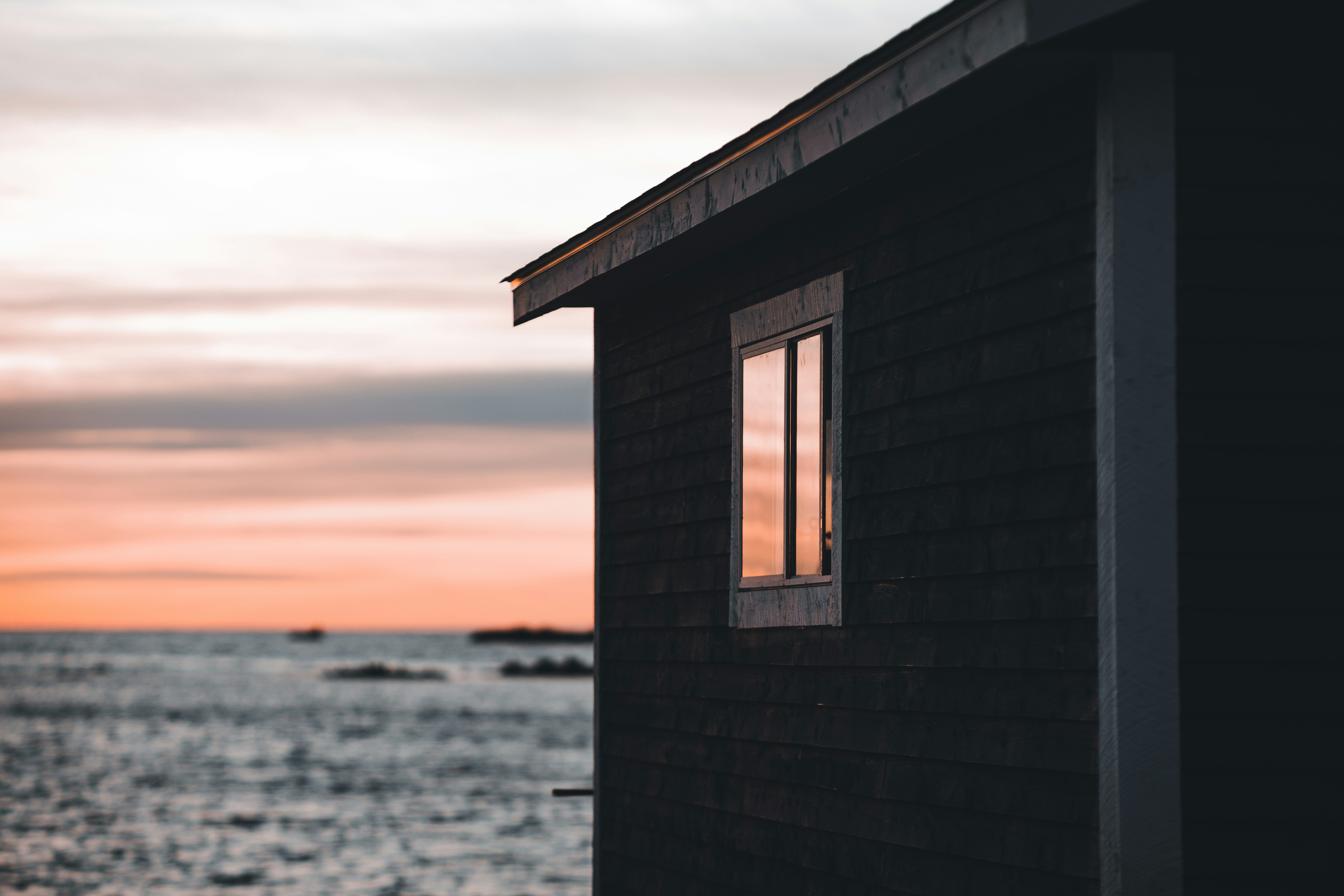
Sara Stojanovska
Macédoine du Nord
Lire le récit dans sa langue originale (PDF en macédonien)
We sail across the Mediterranean. The massive ship parts the water, forging a path, seeking land. Isn’t every life a voyage like this? Odysseus and Aeneas searched for their home, just like you and I. But is a home only a place? Before I met you, I was convinced it was. Home, to me, was my parents’ house. The flower-filled balconies, the white front door, the yard where my bicycle stood, and the bench where I used to sit with my grandmother. It smelled of cooked meals, and it was always warm inside. My home was freshly whitewashed, the walls spotless, and inside, I felt protected, safe—truly at home. I believed everyone had a place like that. I didn’t know it could be taken away, that walls could crumble, that someone could harm my mother’s flowers. I wasn’t aware how easily the smell of pie, sour milk and cookies could be replaced by the stench of gunpowder, dust, and murdered dreams. I learned that later—luckily, from books and films—but someone is living it: right now, someone is losing their home.
Since I met you, home has changed. It was no longer a house with four walls, but a pair of eyes, a smile, and a seemingly ordinary person who, day by day, became my home. In you, I found all my mother’s dishes, all my memories with my grandmother, and everything they had ever wished for me was concentrated in your embrace. All their prayers were answered the moment you appeared in my life. And now I wonder—what would I do if someone took away this home, too? Even though I just whispered to you how peaceful the waves make me feel, part of my heart clenches, and my thoughts grow darker when I think of everything this sea has taken. You tell me I’m being silly, that my fear is irrational, you say our ship is safe.
— What about the others?
“It’s cold, let’s go inside,” you say, tugging my hand, and we leave the deck.
I remember the moment I first touched the sea. I trembled all over and rushed to taste the water. I didn’t believe them when they said it was salty. I ran to my father in tears, and he, smiling, opened the little cooler we had brought and handed me an ice cream to calm me down. For a moment, I forgot all about the salt in the sea. History repeats itself. Nothing new will happen in this world. We’re all little children focused on our chocolate ice cream, while behind our backs unfold stories that will horrify our children. I didn’t have the courage to tell you this, so I remained silent.
Every journey around the world is, in fact, a journey within oneself, an expansion of one’s being in every direction. That’s how we grow—us, and our love for the world. You know how much love can change a person.
“How much love would it take to heal the world?”
— Ours is enough for at least three.
You joke about how serious I am as we stroll through unfamiliar cities trying to better understand ourselves. It’s easy to love the world when it’s rosy, just as it’s easy for you to love me when I’m happy. Like in those moments when I’m eating ice cream in the narrow streets of the cities we explored together, or lying beside the sea in the sun, cocktail in hand and a blissful smile on my face. These are the stories we tell others, and they believe them. They believe in our false perfection. But you and I, we know the truth.
“What do you think, is it worth having a child in such a world?” You dodge the question. You make excuses—for the world, for us, for humanity.
“If everyone thought that deeply, our species would die out.”
And you know that’s not true, but you won’t give up trying to convince me the world isn’t such a bad place. You’re trying to sell me the same story I sell to others. And even if it’s not rosy, we are learning to love this world—and to my great joy, we are doing it together. The hope that we can heal it grows with every kind and humane person we meet, and shrinks with every cruel person ruling over it.
We travel to learn, to help where we can, to see the truth and stand before it. You try to open your eyes, to truly see, and you realize it’s not painless—but is living a lie painless? After each journey, the number of questions only increases, the yearning for freedom deepens, and we dream of a world without borders, a world where moving from one place to another would meet less resistance.
When we returned, I rushed to see my family. I sat at the dining table in the home I grew up in. My mother brought out the pie and asked how our trip went. I told her about all the newly discovered cultures, peoples, traditions, about the food—which was nothing compared to the pie I was eating, with the taste of an entire childhood. I showed her photos of buildings, beaches, restaurants, museums, parks, markets, people… And yet one thought kept spinning in my mind: maybe this is the meaning of every journey—to have somewhere to return to and someone waiting for you. There is nothing more beautiful in the world than to experience all its colours, smells and tastes, without being afraid for your loved ones. And as I tell my mother that she’s going to be a grandmother, I picture a world for our child in which returning safely home is no longer a privilege.
Can you imagine it too?
The wind rustles my grey hair, and I breathe in the sea like it’s the first time. The years have changed so much, but my love for the Mediterranean remains. In fact, love is all that remains. The love I now share with my grandchildren, with the children running on the beach in front of me while I enjoy my cold lemonade and the pleasant shade. You’re no longer here to crack a joke, to tease me for becoming a serious and sentimental grandma with no sense of humour. And it’s true, I did become serious and sentimental after you left. Don’t worry, we’re all doing well. Our daughter has had another child—I’m a grandmother again—and our son is getting married soon. He’s sad you won’t be there to celebrate with us. His fiancée is wonderful. You know, her family finally returned to their country, and now the wedding will be held there. In recent years, the world has changed a lot. All the wars have ended, and now everyone can freely return home. I look back on our journey across the Mediterranean all those years ago, I long for our youth, for our love—but not for the fears of that time. I’m grateful we built a family together, that you held my hand as we travelled the world.
“Grandma, Grandma, let’s go home!” — came the voice of little Aeneas.
— Sweetheart, we are already home.
“But how can we be home? We’re outside!”
— All of this is our home.
“Mum, Aeneas, hurry up! A storm is coming—we should go!”
I stood up, took my grandson by the hand, and cast one last look at the sea.
Your storms don’t frighten me anymore. All the ships are now safe, and all the children are home—safe.
Sara Stojanovska (2002) est née à Bitola, en Macédoine du Nord. Elle étudie actuellement la biochimie et la physiologie à la Faculté des sciences naturelles et des mathématiques de l’Université Saints-Cyrille-et-Méthode de Skopje. L’écriture a toujours occupé une place importante dans sa vie et, à travers son travail et son engagement, elle s’efforce d’inspirer les autres et de contribuer à un changement positif au sein de sa communauté.
À propos de ce récit
Dans Home Must Be Safe, Sara Stojanovska transforme une histoire d’amour intime en une réflexion sur l’appartenance, la mémoire et le besoin universel d’avoir un lieu que l’on puisse appeler chez soi. Entre souvenirs personnels et tragédies collectives, le récit explore ce que signifie réellement se sentir en sécurité dans un monde marqué par les déplacements forcés et la guerre. Tandis que la Méditerranée accompagne des générations de voyageurs, l’autrice nous rappelle que le foyer n’est pas seulement une maison ou une patrie, mais aussi les personnes que nous aimons et l’espoir que les générations futures n’auront jamais à craindre de les perdre. Un récit apaisé et profondément humain sur la capacité de l’amour à survivre aux conflits.
The Shape of Salt
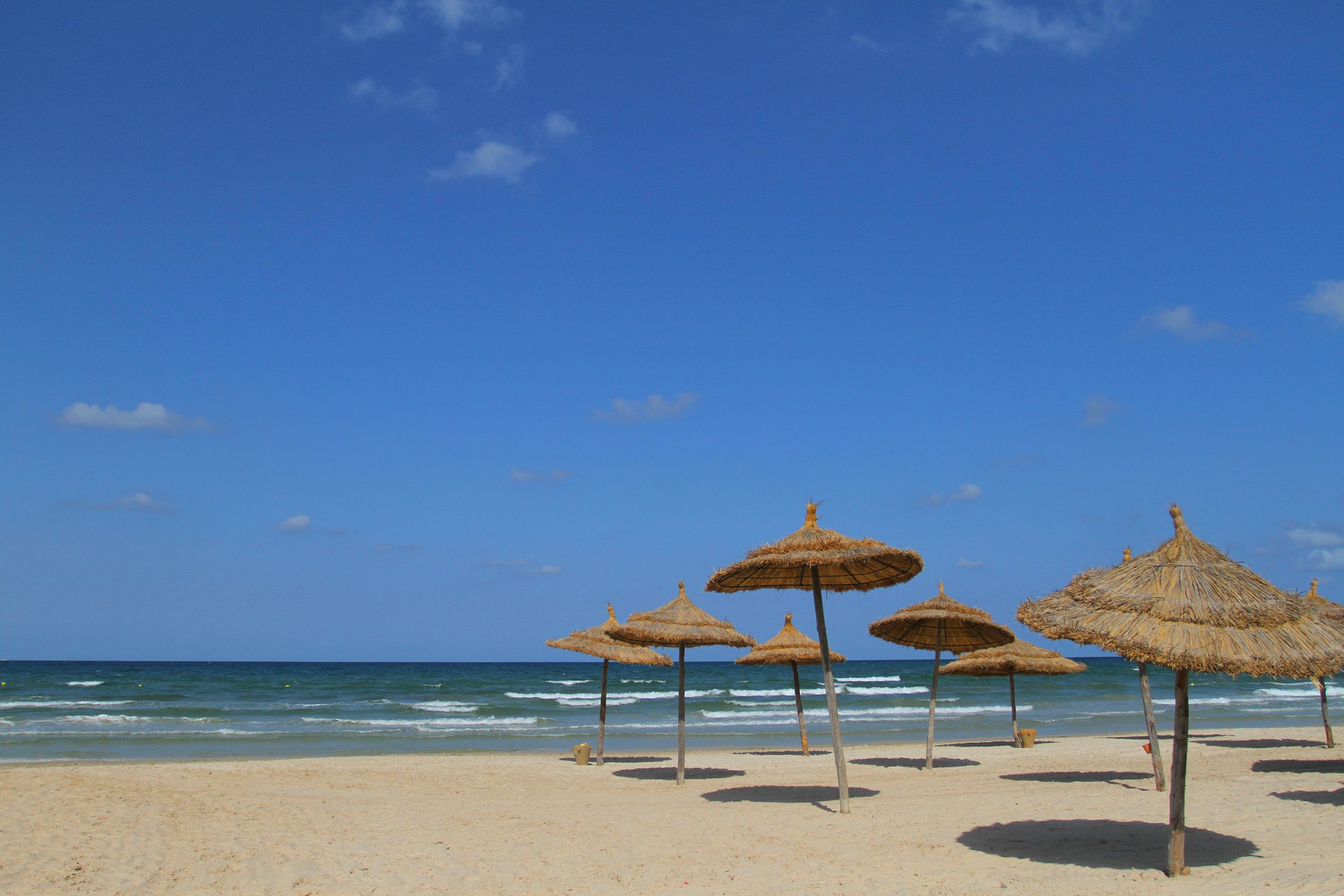
Houda Elafdel
Morocco
Texte original rédigé en anglais
She first met the Mediterranean when she was three years old.
A family trip to Saïdia, the little Moroccan beach town where the coastline brushes against Algeria’s invisible line. She did not remember the details — no, those were faded like an old photograph; but she remembered the feeling. Warm sand crumbled under her feet, the sun beating gently on her shoulders, and the wide, endless sea stretched out before her. She remembered her father crouching beside her, pointing across the water: “That’s Algeria, sweetheart.”
She had no idea, at that age, what Algeria was, what borders meant, or why people on one side were different from people on the other. However, she remembered wondering why something as big and open as the sea could ever be split.
She carried that question with her as she grew.
At eighteen, she left for the UK.
She thought she was prepared. She had packed carefully, researched the weather, learned the transportation system, and prepared polite answers to the inevitable questions. Nevertheless, nothing had prepared her for the cold; not just the temperature, but also the coldness in the air, in the streets, in the quiet stares of people who did not quite know where to place her.
One evening in her dorm kitchen, a girl asked her, “Where are you from again? Morocco, right? Do you guys ride camels everywhere?”
She forced a smile. “No. We actually have buses. And… cars.”
The girl giggled awkwardly. “Oh, of course! Sorry, I just… never met anyone from there before.”
In her small student room, she sat by the window at night, looking out at streets lit by soft yellow lamplight, wondering why she felt so invisible here. She missed the sea, its warmth, its noise. She wondered if the distance from the Mediterranean was not just measured in kilometres but in something else, something heavier, and something inside her.
Two years later, she landed in Cyprus for her master’s at Eastern Mediterranean University.
It was North Cyprus, with its complicated half-official status, but to her, it was a place that hummed with history. She walked streets lined with tangled cultures: Arabic, Greek, Turkish, Levantine. Churches stood next to mosques. Olive trees grew beside orange groves. The world felt layered here, as if the past and present were touching hands.
When she missed home, she walked barefoot to the EMU Beach Club. She loved the way the sand felt cold under the moon, the way the waves hissed softly as if whispering secrets just for her.
On her twenty-second birthday, she planned to celebrate alone. She bought a small cake, carried it down to the beach, and thought she would light a candle and sit with her thoughts. But just as she reached the shore, laughter burst behind her.
“Surprise!” shouted Hana from Egypt, waving a sparkler.
“Happy birthday, you thought we forgot?” added Leila from Lebanon, pulling her into a hug.
“You were going to celebrate alone?” teased Emre from Turkey, handing her a flower. “Not on our watch.”
Someone had brought a drum, another fresh bread, another a silly birthday crown. They danced on the beach until the stars scattered overhead.
That night, she realized something she had never understood before: solitude can be a place of transformation, not loneliness. In addition, sometimes, the people who meet you in your solitude are the ones who make you whole.
A few months later, Madrid welcomed her warmly.
She arrived for a three-month Erasmus+ exchange, nervous and unsure of how quickly she would fit in.
On her very first day at the university, a professor noticed the slightly shy Moroccan student and kindly invited her to the cafeteria.
“Come,” he smiled, “let me show you how to survive here.”
She tilted her head, puzzled.
“In Madrid, we drink coffee, not mint tea! Watch: Un café bien caliente, por favor.”
She laughed softly, repeating after him: “Un café bien caliente…”
“That’s it! You’re one of us now,” he grinned.
As the months passed, Madrid wrapped itself around her like an old cousin she had not seen in years. In Lavapiés, she ate couscous in Moroccan restaurants, and in Malasañashe drank thick Spanish coffee with classmates who introduced her to local music and neighbourhood cafés.
Language barriers became jokes. Food became the fastest way to friendship. She joined a storytelling group, where she shared tales from home; old Amazigh myths, family legends, and folk songs her grandmother used to hum.
One night, during a long dinner where plates piled up with tapas and hands waved in passionate conversation, someone asked her:
“What does it mean to you, being Mediterranean?”
She paused, smiling.
“It means,” She said softly, “I never need to explain why I feel things so deeply.”
Then came Brussels.
She did not arrive as a tourist or a student. She arrived as a voice.
She was there for the Euro-Mediterranean Youth Dialogue, to speak about misinformation, digital futures, and the role of young people in reshaping public discourse. In the big conference halls, with their glass walls and earpiece translators, she sat alongside other youth leaders, researchers, artists, and activists.
She shared her thoughts on disinformation, her heart pounding but her voice steady. She spoke of the need to battle misinformation, and of the danger of Western-centric algorithms misunderstanding North African contexts. She spoke of the importance of youth, not as symbols, but as active agents in shaping the future.
After the formal sessions, they gathered in quiet corners, sipping coffee, laughing, and dreaming.
“Wouldn’t it be amazing,” said Jamal from Tunisia, “If we could travel without borders, just once?”
Maria from Greece added, “Or if climate change wasn’t just something we talked about, but something we fixed together?”
She nodded, smiling softly. “I just want crossing the sea to feel like connection, not escape.”
That night, they sat on the hotel rooftop, tracing imaginary lines between their countries under the stars.
She realized then that the Mediterranean was not a broken puzzle to fix; it was a living story, one that needed new authors, new voices, and new endings.
Now, back home, she often thinks of the sea.
Not just the Saïdia shore where she stood at age three or the EMU beach in Cyprus where she blew out candles at twenty-two, or the Retiro Park walks where she ordered coffee in practised Spanish, or the policy rooms in Brussels where she found herself among change makers.
She thinks of all of it.
She no longer sees the Mediterranean as a line dividing nations. She sees it as a compass — always pointing her toward new understandings, always reminding her where she has come from.
The girl who once stood on a Moroccan beach and wondered what lay beyond now knows:
She belongs not to one shore, but too many.
And the sea, as always, remembers.
Houda Elafdel est une autrice marocaine et doctorante en management à l’Université Internationale de Rabat. Ses recherches et son travail d’écriture portent sur la jeunesse, la transformation numérique et les identités culturelles dans l’espace méditerranéen. Elle participe activement à des programmes internationaux consacrés aux récits, à la désinformation et à l’engagement citoyen. À travers son travail créatif comme académique, elle œuvre en faveur d’un dialogue inclusif au-delà des frontières. Son écriture témoigne d’un engagement profond en faveur de l’impact social et de la compréhension interculturelle.
À propos de ce récit:
Certains voyages commencent par une carte. D’autres commencent par une question posée par une enfant face à la mer. Dans The Shape of Salt, Houda Elafdel retrace un parcours profondément personnel à travers le Maroc, Chypre, l’Espagne, la Belgique et au-delà, découvrant que l’identité se construit moins à partir des frontières qu’à travers les personnes, les lieux et les rencontres qui nous transforment. Entre nostalgie, amitié et dialogue, la Méditerranée cesse d’être une simple géographie pour devenir une manière d’appartenir au monde, tissée de souvenirs partagés et de curiosité. Tendre et discrètement optimiste, ce récit célèbre une génération qui porte en elle plusieurs rivages tout en imaginant un avenir uni par l’empathie plutôt que par la division.