



The Corsair Mediterranean: Tales of Slaves, Pirates, and Renegades in the Early Modern Era
27 October 2025. From 18:30 | Conference | Italian | IEMed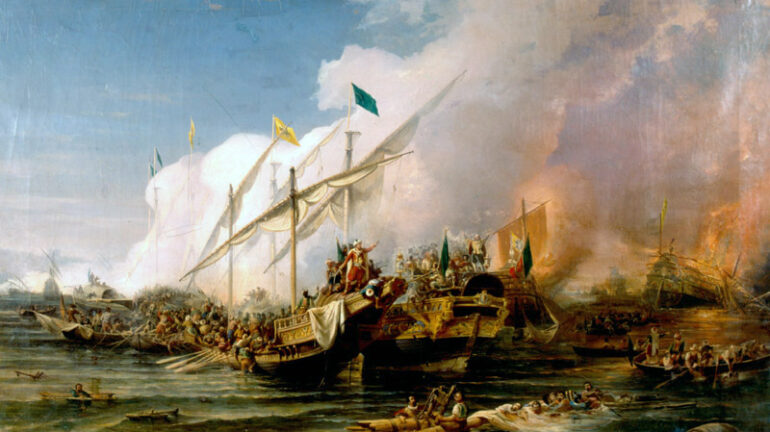
The Mediterranean between the 16th and 19th centuries was the stage for privateering warfare and, secondarily, piracy: a space continuously crossed by men and goods, shared through commercial activity and militarily contested. The jurisdictions of nation-states, the Spanish and Ottoman empires, and their respective allies projected over this space. Privateering thus had political, military, economic, and religious causes; it produced captives, reduced to slavery and ransomed by secular or ecclesiastical institutions, religious orders, merchants, enterprising intermediaries, or family members. Ransom became a lucrative activity —in which Jewish merchants played a prominent role— weaving an intricate financial network throughout the Mediterranean and generating a constant flow of information and knowledge. To escape forced labor and the violence of slavery, many renounced their faith: Christians “became Turks” and “wore the turban,” while Muslims requested baptism. Sincere or opportunistic conversions, secret or displayed, raise questions about the legitimacy of dissimulation. The intense mobility that characterizes those who sail creates connections between the two shores which, although marked by deep political fractures, maintain an undeniable reciprocity. Privateering, capturing, renouncing, and ransoming constitute a “tangled knot” that attempts to be unraveled. The people on the move face many difficulties but prove interactive with the hostile reality that hosts them, capable of devising strategies, building relationships, discovering unexpected talents, and even reconfiguring their own lives; therefore, they are not passive victims of circumstances but the only commodity-that-sells-itself, even showing awareness of having rights.
A lecture by Giovana Fiume, former professor of modern history at the University of Palermo. She has researched numerous aspects of slavery in the Mediterranean, with reference to forced and voluntary mobility, conversions in captivity, the construction of the model of black sainthood and exchanges between different religious cultures, crossing judicial, literary and iconographic sources. His books include: Mediterraneo corsaro. Storie di schiavi, pirati e rinnegati in età moderna (Carocci, 2025); Schiavitù mediterranee. Corsari, rinnegati e santi di età moderna (2009); La cacciata dei moriscos e la beatificazione di Juan de Ribera (2014), among others.
A session within the framework of the Aula Mediterrània lecture series. Co-organised with the Master’s Degree in World History, UPF
Language: Italian (with simultaneous translation to Spanish)
Speakers


Organised by


Within the framework of
