
Kaoutar Harchi presents her latest novel
26 March 2025. From 19:00 | Conference | Catalan | French | Institut Français de Barcelone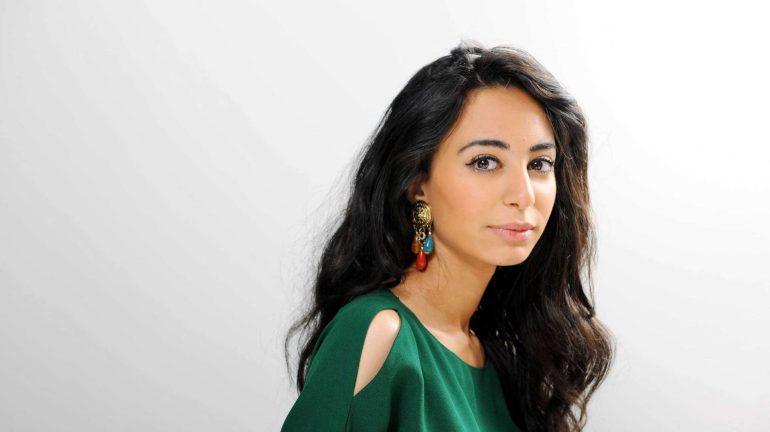
Co-organised by IEMed, Ateneu Barcelonès and Institut Francès de Barcelona, this round-table is the second event of the initiative “Blue and purple narratives” which aims to bring closer to the public the new generation of writers who base their creations within the framework of the cross-cutting identities of the Mediterranean.
Featured writer:
Kaoutar Harchi , who presents her latest novel, Tal como existimos, at the Institut Français of Barcelona, published in Spanish by Ediciones del Oriente y del Mediterráneo.
Published by Ediciones del Oriente y del Mediterráneo, this book is an autobiographical investigation in which Kaoutar Harchi seeks to capture and transcribe as faithfully as possible the state of awakening, fear, and excitement provoked, as she says, “by the discovery that we—young girls and boys identified as Muslims, whether we actually were or not—were perceived at the dawn of the 2000s by society as a problem.” A book where filial love and the awakening of political consciousness intertwine in a powerful and poetic language.
A dialogue with Ourdia Sylvia Oussedik, collection director at Ediciones del Oriente y del Mediterráneo.
Kaoutar Harchi
Kaoutar Harchi grew up in Strasbourg, the daughter of working-class parents of Moroccan origin. She attended secondary school at a private Catholic institution, an experience that plays a central role in Tal como existimos. The work of Algerian sociologist Abdelmalek Sayad, particularly his writings on immigration as a “total social fact,” led her to study Sociology and earn a PhD with a dissertation on Algerian Francophone writers Kamel Daoud, Rachid Boudjedra, Boualem Sansal, Kateb Yacine, and Assia Djebar, which was published in 2016 under the title Solo tengo una lengua y no es la mía (I Have Only One Language, and It Is Not Mine).
At 23, she published her first novel, Zone cinglée, followed by L’Ampleur du saccage (2011) and À l’origine notre père obscure (2014). In 2024, she co-authored Littérature et Révolution with Joseph Andras. After Tal como existimos, Kaoutar Harchi has moved away from fiction, as reflected in her sociological articles on culture, gender, migration, and ethnozoology, published in journals such as Sociologie de l’Art, Hommes et migrations, Cahiers du Genre, Sociétés contemporaines, Ballast, Frustration Magazine, and L’Humanité. In her latest book, Ainsi l’animal et nous (Thus, the Animal and Us), she explores the relationship between humans and the animal world.
Organised by