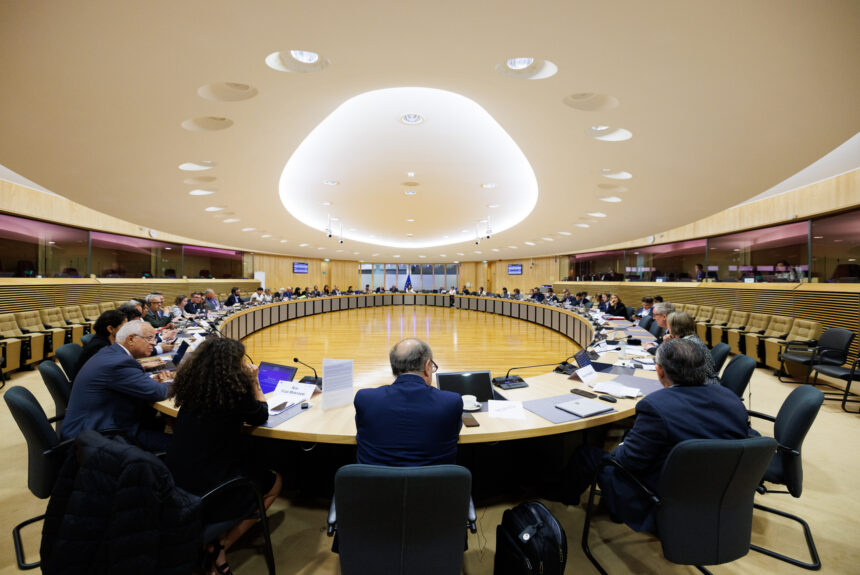
The success of the New Pact will depend on its capacity to turn consultation into genuine partnership, to balance ambition with realism and to show it has learned from past experience.
In recent years, only Serbia and, in part, Bosnia and Herzegovina (particularly the Republika Srpska entity)have decided to pursue closer relations with China in strategic areas.
The Middle East is experiencing a spike in the production, trafficking and consumption of illicit narcotics, raising risks to governance, rule of law, public health and human security.
With its indiscriminate bombardments, Israel squandered Western sympathy. Its relentless onslaught on Gaza sounded the alarm bells in the United States and Europe and sparked great indignation in the “Global South”.
African countries are seeking a greater degree of freedom to establish relations that could benefit them with new partners (China, Russia, Brazil and India) but none offers the same advantages as the EU.
For the first time, the gender dimension of the conflict, with an extra focus on sexual violence, has been at the heart of both the physical and symbolic battlefield.
The state of humanitarian aid and aid workers in Gaza is precarious. Aid workers are unable to access many parts of the enclave at risk of their own safety.
Rebuilding the EU's image as a constructive and cohesive force for peace in the Middle East should be a priority but this is easier said than done.
The Abraham Accords are likely to survive the war on Gaza, as economic, political, security and defence interests now far outweigh support for the Palestinian issue.
Experience in Tunisia suggests that it is relatively easy and uncostly to adapt most forms of infrastructure for most locations to the likely impacts of climate change up to 2030.
A webinar in the afkar Debates series addressing how to enhance EU soft power in the MENA region amidst the current crises.
The Mediterranean will regain its centrality if it develops a policy that articulates a geostrategic relationship between Africa and Europe through the Mediterranean Sea.
Migratory moves in the Sahel are on the move and they cannot be stopped, but their movements are forced and involuntary.
Sign up for our newsletter and be up-to-date with upcoming events and latest publications.
Please, choose language:
English Spanish Catalan French
This will close in 0 seconds