
The Iran War and How the World Sleepwalked into an Energy Crisis
On 28 February 2026, the United States (US) and Israel launched Operation Epic Fury, a high-impact campaign targeting Iran’s leadership and military assets.
Energy markets initially reacted with caution rather than panic. Drawing on the precedent of the June 2025 confrontation, traders and policymakers expected a limited exchange, one that would remain largely contained and avoid direct damage to critical energy infrastructure. Oil and gas markets opened the following Monday with relative restraint, reflecting an assumption that the conflict would follow familiar escalation patterns.
That assumption proved fundamentally flawed. Instead of a short and contained confrontation, the conflict rapidly evolved into an energy crisis. Iran abandoned previous restraint and adopted a strategy focused not on immediate military retaliation against Israel and US bases in the Gulf, but on imposing maximum economic cost on its neighbours and the global economy. What had been a fragile but stable deterrence equilibrium among rational actors transformed into a war of attrition with no clear off-ramp.
The energy war
The decisive shift occurred following the first strikes of Operation Epic Fury. Shortly after the operation began, the Islamic Revolutionary Guard Corps announced that the Strait of Hormuz would be closed until further notice. Unlike previous warnings, this declaration was enforced through attacks on commercial shipping with drones and missiles, creating an immediate and highly credible risk for vessels attempting to transit the chokepoint.
The response from the maritime insurance market was swift and decisive. Protection and indemnity (P&I) clubs either withdrew coverage entirely or imposed prohibitive premiums for vessels transiting the Strait. Despite US attempts to provide guarantees and pressure insurers, the combination of physical risk, a potential environmental catastrophe, and crew safety concerns effectively halted traffic.
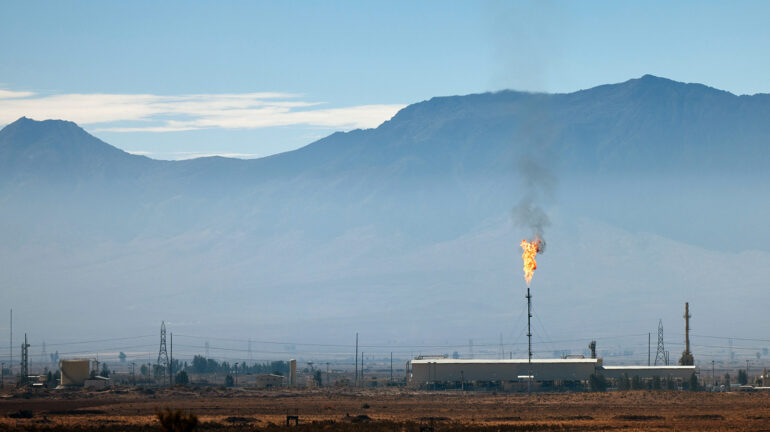
Iran’s strategy quickly expanded beyond maritime disruption and the next phase targeted energy infrastructure across the Gulf. In response to US and Israel strikes on civilian infrastructure, on 4 March an attempted drone strike targeted the Ras Tanura Refinery in Saudi Arabia, signalling intent to escalate toward critical oil export nodes. Within days, attacks intensified across multiple Gulf Cooperation Council (GCC) facilities. QatarEnergy halted LNG exports from the Ras Laffan LNG export facility, reflecting both security concerns and logistical constraints: even if production continued, the closure of Hormuz made it nearly impossible to ship cargo. The global impact was immediate. Ras Laffan accounts for approximately 18 percent of global LNG supply. European gas prices surged by around 40 percent, while some Asian import-dependent developing countries began rationing supply.
In this situation, Gulf producers put in practice their contingent plans for a Strait closure. Saudi Arabia and the United Arab Emirates (UAE) accelerated the use of alternative export routes maximizing the use of the East–West pipeline and the Habshan–Fujairah pipeline, while preparing ports outside the Strait to operate at maximum capacity. However, these alternatives could handle only around 30 percent of the normal volume transiting Hormuz for crude oil, with no alternative route for natural gas.
With export capacity constrained and storage filling up, producers were forced to reduce output. Qatar and Iraq were first, followed by Kuwait and finally Saudi Arabia and the UAE. By 8 March, benchmark crude prices, Brent crude and West Texas Intermediate, rose sharply above $100 per barrel. Iran’s strategy was now clear: weaponize energy flows to impose intolerable economic costs on the US, knowing that Trump campaigned promising to bring down energy prices as part of a broader agenda of energy dominance, ending wars and keeping the US out of military conflict.
The international response struggled to keep pace. On 11 March, the International Energy Agency announced a coordinated release of strategic reserves, only the sixth such action in its history. The US also took the controversial step of easing sanctions on Russian oil exports to increase available supply, angering its European Union allies and sending a worrying signal about the interconnectedness of the Middle East theatre and the war in Ukraine. Meanwhile, Trump’s efforts to organise a multinational naval escort system in Hormuz, including China, failed to materialise, proving how isolated the US was in continuing this war.
The turning point occurred on 18 March, when Israeli forces struck the South Pars gas field, Iran’s primary natural gas supply and a shared field that serves as the economic lifeline for all of Qatar’s LNG exports
Escalation persisted. On 14 March, US forces struck Kharg Island, a key Iranian oil export hub, but focused only on military assets while signalling that further escalation could follow if the Strait remained closed. Iran responded by broadening its targeting strategy. By 16 March it had successfully struck upstream oil and gas oilfields in the UAE and Iraq, marking a shift from targeting storage and transport infrastructure to directly disrupting supply.
The turning point occurred on 18 March, when Israeli forces struck the South Pars gas field, Iran’s primary natural gas supply and a shared field that serves as the economic lifeline for all of Qatar’s LNG exports. Iran’s retaliation was swift, targeting energy infrastructure throughout the Gulf, including a major strike on Ras Laffan that crippled approximately 17 percent of its LNG production capacity, with repairs expected to take years. President Trump’s social media posts, which denied U.S. involvement and called for restraint, underscored a lack of strategic clarity and a high degree of improvisation. These statements also highlighted the limits of rational escalation for the US and demonstrated how Israel, despite its role as the junior partner, operates with remarkable autonomy and initiative.
This sense of improvisation resurfaced when on 21 March, Trump issued a 48-hour ultimatum for Iran to reopen the Strait or face the destruction of its power sector. Well before the countdown had even concluded, Trump posted again, claiming “good” and “productive” talks with Tehran, an assertion the Iranian leadership promptly denied, further fuelling the perception of desperation within the White House.
Future energy scenarios
The consequences of this escalation are profound and very worrying for the global economy. According to the International Energy Agency, the conflict has triggered the largest supply disruption in the history of the global oil market. With flows through the Strait of Hormuz reduced to a fraction of normal levels, up to 20 million barrels per day of oil and refined products have been effectively removed from global circulation, with close to 20% of global LNG disrupted for the short and medium term.
Prices have responded accordingly. Crude oil has risen and remained above $100 per barrel, while refined products such as diesel, jet fuel, and liquefied petroleum gas have seen even sharper increases. Natural gas in European and Asian benchmarks have also reached two-year highs, with negative spillover effects on key value chains such as fertilizers, mining feedstock, and petrochemicals.
Looking ahead, the past trajectory of continued escalation presents a worrying landscape for the future. Iran does not appear to be seeking a quick ceasefire. Instead, its objective is to reshape the regional balance of power and restore deterrence against the United States and Israel once it has secured that regime change without boots on the ground is out of the equation. Its willingness to target GCC infrastructure suggests a strategy of escalation dominance rooted in the belief that it has little left to lose and that a symbolic victory in this war might consolidate the new leadership’s legitimacy in the eyes of its nationalist and conservative audience.
Even in the event of regime destabilisation, the likely outcome could be prolonged instability or fragmentation rather than a controlled transition, repeating the disastrous experiences of Libya and Iraq
Without clear means to restore traffic through Hormuz and stop Iranian attacks on energy infrastructure, US options remain limited. De-escalation could leave a more radicalised Iranian regime intact, one that may rebuild its capabilities and pursue long-term strategic objectives, including nuclear development. Further escalation, on the other hand, risks triggering even broader attacks on global energy infrastructure without guaranteeing regime change. Even in the event of regime destabilisation, the likely outcome could be prolonged instability or fragmentation rather than a controlled transition, repeating the disastrous experiences of Libya and Iraq.
Given these circumstances, Trump may find himself with no viable option but to de-escalate, likely pivoting to frame Operation Epic Fury as a strategic triumph for his domestic audience. However, Israel’s continued bombing of Iran and its ongoing ground invasion of Southern Lebanon threaten to undermine any potential for a diplomatic breakthrough. To prevent Israel from spoiling again a negotiated settlement, Washington would need to establish clear red lines for its military operations, ensuring they align with US interests in the Middle East.
While the Iranian regime has little incentive to accept a US call for de-escalation immediately, it does need time to reorganize politically and rebuild its economy. This may ultimately push Tehran to conclude that ending hostilities and gradually allowing vessels to transit the Strait is in its best interest. However, in the same fashion that the US and Iran have lost control of the escalation, sleepwalking the world economy into chaos, events could continue on this trajectory, bringing more destruction to the region.