
The Gulf in the Crossfire: Strategic Consequences of the Iran War
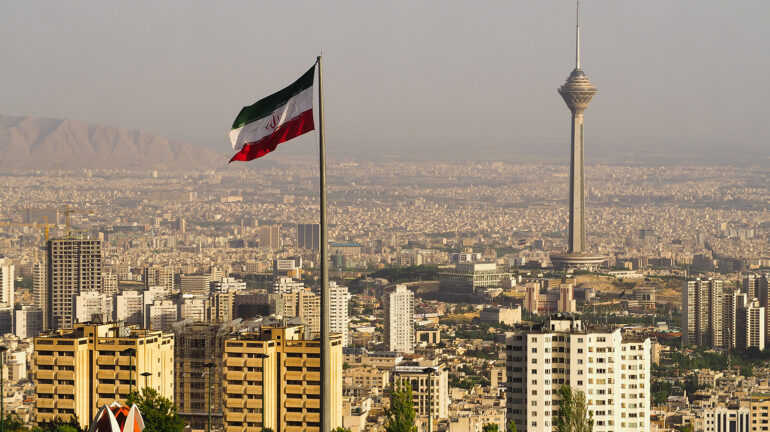
For the Gulf states, the war that erupted on February 28, 2026 did not arrive without warning. It arrived despite their efforts to prevent it.
Understanding what is now unfolding requires going back to a quieter moment in 2023, when Saudi Arabia and Iran announced the normalisation of ties brokered by China. Both sides agreed to resume diplomatic relations. This was not merely a bilateral détente. It was the culmination of a strategic reorientation. The Gulf Cooperation Council collectively recognised that decades of confrontation with Iran had produced only instability, and that coexistence, however uneasy, was preferable to perpetual crisis. Normalisation would potentially offer much-needed prospect of regional stability; whilst a constant struggle with Iran, would impede it – an obstacles to the GCC’s economic transformation journey.
The GCC entered this period with clear eyes. They understood that Iran had not abandoned its strategic ambitions, nor its nuclear programme, nor its network of regional proxies. But they calculated, reasonably, that managed engagement was less dangerous than managed hostility. As tensions between Tehran and Washington mounted, Gulf capitals converged on a shared posture: hedge, stay neutral where possible, and pursue diplomacy as the primary tool for managing an increasingly volatile neighbourhood.
Iran’s message is blunt: no amount of diplomacy, neutrality or accommodation would shield the Gulf countries from being made to pay the price of a war it did not start and did not want
In the years leading up to the war, GCC leaders were consistent and publicly expressed their opposition towards a military confrontation. This was driven by a collective judgement that open conflict would be an economic and political disaster for the entire region. When the possibility of US strikes on Iran began to loom in early 2026, the Gulf states did not simply stand aside. They actively lobbied against it. In January 2026, a senior Saudi official confirmed that Saudi Arabia, Qatar and Oman had led a “frantic, last-minute”[1] diplomatic effort to persuade President Trump to hold off on military action and give Iran a chance. Omani foreign minister mediated the latest round of US-Iran nuclear talks just days before the bombs fell.
Iran’s answer to these efforts was to open fire on the very states that had spent years trying to protect it from this outcome. This came despite repeated assurances from several GCC countries that neither their territory nor their airspace would be used to launch offensive operations against Iran. Exploiting the GCC’s geographic centrality and its outsized role in the global economy, Tehran’s strikes appear calculated to generate enough regional pain to pressure Washington into halting its campaign. The targets have been deliberate and telling: international airports, hotels, oil refineries, residential buildings, data centres and oil storage facilities. These were not accidental. Iran’s message is blunt: no amount of diplomacy, neutrality or accommodation would shield the Gulf countries from being made to pay the price of a war it did not start and did not want.
This points to a deeper and more deliberate Iranian objective: to expose the fundamental vulnerability of the GCC’s political economy and to demonstrate, with lethal clarity, that the United States cannot guarantee their security. The Gulf states have spent the last decade constructing an elaborate vision of themselves as safe, stable, globally connected economies with diversification visions into tech, finance and tourism. Iran is targeting precisely this vision. Rather than seeking battlefield victories, Iran’s strike campaign appears designed to degrade infrastructure and erode the region’s carefully built global image, while simultaneously draining defenders of costly interceptors through waves of cheap disposable systems. The UAE alone absorbed over a thousand detected drones in the first week, accounting for roughly 55 percent of all recorded strikes by Iran.[2] The imagery of smoke rising over various sites across the GCC is the reputational damage Iran is deliberately engineering. Every cancelled flight, every diverted tanker, every conference rescheduled, chips away at the brand the Gulf countries has spent billions constructing as safe and stable islands of efficiency, modernisation and growth in a historically volatile region.
This campaign is punishing the GCC countries in a very specific way. Each Iranian Shahed drone costs between $20,000 and $50,000 to produce, while air defence interceptors used by the GCC states cost between $1 million and $12 million per missile. For every $1 Iran spent on drones, the UAE spent roughly $20 to $28 shooting them down.[3] Iran has essentially turned the economics of air defence inside out: the cheapest weapon on the modern battlefield is now dictating the pace at which the most expensive ones are consumed. It is the military equivalent of hiring a surgeon to swat a fly – technically effective, financially ruinous, and ultimately unsustainable at scale.
The interceptor stockpile problem is structural: the US, Israel and Gulf countries are largely drawing from the same production lines, and in the long run they simply cannot make interceptors fast enough to replace them. Iran understood this well. This is precisely why US and Israeli forces have made drone production facilities and existing stockpile sites priority targets in the current campaign, racing to destroy Iran’s manufacturing capacity faster than it can be dispersed or rebuilt. Though, the outcome of that remains uncertain. Iran may be adept at hardening and concealing its military-industrial infrastructure. Even a degraded production line pushing out a fraction of previous output can in principle sustain a campaign that costs the defender far more than the attacker. The key takeaway from this strategy is that Iran is not trying to win a conventional military exchange. It is waging a war of economic attrition by trying to make the cost of defending the Gulf unsustainable, while simultaneously destroying the Gulf’s carefully constructed global reputation as a safe, stable commercial and financial space. Every drone that slips through, whether it strikes a runway, a refinery or a hotel lobby, advances that objective regardless of how many are shot down.
The Gulf states now face a stark and unwelcome choice: deeper integration into a US-led war posture they tried to avoid, or a continued exposure to Iranian coercion
The strikes on states that were actively pushing for a peaceful resolution just weeks earlier, including Oman, whose foreign minister had been shuttling between capitals trying to broker a deal, will leave a lasting mark on how Gulf governments think about the value of diplomatic engagement. The painful lesson being drawn in the GCC is that diplomacy offers no immunity. Nowhere is this more visible than the Strait of Hormuz, through which roughly a fifth of the world’s oil supply normally flows. Its effective closure has sent energy prices surging, starved Iran of the oil revenues it desperately needs, exposed GCC export arteries to disruption, and landed an unwelcome shock on China – the very power that invested its diplomatic prestige in brokering Gulf stability just three years ago. The war has, in this sense, punished everyone who had a stake in peace.
The Gulf states now face a stark and unwelcome choice: deeper integration into a US-led war posture they tried to avoid, or a continued exposure to Iranian coercion that their own populations and economies cannot indefinitely absorb.
What is becoming clear is that Iran has taken a strategic gamble on the assumption that striking the GCC would coerce Washington into restraint. This may badly misfire. Instead, it can accelerate a realignment that Tehran should have feared most: GCC states moving from defensive neutrality toward active co-belligerency.
[1] https://www.telegraph.co.uk/world-news/2026/01/15/iran-latest-trump-regime-protests/
[2] https://www.csis.org/analysis/unpacking-irans-drone-campaign-gulf-early-lessons-future-drone-warfare
[3] https://www.middleeasteye.net/news/iranian-drones-fraction-air-defences-how-long-gulf-last