The International Community is Trying to Learn That You Cannot Export Democracy
Interview with Besa Shahini by Gracia Romeral Ortiz Quintillà and Hugo Gallego
What can we learn from the experience of Kosovo towards the recent and future developments in the Arab world?
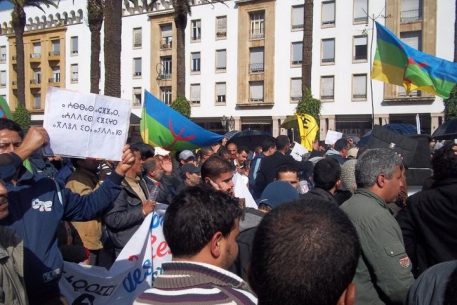
What is happening in the Arab world is such an organic transformation, the kind similar to what happened in the countries of Eastern Europe when they were splitting from the Soviet Union. Kosovo was different – transformation in Kosovo happened because of a heavy international intervention to stop mass killings and human rights violations. What followed was a large nation building project from the international community, involving the UN, OSCE, the EU, NATO etc. The intervention was successful in stopping bloodshed. The nation building project was not. I think that one big lesson to learn from Kosovo (and Bosnia) is that heavy international intervention is not necessarily a good solution for solving socio-economic problems of any country. But this is not the lesson that was taken to Iraq and Afghanistan. There the international community tried to do what they did in Kosovo and failed with disastrous results.
There are a lot of things that the international community can do to help the transition in the Arab world. But their missions or project have to be small, limited, self restricted and have an exit strategy, in order to be helpful. Otherwise, international interventions can create the kind of mess that we see in Iraq and Afghanistan and the kind of political and economic dependency that we see in Kosovo and Bosnia.
The international community is trying now to learn that you cannot export democracy. It is crucial that the countries in the Arab world know this too and instead breed their own types of democracy.
How do you see the intervention in Libya?
Libya is interesting because there is a NATO intervention. Usually these are followed by a nation building project, as it happened in Bosnia, Kosovo, or even Afghanistan and Iraq. To go from a short of targeted military intervention with the aim to stop crimes or genocide, to a nation building process – through imposing democracy and free market economic – is an impossible feat. It has definitely not worked well in Kosovo.
Now, I don’t know if that is an issue with Libya. I mean this may just be what it is, a short military intervention. But if Libya gets complicated, if Gaddafi does not leave or if the country moves toward splitting, there could be all these scenarios unfolding. If it comes to the point that Libya will needs an international mission to oversee its peace then the key lesson from Kosovo and Bosnia is to be able to limit that overseeing to concrete things like demilitarization, police training, reconstruction of houses etc. But they should be careful not to create situations where the international community takes over the whole governance of the country and starts running everything from pensions to waste water management to economic development (which is what happened in both Kosovo and Bosnia). There is absolutely no way that a bunch of lawyers or economists, working for these international missions on 6-12 month contracts, can come up with good implementable policies for the country. Policies should emerge out of a discourse between politicians and their voters. In cases where governance sits with unelected officials (ie. international missions) then this healthy link between voters and those who govern disappears. And with it disappears the principle of democracy.
In light of EU State-building in Kosovo, which role should play the EU in the democratisation processes of the Arab countries?
There is a key difference between what happened in Tunisia and in Egypt and what happened in Kosovo and in Bosnia. It concerns the concept of nation-building. When the Kosovo conflict emerged in 1999, fears of a repeated genocide, like the one in Bosnia four years earlier were imminent. Therefore, the international community decided to intervene, not just to stop the conflict but to also make sure it does not re-emerge. They decided to send a whole international mission to oversee peace and transition. There were around 50 000 NATO peacekeepers, some 10,000 UN officials and many more locals working with them. And this continues today: in 2008, after Kosovo declared the independence and the UN mission reduced its staff, the EU sent a Rule of Law mission with some 1800 EU staff and another 1000 local staff. So the key difference is clear: transformations in Tunisia and Egypt came from the grassroots, whereas in Kosovo they were largely supported, or even initiated, by the international community. As a result, further development of Kosovo still depends on the international community.
On the one hand, this international mission was helpful, for instance, they assisted refugee return, reconstruction or the setting up of basic institutions to run the country like police and judiciary. On the other hand, they created huge governing dependencies, where the government cannot make decisions without consulting the international community on the ground. I do not think that Tunisia has to go through this. Transitions are messy and hard, and if you can build the institutions yourself, then there is more credibility to those institutions.
In Kosovo, we have a government, but the accountability to its electorate is still not very strong, even though actions of the international community have been reduced. Governance of Kosovo is shared between this artificially created circle of institutions – the government, the international community, the civil society and donors – that exists in its own right and sits largely disconnected to the people of Kosovo.
In this respect, I do not think that transitions in North Africa are comparable to the transition in Kosovo. I hope they are not. I would hope that the transitional period in Tunisia or Egypt will be more of an organic process than it was in Kosovo. And if any support needs to be given to Tunisia, Egypt or Libya, it should be done following the terms set by these countries and only if the institutions of these countries request such assistance. It is fair enough that those countries would need help with rule of law, judiciary, training police, setting up military structures. But these should be short term missions with limited authority.