
Egypt’s Revolution: What Are the Prospects?
Egypt’s revolution is a turning point in the history of Egypt and the entire Middle East. The spark that ignited the revolution in Egypt came from Tunisia. However, considering Egypt’s size and centrality, it is the Egyptian revolution that is likely to carry the revolutionary effect to other corners of the Middle East.
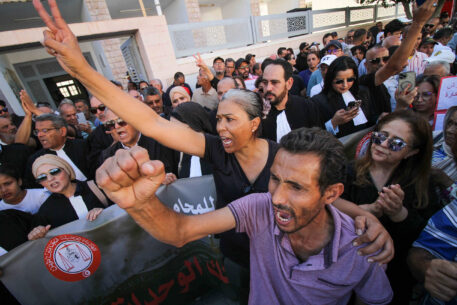
Socioeconomic and political realities in Egypt convinced many Egyptians that change was inevitable. However, nobody seriously anticipated a revolutionary change of the sort that took place beginning with the protests of 25th January. Mubarak’s insurmountable police apparatus quickly collapsed under the massive and swift protests of 28th January, opening the way for regime change. By 11th February, President Mubarak was forced to step down and surrender power to Egypt’s military, allowing Egypt to enter a new political era.
Between 25th January and 11th February, President Mubarak tried to respond to the mounting protest but was always late and short of meeting the escalating revolutionary situation. Mr. Mubarak’s insufficient response during the eighteen days of protest was just another, but intense, example of the slow careful approaches he pursued during his thirty years in power. Not missing a chance to miss an opportunity, this has been the main characteristic of Mubarak’s rule in the past three decades. Over-concerned with stability, Mr. Mubarak defied and missed all opportunities to take the initiative when it was possible and badly needed. He was extremely conservative and chose to be on the defensive on all fronts. The domestic and regional realities, however, kept changing rapidly, leaving Mubarak’s regime behind and suffering a number of serious deficits.
The development deficit: Mubarak came to power in 1981 when the Egyptian economy was still suffering from the heavy cost of the military conflicts and the failed socialist experience of the previous two decades. Mubarak’s conservative mindset discouraged him from introducing the needed market reforms to revitalize Egypt’s economy. The unhealthy hybrid of state-run economy and randomly growing private sector obstructed development and created massive irregularities. In the following two decades the economy grew slowly while population continued to grow rapidly.
The equity deficit: The economic reforms of the last decade have been instrumental in speeding up growth rates to the above seven percent levels during the three years preceding the global financial crisis of 2008. Only a small segment of the Egyptian people reaped the benefits of growth. The majority of Egypt’s workforce is concentrated in the traditional low-skilled non-globalized sectors of the economy, which did not allow them to share the benefits of economic growth. The non-functioning trickle-down economics and the dislocations that typically come with economic reforms all contributed to the strong feeling of social injustice. Egypt’s lower and old traditional middle classes have been alienated and ready to respond to the call for revolt. The alienation of these social forces caused the erosion of the social support base of Mubarak’s regime.
The transparency deficit: No matter how much corruption there was in Mubarak’s regime, which is not likely to be revealed by the current investigation, Mubarak’s regime has been depicted as the most corrupt since the officers’ coup in 1952. Corruption and the weak rule of law have undermined the market mechanism of fair competition. While Mubarak’s economic reforms of the past decade have been instrumental in facilitating the rise of new globalized middle and upper middle classes, corruption and the lack of fair competition has turned these classes against his regime. It was Egypt’s modern middle classes who took the lead in organizing the protests of 25th January, which ended with Mubarak stepping down on 11th February.
The generational deficit: Mubarak’s long rule of thirty years proved detrimental to his regime. While Mubarak and his main advisors have been aging, Egyptian society continued to be young. Out of Egypt’s population of about eighty million, 69 percent are under 35 years old. The political experience of Egyptian youth, who have experienced a rapid change of values, ideology, lifestyle, taste and technology, was limited to Mubarak’s stagnant regime. Change is the main fact in the lives of young Egyptians, while stagnation was the main characteristic of Mubarak’s regime. The generational gap was irritating to Egypt’s youth and left them with no sense of ownership of their country. Change became a demand for Egypt’s youth, while the regime only promised continuity.
The legitimacy deficit: Since the officers’ coup of 1952, regime legitimacy in Egypt has been based on a combination of ideology and achievement. Nasser’s legitimacy was based on Arabism, socialism and anti-imperialism, on the one hand, and independent foreign policy, development and wealth redistribution, on the other. President Sadat established his legitimacy based on Egyptian nationalism, new traditionalism, and the restoration of Egyptian occupied territories through a combination of war and peace. His short-lived political reforms were also part of his regime’s legitimacy.
After thirty years in power Mubarak’s regime exhausted all sorts of legitimacy. Its ideological power was always weak because he failed to articulate any kind of ideology. Mubarak’s high regard for pragmatism did not allow him to realize the value of ideological and moral power in providing for the regime’s cohesion, particularly in an authoritarian regime.
Achievement did not help rescue the legitimacy of Mubarak’s regime. The economic achievement of his regime did not come until recent years but at a high social cost. Foreign policy was the field in which Mubarak’s predecessors made up for their domestic shortcomings and effectively used it to consolidate the legitimacy of their regimes, but Mubarak failed to follow suit. Failure to push the Middle East peace process forward had particularly hurt Mubarak’s regime. Mubarak presented Egypt as the champion of peace and stability in the Middle East, but the region’s record on both tracks was extremely limited. The rise of other regional powers, particularly Iran, Turkey and Saudi Arabia, further alienated Egyptians who used to perceive their country as the leading regional power.
The democracy deficit: President Mubarak assumed power in the aftermath of the political crisis that ended with the tragic assassination of President Sadat. Sadat’s final years in power were years of unveiled despotism. President Mubarak opened up Egypt’s political system during his first few years in power. But the following two decades witnessed major setbacks culminating in the November 2010 parliamentary elections where the ruling party won a majority of 90 percent through the wide application of fraudulent tactics. Mubarak’s plan to pass the presidency to his son was beyond what most Egyptians can tolerate.
While Mubarak’s regime was becoming more authoritarian, during Mubarak’s final decade in power Egypt experienced a steady rapid expansion of freedom of press and expression. Mr. Mubarak thought that freedom of expression was enough to make up for the stagnant power structure and a means of letting off political steam. Ironically, the expanding freedom of expression has been very instrumental in mobilizing the opposition and causing the fall of his regime.
The Road Ahead
Post-Mubarak Egypt is at a crossroads. Egypt has a valuable chance to build a functioning democracy while it could still suffer a major setback toward other types of authoritarianism. The direction Egypt takes depends on the balance between the forces that have been unleashed during the revolutionary days of protest and the forces inherited from the pre-revolutionary time.
The revolutionary days have released the power of the people unrestrained by the fears of the past. Whether the collective power of the mobilized public will remain intact and focused on regime change and democracy building is yet to be seen. Signs of demobilization are building up slowly with many people willing to restore normalcy and feeling satisfied and relaxed after the departure of President Mubarak. Moreover, the people’s collective and focused action is fragmenting with many people reordering their priorities to focus on limited sectoral economic demands.
There is still, however, the strong wave of secular activists, both liberals and socialists. They are injecting new blood into Egypt’s politics and could help contain the influence of Islamists on Egyptian politics. However, the limited experience of the young activists and their weak political organizations could prove detrimental to their role in Egyptian politics, particularly during the short transitional period run by the army.
On the other hand, post-revolutionary Egypt has inherited strong political forces from the Mubarak era. Islamists, particularly the Muslim Brothers, are the biggest winners in the new Egypt. The Brotherhood has won the political and legal recognition they have been denied for decades. Their iron organization would allow them to dominate Egyptian politics if the new forces fail to organize and capitalize on the gains they made through the developments they have initiated.
Also inherited from the Mubarak regime are the fundamentalist Salafi groups, which were nurtured by Mubarak to balance the Muslim Brothers. Even though Salafis are an apolitical movement, they are currently organizing along political lines to take advantage of the changing political reality in Egypt. The prevalent Whabi ideology of Egypt’s Salafis poses a serious threat to the prospects of liberal democracy in Egypt.
The direction Egypt takes in the coming era heavily depends on the choices to be made by the army, which has been trusted to run the short transitional period of six months. The Egyptian army is the most respected state institution and the army leaders are keen not to compromise this valuable legacy. But the vision of a liberal democratic Egypt is not known to be deeply entrenched in the military’s institutional culture, particularly when compared with order and discipline. The balance and interaction between the preferences of the army, the democratic forces and the Islamists will determine the direction Egypt takes in the post-revolutionary era.