



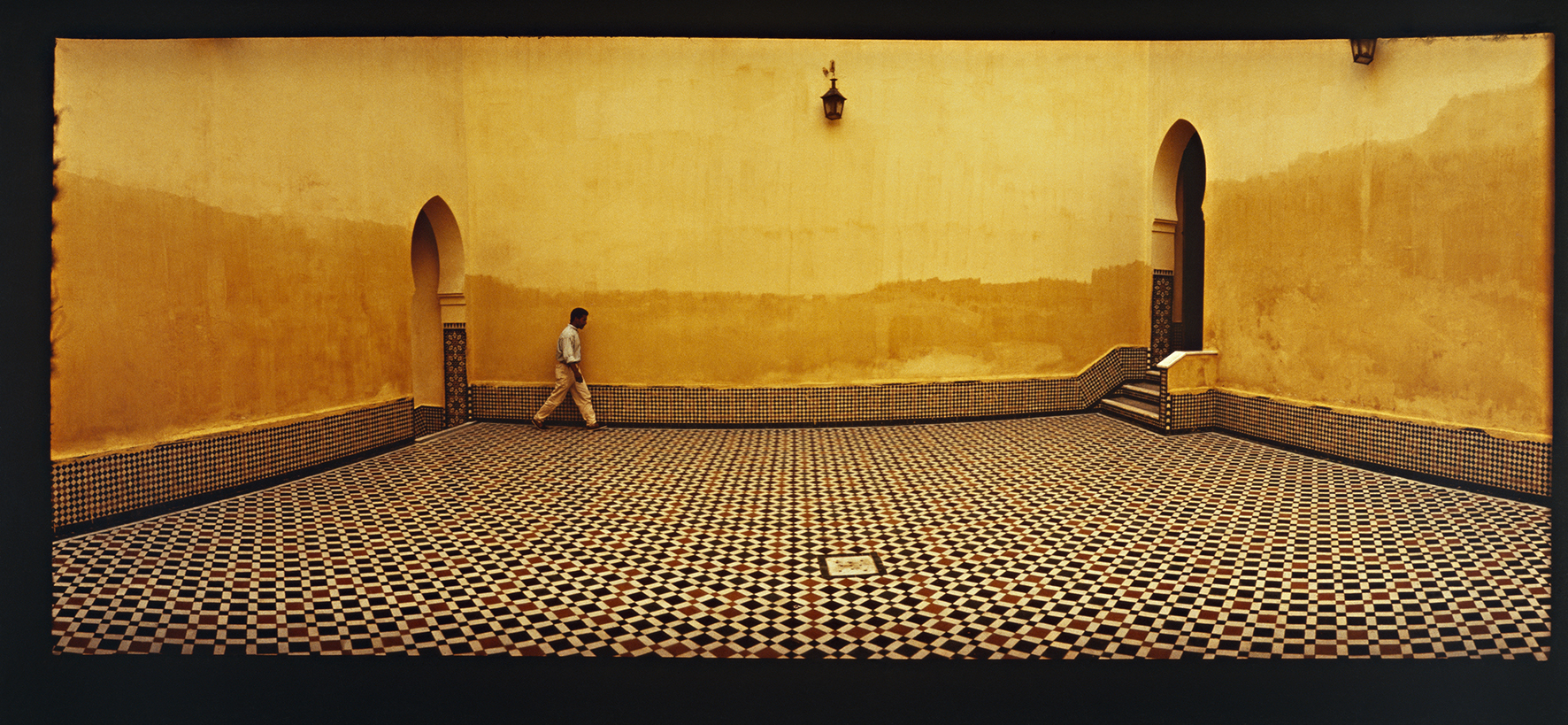
For centuries, the Mediterranean has been imagined as a space bound to a harmonising myth of cultures, languages and peoples, sustained by constant and fruitful exchange among its communities and shorelines. All Mediterranean cultures are the outcome of contact with one another, shaped by meetings and farewells, by borrowing and stealing, by agreements and clashes, by outstretched hands and clenched fists.
“All Mediterranean cultures are the outcome of contact with one another, shaped by meetings and farewells, by borrowing and stealing, by agreements and clashes.”
Thus, over time, an immense, seemingly unstoppable and deeply ingrained space of curiosity and interest in the other has taken shape, but also one of fear and distrust, wariness and suspicion.
The positive, forward-looking values that the Enlightenment and Neoclassical Romanticism condensed into the Mediterranean imaginary, and that the cultural avant-gardes also built around codes of diversity, nature, beauty and reason, are today once again being called into question in the face of current crises (which are the same as ever), today’s conflicts (which were also yesterday’s), and economic inequalities (as always) between the shores.
“The current landscape moves away from the classic epithet of Mare Nostrum, as today it is shown to us starkly as a space of borders and closures.”
Rethinking the Mediterranean Myth
All this compels us to reconsider the relevance of certain myths built around a sweetened, harmonising idea of the Mediterranean. The current landscape has drifted from the classic epithet of Mare Nostrum, since today it appears with harsh clarity as a space of borders and closures, of exclusionary identifications, of narratives of hatred and confrontation. In this way, the idealisation of a harmonising Mediterranean myth, grounded in values of progress and peace, begins to unravel.
“Perhaps the idealised myth of the Mediterranean is nothing more than the desire of some.”
Perhaps the cultural myth of this space of four shores has more edges than we have acknowledged so far, and we have become stuck in stereotypes that have turned it into a chimera, far removed from the diverse realities that shape it.
The Historical Construction of the Mediterranean Myth
The new iteration of Quaderns de la Mediterrània, promoted by the European Institute of the Mediterranean from Barcelona, seeks to reflect on the Mediterranean myth, both to unmask it and to identify the motives and common points that may lead us to build a new narrative about who we are and where we want to go. To draw, then, together with all the artists, creators, thinkers and cultural actors from the four shores, the guiding lines of an identity that, because it is common and shared, must be positive and help us move forward as a cultural collective.
In its first issue in this new digital and print format, the new QM will be a platform to discuss and debate the Mediterranean myth in the secular manner of our region: an agora where the voices of the four shores can be heard and can engage in frank, free dialogue.
“Our goal is to bring together on our pages and screens the opinions and viewpoints of figures who confront the cold facts of reality with the warmth of their dreams.”
Towards a New Narrative of the Mediterranean
We are left, then, with these questions on our lips:
- Does the Mediterranean myth as we know it still hold?
- What, exactly, is that myth?
- Which commonplaces or stereotypes still define us today as Mediterranean?
- What Mediterranean myth do we want or need today?
- Do we want, or can we, build a narrative that gives shape to our identity as inhabitants and children of the Mediterranean?
The thinkers and creators from its four shores may offer us some preliminary answers, and the new QM wishes to gather all the good they can contribute.
“Myths, it is said, are eternal, and therein lies both their immutability and their capacity to transform.”
The Mediterranean myth that still persists today is the product of a specific era and of ideals of artistic harmony, classical beauty, climatic well-being and a kindly exotism, which our contemporaneity and the frenetic vertigo of the present seem to undermine and leave behind.
Current affairs, the immediate present, the reality of the time we live in, seem to have dissolved the Mediterranean myth that the Grand Tour and Orientalism constructed and kept alive well into the twentieth century. To better understand this paradigm shift, painful yet real, tragic yet also hopeful, in our early twenty-first century, it is necessary to delido enormes, profundos, significativos y duraderos.