
MedThink 5+5 Thematic Seminar: Transport in the Western Mediterranean Facing the Climate Crisis
23 June 2026. From 14:30 To 19:00 | Conference | English | Rabat
In the context of the Group of Ministers of Transport of the Western Mediterranean (GTMO 5+5), strengthened cooperation and sustained dialogue among the countries of the 5+5 Dialogue are even more urgent in the face of the climate crisis. On the occasion of the 11th Conference of Ministers of Transport of the 5+5 Dialogue in Rabat, Morocco, this side-event, organised within the framework of the MedThink 5+5 network by the European Institute of the Mediterranean (IEMed) and the Centre for Transportation Studies for the Western Mediterranean (CETMO), aims to foster a forward-looking discussion on how the 5+5 countries can advance the transition towards a climate-resilient, integrated transport system in the face of a changing climate and growing geopolitical instability.
Climate change is progressively transforming the dynamics of the transport system in the Western Mediterranean by increasing the frequency and intensity of extreme weather events that affect transport infrastructures, logistics platforms and supply chains. In this context, the cost of inaction is rising, as delays in adaptation increase exposure to disruptions, accumulated damage and economic losses, potentially affecting trade flows and the stability of transport systems. Responding to the climate crisis through resilient transport systems, particularly in times of increasing geopolitical instability, requires moving beyond isolated national interventions toward corridor-based approaches that integrate multimodal planning, cross-border cooperation, and coordinated investment strategies. Multilevel governance involving states, regional authorities, infrastructure operators, and international organizations will play an essential role in defining common priorities and strengthening resilience across the regional transport system.
In addition, the planning and financing of climate resilience in transport in the Western Mediterranean must be focused so that adaptation does not reproduce or expand inequalities but rather contributes to territorial cohesion. It is also essential to highlight the value of resilient financing through mechanisms that allow quantifying the medium- and long-term return on resilience investments, including damages avoided, service continuity, future maintenance savings, and social and environmental co-benefits. Private capital and public-private partnerships are especially important for closing the investment gap in resilience, while multilateral development banks can play a catalytic role through blended and hybrid financing and to help structure complex projects in contexts of greater climate vulnerability.
Registration is now open
PROGRAMME
Opening
First session
Towards a Climate-Resilient and Integrated Transport System in the 5+5 Region: Barriers and Opportunities
Second session
Territorial Cohesion and Finance for a Climate-Resilient Transport System
Concluding remarks and closing
Policy Study
Ahead of the 11th 5+5 Dialogue conference on Transport, IEMed and CETMO have promoted a Policy Study that explores climate resilience in a sector increasingly exposed to climate-related disruptions, examining both the vulnerabilities facing transport systems and the strategies needed to strengthen their capacity to adapt and thrive in an era of growing uncertainty.
Read the policy study “Transport in the Western Mediterranean Facing the Climate Crisis: the Challenge of Transitioning Towards a Climate-Resilient Transport System”

Speakers

Nisreen Tamimi
Deputy Secretary General for Sustainable Development Union for the Mediterranean (UfM)
Roger Albinyana
Managing Director IEMed
Sergi Saurí
Deputy President CETMO
Adil Bahi
Directeur de la Stratégie, du Pilotage et de la Coordination des Transports Ministère du Transport et de la Logistique (Maroc)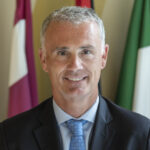
Andrea Tinagli
Senior Associate Fellow IEMed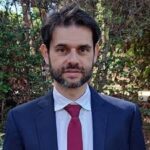
Enric Pons
Coordinator of the activities of the GTMO 5+5 CETMO
Pedro Duarte
Head of Cabinet of the Secretary of State for Mobility Government of Portugal
Juan Alario
Former Associate Director European Investment Bank (EIB)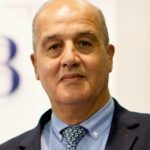
Imed Zammit
Consultant, Transport & Logistics SRDB Consulting
Mahmoud Arbouch
Senior Economist Policy Centre for the New South
Nora Aboushady
Associate Professor of Economics Cairo University
Othmane Fathallah
Programme Lead Imal Initiative for Climate and Development
Ouail Oulmakki
President Ethica-Chain AssociationOrganisers


In collaboration with
With the support of
Within the framework of the MedThink5+5 network’s activities