
Extractivism under Neoliberal Authoritarianism: A Theoretical Framework and Snapshots from Turkey
We are witnessing an ongoing turn toward authoritarianism in global politics. Autocrats ‒ ranging from Trump and Putin to Sisi and Erdoğan ‒ have risen to power through democratic elections, often by exploiting populist policies, yet they erode fundamental democratic principles. Although their rhetoric is nationalist and their policies emphasise strengthening the state, they also signal a continuation of the neoliberal global order.
Turkey’s Justice and Development Party (AKP) era (since 2002) has been marked by an interdependent logic of authoritarianism, populism, and developmentalism. These three pillars operate in concert to secure legitimacy, co-opt opposition, and manage dissent. The environment has emerged as a pivotal arena where these dynamics converge, shaping grievances arising from developmentalist projects. Surprisingly, social dissent related to these projects has remained relatively muted and fragmented, with many AKP supporters adversely affected by development continuing to back the party. Beyond formal coercion, a critical element in sustaining power appears to be the widespread belief that bearing environmental costs is a prerequisite for prosperity. The issue is especially pertinent to extractivist ventures, which impose substantial social and environmental costs through resource extraction (see, e.g., Regueiro-Ferreira et al., 2025).
This article provides a theoretical framework for understanding extractivism under neoliberal authoritarianism and applies it to the Turkish context. It argues that neoliberal governance combines market-oriented restructuring with centralised political authority, enabling a mode of accumulation that relies on the extraction of natural resources, labour, and ecological value while constraining democratic oversight. The framework synthesises theories of extractivism, neoliberalism, and political economy to explain how policy instruments reproduce growth imperatives and reinforce political control.
***
Neoliberalism and authoritarianism have long reinforced one another from the outset. Although many neoliberal governments have employed coercive measures against large segments of society ‒ as carefully analysed by David Harvey (2005) ‒ to tilt the balance of power away from labour toward capital, history also reveals instances of “left neoliberalisms”, albeit scarce, in which redistributive policies favouring capital were not part of the agenda. Therefore, although neoliberalism has relied on coercive measures when pursuing a capital-friendly trajectory ‒ thereby applying pressure to labour ‒ the starting point of our theoretical framework is that authoritarianism is in fact a structural and intrinsic aspect of neoliberalism par excellence (Adaman, 2025).
As a project to extend market logic into every sphere of life, neoliberalism seeks to transform society despite its deleterious social and ecological effects. As an ideology aimed at the depoliticisation of social and political realms through economisation, neoliberalism posits that humans respond to economic incentives and that addressing social and political issues through the creation of appropriate incentives is necessary. Within this framework, viewing human behaviour as a cost-benefit calculation allows neoliberalism to encompass a wide range of theoretical and political perspectives with diverse policy implications, including those that advocate for state intervention (Madra and Adaman 2014).
The inevitability of an authoritarian shift within neoliberalism can be theorised through Karl Polanyi ‒ a Hungarian-British economic historian and social philosopher (1886-1964). Polanyi described capitalism’s ultimate aim as the expansion of market logic into every facet of human life, a process he labelled the “first movement” in The Great Transformation (1944/1992). This movement seeks to create a self-regulating, price-driven market by commodifying land, labour, and money and embedding market relations into political and social institutions. Societies, however, tend to resist such expansive measures, which Polanyi called the “second movement”: protective social and political responses that re-embed the economy within social protections. Thus, state apparatuses are pulled between these competing dynamics (see also Harvey, 2007; Dale et al., 2019). Polanyi anticipated ‒ avant la lettre ‒ the tensions we observe today in neoliberal states. However, because contemporary governments are aligned with neoliberal ideology, they often rely on coercive measures to maintain the system.
But governing a society solely through coercive measures is, in a sense, an impossibility given the long arc of human civilisation. In contemporary politics, ruling a country without some form of democratic elections is now the exception rather than the rule. Hence, the need to build consent as well ‒ at which point Antonio Gramsci, the Italian philosopher and politician (1891-1937), enters the picture.
***
Gramsci (1929-1936/1971), in his Prison Notebooks, theorised the idea that the ruler would establish its hegemony not only by force alone, but on a combination of “coercion” and “consent” (see also Poulantzas, 1978; Koch, 2022; Carroll, 2024). The hegemonic power would create consent either by shouldering some of the interests of subordinate segments, or by persuading them to accept its dominant ideas, or by both (thus, by building alliances with other social forces and by formulating discursive formations). His term “hegemony” therefore conveys the insight that groups and societies are not governed solely by the legalistic and militaristic measures of the state apparatus, but also by ideas, beliefs and knowledge ‒ which involves the processes of consent-building within a society, thus the formation of “common sense”. Through common sense, which is produced and reproduced through societal culture (and sometimes may well be grounded in traditions), a source of power can forge consent within a societal entity.
Although much time has passed since the Notebooks, the Gramscian lens remains powerful for analysing hegemonic rule as a combination of coercion and consent-building, as well as for imagining counter-hegemonic politics that can challenge the dominant order. It is therefore unsurprising that democratically-elected governments that adopt authoritarian measures rely on both coercion and legitimation ‒ and, of course, co-optation (Gerschewski, 2013) that sits between the two.
The interim conclusion is that, on the one hand, Polanyi explains why authoritarianism is inevitable under neoliberal regimes, while on the other hand Gramsci illuminates why authoritarianism should be accompanied by consent-building efforts.
***
A Polanyian-Gramscian framework can be deployed to examine how the AKP regime couples authoritarian rule with consent-building in the environmental domain. The core claim is that appeals to developmental prosperity ‒ a narrative linking environmental costs to progress ‒ have enabled the regime to legitimate its rule by mobilising broad-based support. The prosperity logic of developmentalism has become central to the regime’s hegemony in Turkey, despite locally rooted resistance that seeks to illuminate the social and ecological costs of such engagements.
Although the AKP’s macro-level consent-building strategies for consolidating its power base have included boosting nationalism with an Ottoman flavour that invokes the “glorious past”, pressing for intensified Islamisation and conservative values in Turkish societal life, promoting anti-elitist discourses, implementing anti-gender policies, and creating “enemies”, the fetishisation of economic growth ‒ driven by the triplet of construction, energy, and military sectors and celebrated through so-called megaprojects (including the vast new Istanbul airport) ‒ has been paramount (see, e.g., Özbudun, 2015; Esen and Gumuscu, 2016; Paker, 2017; Tansel, 2018; Adaman and Akbulut, 2021; Akçay, 2021; Arat, 2022; Tuğal, 2023).
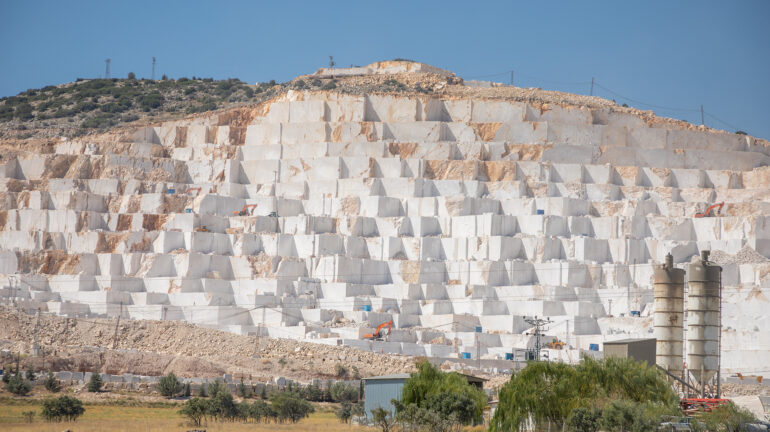
At the core of development projects lies extractivism. The AKP regime has institutionalised extractivist activities as a central strategy to extract natural resources for economic development, whether for domestic use or for export, often disregarding the associated health, social, and environmental costs (Akbulut, 2019; Adaman and Akbulut, 2021). A contemporary instance (2025) involves legislation permitting mining in olive-cultivated areas ‒ one of Turkey’s most important agricultural products ‒ to advance energy production, allowing companies to lease agricultural land for coal extraction (heavily used in electricity production via coal-fired plants, numbering 69 today). The law also includes a clause requiring the planting of two olive trees for every felled tree, a measure critics argue is unlikely to preserve olive production potential or deliver meaningful ecological compensation.
Although there is notable discontent over the adverse effects of extractivism, it is largely of the NIMBY (not in my back yard) variety. Concerns include habitat and livelihoods destruction, soil and water contamination, biodiversity loss, long-term ecological degradation, as well as health problems, cultural disruption, and displacement of people in mining areas. Only a small minority critiques extractivism on the grounds that environmental and social costs may be borne by future generations while immediate profits accrue to current actors ‒ creating intergenerational inequities. Additionally, questioning the growth fetish and the idea of development through an extractivist trajectory remains a very marginal voice today. Consequently, the claim that extractivism is a tool of developmentalism that brings prosperity appears hegemonic. It is not surprising, then, to see the incumbent regime labelling opponents of mining ‒ who bear heavy social and environmental costs ‒ as unpatriotic or even as enemies or foreign agents (Adaman et al., 2017).
References
Adaman, F. 2025. Quo Vadis? Academic autonomy and freedom: The case of economics discipline in Turkey. Review of Radical Political Economics, 57(3), 642–648.
Adaman, F., and B. Akbulut. 2021. Erdoğan’s three-pillared neoliberalism: Authoritarianism, populism and developmentalism. Geoforum, 124, 279–289.
Adaman, F., B. Akbulut, and M. Arsel (eds.). 2017. Neoliberal Turkey and its Discontents: Economic policy and the environment under Erdoğan. I.B. Tauris.
Akbulut, B. 2019. The “state” of degrowth: Economic growth and the making of state hegemony in Turkey. Environment and Planning E: Nature and Space, 2(3), 513–527.
Akçay, Ü. 2021. Authoritarian consolidation dynamics in Turkey. Contemporary Politics, 27(1), 79–104.
Arat, Y. 2022. Democratic backsliding and the instrumentalisation of women’s rights in Turkey. Politics & Gender, 18(4), 911–941.
Carroll, W.K. (ed.). 2024. The Elgar Companion to Antonio Gramsci. Edward Elgar Publishing.
Dale, G., C. Holmes, and M. Markantonatou (eds.) 2019. Karl Polanyi’s Political and Economic Thought: A Critical Guide. Agenda Publishing.
Esen, B., and S. Gumuscu. 2016. Rising competitive authoritarianism in Turkey. Third World Quarterly, 37(9), 1581–1606.
Gerschewski, J. 2013. The three pillars of stability: Legitimation, repression, and co-optation in autocratic regimes. Democratisation, 20(1), 13–38.
Gramsci, A. 1929-1936/1971. Selections from the Prison Notebooks, edited by Q. Hoare and G. Nowell-Smith. Lawrence & Wishart.
Harvey, D. 2005. A Brief History of Neoliberalism. Oxford University Press.
Harvey, M. 2007. Karl Polanyi. New perspectives on the place of the economy in society. Manchester University Press.
Koch, M. 2022. State-civil society relations in Gramsci, Poulantzas and Bourdieu: Strategic implications for the degrowth movement, Ecological Economics, 193.
Madra, Y.M., and F. Adaman. 2014. Neoliberal reason and its forms: De-politicization through economization. Antipode, 46(3), 691–716.
Özbudun, E. 2015. Turkey’s judiciary and the drift toward competitive authoritarianism. The International Spectator, 50(2), 42–55.
Paker, H. 2017. The “politics of serving” and neoliberal developmentalism: The megaprojects of the AKP as tools of hegemony building. In: F. Adaman, B. Akbulut, & M. Arsel (eds.), Neoliberal Turkey and its Discontents: Economic policy and the environment under Erdoğan (pp. 103–119). I.B. Tauris.
Polanyi, K. 1944/1992. The Great Transformation: The Political and Economic Origins of our Time. Boston: Beacon Press.
Poulantzas, N. 1978. State, Power, Socialism. Verso.
Regueiro-Ferreira, R., P. Alonso-Fernández, and A. Mañe-Estrada. 2025. Economics of Extractivism. Routledge.
Tansel, C.B. 2018. Authoritarian neoliberalism and democratic backsliding in Turkey: Beyond the narratives of progress. South European Society and Politics, 23(2), 197–217.
Tuğal, C. 2023. Three routes to autocratic rule: Market reforms, politics, and masculinist performance in the making of right-wing regimes. Journal of Right-Wing Studies, 1(1).
Author’s note: This manuscript, arising from my talk “Neoliberalism and Extractivism in Turkey” delivered at the IEMed on 24 February 2026, benefited from the organisers’ and participants’ comments. It relies on my independent and coauthored contributions (Adaman and Akbulut, 2021; Adaman, 2025).
Watch again the lecture by Fikret Adaman in the Aula Mediterrània series.
Within the framework of