



A survey shows Europe’s poor management of migration and refugees
15 March 2017 | News

The conflicts in Libya and Syria and their regional impact last year led to the worst refugee crisis in history since the end of World War II. The Euromed Survey, conducted by the IEMed in 2016, asked experts and actors to assess how the EU has reacted to the movements of refugees and immigrants in the Mediterranean and what should be done.
Although the greatest impact of the arrival of refugees and immigrants is borne especially by the Mediterranean countries (especially Lebanon, Jordan or Turkey), the survey shows that Europe has not lived up to it. Most respondents describe the management of the arrival of refugees since 2014 as “negative or very negative”, although they mainly blame the unilateral decisions taken by the states, rather than the European institutions.

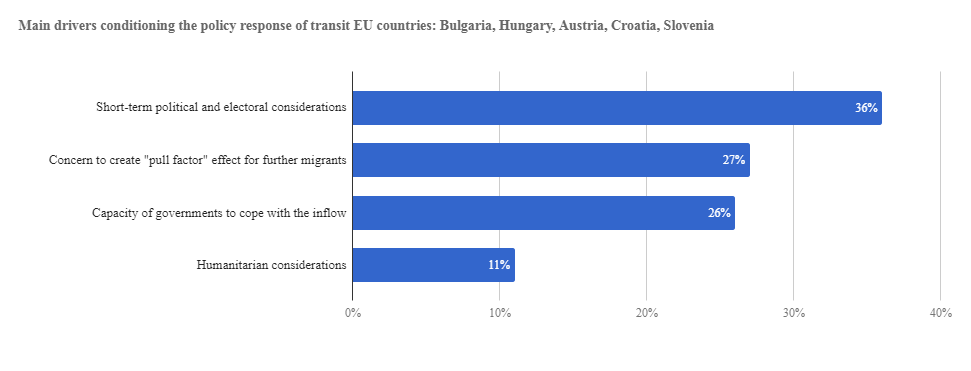
In this sense, respondents consider that the restrictive measures taken by transit countries in the EU have been based mainly on political and electoral calculations and the fear of a “knock-on effect”.
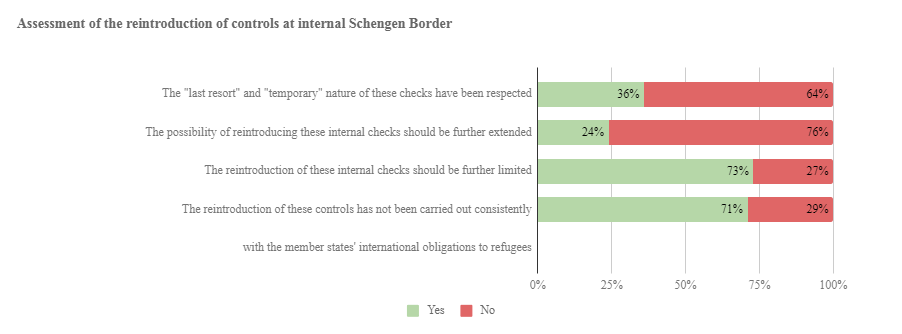
In addition, 71% negatively assess the use of the reintroduction of controls in the Schengen area or the outsourcing of borders, especially the agreement between the EU and Turkey, which are at odds with the obligations of the EU towards refugees.
These are some of the main results of the Euromed Survey of Experts and Actors conducted by the IEMed in 2016 and which will be published in full shortly. It was answered by over 800 respondents, including representatives of governments and regional institutions, civil society organizations, universities and think tanks from the Euro-Mediterranean region.