
The Israeli Dilemma. Effects of the Economic Crisis and Changes in the Arab world on Israel’s Domestic Policy
13 February 2014. From 18:30 | Workshop | IEMed, BarcelonaThe January 2013 elections gave way to a broad and heterogeneous government coalition led by the Likud -Israel Beitenu front and led by Yesh Atid, HaBayit HaYehudi and Hatnuah. Relations between these forces are not easy because of their different attitudes on key issues such as the resumption of peace talks with the Palestinian National Authority, the continuation of settlement expansions in the West Bank and Jerusalem, austerity measures to make in the face of the economic crisis, and potential threats to Israel’s security in the wake of the Syrian conflict or the Iranian nuclear program.
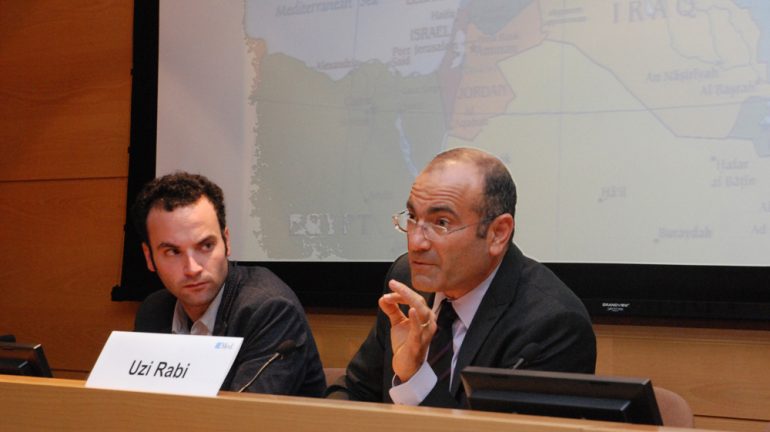
“We are at a crossroads because if there is no agreement for the creation of two states, we could approach a third Intifada or the scenario of a single Israeli state that even Netanyahu knows is not viable for the future of the country”. This is the opinion of the speaker of this session, Uzi Rabi, director of the Moshe Dayan Center for the Study of Contemporary Middle East Affairs in Tel Aviv, in relation to the peace process that the US administration is trying to put in place this year with the authorities of Tel Aviv. Israel and the Palestinian National Authority.
Speakers


Pol Morillas
Researcher IEMedPictures