



In line with its commitment to intercultural dialogue and to culture as a driver of social change, QM incorporates the finalist stories from the latest edition of the literary contest A Sea of Words into its editorial programme through a serialized publication.
Maltese writer Nadine Zammit, a member of the jury in the 2025 edition and winner of the previous one in 2023 with her story “Design of Betrayal”, sponsors this initiative. Her inspiring words are presented here as a symbolic gesture of passing the torch between generations of creators who, through their stories, have been able to imagine the Mediterranean we aspire to.
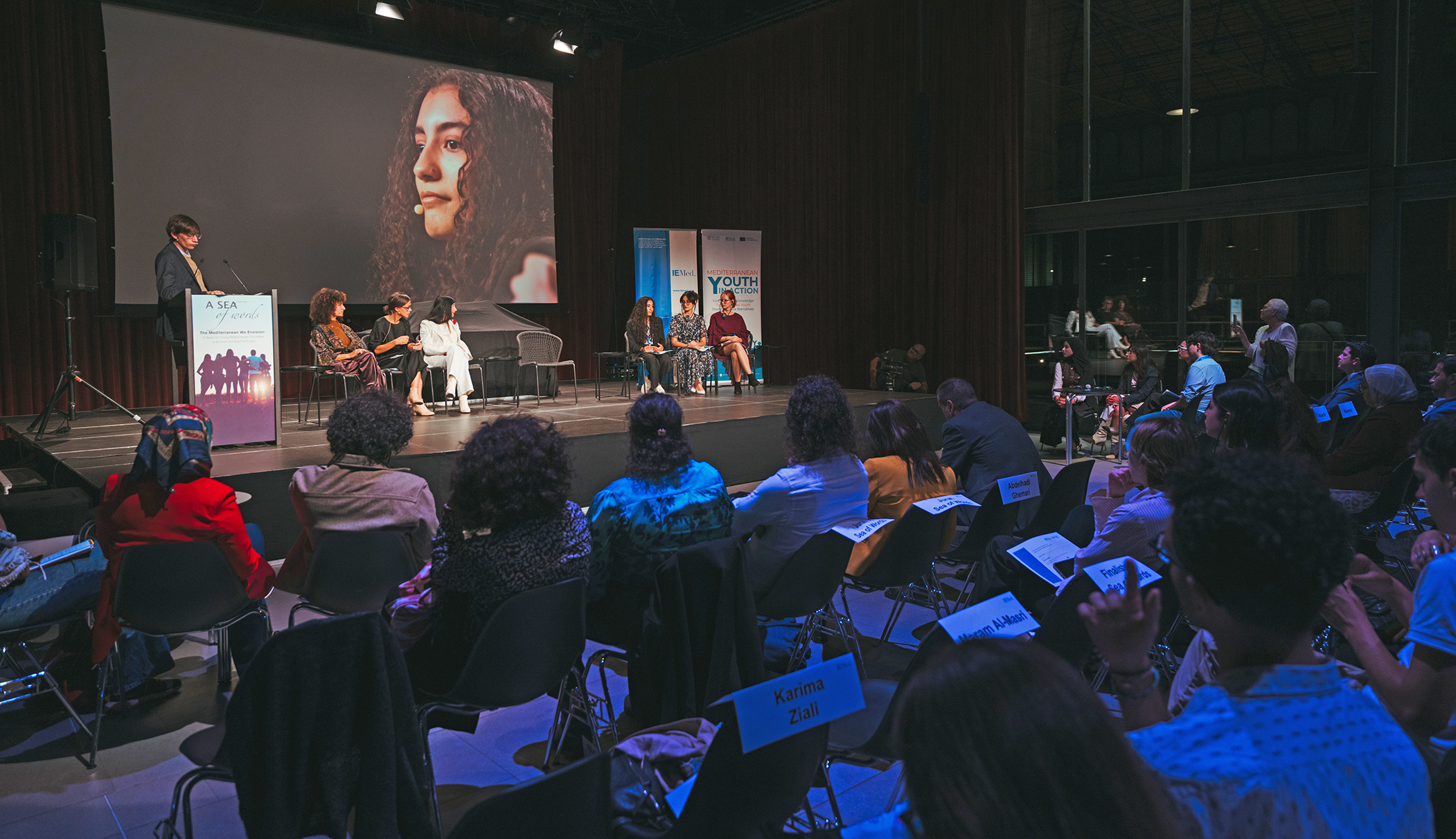
The 17th edition of A Sea of Words (SoW), held in September 2025, stands as a timely literary initiative rooted in the premise that young voices are indispensable in reimagining the Mediterranean. Organized by the European Institute of the Mediterranean (IEMed) in collaboration with the Anna Lindh Foundation, the competition invited young writers to engage with a shared space often defined by crisis, yet equally shaped by encounter, collaboration, and possibility. Under the theme “The Mediterranean We Imagine,” participants were encouraged not only to narrate the present, but also to imagine the future – plural, contested and open-ended, at a moment marked by polarization and conflict.
The twelve shortlisted stories reflect this ambition with striking rigour and heartwarming diversity. Across different styles – intimate, allegorical, dystopian and speculative – they return to a set of shared concerns: the Mediterranean as both border and bridge, the fragility of home, the persistence of memory and the search for belonging in a fractured region. Whether through the brief dissolution of borders in personal connections, the rediscovery of collective identity, the quiet resistance of art or the imagined utopias of borderless islands and shared languages, these stories bring forth lived experience as well as emotional truth. The narratives presented suggest that the Mediterranean is not merely a geopolitical space but a human one, woven through relationships and untold stories.
Beyond its literary merit, the contest emphasises the role of cultural production as a form of dialogue and transformation. In bringing together young writers from across the Euro-Mediterranean region, A Sea of Words creates a platform where diversity becomes a resource rather than a fault line. The featured stories do not offer uniform answers; rather, they insist on the necessity of listening across difference and reclaiming narrative agency in a time of uncertainty. The contest served as more than just a competition; it was a collective exercise in rethinking the Mediterranean from within, guided by those who will inherit and reshape its future.
Nadine Zammit
The Human – When Carried by the Sea
By Hamza Mohammad Tawfiq Al-Halabi
Palestine – Gaza
During the award ceremony, which Hamza was unfortunately unable to attend, Mohamad Bitari, a Syrian-Palestinian poet based in Barcelona and a member of the SoW jury, delivered a few moving words in Catalan in his speech addressed to the Palestinian author:
“Our joy is incomplete because the world around us is sinking into spirals of injustice, violence, displacement and war. It is also incomplete because one of the participants in this award, Hamza Al Halabi, has not been able to be here with us today, simply because he is besieged in Gaza, where ink is prevented from becoming a voice and the body remains trapped within borders it cannot cross. From this literary platform, we send him our warmest greetings of affection and solidarity, and we say to him: your presence is with us, even if you are not here physically; your voice will arrive, even if they try to silence it.” (See video)
In his story The Human – When Carried by the Sea, Hamza draws on his intimate experience in the context of Gaza to arrive at a universal reflection on humanity, memory, and the possibility of peace. The text presents the Mediterranean as a border, but also as a shared space from which to imagine a different future. Originally written in Arabic, this story was one of the twelve finalists in the competition. It opens the serialized publication for its literary quality and because Palestinian voices are today, and always, more necessary than ever.
It had become unbearably dull to hear the footsteps of employees heading off to work in the morning, the murmurs of schoolchildren along the long road, the clanging of metal in the small factories, and the voice of Umm Kulthum from the nearby café.
And it was dull too—my sunrise each morning with the sun, leaving home for my university classes, leaving my consciousness behind, asleep in the house. I used to forget breakfast, as I had the habit of waking up late.
But one morning awakened me in full awareness. It pulled me out of the monotony of my time into a halo of nothingness—or a state of absurdity. I thought then: as long as the human is human in essence, and race or ideology is merely incidental to the human being, how can the incidental override the essence? How can I erase the existence of others for the sake of a transient thought in my head?
I had to realize, then, that all a human needs today is simply another human being—because that is the one truth we need not fight for. It is the lasting common ground between all people.
I grew up, along with my family, in a small town on the shore of the Mediterranean Sea. The city looked like an old creature, worn down by time, resisting aging with residents full of youthful energy and childhood dreams—even though everything in it aged quickly.
We lived near the shore, but we couldn’t see it.
The sea, that endless blue being, had become a boundary—not a dream.
A barrier of wire, not a mirror for the sky.
My father always instilled in us the love of people—all people. He used to say:
“My son, if the children of Gaza, Tel Aviv, Beirut, and Naples gathered in one square and played together, no one would need to write a peace treaty.”
I didn’t understand him then. But on that strange morning I mentioned, I realized that play has an echo—just like war—but it doesn’t frighten.
I grew up, and the sea grew with me. I used to see it as closer, more intimate when I was young, but it began to drift away.
The distance between me and it was not measured in meters, but in fear—in small losses piled on top of each other, like ancient stones in the city’s old wall.
Our house had an old wooden door that opened onto a narrow alley, and my father would open it every morning, murmuring verses from the Qur’an.
I would ask him: “Why do you always mumble when you open the door?” He’d say:
“So only peace enters with us.”
I used to think he exaggerated, but now I understand. Anyone who wants to survive here must negotiate with the door every morning, convincing it not to open onto a bullet or a shell.
At fourteen, I saw my first friend killed. His name was Yasser, and he resembled me in everything—even in his small dreams. He wanted to become a football player, to play for a European club and send us videos from green stadiums.
But instead of watching his goals, we watched his funeral.
I don’t remember how I cried. All I remember is that I didn’t speak for days, as if my voice had declared mourning. From that moment, two voices began to live inside me:
One wanted to scream, to take revenge, to destroy everything.
The other wanted to walk against the fire—to plant something that could not burn.
These two forces battled within me for years.
One night, I spoke with a university professor who taught us “international conflicts.” I had asked him:
“Can justice be achieved without revenge?”
He said:
“Justice is not revenge on the killer—it is safety for those who remain.”
That sentence opened a window in my head. I began to see the world differently. Everyone who had been ‘against me’ was no longer an enemy—but another victim of a false narrative.
I decided to write. Not as a great writer, but as someone trying to understand. I began to record my reflections:
Why do we fear difference?
How can one idea kill?
And does writing save—or merely delay the explosion?
At university, I met a girl named Mariam. She studied French literature and dreamed of translating and working in peace organizations. She believed that words could stop a bullet—if written at the right time and place.
She once said to me, as we looked at the sea through the bars:
“You know? This same sea touches Italy and Spain and Turkey… Do you think it knows it has to take a side in the war?”
I laughed then, but she didn’t smile. She truly believed the sea was the first teacher of peace; it doesn’t fight those who cross it, but carries them all. That vastness was what she missed here.
In a joint university project, we began writing letters to students from other Mediterranean universities—from Athens, Tangier, Marseille. We exchanged stories and music. We began to discover that we live with the same anxiety, asking the same questions:
What does it mean to be from this region?
Are we destined to carry the legacy of wars to our children?
Or can we truly break the chain?
One of those students was named Michel, from Marseille. He wrote to me once:
“When I hear about Gaza, I think of fear. But when I read your letters, I think of hope. You’re creating a new image of the city—an image that resembles all of us.”
Those words were enough to change the course of my studies. I shifted from political science to cultural anthropology. I began to believe that studying humans as humans—before identities and flags—is the real key to peace.
My father died in the last aggression. He had gone out to buy bread.
His funeral was quiet, just as he always liked. The imam said a word I will never forget:
“He believed that death should not create more enemies—but more reasons to live.”
Months later, I traveled on a scholarship to Barcelona.
There, for the first time, I felt that the sea is the same here as it is there—
but the people were different only because they were allowed to be different without fear.
I participated in a workshop on “narrative-making for peace” and read my first text about Gaza—my voice trembling, but the applause long.
A Moroccan girl stood after me and said:
“Peace doesn’t need treaties—it needs stories. Stories like this raise children who won’t pick up guns.”
In Barcelona, everything changed. Not because the city was perfect, but because it gave me what I had been denied: the right to quiet.
At one literary gathering, a Greek writer said to me:
“Peace is not forgetting the war, but refusing to repeat it.”
That was when I felt I had found the answer I’d been searching for.
Peace is not weakness—but the strongest form of resistance.
Now, I return to Gaza with a new message. I won’t promise to change the world, but I promise to tell everyone I meet:
“We don’t just live in Gaza. We are born here every day.
And we must choose each time: to be the beginning of a new story—or the repetition of an old one.”
And I have chosen to be a new story.
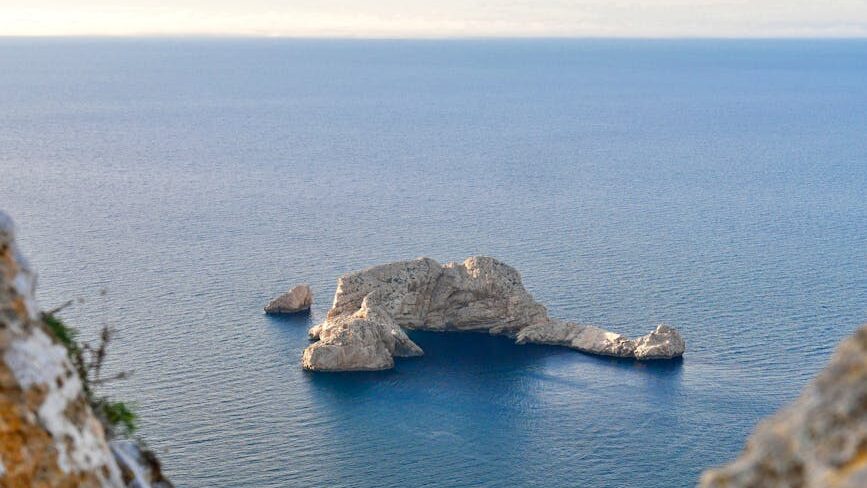
The Island That Is Not on the Maps
By Aicha Saïd Larabi
Algeria / Spain
Awarded second prize in the A Sea of Words 2025
No one could tell me where it was.
Not the ferry pilot, nor the woman at the maritime station in Marseille.
“It’s an island… how can I put it?” said a young Tunisian at the port, lighting a cigarette with trembling hands. “An island you sometimes find only if you need it.”
And I needed it.
My name is Noura. I was born in Algiers, but I’ve lived most of my life in Madrid. I’ve spoken Spanish longer than Arabic, but when I dream, I still do it in my grandmother’s voice. I hear her in whispers, the way she used to recite proverbs during siesta time:
“Li ma ʿandūsh el-kbār, ychrihū.”
(Those who have no elders, should buy them.)
I never fully understood its meaning—until I no longer had her.
I study Translation and Interpreting. I always knew I wanted to live between languages, between worlds. As a child, they called me “the bridge” at home. When my parents argued, I translated emotions, not words. Sometimes a look, a hand on the shoulder, or a phrase said in the right tone was enough. Later, I learned that had a name: cultural mediation. And I promised myself I would turn that skill into a calling.
That summer, before starting an internship at a coastal hospital—where I would work as an interpreter for migrant patients—I decided to accept an invitation that didn’t come through any official email, social media, or academic announcements. It arrived like a digital whisper, in a Mediterranean youth forum, among threads of poetry, activism, and snippets of songs in different languages.
The message was short, almost cryptic:
“We want to build something new.
If you know how to translate, if you know how to listen, we need you.
June 29. Marseille. Dock C.
Bring only the essentials. The rest we’ll build together.”
I thought it was an experiment. Maybe some kind of collective performance. But something in those words touched a deep nerve. Translate. Listen. Build. They sounded like verbs written just for me. So I went.
The night before the trip, I packed a small backpack with the bare minimum: light clothes, a notebook, my old Arabic dialect dictionary, a voice recorder, and a packet of dates my mother sent “just in case you need sugar, daughter.” I didn’t tell anyone the exact destination. Sometimes the most important things can’t be explained without sounding mad.
Marseille smelled of salt, tar, and oregano. At Dock C, there were others like me: young people with backpacks and watchful faces. No one spoke loudly. Some shared fruit, others typed on their phones. There was a strange tension in the air: not fear, but expectancy. As if we knew—without quite knowing—that we were about to step into another world.
The boat arrived without a flag. A light wooden sailboat, hull painted blue, its name erased. No one asked for tickets. Just a simple greeting, a wave of the hand:
“ʿAla r-raḥba w s-saʿa.”
They were the first words in Arabic I’d heard in days. I was instantly drawn in.
We boarded in silence. The sails unfurled with a soft creak, and soon the shore disappeared, swallowed by a mist thick as flour. For hours, we said nothing. I sat beside a girl reading something in French. Her eyes lined with kohl, her lips cracked. She offered me a tangerine, and without a word, we shared its slices as if we had known each other before.
I don’t know how long passed. I lost track of time. At sea, time is something else: there are no minutes, only light, shadow, silence, and waves.
And then I saw it.
The island emerged like memories in the middle of the night: unannounced. A curve of land covered in green, with stone houses and narrow paths. No docks or cranes. No sign of modern buildings. Just a coarse-sand beach and beached boats. On the highest hill, a cloth fluttered—stitched from scraps of different flags. A way of saying: all of them and none.
We disembarked among laughter and embraces. No one asked names or nationalities. We were given fruit, orange blossom water, and invited to sit in a circle. A young woman, her hair covered in a sky-blue scarf, spoke to us in many tongues: Arabic, French, Spanish, then Italian, and something that sounded like Albanian.
“Here, we don’t translate everything. We listen to what we can, and what we can’t—we feel. This island isn’t on the maps. Not by mistake, but by choice. Here we come to imagine what we’re not allowed to imagine on our shores. Here we come to build what doesn’t fit in official speeches.”
I didn’t fully understand what this place was. But I knew one thing: I had found more than a destination. I had arrived at a space where my identity stopped being a problem and became a bridge. Where the way I spoke, listened, moved between cultures—was not a rarity or burden, but a key.
For the first time in a long while, I felt at home.
2. The Island
They call it Al-Mutawassiṭa. “The one in the middle.”
But others call it Isla Mar, Isoletta, l’Île du Possible.
No one could agree, and in the end, that was the most beautiful part. In every language it sounded different, but they all meant the same: an attempt at a future.
The agreement was this: here, each person could name the island as they wished, so long as the name opened a door rather than closed one. That was one of the first lessons: language is not just translation—it is possibility.
I arrived at dawn. The sky was tinged pink, and the air smelled of fresh bread and salt. The houses were light constructions, made of recycled wood, sails from old ships, tarps painted with verses in many languages: Amazigh poetry beside Greek graffiti, Tunisian proverbs on canvases that once were tents. No flags. No borders. No one asked for documents. The first sign I saw read:
“Here, there are only first chances.”
There was something radical in that sentence. Something that defied everything I knew from the world beyond the coast. Here, no one asked where you came from—but what you wanted to build. No one reduced you to your country, your passport, or your language. The island was not a refuge. It was a seed.
About forty of us lived on the island. Most were between twenty and thirty. We came from everywhere: Syria, Greece, Egypt, Morocco, Spain, Palestine, Lebanon, Tunisia. Some had swum across the sea. Some had survived detention camps. Others came from neighbourhoods the news never reached, where the promise of a future was a myth. I came from a university translation lab, with my headphones, my dictionaries, and my doubts. What could I offer—with my annotated texts and mixed accent?
At first, I didn’t know where to place myself. While some fixed fishing nets or cooked for the group, others built communal spaces for workshops, debates, moments of silence. Everyone offered what they knew, and did so from a place of giving, not obligation.
My work was simple and complex at once: to mediate. To translate when words weren’t enough. To listen when the story was too heavy to tell alone. Sometimes, to be a bridge. Sometimes, to be silence.
One day, Hiba—a young Syrian woman whose Arabic I could barely understand from lack of practice—approached me in tears. She wanted to share something, but the words slipped, tangled on her lips. She looked at me, eyes wide and wet, and said just one thing:
“Don’t translate me. Just stay.”
I realised then that sometimes mediation doesn’t require a shared language, but a presence that does not judge. That afternoon, I sat by her side and we shared a notebook. She drew her city, her broken house. I translated her images into questions for the next day’s circle. I didn’t say they were hers. I just threw the words into the centre and watched others respond from their own experience.
That’s how the island worked. Each day opened with a collective breakfast—flatbread, dates, white cheese, thick coffee—and an assembly. We spoke many languages, sometimes with improvised interpreters, sometimes mixing phrases. The common language was the desire to understand. No one was ridiculed for poor pronunciation. No one corrected from a place of superiority. We learned as we went.
Bit by bit, I found my place. I helped translate texts for the collective archive we were building: a kind of living Mediterranean memory, told from below. Stories, songs, unsent letters. I also facilitated dialogue between those too afraid, ashamed or hurt to speak directly.
On an island without institutions, without written rules, my role was to give shape to invisible bridges: to prevent misunderstandings before they grew, to translate intentions as well as words, to remind everyone that behind every language there is a story.
I discovered that being a mediator wasn’t just my professional future—it was, in some way, my way of being in the world. Not as someone neutral—because no one is—but as someone who accepts conflict as part of encounter, and error as part of translation.
3. The Dream
For weeks, we believed we had achieved the impossible.
We shared meals at circular tables, made from wood of different colours that symbolised our languages. We took turns cooking: couscous, moussaka, Spanish omelette, shakshuka, dolmas, harira. Someone always brought music: an oud, a darbuka, a speaker playing childhood songs. We sang in the five languages most spoken on the island, and no one minded if we didn’t understand everything.
Layla, a Syrian girl, painted murals with every new story that arrived. “The walls need memory,” she said. Yannis, from Greece, suggested ways to save water and adapt to the rhythm of the sun. Fatima, Moroccan, taught us how to make soap from used oil. Sami, Palestinian, organised a small library: every book carried a story of how it got there.
Some days, we just sat by the sea to breathe. Other days, we argued for hours over how best to distribute the fish or record group decisions. There were mistakes, of course. And also exhaustion. But no one used it against anyone else. We were learning how to be a community.
It wasn’t utopia. But it was close.
It was a rehearsal. A sketch of what a less broken world could be. And for a time, that was enough.
4. The Cracks
But one day, an argument broke out.
Small. Almost absurd.
Adam—a Tunisian guy raised in Italy—suggested we use only French during assemblies. “For efficiency,” he said. Some agreed. Others frowned. “Why not Arabic?” murmured Layla. “What about English?” said Yannis. “Why not speak our own languages and translate together?” I added, trying to calm things down.
But it was too late. Invisible camps had formed. Whispers in the kitchens. Silence in our meetings. No one said it out loud, but something had broken: the trust that we all wanted the same thing.
Because the language wasn’t the problem. It was what each language carried: hierarchies, colonial memories, past exclusions. French as imposition. Arabic as wound. English as global lifeline. Languages weren’t neutral. And neither were we.
I felt powerless. No matter how much I translated the words, I couldn’t translate the fears, the resentments, the buried histories. Translation wasn’t enough. Sometimes it was even a trap.
One night, someone painted a wall white. Nothing more. Just white. It was Layla. When we asked her why, she said:
“Sometimes silence is also a language.”
And she walked toward the sea without looking back.
5. The Night of Languages
We didn’t know how to continue. The debates had grown tense. Meals, quieter. Something essential was slipping through our fingers.
So I proposed something:
“What if we have a night of languages?” I said one morning. “An evening where each person speaks in their mother tongue. No filters. No translation. Just speak. And the rest… listen.”
At first, no one understood the idea. “What if we don’t get anything?” “What’s the point?” “Listen, for what?”
But one by one, they agreed. Maybe because we didn’t know what else to try.
That night, we lit candles around the central circle. No one had to translate. Just speak.
One by one, voices filled the air. We heard poems in Tamazight, tales in Darija, lullabies in Hebrew, family stories in Southern Italian, chants in Greek, sighs in French, proverbs in street Spanish. No one understood everything. But we all felt something. It was as if, in that shared bewilderment, we found a deeper way to understand each other.
I spoke in Arabic. For the first time in ages, without fear.
أنا ابنة ضفتين، ولغةٌ بين لغتين
(I am daughter of two shores, and a tongue between two tongues.)
Someone cried. Someone applauded.
Someone simply closed their eyes.
And I understood that, finally, we had begun to listen.
6. And Now?
The island is still there. Even if it’s not on the maps. Even if some days it seems to dissolve. The sea remains. The youth remain. The need to imagine another Mediterranean remains.
Sometimes tensions return. Differences. But we no longer fear them. Because we’ve learned that conflict isn’t the end—but a question. And that language, when listened to with the heart, doesn’t need to be understood to be felt.
Layla painted that white wall again. This time, she covered it with handprints—painted hands of all those who spoke on the night of languages. Over them, she wrote, in Arabic:
“كل لغة طريق. وكل طريق يحتاج إلى جسر”
(Every language is a road. And every road needs a bridge.)
I will return. Even if I live far away.
Every time I translate a story at the hospital, every time someone tells me, “I don’t know how to say it,” I remember that my job isn’t just to translate. It’s to weave. To connect. To listen to what’s not said.
And, above all, to imagine what doesn’t yet exist.
The island isn’t on the maps. But it lives in every attempt to understand. And in every story that dares to cross the sea.
Aicha Saïd Larabi (Algeria, 2004) grew up in Spain from the age of three. She is currently pursuing a degree in Arabic and Islamic Studies at the University of Alicante. She has been writing since childhood and has participated in various school competitions, where she began to develop a distinctive voice shaped by her interest in languages, memory, and identity. These concerns also permeate her writing, in which her multiple cultural references converge. “The Island That Is Not on the Maps” is her first work to be shortlisted in an official literary competition
ON THIS STORY:
“Translating, listening, building”, from these premises emerges a text that leads us into a utopia that resonates, in these turbulent times, within each of us. Aicha Saïd Larabi has crafted an immersive story that leaves no reader indifferent. The author creates a space of possibilities, without flags, acknowledging the violence and fragility of the languages that shape us, while placing genuine interest in the other at the forefront.
We too, as readers, wish to inhabit this island that exists without existing; we wish to be part of this circle of chosen individuals who seek to break the rules of the murderous identities that prevail in the global disorder to which we are subjected; we wish to make her perspective our own, because “conflict is not the end, but a question.” In this way, we celebrate the sensitivity of a text that opens doors and windows to hope, beyond utopia.
Mireia Estrada (Barcelona, 1974), philologist, cultural manager and member of the jury of the A Sea of Words 2025
Partition
By Gaja Smilevska
North Macedonia
*Original text written in English
He left me on the shore, my rugged sailor man, with his wind-weathered hair and eyes as white as sand. Pulled up his sails and set off.
He left, but made good on his promise- a glimpse of the world in my hand.
It was a five year travel, or maybe five hundred, or more. Along the coast we set off, brushed by Sidon and Tyre. Not alone, but a fleet- a procession of souls speaking tongues long since buried. Onwards we ferried, in tandem on a road well-known.
Backwards in time or forward, no map could show.
What little borders we knew got away from us. Desiccation upon flood upon boiling sky, its coastline bending to thoughts of mother earth with each passing tide.
My sailor man had two faces, one front facing and one on his back. Saw each voyage twice over. Every beginning his end, each voyage his homecoming.
For a few days each year, we’d stop at a port. Tied our ships with ropes tattered and worn, and dried off our salt-soaked backs. Saw cities worth living and dying in twice over. But longed yet to continue our tracks. We learned the language, walked the roads, left parts of us in some small corner. In time, we’d take to the sea, fall victim to the beck and call of our ship and leave.
The real fun, said my sailor man, waited for us further down. He would not tell me what, nor where, merely promised my listening would do well. In the night, every shape was new. Never a wave similar to any other two.
There was waiting, too. Most of life is. At times the wind left us wanting, waiting for a blow. Our sails went ghostly still and we hovered. We hovered for a while, ships came to a crawl as the waves danced beneath us. A largo performed for aeons before, the push and pull of the moon and seas, two mothers cradling their children on the open waters. We sat above remnants of maritime republics sleeping deep below.
We were the only light for miles. Some sort of offering for some sort of contact, reaching out to lands now fallow.
But the past did not gleam back.
Further down, we wove past a patch of floating men. Their hands held upwards, hope still laying with them in eternal rest. Their ships abandoned, homes left standing in their hearts, awash with no world to call their own. They had made a house in our sea. How gently she held the ships and bodies of martyrs, restful in the depths for as long as need be.
Our media-terrania, sea between two lands. Once roman lake, now common men’s grave.
And then we felt it. Further east, from all corners the smell carried. The smell of olives, then of steel. Smelling of whatever fire the breeze had not parried.
In our last days, a time future-passed, we came upon a stage. A cerulean blue disc spanning miles upon miles. Waves lapped at its edges, corners sea-glass smooth from years of touch. Our ships could not clear it so we walked on to the center, the transparent marble offering up a clear view of the sea bed below us. We saw every rock and cliff leagues underneath, specks in the deep reflecting the constellations high above us. A high fidelity map, as above so below.
We followed my sailor man onward, one head craned to the sky, the other planted down low.
In its center, we met a tall man. His head bore the sun of Egypt, left hand from Piraneus, the other Dubrovnik. He knew of no war nor border of cities, but he knew of our home. His home, an empire burned down and remade in all our image. I did not understand when he spoke But it sounded like you, like me. Like hands held tight from across the sea.
He knew of us, of what we used to be. We took more than was there, more than there ever could be. A killer thirst in the middle of ocean waters.
And even with our riches, our salt and steel and land in the hull, the sea thrashed and scoured none the wiser to our power. And our ships were too heavy with our gold and our spice, and for certain none of it would we throw overboard, we need not even think twice. And never did we part from it.
And so we looked again, made out the rusted metal from the rock below us. In place of shell or corral, we saw drones- missiles, torpedoes, shelling of every flavour. Gunpowdered city-killers that lay sleeping in the depth.
And so we understood, we were too late for any palaver. For you may not bargain with time nor the sea. No city nor steel nor rock, nor you and I, will stand the test of time. In two blinks time, she will rise. She will fill up our homes and welcome us back. Swallow us dead with the tides.
And the fire we lit will no longer burn. Homes will be extinguished, though the fires have long since been their only inhabitant.
We left the sphere. We could not stay. What merit would there be in standing on solid ground when all the world around had no time to spare. The sea could not make our peace for us, that is not her mission. We bid the tall man goodbye and reeled up our anchor, there was no difference between us and them, between us and our world. We could not be its partition.
I understood then, my sailor man’s words. The world in my hand is a heavy burden.
The time for war had already passed.
And it cannot be too late, our shores span the same sea. The distance between you and me is negligible. A ship or shore away. What fire touches you will soon reach me.
With his wind-weathered hair and eyes pale as glass, my sailor man hoisted his white flag topmast.
Gaja Smilevska (North Macedonia) is a visual artist, illustrator and comic book author based in Skopje. Her work has been featured on book covers, international exhibitions, and art and comic festivals. Alongside her artistic career, she holds a degree in Psychology and actively volunteers at various cultural festivals. Her creative practice combines visual sensitivity, storytelling, and an interest in human and social dynamics
ON THIS STORY:
Through a journey suspended between the past, the present and a threatening future, Gaja constructs a powerful allegory of the contemporary Mediterranean. Partition turns the sea into shared memory, border, grave and warning, while following a flotilla of travellers crossing sunken civilisations, latent wars and landscapes on the verge of collapse. Through deeply visual and poetic writing, the story reflects on the impossibility of separating ourselves from what happens on the other shore: because every fire that reaches the other will inevitably end up reaching us too.
Here Begins Tomorrow
Sandra Sami
Tunisia
ALECSO Special Mention Winner
Read the short story in the original language (PDF Arabic )
There was no time. No sunrise, no sunset, no hourglass running out. Only a suspended blueness, like a ceiling in a forgotten room. A scent of saltiness mingled with a distant sound, as if someone was crying underwater. The place resembled the beginning of creation, or its end. On the unknown shore, ancient stones crumbled slowly as if breathing, and dry olive branches sprouted over the wreckage of a wooden boat. From afar, specters of exhausted cities appeared: Beirut with its flames, Sfax with its heaviness, Gaza with its suppressed voice, and Athens with its wounds.
A faint sound began to seep through, as if something was preparing to reveal itself after centuries of silence. The water trembled, and the scent of memory wafted. In the sound was something of nostalgia, something of reproach, and something of anger. The sea sang, or judged, or pleaded: “I have seen you all.” Thus it spoke, with a deep, raspy voice like dry rocks: “I carried your ships upon my waves, and I buried those of you who did not return. I witnessed your promises sink, one after another. You sailed upon me with sails of nostalgia, longing, and hope. I let you build cities, burn them, and then cry over their ashes.”
The stones on the shore trembled as if afraid to remember. Everything was still, except memory. Something moved beneath the surface of the water, like a living creature slowly extending its cold limbs, and saying: “I am he upon whose chest the Phoenicians, the Greeks, and dreamers from all directions walked. I was the mirror of cities before they knew names, I was the melody of the poem before it knew language. I carried the markets of Carthage, the sails of Granada, and ships laden with fear and hope, leaving and not returning. I address those who carry tomorrow in their hearts. Remember that you were born from civilizations that dreamed, spoke, and wrote about love in their letters. Civilizations that were not afraid of the word, and did not confuse freedom with chaos. When did the homeland become merely a station for departure? And are homelands built from silence? Why do I see you today fleeing aimlessly?”
It repeated with a voice overcome by reproach: “O lost ones between a screen and borders, and those sitting on the seats of oblivion, the dream is not borrowed, but written when you realize that you are the first page in the book of the future.”
Silence suddenly fell, and the features of a strange island appeared in the heart of the Mediterranean. On it were four young people from different regions. It was not an island seen on maps, nor mentioned in sailors’ logs. It was at a convergence point that geographers had not defined, where the wind coming from Tangier collided with the groan of the Levant, and the saltiness from Sicily intersected with the warmth of the ports of Jaffa. In the middle of the island, an inverted hourglass. And on the shore, an ancient, cracked bottle rolled gently, approaching the rock. Suddenly, the island’s winds stirred to awaken the sleepers.
Leila was the first to open her eyes. Saltwater on her lips, and damp paper in her left hand. Her black hair was pulled back, and her wide hazel eyes were like windows overlooking Beirut. She rose slowly, taking her first steps while contemplating the island as if trying to remember something she hadn’t yet lived.
Adam followed, opening his eyes to the sound of the sea. His right hand was stained with ink, and his face was still like the alleys of Gaza after the rain. He stood, staring at the sand for a long time, as if seeing in it a map he didn’t yet know how to read.
On the other side, Kira rose without a sound. Her eyes were blue like fresh water, with a gleam of Greek light. In them was something of Athens, and something of the silence of temples. She looked at the bottle wedged between the stones and contemplated it without touching it.
Yassin was the last. His features were Tunisian, and the dream in his heart reached all homelands. He rose in one swift motion, looked at the three, then at the sky, then at the hourglass in the middle of the island. He said nothing. He took a deep breath and began to walk towards the only shadow in the place.
They were four, brought together by a place they didn’t know. They stood in the middle of the island where the ground was flatter. Adam came forward, head slightly bowed, his eyes slowly moving between the rocks and the faces, as if trying to understand the place through them. As for Yassin, he remained standing to the side for a few moments, then approached them with two clear steps, placed his hand on a low stone next to him, and broke the silence, saying: “Do you know this place?”
Kira didn’t lift her head; she was intently watching the sand fall in the hourglass. Then she said: “It’s clear there’s limited time, and if there wasn’t a purpose, this hourglass wouldn’t be here.”
Adam said with a reserved tone: “Perhaps we shouldn’t rush to conclusions. I think this place is too big to understand quickly.”
Leila looked at the paper in her hand, then raised her eyes to them and said calmly: “Even if we don’t understand the reason yet, our presence here isn’t in vain. I feel there’s a link between us, even if we haven’t seen it yet.”
Yassin smiled slightly sarcastically and said: “A feeling? I don’t reject the idea, but can we base our steps on mere feeling? The sea stretches around us, and there’s no clear exit. If we don’t do something, we’ll remain trapped.”
Kira, crossing her arms, said: “What exactly do you want to do? We have no information, no map, no guide. All we know is that we are strangers gathered in an unknown place.”
Adam suddenly replied, without changing his tone: “And that alone is enough to separate us. In our countries, we haven’t agreed, and we haven’t overcome our differences, so how can we do it here?” A moment of silence ensued, during which eyes seemed strained and hearts reserved. Leila, her voice sounding firmer, said: “But we are here, and no one chose who the other would be. Perhaps this is the real test, to come together without carrying our past with us as a chain.”
Yassin, looking towards the sea, said: “Perhaps, but there’s no point in standing like this. Let’s split up for a bit and look for any clue, sign, or exit.” Adam nodded in agreement. Kira looked at them all, then said in a calm tone: “Alright, but don’t go too far.” They dispersed quietly, each heading in a different direction on the island, and the hourglass continued to bleed slowly.
The sun was at its zenith, and the island stretched before them like an unwritten page. They walked in four different directions, each searching for something they didn’t know. Leila walked along a crumbling stone wall, from whose cracks grew small plants resembling those she used to see at the edges of Beirut’s alleys. She wasn’t afraid of silence, but of its fullness with what remained unsaid. She stopped before an old stone carving, half-erased, the other half resembling a sentence she once began in a poetry notebook but never finished. She placed her hand on the stone and closed her eyes. She remembered the first time she stood on a school platform, and her voice didn’t come out. Beirut, which she loved with words, and feared with sound. She dreamed of creating a place where people weren’t afraid to listen to each other. To return letters to the streets, and to homes. She extended her hand to the paper she carried and read from it in a trembling voice: “I am the homeland that resides within you, so speak me so that I may not die.”
Adam headed towards the coast, where the sea met the sand. He sat on a smooth rock and dragged his palm through the water. He looked at his face and didn’t recognize it, as if he had returned from a city that didn’t resemble him. He remembered Gaza as he knew it: the narrow alleys, the school walls that had absorbed the screams of children, and the sky that was always clear. He took a small piece of charcoal from his pocket, which he kept as a memento from his burned home. In front of him, on the stone, he began to draw a line, then an arch, then a window. He imagined his house with a balcony overlooking the sea. The greatest challenge in his life was not to let pain turn into blind rage and to keep art alive within himself.
As for Yassin, he made his way through the pine trees with steady steps that contained as much tension as determination. The island’s soil beneath his feet reminded him of his childhood fields in Sfax, where he used to run after his father during the olive harvest season. He stopped in front of a tall tree, then sat beside it to think. He used to believe that freedom was taken, but now he knew it was built. He took a small piece of wood he was carrying from his bag, along with a carving blade, and began to carve the wood.
And Kira walked in silence, looking at the island’s details as if reading a book in an ancient language. She passed by wavy columns, similar to those she used to see in Athens, when she would sit for hours in front of the National Museum contemplating the statues. She found a stone circle carved into the ground, stood in its center, and took an old photograph from her pocket. The photo was of a woman standing on a beach, her face familiar. Kira had always wondered if this woman was her grandmother, who had disappeared under mysterious circumstances during a trip to the south. Kira wondered: “What if I tried to start anew?” At that moment, light began to seep into the edges of the circle, as if the earth had responded to her question.
Night began to fall quietly on the island. The four returned to the meeting point. They hadn’t agreed, and no one was late. They sat on the ground without order, their faces turned towards the sea, their shoulders close enough for words to begin to appear.
Kira, rubbing her palms as if trying to remove something stuck, said: “Do you know what pains me? That most of my generation in Athens lives between two ideas that don’t meet, between the glory of the past and the helplessness of the present. They talk about philosophy and democracy, but we can barely talk about ourselves without fear of ridicule or being accused of superficiality.”
Yassin nodded and said: “In Tunisia, we have freedom, but we don’t know what to do with it. It’s like a door that suddenly opened onto a void. Everyone shouts, and no one listens. We change governments, fill the streets, and then return to our homes with no clear purpose.”
Leila, with a tone that carried a hint of weariness, said: “And in Beirut, we learned to suppress more than we say. The word there is a weapon, not a tool for dialogue. We dream, yes, but in a low voice, so as not to awaken sleeping wounds. We are a people who love life, but we live it cautiously.”
Adam added, tracing with his fingers on the sand: “As for us in Gaza, life is not something we live, but something we cling to. Everything we own is fragile, temporary, even dreams. To dream in Gaza is to defy reality day by day. We don’t just want to die, we want to live as we wish.”
A slight silence fell, as if each of them was confronting what their heart was filled with longing. Kira moved slightly to the front of the circle and said, wiping her knees: “Alright, if we know what we don’t want, let’s try to draw what we do want. How do we imagine this region?”
Yassin rose and began walking slowly around the circle, saying: “The most important thing we need today is for someone to listen to us. The youth in our region do not lack awareness or desire, but their voices are marginalized and cut off before they are understood.”
Adam added: “I want public spaces to be planted with art, not barriers. I dream that we teach children to draw as we teach them letters. That the streets become a mirror of hope.” Then he turned to the three and asked: “What if every city in the Mediterranean carried on its walls the stories of its youth? What if art became the language of the people, not exclusive to halls?”
Leila smiled and said, straightening her posture: “I dream that every young person has a voice that is heard, one that doesn’t need a license or permission. To restore the word to its place, as a tool for life.” She looked at Kira and asked: “And you? What do you see?”
Kira replied, fiddling with a lock of her hair: “I dream of a society that doesn’t tell us who we are, but asks us who we want to be, and gives us the opportunity to answer.” She added: “Education, art, participation, and dialogue are the foundations of societies.”
Yassin approached the center and, pointing to their footprints on the sand, said: “What we need is one simple, yet shared project. We need a network of small, connected, and cooperative actions.”
Leila asked, as if thinking aloud: “Can a dream be built between four different directions? And is will alone enough?”
Adam replied: “Perhaps not enough, but will is what brings us here. And if it weren’t enough, we wouldn’t have gathered.”
Yassin stood up, looked at the three, and said firmly: “We need a map that brings us together, a map built on values and actions.” Kira immediately said, rising with him: “Let’s draw it now with our hands on this ground. Let’s leave what we have.”
Leila moved to the center of the circle, extended her hand to the paper she had carried throughout the journey, and placed it firmly on the sand. Adam came, placed the piece of charcoal beside it. And Yassin took out the piece of wood he had carved on his journey and leaned it against a still stone at the edge. As for Kira, she opened the photograph, looked at it for a moment, then placed it on the sand without hesitation.
The four stood for a moment looking at what they had done, then Yassin said quietly: “Let’s try to start now.” They approached the hourglass together, extended their hands, and turned it over at once.
A light breeze blew from the direction of the sea, and a faint light emerged from the sand, flowing like a thread, heading towards a stone wall on the opposite side. A new inscription formed on it, which hadn’t been there moments before, as if the island had recorded its first line. And from the depths of the island, they heard a faint sound resembling a call. Adam, looking at the light that began to emerge from the ground, said: “I think something has already begun.”
When the four turned the hourglass, time seemed to breathe for the first time. The light on the island changed, and from the center of the circle, a line of faint glow extended until it reached a rocky wall, which split silently. Behind it, a narrow passage pulsated with a light resembling the first dawn. They entered the passage without a word. Inside, a circular hall appeared with a stone platform in its center. They looked at each other and realized there was one final price, and that only one should remain.
The hesitation didn’t last long. Kira advanced with steady steps, looked at them, and then said: “I found what I was looking for, this circle is my place.” They wanted to object, but she smiled and said: “He who stays does not retreat. And he who leaves must carry something unforgettable.” She placed the photograph she was carrying in the middle of the platform, then sat on the ground quietly. At the same moment, a wall behind them split, and a faint light flowed from it, and a breeze carrying something from the other world. The three left, turning back every moment. And in the depths of the hall, Kira sat, watching the light stream in.
Each of them woke up in a different time, not carrying all the answers, but the spark of change. Each of them returned to their city looking for a small space to plant a dream. Leila returned to Beirut with great hope in her eyes. She rented a spacious room above a popular café, where she gathered scattered chairs, tables, and a number of empty notebooks. She invited the youth of the neighborhood and started a simple project with them: reading and writing sessions held every Thursday evening. Each session began with a question and ended with an idea, and in between, spaces for confession, discussion, and a dream written between the lines grew.
Adam returned to Gaza and began organizing drawing sessions in the alleys, inviting children and talented individuals. Art was his way of speaking. He drew windows, doors, and open skies. In the first workshop, he told his students: “If we don’t find what we see in front of us, let’s draw it until it appears.”
Yassin returned to Sfax and established an open dialogue circle in a public square. They discussed issues of education, participation, and justice, and drew on a white paper a gradual path for small initiatives. Yassin was among them, asking, listening, and saying whenever they stumbled: “When we truly differ, we get closer to meaning.”
As for Kira, she remained there, at the edge of the sea, with the notebook open before her. She wasn’t writing about the past, but searching for a new beginning for what could come. She believed that whoever remains captive to what has passed cannot build what deserves to be born. She wrote in clear handwriting: “We cannot build the future if we do not leave room for moving forward.”
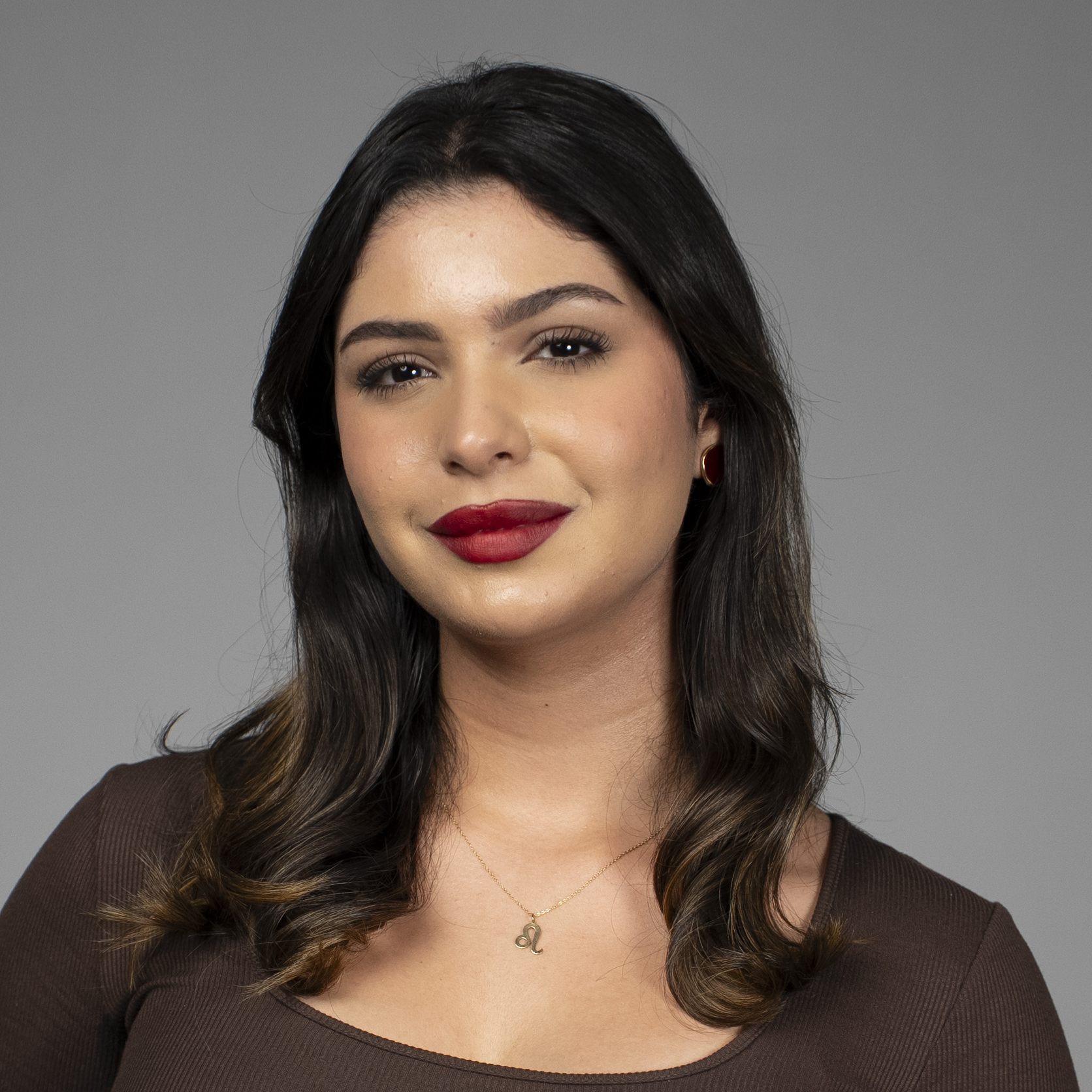
Sandra Sami is a Tunisian journalist and communication specialist currently pursuing a master’s in journalism at the Doha Institute for Graduate Studies with an Academic Excellence Scholarship. She has worked across radio, television and communication agencies in Tunisia, Oman, and Qatar. She produced multilingual reports, coordinated media coverage and contributed to written press and broadcast production. Author of the Arabic novel Eva, shortlisted for the Comar d’Or, she has collaborated with international organizations and EU-funded initiatives, producing content on youth, culture and social change. She represents Tunisian youth in global media and cultural forums.
ON THIS STORY:
The Arab League Educational, Cultural and Scientific Organization (ALECSO) has recognised Sandra Sami’s story as the best Arabic-language text of this edition of A Sea of Words for its ability to construct a deeply human and symbolic vision of the contemporary Mediterranean. The jury particularly appreciated the originality of a story that brings together characters from different Arab and Mediterranean backgrounds within a shared narrative space, transcending geographical and cultural borders in order to imagine new forms of coexistence.
The organisation also highlighted the literary quality of the text, marked by poetic and evocative language, as well as by a solid narrative structure that moves from a symbolic introduction to an open ending filled with hope. Through diverse characters and symbols such as the island, the sea, and the hourglass, the story addresses themes such as freedom, dialogue, memory, and the collective construction of the future.
For ALECSO, Sandra Sami’s work stands out not only for the strength of its writing, but also for the message that runs throughout the story: the need to imagine a more open Mediterranean, capable of listening to difference and building bridges in times of fragmentation and uncertainty.
Echoes Across the Sea
Radoslav Sviretsov
Bulgaria
Read the short story in the original language (PDF in Bulgarian)
The ferry rocked gently as we crossed from Bodrum to Kos. The Aegean sparkled like shattered glass under the early summer sun, but my thoughts were somewhere else—adrift between two continents, two cultures, and two futures I had yet to reconcile.
I am Elif. I was born on the Turkish coast, where minarets pierce the skyline and fishermen mend nets while telling stories about Atatürk and ancient sea gods. But I live in Marseille now, a Mediterranean city with a different rhythm, louder perhaps, yet not unfamiliar. Marseille offered me a scholarship, an escape, a contradiction: both a refuge and a reminder of everything I’d left behind.
My story begins with a phone call.
It was my grandmother, from Izmir. “They’re bringing down the fig orchard,” she said, her voice trembling. “The government sold the land to a developer. It will be concrete soon.”
I hung up and stared at my ceiling. The fig orchard was where I learned to climb trees and listen to cicadas. I used to nap in its shade as a child while my grandmother sang songs older than Turkey itself. I realized, then, that the Mediterranean I knew was disappearing—not only physically, but spiritually. And no one was writing about it.
I took a notebook, wrote one sentence: “What does the Mediterranean mean if we forget its stories?” And I packed my bag.
I planned a journey, part pilgrimage, part protest. I would retrace forgotten threads of memory across the Mediterranean, from its eastern shores to its western harbors. I wasn’t sure what I was looking for. But I knew I wanted to listen.
First stop: Tunisia.
In Tunis, I stayed with Leila, a poet I’d met through a student exchange. Her apartment overlooked the old Medina, a maze of domes and alleyways.
“The sea here,” she told me, “Has always been a paradox. It brings spices, silk, strangers… and sometimes, silence.”
We visited Carthage, walked among ruins where Phoenicians once traded purple dye and ivory. “You know,” Leila said, “our ancestors didn’t see borders. The sea was a thread, not a barrier.”
That night, I wrote: “What if the Mediterranean is not a sea, but a story told in many languages?”
From Tunis, I sailed to Sicily. I sat on the deck beside fishermen from Sfax and Palermo. One of them, Salvatore, handed me a piece of bread with sardines.
“We don’t talk much on these trips,” he said, “but the sea listens.”
In Palermo, I met an artist named Sofia. Her studio was a converted boathouse, filled with canvases smeared with cobalt and ochre.
“I paint the sea,” she said, “because it’s the only thing that doesn’t lie.”
Sofia was born to an Eritrean mother and Sicilian father. Her Mediterranean was hybrid, layered like her brushstrokes.
She showed me one painting that struck me deeply: a boy reaching into the sea, trying to pull up an anchor tangled in human hair.
“That’s my brother,” she whispered. “He drowned on the crossing from Libya.”
We stood in silence. I felt the weight of her pain and also the tenderness in her art. I asked if she hated the sea.
“No,” she said. “I just wish people saw all of it—not just the blue postcard.”
I crossed to Athens, a city where myths refuse to die.
There, I met Youssef.
He was Syrian, about my age, studying philosophy and delivering food by bicycle to pay rent.
We met in a library, both reaching for the same book: Camus’ The Stranger.
We laughed.
He invited me for tea on his rooftop. The Acropolis loomed nearby like a sleeping god.
“I come from Homs,” he said, “but I lost my home. I live in Athens, but I’m not Greek. I read Plato, but I doubt everything.”
We talked for hours. About identity, exile, and longing.
He said, “You know what the Mediterranean really is? It’s not water. It’s the space between missing and belonging.”
His words stayed with me.
I went further east, to Lebanon, where the sea is always close, but the past even closer.
In Beirut, I stayed near the Corniche. At sunrise, fishermen lined the seawall, casting long shadows and longer lines.
There I met Nadim, a documentary filmmaker who lost his studio in the port explosion.
“We don’t rebuild cities,” he told me. “We rebuild memory. That’s harder.”
He showed me fragments of his film: images of his grandmother dancing the dabke at a wedding in Sidon, then cuts to a shattered balcony, then to waves crashing on ruins.
Nadim took me to Tyre. We walked barefoot along the Phoenician harbor.
“You can still see Roman mosaics underwater,” he said. “But soon they’ll fade. Saltwater is patient.”
That night I wrote: “To live by the Mediterranean is to inherit both salt and sorrow.”
Back in Marseille, I began compiling my notes. The journey had transformed me—not by giving answers, but by widening the questions. I saw the Mediterranean not as a map, but as a mosaic of stories, some bright, some broken.
I submitted a short essay to a university magazine titled “The Sea Remembers.” It was modest, just a reflection on fig orchards and ferry rides. I didn’t expect much.
But a month later, I received an email: “We loved your piece. Would you consider expanding it for a symposium on Mediterranean Futures?”
I sat stunned.
They wanted me to speak.
At the event in Barcelona, I stood in a sunlit room filled with writers, musicians, architects, and activists. I was the youngest speaker.
I took a deep breath.
And I told my story.
I spoke of my grandmother’s orchard and of Sofia’s painting. I recited a line from Youssef:
“The Mediterranean is the space between missing and belonging.” I showed a photograph of a fisherman’s hands and read a stanza from Leila’s poem:
*”Salt binds us / not borders / Our oars echo / the same lullaby”
I shared Nadim’s footage. The crowd gasped at the juxtaposition of joy and destruction, of childhood and collapse. I ended with a question:
“If salt preserves, can stories?”
When I finished, there was silence. Then applause. Then questions.
One man asked, “Do you believe the Mediterranean has a future?”
I answered without hesitation: “Yes. But only if we keep listening—to each other, to the past, and to the waves.”
Months passed.
The magazine printed my expanded essay. Sofia emailed me a new painting. Youssef sent a voice message: “I’m applying for a writing program in Spain. Thank you for reminding me I have a voice.”
And Leila? She published her first poetry collection, titled “Daughter of Salt.”
As for Nadim, his documentary won a small prize in a Marseille festival. He thanked me in his speech.
As for me, I started teaching creative writing to migrant children in Marseille. Every Tuesday, we sit in a circle and tell stories—some real, some dreamed. One girl from Algeria drew the sea as a grandmother’s face. A boy from Syria called it a mirror. A Roma child from Thessaloniki said, “It’s like a big song we forgot how to sing.”
Sometimes I close my eyes and try to remember that first sentence I wrote in my notebook:
“What does the Mediterranean mean if we forget its stories?”
Now I know the answer:
It becomes silent.
And silence is dangerous.
So we write.
So we remember.
So we build.
One word at a time.
Radoslav Sviretsov is a Bulgarian architect, photographer, and traveler whose work explores the connection between art and nature. An award-winning photographer featured in publications such as Forbes, The Guardian, and PetaPixel, he was shortlisted for the Astronomy Photographer of the Year award in 2024 and received the Sofia City Award for Culture in Artistic Photography. In 2025, he was recognized among Bulgaria’s most outstanding young people and won Second Place at the prestigious World Food Photography Awards. He is also the founder of the charitable initiative Buy Art, Donate a Child’s Future and regularly gives lectures and photography workshops. Since 2025, he has been based in Iceland, where the country’s dramatic landscapes continue to inspire his creative work.
ON THIS STORY:
From the Turkish coast to Marseille, and from Tunisia to Lebanon, Radoslav Sviretsov’s Echoes Across the Sea follows a young woman’s journey across a Mediterranean woven from memories, losses and shared hopes. Through encounters with artists, migrants, poets and dreamers, the story reveals a sea that is more than a geographical space: a living archive of voices, cultures and unfinished conversations. Blending personal reflection with collective memory, Sviretsov invites readers to see the Mediterranean not as a border, but as a mosaic of stories whose echoes continue to shape the future of its shores.
The Day the Sea Returned
Ali Al-Smadi
Jordan
Read the short story in the original language (PDF in Arabic)
The first time the sea disappeared, no one believed it.
How could a sea just vanish?
But in the morning, the sun rose over dry, cracked earth, and the water was gone as if it had never been there.
We followed the news from the rooftops of Irbid — even though the sea was far away, the whole world was talking about it.
Pictures from Tunis, Beirut, and Alexandria… The sea had vanished, the shores were empty, boats flipped over.
My grandmother, Um Hazem, stood by the window, staring east.
She whispered, “It took away our childhood… and our promises.”
At the time, I didn’t get what she meant. But later, everything became clear.
After a week, people stopped talking about the sea and went back to their lives.
Then suddenly, a WhatsApp message blew up the group: “Abu Elia’s bakery is giving away free manakeesh!”
I went to see, and found an old man behind the oven, his smile heartwarming.
He told me, “The sea raised me. I lived off its blessings my whole life… Now it’s my turn to feed people.”
I sat with him as he told me stories about his island, and how the sea back then didn’t care about nationalities.
He said, “We were just humans. We were all children of the sea.”
Two weeks later, something strange happened.
Not with the sea… with us.
A Palestinian girl named Nour painted a huge mural in the park.
A wave — not of water, but made of hands. Syrian, Moroccan, Greek, Lebanese, Jordanian — all reaching toward each other.
She called it “The Mediterranean We Forgot.”
Every day, we started gathering there. One played music, another read poetry, someone brought coffee.
And the best part? Dr. Samira — who was always grumpy — began reciting Mahmoud Darwish’s poetry in her beautiful voice.
One day, a boy from Tripoli, Libya, said something so simple it shook the whole place:
“Why do we keep acting like we’re not from the same sea?”
We all fell silent…
But the next day, a Tunisian chef cooked for everyone, a Moroccan played music, a Syrian sang — and my heart beat differently.
We laughed together, cried together, dreamed together.
Time passed, and the sea still hadn’t returned.
But our lives? They had changed.
We spoke each other’s languages, cooked each other’s food, memorized each other’s songs.
We became a sea… but a sea of people, of love, of stories.
Then one day — exactly a year later — I woke up to a strange scent.
The smell of salt and water… the sea?
We all rushed into the street, people shouting:
“It’s back! The sea is back!”
But the strange thing? No one ran to it.
We all just stood still, smiling.
Because we knew… the sea had been inside us all along.
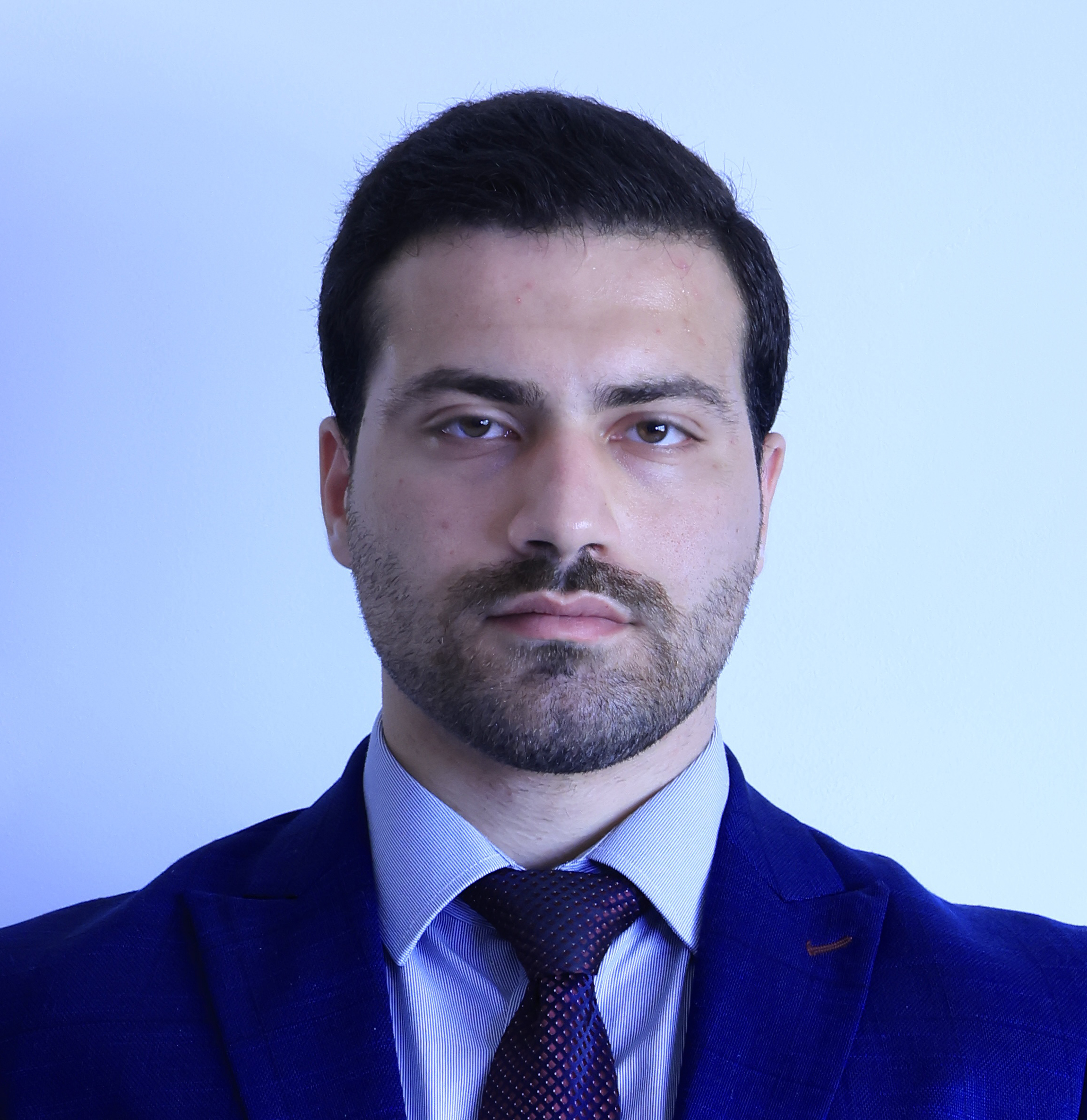
Ali Al-Smadi is a 23-year-old senior medical student from Jordan who is passionate about people, public health, and the stories that shape us. His interest in writing grew naturally from his experiences across the Mediterranean, especially during his time at the UfM Med Youth Lab in Morocco, where he connected deeply with youth from different backgrounds. That experience inspired him to explore how culture, identity, and shared challenges bring us together. He hopes to use both medicine and storytelling as tools for connection, understanding, and change.
ON THIS STORY:
What would happen if the Mediterranean suddenly disappeared? In The Day the Sea Returned, Ali Al-Smadi transforms this impossible premise into a moving reflection on memory, belonging and human connection. As the sea vanishes from the horizon, people across the region begin to rediscover what truly binds them together: shared stories, languages, songs and dreams. Through a narrative that blends fable, humour and hope, Al-Smadi imagines a Mediterranean that exists beyond geography, a sea carried within its people. At a time marked by division and uncertainty, the story offers a simple yet powerful reminder. What unites us is often stronger than what separates us.