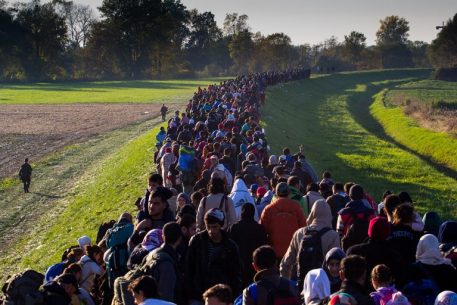
“Las personas refugiadas deben integrarse adecuadamente o poder regresar sin riesgos a sus países. Cualquier otra solución será frágil y poco sostenible a largo plazo”.
Concebidos para acoger temporalmente a quienes huyen de los conflictos, los campos de refugiados se transforman en entidades urbanas donde sus residentes tratan de reconfigurar su vida.
La arquitectura de la acogida de refugiados requiere un enfoque que aúne movilidad, dignidad y respeto, pero también ecología, rapidez de instalación y reciclaje de la construcción.
During the last decade, the issue of migrant and refugee arrivals on European shores in the Mediterranean has undoubtedly been a constant key topic on European political agendas, as well as in the media and as a civil society concern.
The Mediterranean has long been a major migratory region, but the factors responsible for this mobility have gradually become more diverse.
There is no doubt that what has been termed the migration or refugee crisis in Europe has been framed in the public and media discourse as the defining phenomenon of the second decade of the 21st century.
The “Western Balkan route” became a well-known term for public debates throughout the EU. With the EU-Turkey deal in March 2016, the number of migrants passing through the Western Balkans has been significantly reduced.
The largest refugee crisis since the Second World War became a major challenge for the EU in 2015. The crisis is far from over and the need for managing the difficult tasks seems to be interconnected with a political crisis in the EU.
¿Como los mecanismos de interacción nos permiten entender las dinámicas migratorias con el paso del tiempo, desde dentro y fuera de las redes?
The push factors of an economic nature are key behind the phenomenon of Arab Mediterranean youth migration. However, the desire to migrate does not depend on the education level and the (un)employment of the young people.
The year 2015 was a serious stress test for the stability and cohesion of the European Union. The so-called refugee crisis revealed several divisions within the EU, and disclosed certain limitations of the European project.
Desde el 2014, aproximadamente 1.6 millones de refugiados y migrantes han llegado a las costas de Europa a través del Mediterráneo. En el mismo período de tiempo, unas 12.000 personas han muerto mientras intentaban cruzar al mar.
Sign up for our newsletter and be up-to-date with upcoming events and latest publications.
Please, choose language:
English Spanish Catalan French
Esto se cerrará en 0 segundos