
Water-Sensitive Urban Design for the Arid Mediterranean in the Context of Climate Change
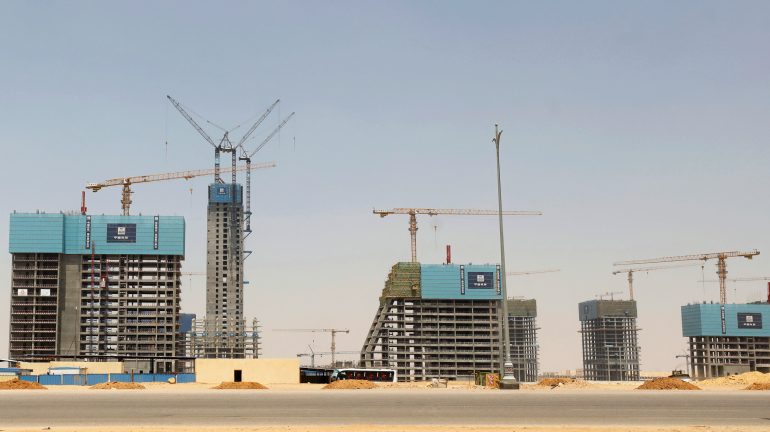
With 23 countries and about 480 million people, the Mediterranean accounts for 7.3% of the world’s population. The region has hosted numerous civilizations throughout history, making it a significant place from a cultural heritage perspective. The area exhibits diverse geographic gradients, as well as socioeconomic and sociocultural conditions. The economy relies on natural resources, especially in the south. Rapid urbanization and population growth are concerning in the southern and eastern Mediterranean countries. These pressures, coupled with climate change, affect urban landscapes and call for serious action across the Mediterranean. This work argues that Mediterranean cities must urgently adopt water-sensitive strategies in the face of climate change and confirms Gareth Doherty’s approach, “Blue could be a framework through which to see the green”1 .
The Mediterranean is a climate-change hotspot, with rising temperatures. Observed annual mean temperatures over the last 140 years exceed the global mean, now about 1.5 °C above late 19th-century levels.2 Frequent, intensified heat waves fuel wildfires, threaten health, and, with more extended drought periods, food production and biodiversity suffer a great deal. Multi-system pressures among water, land, and coastal ecosystems escalate. The heat makes the Mediterranean ecosystems vulnerable in many ways. Reduced precipitation and increased evaporation increase the risk of wildfires, forest pests, and parasites. Projections indicate that the consequences of climate change will likely lower water availability by 2-15% with 2 °C of warming.3 This would be among the most significant declines globally, leading to more extended periods of dry conditions. Historically, water scarcity has been part of the Mediterranean, but climate change-driven intensification threatens to push natural and managed terrestrial ecosystems to the brink of severe strain. According to Lange, “while the overall amount of precipitation will decrease over the Mediterranean, extreme rainstorms will prevail in northern rim countries. Aside from droughts, floods are and will likely remain the most dangerous meteorological hazards.”2
In the quest for solutions to contemporary urban challenges, there is a growing interest in drawing inspiration from ancient cities. These historical urban centers, despite their antiquity, often showcase innovative approaches to sustainability and resilience that resonate with today’s concerns. By examining how ancient cities managed their infrastructures and designed their living spaces, we can glean valuable insights into creating more flexible and resilient urban environments in the face of climate change.
Sustainable Techniques of the Mediterranean Civilizations
Mediterranean civilizations developed sophisticated, sustainable architectural and urban planning techniques to form the foundation of sustainable design today. Ancient Mediterranean civilizations developed highly advanced and sustainable methods for managing scarce water resources, demonstrating exceptional engineering skill and environmental awareness. A notable example is strategic site selection: for instance, ancient Greeks often located major cities away from water bodies, likely to avoid floods and waterborne diseases and to accommodate a dry-climate lifestyle. Ancient civilizations also worked with the existing topography, making slight modifications to the contours to collect water in terraces for agricultural use. This task required careful observation of the land, including its biotic and abiotic elements. In this sense, nature literacy was at its highest level. The available water levels in water bodies guided agricultural planning and taxation (e.g., measurement of the Nile flood). Efficient rules were established to balance public interest with individual needs.
Architectural and urban planning techniques in the Mediterranean were in harmony with nature. Cities were often located on hills for defense and to improve airflow, and building codes, such as the historic alarife codes in Spain 4, were developed to ensure that structures were suited to local conditions. The settlements typically featured a dense, compact matrix with narrow streets and attached buildings to enable shade and reduce the heat island effect. Such practice prevented urban sprawl, thereby protecting water bodies and other natural elements. Buildings were strategically oriented to enhance energy efficiency (e.g., maximizing winter sun exposure for warmth and minimizing it during the hot summer months). Construction with thick walls of local materials, such as limestone, sandstone, or adobe, helped regulate interior temperatures. Courtyards were indispensable social spaces and created microclimates that facilitated natural airflow and cross-ventilation. Courtyards were also used to collect water from the roof and store it in an underground cistern. Most courtyards featured water elements (fountains or shallow water surfaces) that cooled the environment and enhanced the ambiance. Climbing plants on pergolas and facades aided cooling and provided food (e.g., grape vines) and habitat. The use of locally abundant materials, such as stone, clay, ceramics, and sustainably sourced wood, minimized transportation costs and carbon footprint. These durable materials were fabricated using innovative techniques to facilitate recycling and reuse.
The notion of water not only shaped cities and lifestyles in the Mediterranean but also influenced beliefs. Ancient Mediterranean civilizations often viewed water as divine or sacred, essential for life. The Nile was worshiped as the god Hapi in Egypt, with its floods celebrated and managed through rituals and engineering. In Greece and Rome, springs, rivers, and fountains were dedicated to deities and linked to temples, where offerings ensured a steady, pure water supply. This spiritual reverence fostered a deep respect for water sources and influenced their preservation and prudent management.
Water scarcity drove the development of sophisticated hydraulic systems for collecting and transporting water, as well as sustainable management practices. For instance, in ancient Athens, natural sources were insufficient, so artificial wells were first used, later replaced by cisterns, and eventually large rainwater reservoirs were built to ensure a stable supply. Under Roman rule, water became a luxury and a symbol of prestige, with expanded public systems and aqueducts delivering water from mountains to fountains. Ancient design differs significantly from modern practice; sustainability as a design principle is a relatively new concept in engineering, with current norms targeting lifespans of roughly 40-50 years, whereas many ancient aqueducts lasted centuries despite earthquakes and wars. Security shaped ancient designs: for example, the Peisistratean aqueduct in Athens was built underground to remain hidden and protected. Responsibility for maintenance fell to communities, with officials overseeing fountains and water structures; accessibility and fairness in water use formed the core of governance.
Key elements of the water-oriented system can be summarized as follows:
- Rainwater harvesting and storage: terracotta pipes, gutters, and channels collected rooftop rainwater into large underground cisterns at both the individual-building and settlement scales; cisterns served most buildings, while well water often supplied drinking water.
- Distribution and public access: Water was conveyed from distant springs and rivers by gravity, often through underground conduits or on arches. The reason the structures were either buried or elevated well above ground was not only hydraulic considerations but also to minimize contamination. Water-fed public baths, fountains, and some homes were utilized for public use. The settlements featured separate underground clay pipes for potable water, stormwater, and sewage. The system is undoubtedly an engineering marvel in an era when no modern technologies were available.
- Water recycling and energy efficiency: Given its scarcity, water was recycled in an energy-efficient manner. The effluent from large baths was sometimes reused to flush sewers. Constant flows helped clean streets and sewers. Thanks to gravity-driven distribution, water moved, minimizing energy requirements.
- Water purification: To have clean water, filtration with sand and gravel is used in the sedimentation tanks for primary water treatment. Egyptians used alum, and the Greeks used the Hippocratic sleeve, a cloth strainer to purify water and trap sediment.
- Basin irrigation and flood control: Dams protected towns from flash floods (e.g., Tyrins). Egyptians constructed canals, gates, and reservoirs to divert Nile floods for agricultural use. Tools like the shadoof raised water to higher ground.
- Ancient Mediterranean water structures relied on local, durable materials that ensured longevity and low environmental impact. Stone was the primary building material for arches, dams, and cisterns, while volcanic rock and tufa provided strength and facilitated quarrying. Fired terracotta pipes with lime mortar joints provided waterproof conduits. Concrete composed of lime, sand, water, and pozzolana was used to produce durable, waterproof surfaces in baths and cisterns. Structures were built with local timber, resulting in a low carbon footprint.
Today, lessons from this heritage—local materials, multi-layered infrastructure, energy-efficient distribution, and equitable access—remain essential for future water security. Ancient cities, whether inhabited or abandoned, offer us many ways to make our cities more resilient for the future. The compact lifestyles of past civilizations demonstrate an urban metabolism in which infrastructure and life-support systems were thoughtfully designed to be self-sufficient for days in the event of disaster or war.
Shifting Water Management Paradigm around the World
Despite the wisdom of past civilizations, humanity exceeded Earth’s limits during the period of industrialization. The cities became areas where the rules of nature no longer apply. Under the pressure of rural-to-urban migration, cities faced many challenges related to water and climate, as well as social issues. Climate change magnifies these problems and calls for urgent action. Given the increasing frequency and impact of disasters and shocks, creating livable cities is indispensable. For this reason, Mediterranean cities must reconstruct and reassess their relationship with water during the planning and design stages.
In cities where the natural and built environments are in harmony with each other, social, physical, and economic conditions support each other in a sustainable relationship. Water, an indispensable element of life, is more important than ever in nurturing this relationship.
While some countries worldwide have long-standing experience with water harvesting and rainwater management 5, many industrialized cities struggle to allocate human and economic resources to build sound infrastructure. 6 Thus, there has been a marked shift in the approach to managing runoff water in cities over the last 50 years. What was once considered gray infrastructure—underground sewage systems that rely on the immediate discharge of water—has now evolved into green infrastructure that employs nature-based design and technologies. In gray infrastructure, this water is treated as waste, while in green infrastructure, it is treated as a resource. This paradigm shift has led to the development of many terminologies.7 These globally accepted terminologies sometimes emphasize only geographical differences and, at other times, differ in the issues they emphasize. With the rapid growth of approaches, primarily developed in the late 1980s and 1990s, terminologies that first became widespread as Best Management Practices (BMPs).8 Alternative Techniques,9 Water Sensitive Urban Design,10 were later transformed into Low Impact Development 11 and Sustainable Urban Drainage Systems,12, which take into account the broader dynamics of cities.
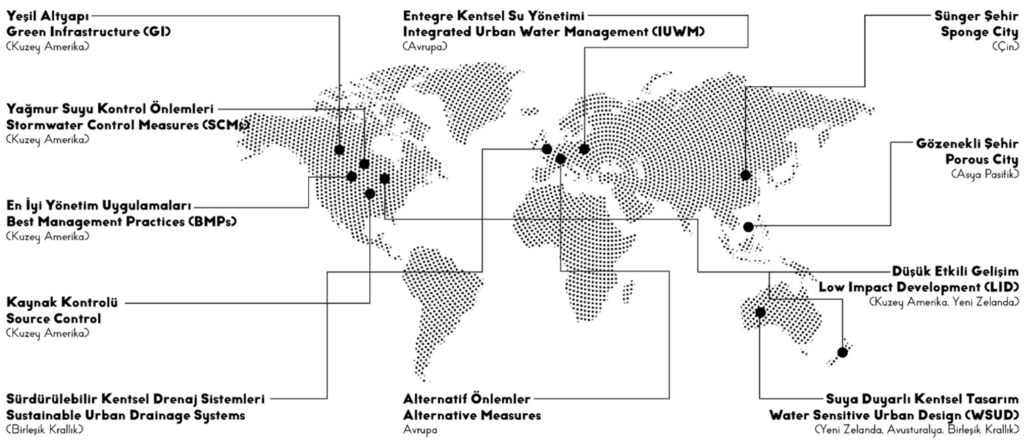
In the 2000s, with the increasing effects of climate change on cities, and heavy and sudden rainfall and long-lasting droughts affecting daily life and the economy more than ever, the Sponge Cities concept, which emphasizes the importance of permeability to increase the resilience of cities, especially from the Far East, was presented by Turenscape in 2013, and the Porous Cities concept was presented by Landprocess in 2016. Under these headings, examples are emerging that transform rivers, wetlands, forests, and macro- and micro-scale urban gaps lost by cities into socially inclusive spaces by considering water and biodiversity elements. Examples from the 2000s supported Derrible’s hypothesis that cities are shaped by the challenges they face.13 However, it is noteworthy that in the countries of the Mediterranean basin, which are dealing with drought on the one hand and floods with irregular and sudden rainfall on the other, a more unique model that overlaps with the realities of this special geography has not yet been described.14
To take a comprehensive look at the relationship between cities, water, and nature, and to develop a holistic strategy, it is necessary to understand several key elements:
- Cities have access to water resources on a wide range of scales and of different types (e.g., rainwater as well as graywater).
- Cities provide many ecosystem services. The built environment can both support and complement the natural environment.
- If city decision-makers and the public take a water-sensitive approach and are highly aware, there is socio-political capital for sustainability.
- Green infrastructure is a strategically planned and designed combination of natural and semi-natural elements that collectively deliver a wide range of social, economic, and ecosystem services, reducing cities’ dependence on gray infrastructure.
Green infrastructure is considered an essential mechanism for achieving the policy objectives set out in the European Union’s policies on biodiversity, regional development, climate change, urban resilience, agriculture, forestry, and the environment. In EU policy, green infrastructure is identified as a strategy that can contribute to various areas of the Europe 2020 Growth Strategy through nature-based solutions.15 The principles of green infrastructure planning in the literature include multifunctionality, connectivity, integration with other infrastructures, a participatory process, and the development of a long-term strategy within the framework of sustainable development.
At the broadest scale, green infrastructure aims to protect and restore natural landscape elements, such as forests, river corridors, flood plains, and wetlands, which are essential components of stormwater infrastructure. It includes agricultural landscapes, transportation corridor landscapes that provide multifunctional and local services, and green space arrangements such as neighborhood and city parks, children’s playgrounds, and urban gardens. At the site scale, gardens, rooftops, and green walls around buildings complete this multi-layered, multi-scaled green space network. The mechanisms that collect, filter, infiltrate, detain, and retain water within these units are designed using ecologically and environmentally friendly materials, in a circular manner, and employing ecologically and environmentally friendly techniques; hence the notion of Nature-based Solutions (NbS). It has been scientifically demonstrated that such solutions offer practical strategies for adapting to disasters in cities16. The concept of NbS has gained more importance, especially since the late 1990s. At the 2002 Earth Summit, it was emphasized that nature-based approaches can play an essential role in combating climate change. IUCN was one of the first organizations to support such solutions. The United Nations Environment Programme (UNEP), in its 2019 report “Nature-Based Solutions for Sustainable Development”, demonstrated the link between NbS and the Sustainable Development Goals. In 2020, the European Commission published “Nature-Based Solutions: A Framework”, promoting NbS practices for sustainable development and climate action in Europe. The aim is to both protect ecosystems and safeguard human well-being. In Mediterranean countries, NbS legislation at the local level is not a single, unified law but rather an integrated approach within broader national, regional, and municipal frameworks, primarily focused on climate adaptation, green infrastructure, and urban planning. Competencies in environmental matters are shared among the state, autonomous communities, and local authorities, resulting in implementation and specific regulations that vary by region and municipality. While there is currently no national system for cataloguing all NbS across their territory, many cities and towns are developing their own plans and pilot projects. In this, not only designers, planners, hydrologists, and ecologists, but also policy-makers, are expected to take an active role.
Concluding Remarks
As Gareth Doherty notes in his book Paradoxes of Green, blue provides a critical framework for perceiving green. In this context, it is essential to maintain the water dependence of arid Mediterranean cities at an optimal level in their relationship with green spaces. However, in Mediterranean landscapes under pressure from tourism, agriculture, and urbanization, green spaces created solely for aesthetic purposes may not be particularly ecologically sustainable, as establishing them in arid urban areas entails high environmental costs to maintain. Doherty emphasizes that this is presented as a conscientious imperative between being green and having green, a paradox that makes the provision of urban green, especially in arid geographies, ethically questionable. It would be beneficial for blue, that is, water, to serve as a defining, regulating, and practical framework from the perspective of green and the city as the leading actor in urban design studies for arid Mediterranean regions, seeking to address the negative impacts of climate change as a policy tool.
To improve urban rainwater management, cities can collect, filter, and reuse rainwater from various surfaces by adopting the “mimicking the ecosystem” approach and reducing the urban heat island effect through green areas. Such an ecological approach will yield more economically viable, socially inclusive, and practical solutions. As cities weave more sustainable systems into their urban fabric, the following principles should take priority:
- Safeguard natural areas and permeable surfaces to the greatest extent feasible.
- Minimize development pressures on hydrology and create a network that supports the city’s natural water cycle.
- Manage water on-site to reduce infrastructure burdens and ensure that green spaces perform their hydrological roles.
- Embed green and blue infrastructure within the integrated water management system, featuring diverse typologies such as rain gardens, bioswales, water retention zones, treatment areas, distribution spaces, and wetlands.
- Prevent pollution and promote waste recycling by treating waste—and water—as resources. Recognizing that rainwater and urban wastewater are resources, Mediterranean cities should steward their water through a synthesis of advanced engineering and nature-based solutions.
Vandana Shiva reminds us that “How we design the world in our minds determines how we relate to it in real life. When we design without understanding and considering our limits, we encroach on the limits of our planet. When we design with an awareness of the interconnectedness of relationships, we strengthen these relationships.” It is time to acknowledge the arid realities of the Mediterranean and to reimagine our urban spaces and daily practices to be more water-sensitive.
References
- Cohen, S., Janzen, C., Stewart, M., Gretchen, W. (2016) Nature-Based Solutions To Address Global Societal Challenges. IUCN Press.
- Doherty, G. (2019) Paradoxes of Green. University of California Press.
- Lange, M. (2020) Climate Change in the Mediterranean: Environmental Impacts and Extreme Events, IEMed Mediterranean Yearbook, 2020: 30-45
- Cramer, W.; J. Guiot; M. Fader; J. Garrabou; J.-P. Gattuso; A. Iglesias; M. A. Lange; P. Lionello; M. C. Llasat; S. Paz; J. Peñuelas; M. Snoussi; A. Toreti; M. N. Tsimplis and E. Xoplaki, (2018) Climate change and interconnected risks to sustainable development in the Mediterranean. Nature Climate Change, 8 (11), 972-980.
- Hakim, S. B. (2014). “Mediterranean Urbanism Historic Urban Building Rules and Processes”, Springer.
- Brown, R.; Clarke, J. (2005) Transition to Water Sensitive Urban Design: The Story of Melbourne, Australia; Facility for Advancing Water Biofiltration. Environmental Management, 36, 455–468.
- Brown, R.; Ashley, R.; Farrelly, M. (2011) Political and professional agency entrapment: An agenda for urban water research. Water Resour. Manag., 25, 4037–4050.
- Fletcher, T.D., Shuster, W., Hunt, W. F. Ashley, R. Butler, D., Arthur, S., Thrawsdayle, S. Barraut, S. Semadeni-Davies, A. (2015) SUDS, LID, BMPs, WSUD and more – The evolution and application of terminology surrounding urban drainage. Urban Water Journal, 12:7, 525-542.
- Schueler, T.R., (1987). Controlling Urban Runoff: A Practical Manual For Planning And Designing Urban BMPs. Washington: Washington Metropolitan Water Resources Planning Board.
- Azzout, Y., Barraud, S., Cres, and Alfakih, E., (1994). Techniques alternatives en assainissement pluvial. Choix, conception, réalisation et entretien. Paris, France: Collection Tec & Doc, Lavoisier.
- Whelans, C., Maunsell, H.G., and Thompson, P., (1994). Planning And Management Guidelines For Water-Sensitive Urban (Residential) Design. Perth, Western Australia: Department of Planning and Urban Development of Western Australia.
- Department of Environmental Resources (1999). Low-Impact Development: An Integrated Design Approach. Maryland, USA: Department of Environmental Resources, Prince George’s County.
- CIRIA, (2000). Sustainable Urban Drainage Systems – Design Manual For Scotland And Northern Ireland. Dundee, Scotland: CIRIA Report No. C521.
- Derrible, S. (2017). Complexity in future cities: the rise of networked infrastructure. International Journal of Urban Sciences, 21:, 68–86
- Esbah, H. (2021) Water Sensitive Cities. Turkish Water Institute (SUEN) Press. (In Turkish).
- EEA (2021) Green Infrastructure: enhancing Europe’s Green Capital. European Environment Agency. http://eur-lex.europa.eu/legal-content/EN/TXT/?uri=CELEX:52013DC0249 (Visit: 20.09.2021)
Watch again the lecture by Hayriye Esbah-Tuncay at the Aula Mediterrània series.