
Integrating Migrants for Integrating Regions. Shared Challenges around the Mediterranean

In terms of migration, striking similarities between the Arab World and Europe emerge. Both the League of Arab States and the European Union are institutional constructs with a charter providing for the free mobility of people (although this provision is not included in most Arab national legislation). Migration is intense in both regions, with immigrants outnumbering emigrants and intra-regional migration representing a large part of all movements. Both are subject to considerable refugee movements, from within in the Arab states, and from without in the EU.
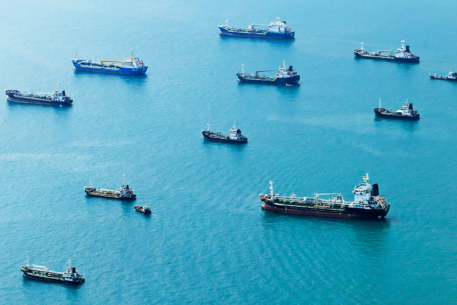
At the same time, there is a remarkable asymmetry in the Mediterranean: migrants are almost exclusively from South to North. While most migrants from the Arab world land in the EU by plane with a regular visa, others reach it by sea with no visa. The smuggling business has been responsible for over 50,000 deaths out of 3.3 million passengers smuggled since 2000, making the Mediterranean Sea the world’s most lethal border.
| Region | Arab States | EU-27 | |||
| Total Population | 491.8 | 449.3 | |||
| Inward Migration | 44.1 | 9.00% | 63.3 | 14.10% | |
| Among which refugees | 9.0 | 1.83% | 7.8 | 1.74% | |
| Outward Migration | 37.2 | 7.60% | 30.6 | 6.80% | |
| Intra-regional Migration | 18.1 | 3.70% | 16.6 | 3.70% | |
| Migration from the region to the other region | 8.6 | 1.70% | 0.2 | 0.00% | |
| Computed from United Nations Department of Economic and Social Affairs, Population Division (2024). International Migrant Stock 2024 | |||||
In Mashreq, armed conflicts are critical triggers of migration. Since World War II, it has been the scene of Palestine wars, from the 1948-49 exodus to the current bloodbath in Gaza and violence in the West Bank; Iraqi wars with Iran, Kuwait and the USA; Israel-Lebanon military events; civil conflicts in Sudan, Yemen, Syria, Lebanon and Iraq again, etc.
Palestine refugees are today the world’s oldest refugee population. Due to demography, their number continuously grows. Indeed, Palestinian refugees are defined by the United Nations as persons who lost their homes as a result of the 1948 Arab Israeli conflict, and their descendants. Only return or financial compensation, both vetoed by Israel, could make a Palestinian refugee lose his status of refugee (UNGA Resolution 194). What impact will events started in October 2023 – mass killings of civilians and destruction of housing and infrastructure in the Gaza Strip, and surging violence against civilians in the West Bank – produce on population movements? No one can predict.
Defending Palestine, proclaimed a sacred cause, has legitimized the indefinite perpetuation of authoritarian regimes in several Arab states, producing adverse consequences on freedom and progress, and therefore emigration of their citizens; notably the Syrian civil war, which called into question the international refugee regime. Indeed, Mashreq countries of first asylum (Jordan, Lebanon…) are not parties to the 1950 Refugee Convention. They have no proper refugee status but are subject to a charity-based rather than rights-based approach. Refugees are temporarily sheltered but denied basic rights.
The Syrian crisis called European solidarity into question. EU law protects asylum-seekers and refugees, but the problem is being able to claim asylum. In the absence of resettlement programs or humanitarian visas, the only possibility is to reach the territory of the EU and lodge an asylum claim upon arrival. For this to happen, one can either apply for a regular visa as a tourist, or travel with no visa and resort to the smuggling business. Among the more than 1 million Syrians who claimed asylum in the EU in the 2010s, 77.5% had entered irregularly by sea.
Egypt is another case in point as it faces what might be the biggest migration-related challenge around the Mediterranean Sea. Its 4.8 million emigrants (4% of Egypt’s 118 million inhabitants) are mostly (88%) temporary workers in other Arab countries. Their homeland lives under a double threat from water. Fresh water, from its only source, the river Nile, risks being dried up by dams in Ethiopia and Sudan. Sea water, due to the announced elevation of its level, risks making a large swath of the Nile delta inhabitable for tens of millions. Demographers project a steady increase of Egypt’s population (up to 160 million in 2050). So where could emigrants go if the Gulf States, their overwhelming destination, shut the door?
Gulf States are the first destination of Arab migrants. Their policies on migration are ambivalent: on the one hand, foreign labor is still needed at all skill levels; on the other, immigrants are not fully accepted. Replacing foreign citizens by nationals, called “nationalization”, has been a political objective for decades. While it largely failed, states did not adopt an alternative approach of naturalization of foreigners to reduce their ratio to nationals. They regard the opening of channels to citizenship as a threat to culture, welfare, and security.
Regarding the Maghreb, 6.3 million emigrants represent 6% of its 109 million inhabitants. Europe is their overwhelming destination (70%). Incidentally, part of the considerable non-migratory daily circulation of people between Maghreb and Europe, from business to tourism, education, and visits to relatives, is linked to a long history of migration.
Transit migration from Sub-Saharan Africa has been growing in recent decades. It remains limited in numbers, except in Libya, but has a strong impact on the governance of migration. Measures such as laws criminalizing irregular exit and campaigns of regularization were taken in accordance with the EU’s view that transit migrants must be kept away from Europe.
But is transit migration a relevant category? Libya’s exacerbated case incites relativization of the notion. Before 2011, it was a magnet for labor migrants from neighboring Egypt and Tunisia, and farther away in Sub-Saharan Africa. Many would return to their countries at the end of a work contract, but others, originating from conflict areas (Somalia, Sudan, Eritrea…), had a “well-founded fear of being persecuted” if they returned to their homeland. In other countries they would be considered refugees but not in Libya, which has no refugee status in its law. Many were therefore waiting for a passage to the EU, with no visa. They were in transit.
Since the 2011 upheavals, Libya has continued to attract migrant workers, though in smaller numbers (900,000?). How many of them are in transit? No one knows, but their particularly worrying situation is amply documented. Large parts of the territory, its borders and seashores have passed under the control of militias. The worst forms of exploitation can be imposed on Sub-Saharan migrants, from abuse and trafficking to slavery and killing. The EU’s response is ambivalent. It unequivocally condemns abuse, and at the same time closes the door to migration and shuts maritime routes. Keeping would-be migrants in Sub-Saharan Africa is the EU’s response to atrocities in Libya.
Anti-immigration views have recently been soaring, in Europe as elsewhere. They represent a hidden, though serious, threat facing the EU: a threat to the EU’s internal cohesion, as anti-immigration stances go in parallel with euroscepticism, calling into question the Schengen acquis (abolition of border controls between member states) and even the Union itself (Brexit); a threat to the EU’s external relations, for large-scale forced migration has put a heavy burden on Arab countries and Turkey, and resulting tensions South and East of the Mediterranean negatively reverberate on partnership between the two shores; and, finally, a threat to the EU’s economic future, for Europe is entering a period of durable population shrinking and ageing that should invite a reevaluation of immigration.
Eurostat projections find that, if migration stops today, the EU27 will lose 60 million people of working age in the next 30 years and gain 37 million old-age pensioners. Calling on migrants to replace missing natives could be a response to labor shortages and skills ageing. But intolerance is growing: polls reveal negative feelings towards migration as high as 52% among 15-24 years and 68% among over 65s.
From where will future migrants to Europe come? Demographic projections from 2025 to 2050 show a quasi-perfect correspondence at young working age (20-44) between losses in the EU and gains in the Arab world. But are demographic complementarity and geographic proximity sufficient to resuscitate South to North trans-Mediterranean labor migration? At a time of global migration, a complex mix of factors are at play. Among these, a comparative advantage in terms of skills is decisive to transform potential migration into facts.
There are migrant integration deficits to address. The Arab world is characterized by a general lack of integration of migration-related statuses into the framework of rights. Arab nationality laws do not provide for channels to citizenship; therefore, immigration produces non-citizens. The consequences of this are basic rights being denied to many. Deprived of the right to reside, undocumented migrants and refugees find themselves relegated to limbo. Social cohesion is undermined. In the EU, there is a persisting deficit of integration of migrants in the social framework. Social and employment surveys show marked inequalities between people born outside the EU27 and natives. For example, the at-risk-of-poverty rate is 38% for the former against 18% for the latter.
In both the Arab world and Europe, too many migrants continue to belong to where they are from more than where they live, a feeling amplified by internet and the daily communication it allows with families and communities in the homeland. Remaining closer to origin than destination affects the social fabric. It is time for states to find inspiration in the principles stated in the Global Compact for Safe, Orderly and Regular Migration of 2018. Its 22 objectives are all about universal human rights, which migrants must access as any human being.
Watch again the lecture by Philippe Fargues at the Aula Mediterrània series.