



Throughout its millennia-long history, the Mediterranean basin has given birth to great weavers of words. Women who have made weaving an act of symbolic power. Like the eternal cadence of The Odyssey’s Penelope, archetype of cunning and intelligence; like Athena, goddess of wisdom, venerated as the deity of the loom that expands and knots together knowledge; or like the three Moirai − Clotho, Lachesis, and Atropos − the feminine personification of the unalterable destiny of mortals that spins, measures and cuts the thread of life. From the wellspring of inspiration of these imagined, mythical weavers, Fatima Mernissi (Fez, 1940 – Rabat, 2015) was able to use her creative thread to unravel stories of activism and resistance and courageous feminism, and to open unexpected paths in the intimate relationship between gender, religion, culture and power.
Fatima Mernissi will always be remembered as an innovative, unorthodox and, above all, feminist Amazigh-Moroccan intellectual in a time when the “principle of equality between women and men” was seen as a revolutionary and defiant idea. Her staunch defence of women’s rights is intrinsic to her character. She is renowned for her pioneering vision regarding the role of new technologies, and for having become one of the leading international figures in Islamic and Quranic studies. She was an exceptionally cultured woman with an insatiable curiosity that allowed her to encompass disciplines such as history, political science and sociology, intertwining them from novel and ground-breaking perspectives for her time. Fatima Mernissi was many things: social researcher, university professor, consultant, essayist, but above all, writer.ke. Augustus, referred to not as imperator but as princeps (the first among citizens), and the “Good Emperors” who followed him, brought peace by drenching the Mediterranean in blood with armies numbering between a quarter and half a million. For Rome, this peace meant extraordinary wealth through plunder and exploitation; what it meant for the defeated and those who lived on those lands is harder to say. Yet if the defeated could speak, it is not difficult to imagine they would not choose words that ease the heart.
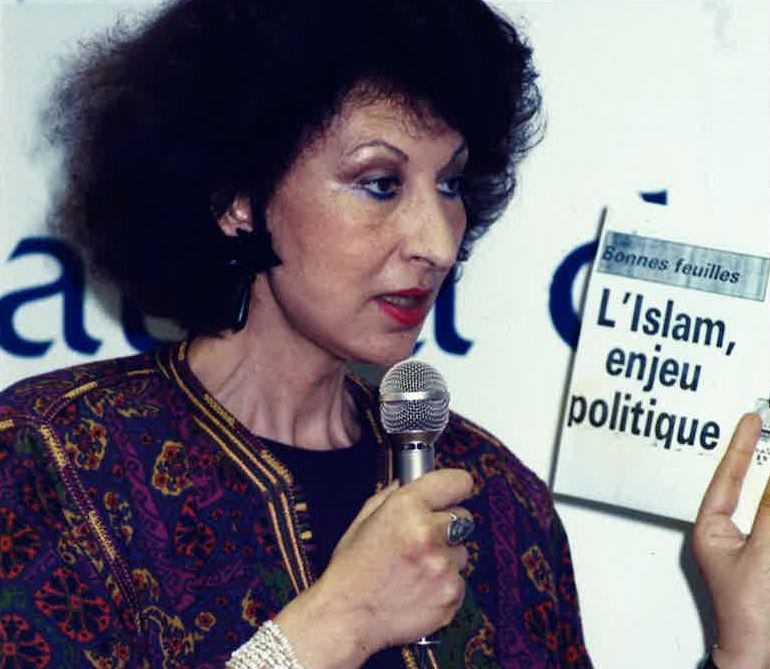
Her prolific authorial legacy comprises nearly thirty courageous and bold books, in which she dared to address real taboos within Arab-Muslim culture. Her first book was a clear statement of intent: Sexe, Idéologie, Islam (1975). From that moment on, many of her notable works would gradually appear, such as L’Harem politique: le Prophète et les femmes (1987), in which she analyses the tradition handed down after the Prophet Muhammad regarding women; or other titles in which she focuses on defending women’s rights and denouncing their oppression, questioning the patriarchal system of Muslim society. In this vein, notable titles include Dreams of Trespass: Tales of a Harem Girlhood (1996), L’harem occidental (2002) and L’amour dans les pays musulmans: à travers le miroir des texts anciens (2008).
In 2003, Fatima Mernissi received the Prince of Asturias Award for Literature, along with Susan Sontag. The jury justified the decision to award the prize jointly not only for the “depth of thought and aesthetic quality of their works,” but also because through social commitment and intercultural dialogue both women, despite coming from distant worlds, were able to uphold, like no other, the pillars upon which bridges of understanding between East and West rest.
Keys to understanding a multifaceted figure
On the tenth anniversary of her death, a real understanding of Fatima Mernissi requires a keen and multifaceted perspective, capable of discerning the nuances of her many sides. An attempt at definition, without pretensions and with the understanding that a complete portrait is impossible, must at least consider the overlapping faces of four women. They are the critical feminist, the committed activist, the weaving writer, and the heterodox researcher. Four women, one voice. Fatima. The following paragraphs evoke all four of them while simultaneously amplifying the echo of a single, enduring voice.
The critical feminist
With a lucid, humanist and courageous perspective, Fatima Mernissi was able to dismantle the arguments of structural sexism present in many Islamic contexts, including that of her own origin, as well as the simplistic stereotypes about Muslim women that have dominated the West for decades. Her thinking always occupied an uncomfortable yet fertile position: critical of internal patriarchal structures, but also of paternalistic or reductionist views that came from outside. Convinced of the central role of civil society as an engine of democratisation and modernisation, she argued for the need to build frameworks of emancipation rooted in the cultural contexts themselves. She never fully identified with secular feminism or with the feminist currents imported from Europe, but neither did she define herself as a Muslim feminist in a doctrinal sense. Her approach was different: to critically reread the texts and traditions of Islamic heritage in order to question established patriarchal interpretations. From this perspective, her work can be understood as an exercise in decolonising feminist thought by constantly questioning society about the exclusions it produces, the mechanisms that construct social authority, and the way in which roles and spaces of power are distributed. Mernissi demanded true equality. She did so by denouncing the forms of injustice that are legitimised through tradition, authority and custom.
“Women are the driving force of civil society. We are the ones who make it move forward (…) Because we have no other choice.”
The committed activist
Throughout a lifetime of tireless commitment, she became a leading figure who continues to inspire contemporary activism. She understood communication, knowledge, and words as tools for social transformation. From this conviction, she spearheaded initiatives aimed at strengthening Moroccan civil society and opening spaces for participation for the marginalised. Notable among these initiatives is the Caravane Civique, a project that brought together artists, intellectuals and activists with the goal of bringing culture, education and public debate to rural regions and vulnerable communities in Morocco. Through meetings, workshops and group projects, often linked to the work of women and artisans, the caravan travelled through peripheral territories, creating exchange networks and giving visibility to social actors who dreamed of transforming the country. Mernissi conceived of these experiences as spaces where words circulated freely and where citizens became protagonists in public life. For her, freedom was never a slogan but a constant exercise in lucidity. Gifted with extraordinary narrative intelligence, she knew how to transform sociological research into storytelling, making visible what seemed natural or inevitable. By telling stories ‒ of women, of young people, of marginalised communities ‒ she taught us to read the world without being hypnotised by its obviousness and to recognise the power structures that permeate it.
“Dignity is having a dream, a powerful dream that gives you a vision, a world where you have your place, where your participation, however small, will change something. You’re in a harem when the world doesn’t need you.”
The weaving writer
We are dealing with a key figure who, through her work, contributed to weaving a female literary genealogy in the Maghreb. Her works have also been fundamental in facilitating the arrival and circulation of Moroccan voices within the Catalan and Spanish literary spheres. Mernissi gathers words, listens to stories, and spreads the message: she tells the story of her country and her culture through the voices of women, recovering tales that for a long time resonated only in the realm of oral tradition. Her writing opens the doors of libraries to forgotten voices. It gives them the possibility of enduring. Her stories invite us to revisit the past and become aware of how discourses are constructed, questioning stereotypes and establishing a dialogue with otherness. Her work interweaves genres, cultural traditions, and diverse languages, making for a hybrid writing style that transforms words into a space for multiple encounters and memories, but also into an effective weapon for social struggle. Scheherazade and Sinbad never abandoned her, no matter how impossible her goals seemed. Perhaps, she paid homage to them in noteworthy books such as Scheherazade Goes West (2001) and Les Sindbads marocains: voyage dans le Maroc civique (2004) to express her gratitude for their unwavering loyalty.
“In her struggle for survival and freedom, Scheherazade commands not soldiers but words.”
The heterodox researcher
Always maintaining a position of rigour and intellectual boldness, she developed research marked by questioning hegemonic narratives, regardless of whether those consensuses originated in the East or the West. With uncompromising lucidity, her thought and critical insight broke down barriers to open new frameworks for reflection on issues such as power, religion and the status of women. A sociologist by training, she had an intuitive and open approach to research, less constrained by the rigid rules of academia. This heterodoxy allowed her to explore paths beyond classical sociology, despite frequently encountering resistance that sought to exclude her from the dominant canons. A notable example of her scholarly contribution can be found in Dreams of Trespass: Tales of a Harem Girlhood (1996), where she explores the concept of hudud, understood as the border or limit between the public and the private, between the colonised and the coloniser, between the masculine and the feminine. Exploring these thresholds, questioning who defines them and how they are maintained, was a constant in her thinking, always oriented toward revealing the invisible structures that organise social life.
A tribute event: feminism, voice and courage
On 16 February 2026, to mark the tenth anniversary of Fatima Mernissi’s death in November 2015, the European Institute of the Mediterranean (IEMed) held, in collaboration with Tamettut-Associació de Dones Amazigues de Catalunya, an event to pay tribute to her in Barcelona. It was entitled “Fatima Mernissi: Feminism, Voice and Courage” and sought to celebrate a valiant woman, feminist, champion of human rights and deeply intellectual. The event consisted of a presentation about the author’s life and work, a thoughtful reflection on the seminal works that have made her an indispensable figure, and a roundtable discussion on her impact as a sociologist, writer and activist. Evoking the figure of Fatima Mernissi were Maria Àngels Roque, doctor of Social and Cultural Anthropology; Driss Ksikes, writer and coordinator of the Fatima Mernissi Chair at the Université Mohammed VI (UM6) in Morocco; Touria Majdouline, writer, novelist, poet and professor; Meritxell Joan, researcher specialised in the Maghreb and professor at the Universitat Pompeu Fabra; and Salwa El Gharbi, social researcher and Tamettut representative, with Gemma Aubarell, Director of the Department of Culture, Gender and Society at the IEMed, acting as moderator. Moreover, Senén Florensa, President of the IEMed, and Eva Menor Cantador, Catalan Minister of Equality and Feminism, gave the institutional welcome.
Tribute event “Fatima Mernissi: Feminism, Voice and Courage” (Full video available on the IEMed YouTube channel)

About Mernissi
Salwa El Gharbi recites a poem in memory of Fatima Mernissi
Meritxell Joan and Touria Majdouline define the essence of an inspiring woman in a few words
Driss Ksikes analyses the multifaceted figure of Fatima Mernissi from three complementary perspectives