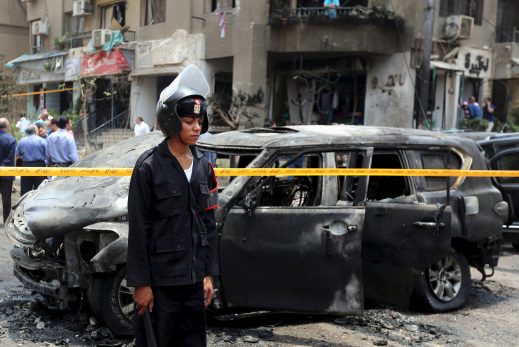
Since the 1970s , Jihadist violence has undergone various transformations. Understanding those dynamics is key to develop efficient approaches to tackle new forms of violent extremism that would go beyond the security focus.
After the fall of Mubarak in 2011, the Sinai peninsula has experienced a deep political and securitarian crisis, posing a serious threat to the security of the MENA region and an important testing-ground for the regional balance of power.
A combination of several factors exacerbated the Sahel’s vulnerability. In this volatile landscape, violent extremism and armed militancy created the conditions for the expansion of new threats in the Sahel region and its neighbourhood.
The EU policy towards the Sahel was either a failure or mixed success because of different reasons. Without a more significant financial contribution and a comprehensive approach, the EU cannot contribute to state building processes in the Sahel.
The Turkish government has responded to radicalisation by combining both hard and soft approaches and resorting to different methods. Regardless, youth radicalisation and extremism continue to pose a threat to the country.
« Le conflit entre les deux factions, le Fatah et le Hamas, est un crime contre le peuple palestinien, sachant que le principal criminel est l'État d'Israël, soutenu par l'Occident, son complice ».
Avec la nouvelle politique interventionniste saoudo-émiratie à l’initiative de l’actuelle crise, on assiste à un changement de paradigme en matière de leadership dans la région.
Il s'est produit dans la région MENA une réduction de l'inégalité des revenus et de l'extrême pauvreté, en même temps qu'une augmentation considérable des conflits.
How to prevent terrorist acts has become a key question within current policy debates. In search of relevant actors that can contribute to the prevention of radicalisation, schools were identified to play a major role.
An estimated 27,000-31,000 foreign fighters have joined terrorist groups such as Daesh or Al-Qaeda affiliates. The need for effective prevention and de-radicalisation programmes cannot therefore be overestimated.
The narrative surrounding the question of social media usage in the Middle East has undeniably shifted. In light of the Jihadist propaganda, the initial optimism was replaced by a skeptical view on the pitfalls of online political activism.
Tunisians are less positive about the policies implemented to fight the phenomenon of violent extremism than some of their neighbours. The EU action seeks in fact to support the Tunisian authorities to meet these challenges.